
Month: December 2025

  • Shopify vs WooCommerce vs BigCommerce: Which Is Best in 2026?

    Shopify vs WooCommerce vs BigCommerce: Which Is Best in 2026?

    Choosing the right eCommerce platform in 2026 is a critical decision for online businesses. Among the top contenders, Shopify, WooCommerce, and BigCommerce continue to dominate the market. Each platform serves different business needs, budgets, and technical skill levels. This guide compares Shopify vs WooCommerce vs BigCommerce to help you decide which is best for your online store in 2026.

    Overview of the Top eCommerce Platforms

    All three platforms allow you to sell products online, manage inventory, process payments, and scale your business. However, they differ significantly in ease of use, customization, cost, and scalability.

    Quick Comparison

    Shopify – Best for simplicity and fast setup
    WooCommerce – Best for flexibility and SEO control
    BigCommerce – Best for built-in features and scalability

    Shopify: Best for Beginners and Fast Launches

    Shopify is a fully hosted eCommerce solution designed for users who want to launch quickly without technical complexity. Hosting, security, updates, and maintenance are all handled by Shopify.

    Key Shopify Features

    Ease of Use – Shopify offers a beginner-friendly dashboard and guided setup.
    App Marketplace – Thousands of apps for marketing, payments, shipping, and automation.
    Reliable Performance – Fast loading speeds and strong security built in.

    Shopify Limitations

    Customization beyond templates often requires apps or developer support. Monthly fees and app costs can add up as your store grows.

    Best for: Beginners, small businesses, dropshipping stores, and DTC brands looking for convenience.

    WooCommerce: Best for Customization and SEO

    WooCommerce is an open-source WordPress eCommerce plugin that gives you complete ownership of your store. It is ideal for businesses that want full control over design, functionality, and SEO.

    Key WooCommerce Advantages

    Unlimited Customization – Modify every aspect of your store with plugins or code.
    Strong SEO Capabilities – Full control over URLs, metadata, content, and site structure.
    Flexible Costs – The plugin is free; you pay only for hosting, themes, and extensions you need.

    WooCommerce Challenges

    WooCommerce requires more technical knowledge. You are responsible for hosting, backups, security, and performance optimization.

    Best for: Content-driven brands, SEO-focused businesses, developers, and businesses needing full control.

    BigCommerce: Best for Growing and Scaling Businesses

    BigCommerce is a hosted eCommerce platform that offers advanced features out of the box. It reduces the need for third-party apps by including powerful tools natively.

    Key BigCommerce Strengths

    Built-In Features – Advanced product options, multi-currency selling, and customer segmentation.
    Scalability – Designed to support high-volume stores and growing brands.
    No Transaction Fees – You keep more profit as your sales increase.

    BigCommerce Drawbacks

    The platform has fewer themes and apps compared to Shopify, and the interface can feel less intuitive for beginners.

    Best for: Mid-size to large businesses, B2B sellers, and brands planning rapid growth.

    Shopify vs WooCommerce vs BigCommerce: Key Differences

    Ease of Use

    Shopify ranks highest for simplicity. WooCommerce has a learning curve. BigCommerce sits in between.

    Customization and Flexibility

    WooCommerce offers the most flexibility. Shopify and BigCommerce are more structured but easier to manage.

    SEO Capabilities

    WooCommerce leads in SEO control. BigCommerce offers solid built-in SEO tools. Shopify handles SEO well but with some limitations.

    Scalability

    BigCommerce and Shopify are strong for scaling. WooCommerce can scale but requires good hosting and technical management.

    Which eCommerce Platform Is Best in 2026?

    There is no single “best” platform — only the best choice for your business goals.

    • Choose Shopify if you want ease of use, fast setup, and minimal technical work
    • Choose WooCommerce if you want maximum control, customization, and SEO power
    • Choose BigCommerce if you want built-in features and long-term scalability

    Final Thoughts

    In 2026, Shopify, WooCommerce, and BigCommerce remain industry leaders because they solve different problems. Understanding your budget, technical comfort, and growth strategy will help you select the best eCommerce platform for long-term success. The right choice today can define how smoothly your online business grows tomorrow.
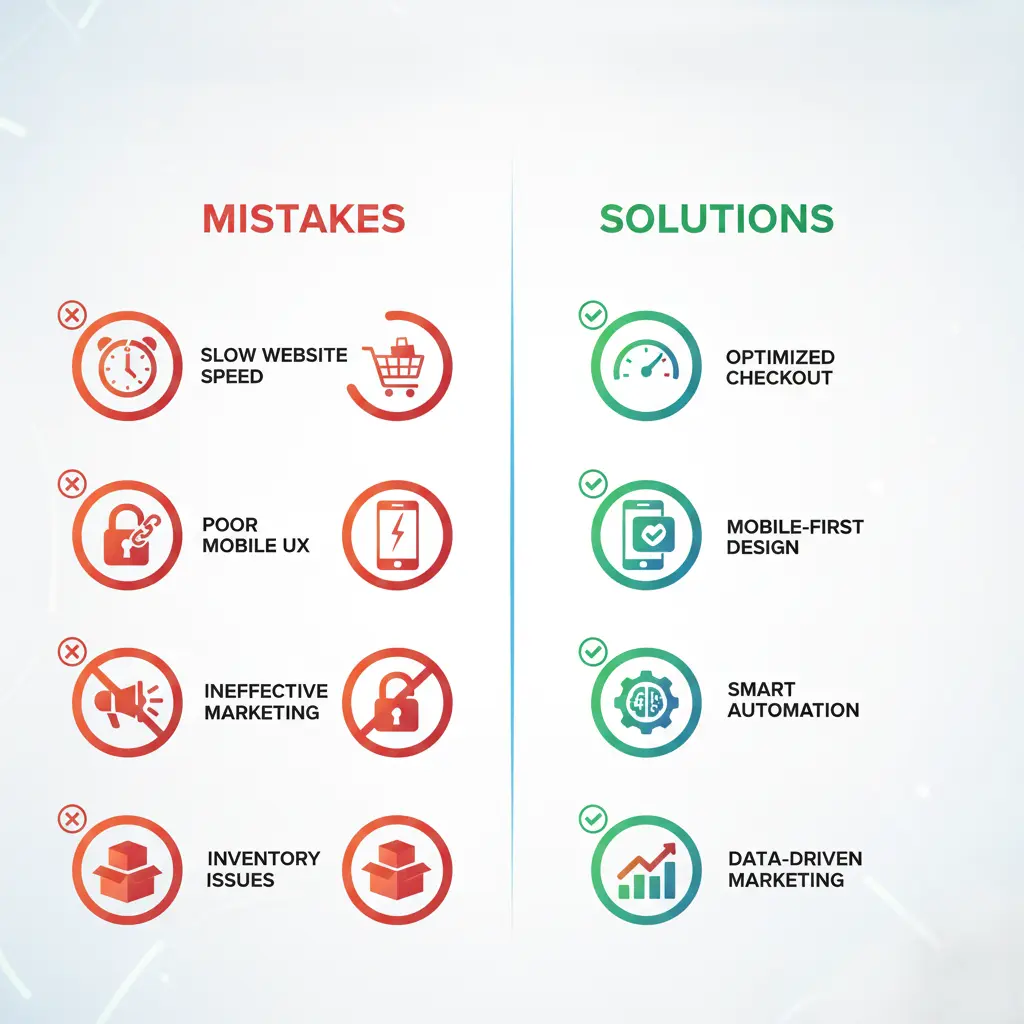

  • Common Ecommerce Mistakes in 2026 (and How to Avoid Them)

    Common Ecommerce Mistakes in 2026 (and How to Avoid Them)

    The ecommerce industry is evolving faster than ever, and while new technology creates opportunities, it also introduces new risks. Many brands fail not because of a lack of ideas, but due to avoidable errors. Understanding common ecommerce mistakes in 2026 can help you protect your business, improve performance, and stay competitive in a crowded digital market.

    Ignoring Customer Experience

    One of the biggest ecommerce mistakes in 2026 is overlooking the customer journey. Shoppers now expect fast-loading websites, easy navigation, and personalized experiences. A confusing checkout process or slow mobile performance can quickly lead to cart abandonment.

    How to avoid it:
    Focus on user experience (UX) design, optimize for mobile-first shopping, and simplify checkout steps. Use AI-driven personalization to recommend relevant products and improve engagement.

    Failing to Optimize for Mobile Commerce

    Mobile commerce continues to dominate online sales, yet many businesses still treat mobile as secondary. Poor mobile design directly impacts conversion rates and customer trust.

    How to avoid it:
    Adopt a mobile-first ecommerce strategy, test site performance across devices, and ensure buttons, images, and payment options work seamlessly on smaller screens.

    Relying Too Heavily on Paid Advertising

    While paid ads can drive quick traffic, depending solely on them is a costly ecommerce marketing mistake. Rising ad costs in 2026 mean lower profit margins if organic channels are ignored.

    How to avoid it:
    Invest in ecommerce SEO, content marketing, and email automation. Building organic traffic creates long-term growth and reduces dependency on paid campaigns.

    Poor Product Descriptions and Visuals

    Generic product descriptions and low-quality images reduce trust and conversions. In 2026, customers expect detailed, interactive, and transparent product information.

    How to avoid it:
    Use SEO-optimized product descriptions, high-resolution images, videos, and user-generated content. Clearly explain benefits, use cases, and value propositions.

    Ignoring Data and Analytics

    Many ecommerce brands collect data but fail to act on it. Ignoring analytics is a critical ecommerce growth mistake that leads to missed opportunities and poor decision-making.

    How to avoid it:
    Track key ecommerce metrics such as conversion rate, customer lifetime value, and cart abandonment. Use AI-powered analytics tools to identify trends and optimize campaigns.

    Weak Inventory and Supply Chain Management

    Stockouts, delayed deliveries, and inaccurate inventory levels frustrate customers and damage brand reputation. In 2026, efficient logistics are more important than ever.

    How to avoid it:
    Implement smart inventory management systems, automate stock tracking, and work with reliable fulfillment partners to ensure fast and accurate deliveries.

    Neglecting Customer Retention

    Many businesses focus only on acquiring new customers while ignoring existing ones. This is a costly ecommerce retention mistake, as retaining customers is more profitable than acquiring new ones.

    How to avoid it:
    Build loyalty programs, personalize email marketing, and offer exclusive rewards to repeat customers. Strong customer retention strategies improve lifetime value and brand advocacy.

    Overlooking Security and Compliance

    Cybersecurity threats and data privacy regulations continue to grow. Failing to protect customer data is a serious ecommerce compliance mistake that can lead to legal issues and loss of trust.

    How to avoid it:
    Ensure secure payment gateways, SSL certificates, and compliance with global data protection laws. Regularly update systems to protect against cyber threats.

    Final Thoughts

    Avoiding common ecommerce mistakes in 2026 is essential for building a sustainable and profitable online business. By focusing on customer experience, mobile optimization, data-driven decisions, and security, ecommerce brands can stay ahead of the competition and achieve long-term success.

  • How to Start an Ecommerce Business in 2026

    How to Start an Ecommerce Business in 2026

    Starting an online store has never been more accessible, and 2026 ecommerce trends are creating even more opportunities for entrepreneurs. With evolving technology, AI-driven tools, and changing consumer behavior, launching a successful store requires smart planning and the right strategy. This guide explains how to start an ecommerce business in 2026 step by step, with key insights to help you stay competitive.

    Understand the Ecommerce Landscape in 2026

    Before launching, it’s essential to understand the ecommerce industry in 2026. Consumers expect fast delivery, personalized experiences, and seamless mobile shopping. Social commerce, voice search, and AI-powered recommendations are becoming standard features rather than optional add-ons.

    Focusing on customer experience, automation, and sustainability will help new ecommerce businesses stand out.

    Choose a Profitable Ecommerce Niche

    Selecting the right niche is the foundation of any successful online store. In 2026, high-demand niches include eco-friendly products, digital goods, personalized items, and health-related products.

    Conduct market research, analyze competitors, and identify problems you can solve. A clear niche makes it easier to target the right audience and build a strong brand identity.

    Create a Solid Ecommerce Business Plan

    A detailed ecommerce business plan helps you define goals, budget, pricing, and marketing strategies. Your plan should include product sourcing, logistics, branding, and revenue models.

    Planning ahead reduces risk and ensures your ecommerce startup can scale efficiently as demand grows.

    Build Your Ecommerce Website

    Select the Right Ecommerce Platform

    Choosing the right ecommerce platform is critical. Platforms like Shopify, WooCommerce, and headless commerce solutions offer flexibility and scalability. In 2026, many businesses are adopting AI-powered ecommerce platforms for better personalization and automation.

    Optimize for Mobile and Speed

    Mobile-first design is no longer optional. Ensure your site loads quickly, is easy to navigate, and supports multiple payment methods. A smooth user experience improves conversions and reduces cart abandonment.

    Set Up Secure Payments and Logistics

    Payment Gateways

    Offer secure and diverse online payment options, including digital wallets, buy-now-pay-later services, and cryptocurrency where applicable. Trust and security are key factors in purchasing decisions.

    Shipping and Fulfillment

    Reliable ecommerce logistics play a major role in customer satisfaction. Consider third-party fulfillment, same-day delivery, or dropshipping depending on your business model.

    Market Your Ecommerce Business

    Search Engine Optimization (SEO)

    Ecommerce SEO helps your store rank higher in search results. Optimize product pages, use relevant keywords, and create valuable content to drive organic traffic.

    Social Media and Influencer Marketing

    Social platforms are powerful sales channels in 2026. Leverage social commerce, short-form videos, and influencer partnerships to reach and engage your target audience.

    Paid Advertising and AI Automation

    Use AI-driven marketing tools to automate ad campaigns, personalize offers, and analyze customer behavior. This improves efficiency and return on investment.

    Focus on Customer Retention

    Acquiring customers is important, but retention drives long-term success. Use email marketing, loyalty programs, and personalized recommendations to build lasting relationships.

    Excellent customer support and transparent policies also boost trust and repeat purchases.

    Stay Compliant and Secure

    Ensure your ecommerce business follows data protection laws, tax regulations, and consumer rights policies. Cybersecurity and compliance are crucial as online fraud continues to evolve.

    Final Thoughts

    Learning how to start an ecommerce business in 2026 means embracing innovation while focusing on customer needs. By choosing the right niche, building a strong platform, and leveraging modern marketing strategies, you can create a scalable and profitable ecommerce brand ready for the future.

  • How Blogging Helps Ecommerce Sales

    How Blogging Helps Ecommerce Sales

    Introduction to Ecommerce Blogging

    Blogging for ecommerce is one of the most effective long-term strategies to increase visibility, attract customers, and drive consistent sales. A well-planned blog does more than share information—it educates buyers, builds trust, and guides users toward purchasing decisions. When combined with SEO-optimized content, blogging becomes a powerful sales engine for ecommerce businesses.

    Improves Search Engine Visibility

    One of the biggest ways blogging helps ecommerce sales is through search engine optimization (SEO). Blogs allow ecommerce websites to target multiple high-intent keywords, long-tail search queries, and customer pain points that product pages alone cannot cover.

    Targets Informational Keywords

    Many shoppers begin their journey with questions rather than product searches. Blogging helps you rank for keywords like:

    • how-to guides
    • product comparisons
    • buying guides
    • problem-solving queries

    By answering these questions, your ecommerce store attracts potential customers early in the buying funnel.

    Increases Organic Traffic

    More high-quality blog content means more indexed pages on search engines. This increases organic traffic, bringing in users who are actively researching products related to what you sell.

    Builds Trust and Brand Authority

    Trust is essential in ecommerce. Customers are more likely to buy from brands they see as credible and knowledgeable.

    Positions Your Brand as an Expert

    Publishing helpful, accurate, and detailed blog posts positions your brand as an industry authority. When customers trust your expertise, they trust your products too.

    Supports Google E-E-A-T

    Blogging strengthens Experience, Expertise, Authoritativeness, and Trustworthiness (E-E-A-T) by:

    • Sharing real-world experience
    • Providing expert insights
    • Publishing consistent, valuable content
    • Demonstrating transparency and reliability

    Educates Customers and Reduces Buying Hesitation

    Many customers hesitate because they lack information. Blogs educate them and remove doubts.

    Explains Product Benefits Clearly

    Blog posts can explain:

    • How products work
    • Who they are best for
    • What problems they solve

    This education helps customers feel confident in their purchase decisions.

    Reduces Returns and Refunds

    When customers understand what they’re buying, expectations are clearer. This leads to fewer returns, improving overall profitability.

    Supports Product Pages and Conversions

    Blogs act as a bridge between traffic and sales.

    Internal Linking to Product Pages

    Strategic internal links from blogs to product pages, category pages, and landing pages guide users naturally toward conversion.

    Improves Conversion Rates

    Customers who read blogs before buying are often more informed and motivated. This results in higher ecommerce conversion rates compared to cold traffic.

    Drives Long-Term, Cost-Effective Sales

    Unlike paid ads, blog content continues to generate traffic and sales long after publication.

    Evergreen Content Generates Ongoing Revenue

    Well-written evergreen blog posts can bring consistent traffic and sales for months or even years, making blogging a high-ROI strategy.

    Reduces Dependence on Paid Advertising

    With strong organic traffic from blogs, ecommerce businesses can lower ad spend while maintaining sales growth.

    Enhances Social Media and Email Marketing

    Blog content fuels other marketing channels.

    Content for Social Sharing

    Blogs provide valuable content to share on social media, driving referral traffic back to your ecommerce store.

    Boosts Email Marketing Performance

    Blogs can be repurposed into email newsletters, product education emails, and promotional campaigns, increasing engagement and sales.

    Conclusion

    Blogging helps ecommerce sales by improving SEO, building trust, educating customers, and driving long-term organic traffic. It supports every stage of the buyer journey—from awareness to conversion. For ecommerce brands looking for sustainable growth, consistent, keyword-optimized blogging is not optional—it is a powerful and proven sales strategy.

  • How Fast Checkout Improves Ecommerce Conversions

    How Fast Checkout Improves Ecommerce Conversions

    Introduction to Fast Checkout in Ecommerce

    Fast checkout has become a critical factor in ecommerce success. In today’s digital world, online shoppers expect speed, simplicity, and convenience. A slow or complicated checkout process is one of the main reasons for cart abandonment. Fast checkout improves ecommerce conversions by reducing friction, saving time, and creating a smooth buying experience that encourages customers to complete their purchases.

    What Is Fast Checkout?

    Fast checkout is a streamlined checkout process that minimizes the number of steps required to complete an online purchase. It often includes features such as guest checkout, one-click purchasing, saved payment details, autofill forms, and multiple payment options. The goal is to remove unnecessary barriers between the customer and the final purchase.

    Key Features of Fast Checkout

    • Fewer form fields
    • Guest checkout option
    • One-click or express checkout
    • Digital wallets and quick payment methods
    • Mobile-optimized checkout design

    These features work together to create a faster and more user-friendly shopping experience.

    Why Checkout Speed Matters for Conversions

    Checkout speed directly impacts ecommerce conversion rates. When customers reach the checkout stage, they are already motivated to buy. Any delay, confusion, or extra step can cause frustration and lead to abandonment.

    Reducing Cart Abandonment

    One of the biggest benefits of fast checkout is lower cart abandonment. Long registration forms, forced account creation, and slow page loading times push customers away. Fast checkout removes these obstacles, making it easier for shoppers to complete their orders.

    Improving Customer Satisfaction

    A smooth and quick checkout leaves a positive impression on customers. When shoppers can complete a purchase effortlessly, they are more likely to return and recommend the store to others. Customer satisfaction plays a major role in repeat purchases and long-term brand loyalty.

    How Fast Checkout Boosts Ecommerce Conversion Rates

    Fast checkout improves ecommerce conversions by aligning with modern consumer behavior. Shoppers value convenience, especially on mobile devices.

    Optimized for Mobile Shoppers

    Mobile commerce continues to grow rapidly, but small screens make long checkout processes difficult. Fast checkout with mobile-friendly design, autofill options, and digital wallets significantly improves mobile conversion rates.

    Encouraging Impulse Purchases

    Impulse buying depends on speed. If the checkout process is quick, customers are less likely to second-guess their decision. Fast checkout helps capture impulse purchases before distractions or doubts occur.

    Building Trust and Credibility

    A clean, simple, and secure checkout process builds trust. Visible security badges, trusted payment options, and transparent pricing reassure customers that their information is safe. Trust reduces hesitation and increases the likelihood of purchase completion.

    SEO Benefits of Fast Checkout

    Fast checkout also supports ecommerce SEO indirectly. Search engines prioritize user experience, and a smooth checkout contributes to better engagement metrics.

    Lower Bounce Rates

    When users find the checkout process easy, they stay longer on the site and complete actions. Lower bounce rates and higher engagement signal quality to search engines.

    Improved Core Web Vitals

    Fast checkout often requires optimized page speed and performance. Faster loading checkout pages improve Core Web Vitals, which are important for search engine rankings.

    Best Practices for Implementing Fast Checkout

    Offer Guest Checkout

    Allow customers to purchase without creating an account. Account creation can be offered after the purchase instead of during checkout.

    Enable Multiple Payment Options

    Support credit cards, digital wallets, and local payment methods to suit different customer preferences.

    Minimize Form Fields

    Ask only for essential information. Use autofill and address lookup tools to speed up data entry.

    Ensure Mobile Optimization

    Design checkout pages specifically for mobile users with clear buttons and simple navigation.

    Conclusion

    Fast checkout improves ecommerce conversions by removing friction, enhancing user experience, and meeting modern shopper expectations. A quicker, simpler checkout process reduces cart abandonment, increases customer satisfaction, and drives more sales. For ecommerce businesses looking to grow, optimizing checkout speed is not just an improvement—it is a necessity for long-term success.