Month: December 2025

  • Social Commerce Trends Every Brand Should Watch

    Social Commerce Trends Every Brand Should Watch

    Social media is no longer just a discovery channel. It has evolved into a powerful sales engine, reshaping how consumers browse, engage, and purchase online. Social commerce trends are accelerating as platforms blend content, community, and checkout into a seamless experience. For brands looking to stay competitive, understanding these trends is essential to driving growth and relevance.

    The Rise of Social Commerce in Ecommerce

    Social commerce refers to selling products directly within social media platforms. Instead of redirecting users to an external website, platforms now enable product discovery, engagement, and purchase in one place. This shift reduces friction and aligns perfectly with changing consumer behavior, especially among Gen Z and Millennials.

    In-App Checkout Is Becoming the Norm

    One of the most impactful social commerce trends is the adoption of native checkout features. Platforms like Instagram, Facebook, TikTok, and Pinterest are making it easier for users to complete purchases without leaving the app.

    Why In-App Checkout Matters

    Fewer steps in the buying journey mean higher conversion rates. In-app checkout also allows brands to leverage impulse buying driven by content, trends, and social proof. As platforms continue refining payment and fulfillment options, in-app purchases will become a core revenue stream.

    Short-Form Video Is Driving Product Discovery

    Short-form video has become the backbone of social commerce. Platforms like TikTok, Instagram Reels, and YouTube Shorts are shaping how consumers discover products.

    Content Over Catalogs

    Instead of static product listings, brands are using storytelling, demos, and reviews to sell. Authentic, creator-led videos outperform polished ads, making short-form content one of the most effective social commerce marketing strategies.

    Influencer-Led Commerce Is Evolving

    Influencer marketing is shifting from awareness-driven campaigns to performance-focused social commerce.

    Creators as Sales Channels

    Creators are becoming storefronts. Affiliate links, shoppable posts, and creator-owned product lines allow influencers to drive measurable sales. Micro and nano influencers, in particular, are gaining traction due to higher trust and engagement within niche communities.

    Live Commerce Is Gaining Momentum

    Live shopping blends entertainment and ecommerce, allowing brands to showcase products in real time while interacting with audiences.

    Why Live Commerce Works

    Live commerce builds urgency and trust. Consumers can ask questions, see products in action, and make instant purchases. While live commerce is already mainstream in Asia, Western markets are rapidly adopting this social commerce trend.

    Community-Driven Shopping Experiences

    Social commerce thrives on community. Brands are increasingly leveraging private groups, comments, and direct messages to engage and convert customers.

    Conversations That Convert

    Features like Instagram DMs, WhatsApp, and Facebook Groups enable one-to-one selling at scale. Personalized recommendations and real-time responses create a more human shopping experience.

    AI-Powered Personalization in Social Commerce

    Artificial intelligence is playing a growing role in shaping personalized social commerce experiences.

    Smarter Product Recommendations

    AI analyzes user behavior, preferences, and engagement to deliver tailored product suggestions. This level of personalization improves relevance, engagement, and conversion rates across social platforms.

    User-Generated Content as a Trust Signal

    User-generated content (UGC) continues to be one of the most influential social commerce trends.

    Social Proof Drives Sales

    Reviews, unboxings, and customer testimonials shared on social media act as powerful trust signals. Brands that actively encourage and repurpose UGC see higher credibility and stronger conversions.

    Social Search and Discovery

    Consumers are increasingly using social platforms as search engines, especially for product recommendations.

    Optimizing for Social Search

    Hashtags, keywords in captions, and descriptive video content are becoming essential for visibility. Brands that optimize for social search will gain an edge in product discovery.

    Final Thoughts on Social Commerce Trends

    Social commerce is redefining the ecommerce landscape by merging content, community, and commerce. Brands that adapt to emerging social commerce trends—from in-app checkout and live shopping to influencer-led sales and AI personalization—will be better positioned to capture attention and drive conversions. As platforms continue to innovate, social commerce will move from an experimental channel to a core pillar of digital growth strategies.
  • Selling on Amazon vs D2C Ecommerce Websites

    Selling on Amazon vs D2C Ecommerce Websites

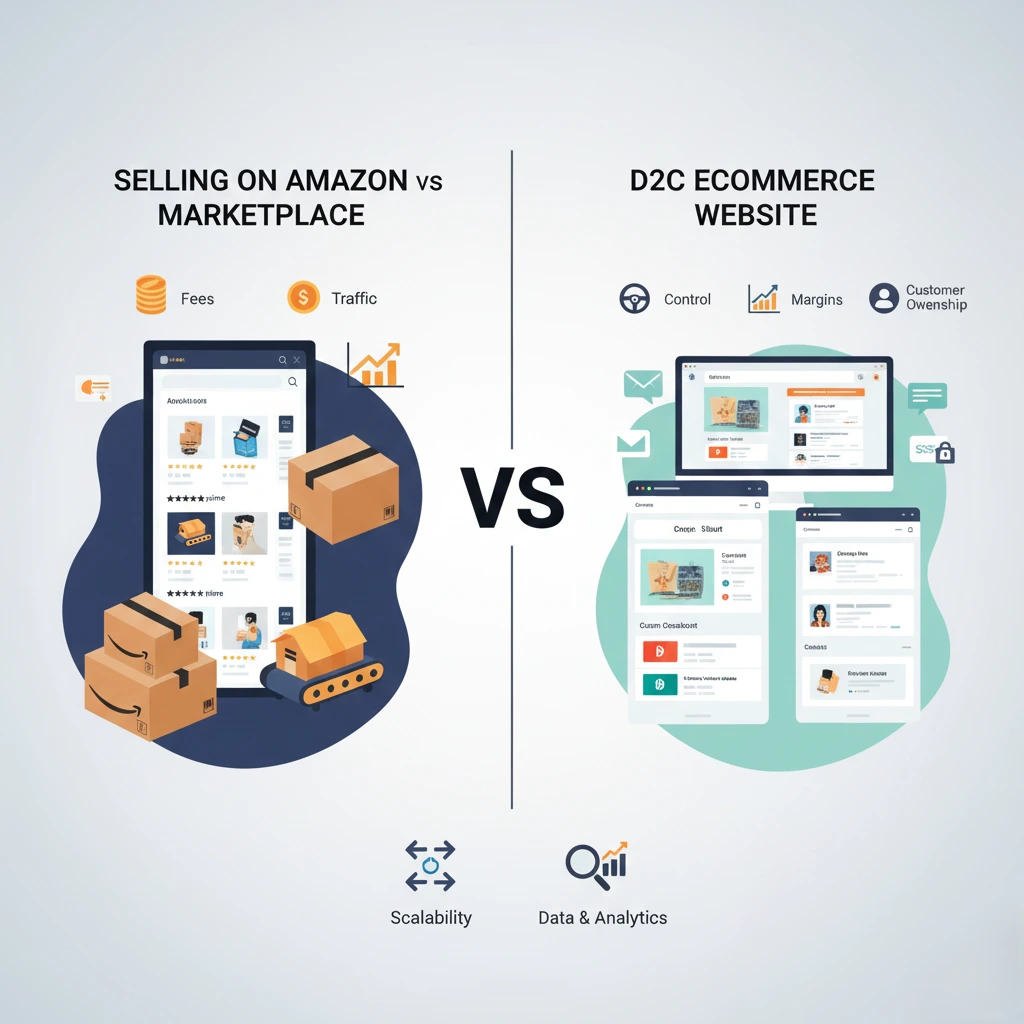
    For ecommerce brands, one of the most important strategic decisions is choosing where to sell. Selling on Amazon vs D2C ecommerce websites is not a matter of right or wrong, but of goals, margins, and long-term brand vision. While Amazon offers instant scale and trust, Direct-to-Consumer (D2C) websites provide control and customer ownership. Understanding the strengths and limitations of both models helps brands build a sustainable ecommerce strategy.

    Understanding the Amazon Marketplace Model

    Amazon is the world’s largest online marketplace, attracting millions of high-intent shoppers daily. For new and growing brands, selling on Amazon can feel like a fast track to revenue.

    Advantages of Selling on Amazon

    One of the biggest benefits of selling on Amazon is access to a massive customer base. Amazon handles trust, logistics, and payments, reducing operational friction. Programs like Fulfillment by Amazon (FBA) simplify storage, shipping, and returns, allowing brands to focus on sourcing and marketing.

    Amazon also excels at product discovery. Shoppers often search Amazon directly rather than Google, giving sellers exposure to buyers who are already ready to purchase.

    Challenges of Selling on Amazon

    Despite its reach, Amazon comes with trade-offs. High seller fees, intense competition, and limited brand differentiation can impact profitability. Brands also have minimal access to customer data, making it difficult to build long-term relationships. Algorithm changes or account suspensions can significantly affect sales overnight.

    Understanding the D2C Ecommerce Website Model

    A D2C ecommerce website allows brands to sell directly to consumers through their own online store, typically powered by platforms like Shopify or WooCommerce.

    Advantages of D2C Ecommerce Websites

    The biggest advantage of D2C is control. Brands own the customer relationship, data, and experience. This enables personalized marketing, email automation, loyalty programs, and better customer lifetime value.

    Margins are often higher on D2C ecommerce websites since there are no marketplace commissions. Brands can also fully control pricing, branding, storytelling, and user experience, which is essential for long-term brand building.

    Challenges of the D2C Model

    D2C ecommerce requires more effort upfront. Brands must invest in traffic acquisition through SEO, paid ads, social media, and content marketing. Logistics, returns, and customer support are also the brand’s responsibility unless outsourced. Trust takes time to build, especially for new or unknown brands.

    Amazon vs D2C Ecommerce Websites A Direct Comparison

    Customer Ownership

    When comparing Amazon vs D2C ecommerce, customer ownership is a key differentiator. Amazon controls customer data, while D2C brands can nurture direct relationships and remarket effectively.

    Cost and Margins

    Amazon’s fees reduce margins but lower operational complexity. D2C websites offer better margins but require ongoing marketing and technology investment.

    Brand Building

    Amazon prioritizes products over brands, making differentiation difficult. D2C ecommerce websites allow brands to tell their story, build community, and create emotional connections.

    Scalability and Risk

    Amazon enables rapid scaling but comes with platform dependency risks. D2C growth is slower but more stable and defensible over time.

    Which Model Is Right for Your Ecommerce Business

    The choice between selling on Amazon vs D2C ecommerce websites depends on business objectives. Brands focused on quick sales and operational simplicity may benefit from Amazon. Brands aiming for long-term growth, loyalty, and brand equity often prioritize D2C.

    Many successful ecommerce businesses adopt a hybrid strategy. Amazon is used for customer acquisition and volume, while D2C channels focus on retention, upselling, and brand building.

    Final Thoughts on Amazon vs D2C Ecommerce

    Selling on Amazon and running a D2C ecommerce website are not mutually exclusive. Amazon offers reach and convenience, while D2C provides control and sustainability. The most resilient ecommerce brands understand the strengths of both models and align them with their growth strategy. By balancing scale with ownership, businesses can build profitable and future-ready ecommerce operations.

  • Google Ads for E-commerce Stores

    Google Ads for E-commerce Stores

    Google Ads for e-commerce stores is one of the most powerful ways to drive targeted traffic, increase product visibility, and generate consistent online sales. When used strategically, Google Ads allows e-commerce brands to reach customers exactly at the moment they are searching for products. This guide explains how e-commerce stores can use Google Ads effectively, which campaign types work best, and how to optimize for maximum return on investment.

    Why Google Ads Is Important for E-commerce Stores

    Google Ads gives e-commerce businesses instant visibility on search results, YouTube, partner websites, and shopping platforms. Unlike organic traffic, paid ads allow faster scaling and precise targeting.

    Key Benefits of Google Ads for E-commerce

    • Immediate traffic and sales
    • High intent audience targeting
    • Measurable and trackable results
    • Scalable campaigns for growth

    For competitive niches, Google Ads for e-commerce often becomes the primary revenue driver.

    Types of Google Ads Campaigns for E-commerce

    Choosing the right campaign type is essential for success.

    Google Shopping Ads

    Google Shopping Ads are the most effective format for e-commerce stores.

    Why Google Shopping Ads Work

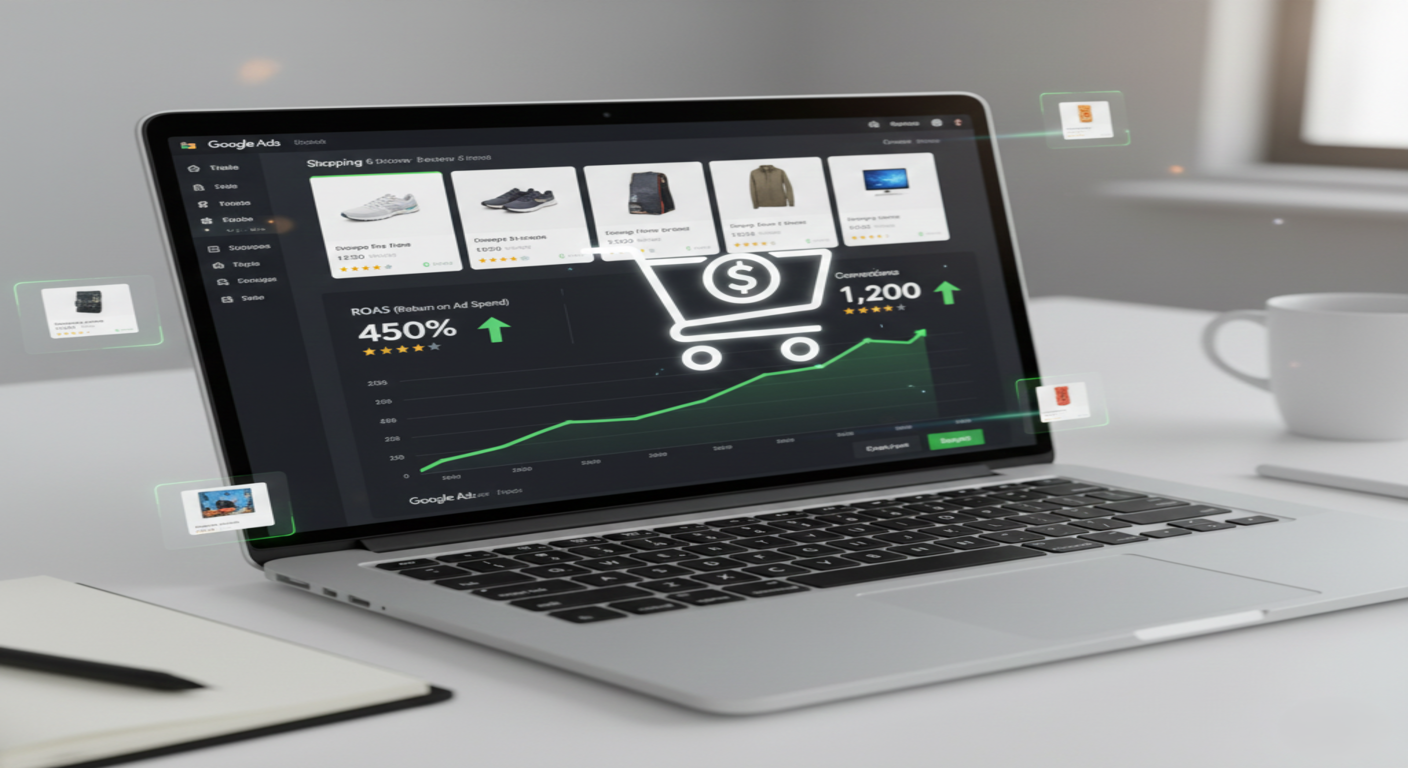
    Shopping ads show product images, prices, brand names, and reviews directly in search results. This visual format attracts high quality clicks and improves conversion rates.

    Requirements for Shopping Ads

    • Google Merchant Center account
    • Accurate product feed
    • Optimized product titles and descriptions

    Search Ads for E-commerce

    Google Search Ads target users actively searching for specific products or categories.

    Best Use Cases for Search Ads

    • Brand keywords
    • High intent product keywords
    • Promotional and discount campaigns

    Using exact match and phrase match keywords helps control costs and improve conversions.

    Performance Max Campaigns

    Performance Max for e-commerce uses automation across Search, Display, YouTube, Gmail, and Discover.

    Benefits of Performance Max

    • Uses machine learning to optimize conversions
    • Works well with Shopping feeds
    • Expands reach across multiple Google properties

    Performance Max is ideal for stores with sufficient conversion data.

    Display and Remarketing Ads

    Google Display Ads are effective for brand awareness and remarketing.

    Remarketing for E-commerce Stores

    Remarketing targets users who visited your store but did not purchase.

    • Cart abandonment campaigns
    • Product view remarketing
    • Dynamic display ads

    These campaigns significantly improve conversion rates and customer lifetime value.

    Keyword Research for Google Ads E-commerce Campaigns

    Keyword selection directly affects profitability.

    Focus on High Intent Keywords

    Use keywords like:

    • Buy running shoes online
    • Best wireless headphones price
    • Discount skincare products

    High intent keywords lead to higher click through rate and return on ad spend.

    Use Negative Keywords

    Negative keywords prevent wasted ad spend by blocking irrelevant searches. This improves Quality Score and lowers cost per click.

    Writing High Converting Ad Copy for E-commerce

    Ad copy plays a major role in attracting clicks.

    Include Keywords in Headlines

    Using primary keywords in headlines improves relevance and ad visibility.

    Highlight Offers and USPs

    Mention:

    • Free shipping
    • Easy returns
    • Limited time discounts
    • Cash on delivery

    These elements increase ad engagement and CTR.

    Landing Page Optimization for E-commerce Ads

    Even the best ads fail without optimized landing pages.

    Product Page Best Practices

    • Clear product images
    • Fast loading speed
    • Mobile friendly design
    • Strong call to action
    • Customer reviews and trust badges

    A strong landing page improves conversion rate and Google Ads Quality Score.

    Bidding Strategies for E-commerce Google Ads

    Choosing the right bidding strategy helps control profitability.

    Smart Bidding Options

    • Maximize Conversions
    • Target ROAS
    • Enhanced CPC

    For mature accounts, Target ROAS bidding works best for scaling e-commerce sales.

    Tracking and Measuring Performance

    Data driven decisions are essential for growth.

    Important Metrics to Track

    • Cost per conversion
    • Return on ad spend
    • Conversion rate
    • Average order value

    Proper conversion tracking using Google Analytics and Google Ads tags is critical.

    Common Mistakes in Google Ads for E-commerce Stores

    Avoiding these mistakes saves money and improves performance.

    Sending Traffic to Generic Pages

    Always send traffic to relevant product or category pages, not the homepage.

    Ignoring Mobile Optimization

    Most e-commerce traffic comes from mobile devices. Poor mobile experience reduces conversions.

    Not Testing Ads and Creatives

    Continuous testing of headlines, images, and offers improves long term results.

    Scaling Google Ads for E-commerce Growth

    Once campaigns are profitable, scaling becomes easier.

    Increase Budget Gradually

    Gradual scaling helps maintain performance stability.

    Expand Product Coverage

    Add more products and categories to Shopping and Performance Max campaigns.

    Optimize Based on Data

    Pause low performing products and allocate budget to high ROAS items.

    Final Thoughts on Google Ads for E-commerce Stores

    Google Ads for e-commerce stores is a powerful growth channel when executed correctly. By combining Shopping Ads, Search Ads, smart bidding, strong keyword research, and optimized landing pages, online stores can achieve consistent sales and scalable growth. Continuous testing, tracking, and optimization are the keys to maximizing profitability and staying competitive in the e-commerce landscape.

  • B2C vs B2B vs D2C E-commerce

    B2C vs B2B vs D2C E-commerce

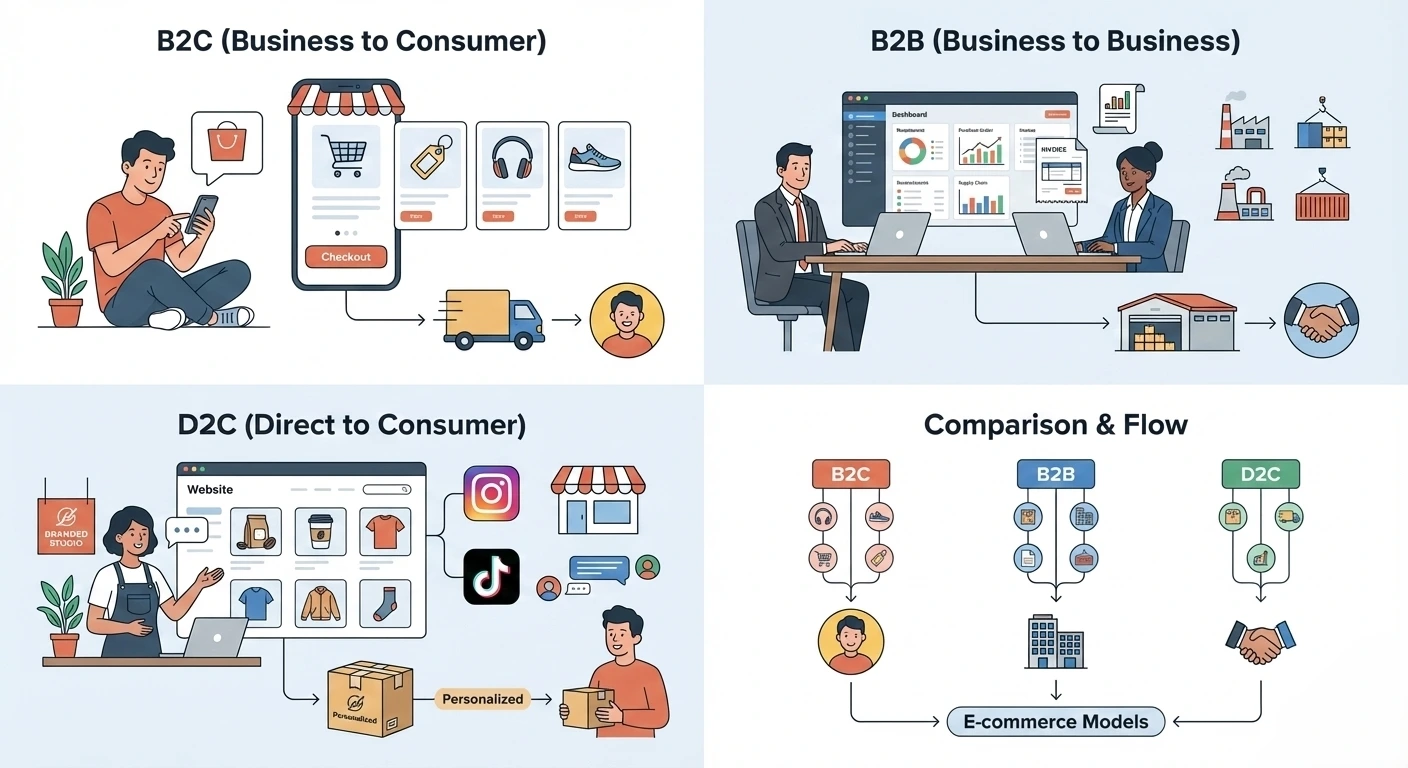
    E-commerce has transformed how businesses sell products and services online. Among the most common models are B2C e-commerce, B2B e-commerce, and D2C e-commerce. While all three involve online transactions, they differ significantly in audience, strategy, marketing approach, and customer journey. Understanding these differences helps businesses choose the right model and build scalable digital strategies.

    What Is B2C E-commerce

    B2C e-commerce stands for Business to Consumer. In this model, companies sell products or services directly to individual consumers through online platforms.

    Key Characteristics of B2C E-commerce

    B2C transactions are usually quick and emotionally driven. Customers expect convenience, competitive pricing, and a seamless user experience.

    Typical B2C Products

    Common B2C products include fashion, electronics, beauty items, food delivery, subscriptions, and digital services.

    B2C Buying Behavior

    Consumers often make impulse purchases. Decisions are influenced by brand perception, reviews, promotions, and ease of checkout.

    What Is B2B E-commerce

    B2B e-commerce refers to Business to Business transactions, where companies sell products or services to other businesses online.

    Key Characteristics of B2B E-commerce

    B2B sales involve larger order values, longer sales cycles, and multiple decision makers. Pricing is often customized rather than fixed.

    Typical B2B Products and Services

    B2B platforms sell raw materials, office supplies, software solutions, industrial equipment, and wholesale goods.

    B2B Buying Behavior

    Purchasing decisions are logical and research driven. Buyers focus on value, reliability, scalability, and long term partnerships rather than impulse.

    What Is D2C E-commerce

    D2C e-commerce stands for Direct to Consumer. In this model, brands sell directly to consumers without intermediaries like wholesalers or marketplaces.

    Key Characteristics of D2C E-commerce

    D2C brands own the entire customer journey, from marketing and sales to fulfillment and support.

    Typical D2C Products

    D2C is popular in fashion, skincare, fitness, electronics, and niche lifestyle products.

    D2C Buying Behavior

    Customers are attracted by brand stories, exclusivity, personalization, and direct engagement with the brand.

    Key Differences Between B2C B2B and D2C E-commerce

    Understanding how these models differ helps clarify their strategic implications.

    Target Audience and Relationship

    B2C targets individual consumers, B2B targets organizations, and D2C targets consumers but with a deeper brand relationship. D2C brands focus heavily on community and loyalty.

    Sales Cycle and Order Value

    B2C and D2C usually have shorter sales cycles and lower average order values. B2B transactions involve higher values and longer decision making processes.

    Pricing Strategy

    B2C pricing is fixed and competitive. B2B pricing is often negotiated or volume based. D2C pricing allows higher margins by eliminating middlemen.

    Marketing Approach in B2C B2B and D2C

    Each model requires a distinct marketing strategy.

    Marketing Strategy in B2C E-commerce

    B2C marketing focuses on reach, visibility, and conversions.

    Common B2C Channels

    Paid ads, social media, influencer marketing, email campaigns, and marketplace optimization are widely used.

    Key B2C Metrics

    Click through rate, conversion rate, average order value, and customer lifetime value are critical.

    Marketing Strategy in B2B E-commerce

    B2B marketing emphasizes trust, education, and relationship building.

    Common B2B Channels

    Content marketing, SEO, LinkedIn advertising, webinars, email nurturing, and account based marketing are effective.

    Key B2B Metrics

    Lead quality, cost per lead, pipeline value, and conversion rates matter more than volume.

    Marketing Strategy in D2C E-commerce

    D2C marketing blends performance with brand building.

    Common D2C Channels

    Social media ads, content marketing, influencer partnerships, email, SMS, and community building drive growth.

    Key D2C Metrics

    Customer acquisition cost, repeat purchase rate, and brand engagement are essential.

    Technology and Platform Differences

    Technology needs vary across models.

    B2C Technology Stack

    B2C platforms focus on fast checkout, mobile optimization, and scalability.

    B2B Technology Stack

    B2B platforms require bulk ordering, custom pricing, CRM integration, and approval workflows.

    D2C Technology Stack

    D2C brands need advanced analytics, personalization tools, and customer data platforms.

    Advantages and Challenges of Each Model

    Every model offers unique benefits and challenges.

    Advantages of B2C E-commerce

    High scalability, large audiences, and faster transactions make B2C attractive.

    Challenges of B2C E-commerce

    High competition, rising ad costs, and low customer loyalty can limit margins.

    Advantages of B2B E-commerce

    Higher order values, long term contracts, and predictable revenue streams are key benefits.

    Challenges of B2B E-commerce

    Long sales cycles and complex decision making slow growth.

    Advantages of D2C E-commerce

    Higher margins, full customer ownership, and brand control drive long term value.

    Challenges of D2C E-commerce

    High customer acquisition costs and logistics management can be demanding.

    Choosing the Right E-commerce Model

    Selecting between B2C vs B2B vs D2C e-commerce depends on your product, audience, resources, and growth goals. Some businesses even combine models, such as B2B brands offering D2C storefronts.

    Final Thoughts on B2C vs B2B vs D2C E-commerce

    Each e-commerce model serves a distinct purpose. B2C prioritizes convenience and scale, B2B focuses on relationships and value, and D2C emphasizes brand control and customer connection. Understanding these differences helps businesses build the right strategy, choose the right platforms, and achieve sustainable growth in the evolving digital marketplace.

  • Dropshipping vs Private Label: Which Is Better for Your eCommerce Business?

    Dropshipping vs Private Label: Which Is Better for Your eCommerce Business?

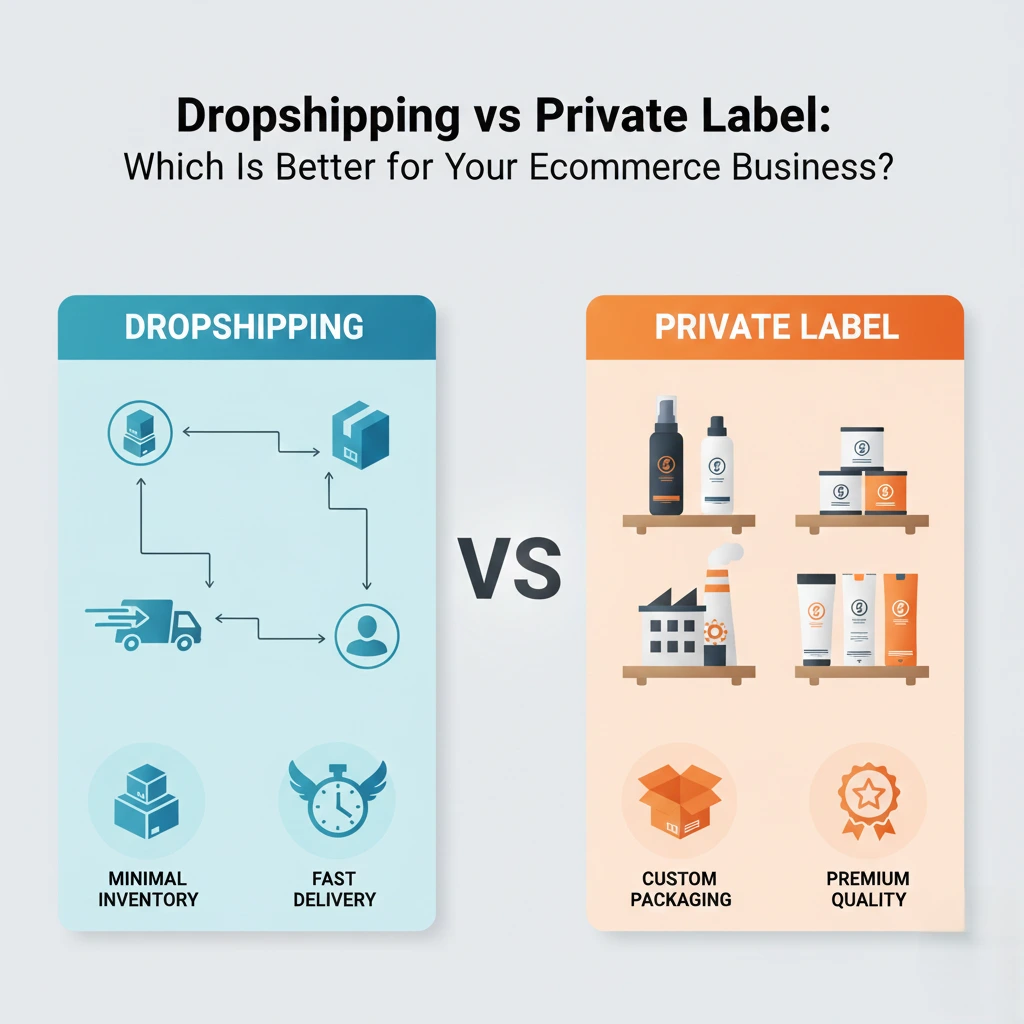
    Choosing the right business model is one of the most important decisions when starting an eCommerce business. Two of the most popular options are dropshipping and private label. Both models allow you to sell products online, but they differ greatly in control, cost, branding, and long-term growth potential. This guide breaks down dropshipping vs private label to help you decide which is better for your goals.

    What Is Dropshipping?

    Dropshipping is an eCommerce model where you sell products without holding inventory. When a customer places an order, the product is shipped directly from a third-party supplier to the customer.

    Advantages of Dropshipping

    • Low startup cost with no inventory investment
    • Easy to launch and manage
    • Wide product selection
    • Minimal operational risk

    This model is ideal for beginners who want to test products quickly without large financial commitments.

    Disadvantages of Dropshipping

    • Low profit margins
    • Limited control over product quality and shipping
    • High competition
    • Weak brand differentiation

    Because many sellers offer the same products, standing out can be challenging.

    What Is Private Label?

    Private label means selling products manufactured by a third party but branded under your own name. You control branding, packaging, pricing, and product positioning.

    Advantages of Private Label

    • Strong brand identity
    • Higher profit margins
    • Greater control over product quality
    • Better customer loyalty and repeat purchases

    This model is best for entrepreneurs focused on building a long-term, scalable brand.

    Disadvantages of Private Label

    • Higher upfront investment
    • Inventory storage and management required
    • Longer setup time
    • Greater financial risk

    Private label businesses require more planning but offer more control.

    Dropshipping vs Private Label: Key Differences

    Startup Cost and Risk

    Dropshipping requires very little upfront capital, making it lower risk initially. Private label involves costs for manufacturing, branding, and inventory, but offers better long-term returns.

    Branding and Customization

    Private label wins in branding. You create a unique product experience, while dropshipping limits branding opportunities since products are generic.

    Profit Margins

    Private label products typically have higher margins because you control pricing. Dropshipping profits are lower due to competition and supplier pricing.

    Inventory and Fulfillment

    With dropshipping, suppliers handle inventory and shipping. With private label, you manage inventory or use third-party fulfillment services.

    Scalability

    Private label eCommerce businesses scale more effectively because they build brand equity. Dropshipping can scale quickly but is harder to sustain long term.

    Which Is Better for Beginners?

    For beginners with limited budget and experience, dropshipping is often the better starting point. It allows you to learn marketing, customer service, and product research with minimal risk.

    However, many successful entrepreneurs use dropshipping as a testing phase before transitioning to private label.

    Which Is Better for Long-Term Success?

    For long-term growth, private label is usually the better option. Strong branding, higher margins, and customer loyalty make it more sustainable in competitive markets.

    Final Verdict: Dropshipping vs Private Label

    There is no one-size-fits-all answer to dropshipping vs private label. The better choice depends on your budget, goals, and experience level.

    • Choose dropshipping if you want low risk, quick setup, and flexibility
    • Choose private label if you want brand control, higher profits, and long-term growth

    Many successful eCommerce brands start with dropshipping and evolve into private label businesses as they grow.