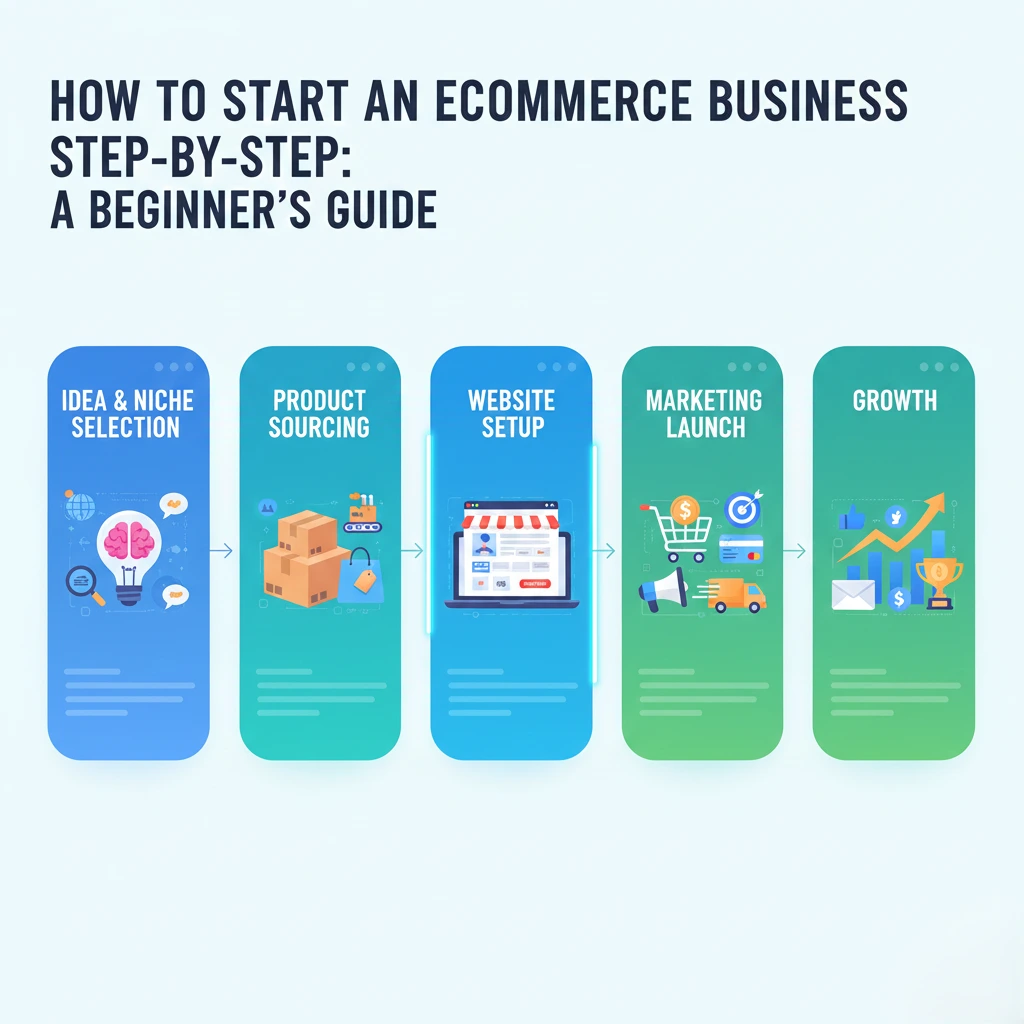
Starting an eCommerce business is one of the most effective ways to build an online income stream. With the right planning, tools, and strategy, anyone can launch a successful online store. This step-by-step guide explains how to start an eCommerce business clearly and practically, with important keywords highlighted for easy SEO optimization.
Step 1: Choose a Profitable eCommerce Niche
The foundation of a successful eCommerce business is selecting the right niche. A niche defines your target audience and the type of products you sell.
Focus on:
- Solving a specific problem
- Products with consistent demand
- A clearly defined audience
- Reasonable competition
Popular eCommerce niches include health products, fashion accessories, home essentials, digital products, and eco-friendly goods.
Step 2: Conduct Market Research and Validate Your Idea
Before investing money, validate your business idea. Research competitors, analyze pricing, and study customer reviews to identify gaps in the market.
Key validation methods:
- Keyword research for online shopping trends
- Competitor analysis
- Social media demand analysis
- Customer pain point identification
Strong market research reduces risk and increases success chances.
Step 3: Decide on a Business Model
Choose the eCommerce business model that suits your goals and budget.
Common models include:
- Dropshipping
- Wholesale and bulk selling
- Print-on-demand
- Digital products
- Subscription-based eCommerce
Each model has different startup costs, inventory needs, and profit margins.
Step 4: Create a Business Plan
A clear eCommerce business plan helps guide decisions and attract potential partners or investors.
Your plan should include:
- Brand mission and goals
- Target audience profile
- Product pricing strategy
- Marketing and sales plan
- Budget and revenue projections
Planning early helps avoid costly mistakes.
Step 5: Choose the Right eCommerce Platform
Selecting a reliable eCommerce platform is crucial for store performance and scalability.
Popular platforms include:
- Shopify
- WooCommerce
- BigCommerce
- Wix eCommerce
Look for features such as mobile optimization, secure payments, SEO tools, and easy customization.
Step 6: Register Your Business Name and Domain
Pick a unique business name that reflects your brand. Then register a matching domain name for your online store.
Tips for choosing a domain:
- Keep it short and memorable
- Avoid numbers and hyphens
- Use relevant keywords if possible
Brand consistency builds trust and recognition.
Step 7: Source or Create Your Products
Your products determine your success. Focus on quality, reliability, and customer value.
Product sourcing options:
- Manufacturers or suppliers
- Handmade products
- Private labeling
- Digital product creation
Always test product quality before launching your eCommerce store.
Step 8: Build and Design Your Online Store
A professional online store design improves conversions and customer trust.
Key design elements:
- Clear navigation
- High-quality product images
- Mobile-friendly layout
- Fast loading speed
- Secure checkout process
User experience plays a major role in eCommerce success.
Step 9: Set Up Payment Gateways and Shipping
Enable secure payment gateways such as credit cards, digital wallets, and buy-now-pay-later options.
Shipping setup should include:
- Transparent shipping costs
- Reliable delivery partners
- Clear return and refund policies
Trust and convenience drive higher sales.
Step 10: Optimize for SEO and eCommerce Marketing
SEO helps your eCommerce website rank on search engines and attract organic traffic.
Essential optimization steps:
- Keyword-optimized product descriptions
- SEO-friendly URLs
- Meta titles and descriptions
- Fast site speed
- Image optimization
Combine SEO with content marketing, social media, and email marketing for better reach.
Step 11: Launch Your eCommerce Business
Before launch, test your website thoroughly:
- Check all links and pages
- Test checkout and payments
- Review mobile responsiveness
- Fix errors and bugs
A smooth launch creates a strong first impression.
Step 12: Analyze, Improve, and Scale
After launch, track performance using analytics tools. Monitor traffic, conversion rates, and customer behavior.
To scale your eCommerce business:
- Expand product lines
- Improve marketing strategies
- Automate operations
- Focus on customer retention
Continuous improvement leads to long-term growth.
Final Thoughts
Learning how to start an eCommerce business step-by-step makes the process manageable and achievable. By choosing the right niche, building a strong brand, optimizing for SEO, and focusing on customer experience, you can create a profitable and sustainable online business.