Month: February 2026

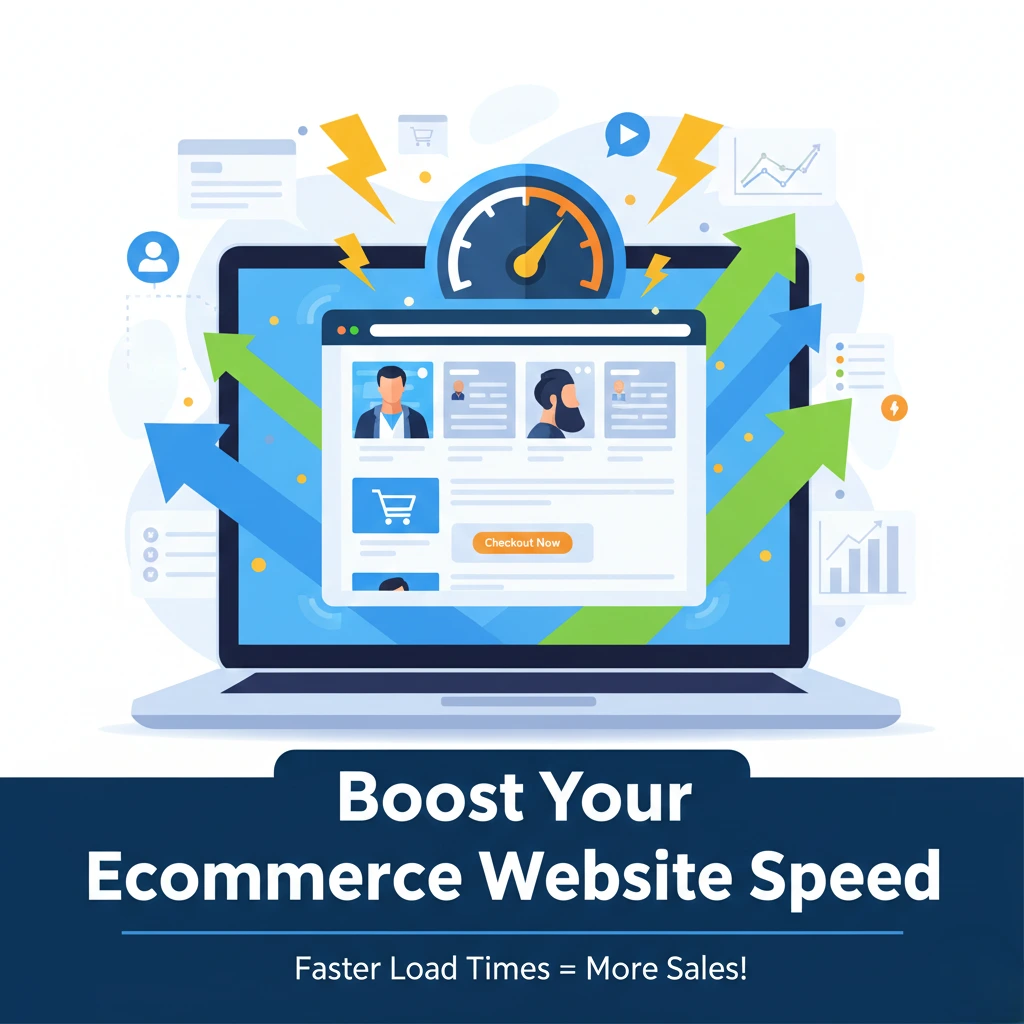
  • How to Boost Your eCommerce Website Speed

    How to Boost Your eCommerce Website Speed

    In the world of online shopping, every second counts. Slow-loading pages frustrate users, increase bounce rates, and cost businesses revenue. Optimizing your eCommerce website speed is no longer optional—it’s essential for a successful online store. A fast website improves user experience, boosts search engine rankings, and increases conversions. In this guide, we’ll explore practical strategies to ensure your store runs smoothly and efficiently.

    Why eCommerce Website Speed Matters

    Shoppers expect instant access to products and information. Studies show that a one-second delay in page load time can reduce conversions by up to 7%. Improving eCommerce website speed not only keeps users happy but also enhances your brand’s credibility.

    Benefits of a Fast Website

    • Higher conversion rates
    • Improved search engine rankings
    • Lower bounce rates
    • Better mobile shopping experience

    A well-optimized site ensures customers enjoy a seamless shopping experience, which is why faster online store performance should be a top priority for every eCommerce business.

    Optimize Images and Media

    Large, uncompressed images are a major cause of slow-loading pages. Optimizing images reduces load times without compromising quality.

    Image Optimization Tips

    • Use WebP or compressed JPEG formats
    • Resize images to match display dimensions
    • Implement lazy loading for below-the-fold content

    Optimizing media is a critical step in improving eCommerce website speed and creating a faster online store.

    Leverage Browser Caching and Content Delivery Networks

    Caching stores parts of your website locally on users’ devices, reducing load times for repeat visits. A Content Delivery Network (CDN) distributes your website’s content across multiple servers worldwide, delivering pages from the nearest location.

    Implementing caching and a CDN is one of the most effective site optimization tips for faster, more reliable page loads. These tools help enhance your eCommerce website speed and ensure consistent performance for all users.

    Minimize HTTP Requests and Code

    Every element on a page—images, scripts, stylesheets—requires an HTTP request. Reducing these requests speeds up your website.

    Steps to Reduce Requests

    • Combine CSS and JavaScript files
    • Remove unnecessary plugins or scripts
    • Use asynchronous loading for non-critical resources

    Efficient code management is a key site optimization tip to achieve a faster, smoother eCommerce website speed.

    Optimize for Mobile

    More than half of online shopping occurs on mobile devices. Mobile users expect fast, responsive websites. Ensure your site is mobile-friendly with fast load times to retain customers.

    Mobile Optimization Strategies

    • Use responsive design
    • Minimize mobile-specific scripts
    • Prioritize above-the-fold content

    Mobile optimization directly impacts eCommerce website speed and helps create a faster online store experience.

    Enable Compression and Reduce Server Response Time

    Enabling Gzip or Brotli compression reduces file sizes for faster downloads. Additionally, a reliable hosting service and optimized server setup decrease server response times.

    Quick Tips

    • Upgrade to a high-performance hosting plan
    • Enable server-side caching
    • Optimize database queries

    These actions are proven site optimization tips that enhance your eCommerce website speed and overall performance.

    Monitor and Test Regularly

    Continuous monitoring ensures your site maintains optimal speed. Tools like Google PageSpeed Insights, GTmetrix, and Pingdom help identify bottlenecks and opportunities for improvement.

    Testing Recommendations

    • Test site speed on multiple devices and locations
    • Track load times after updates or plugin installations
    • Set goals for page load times (under 3 seconds is ideal)

    Regular testing reinforces best practices and ensures a consistently faster online store, improving the eCommerce website speed over time.

    Conclusion

    A fast-loading website is crucial for online sales, customer satisfaction, and SEO. By following these site optimization tips—compressing images, using CDNs, reducing HTTP requests, optimizing for mobile, and monitoring performance—you can achieve an eCommerce website speed that delights customers and maximizes conversions. A faster online store isn’t just a technical advantage; it’s a competitive edge that drives business growth. Focus on speed today, and your customers will thank you tomorrow.
  • The Ultimate Guide to Handling E-Commerce Returns

    The Ultimate Guide to Handling E-Commerce Returns

    A clear e-commerce returns policy is essential for building customer trust and maintaining a successful online store. How you handle returns can directly impact your reputation, customer loyalty, and overall sales. By combining an effective e-commerce returns policy with smart e-commerce marketing strategies and practical return process tips, you can turn returns into a positive experience.

    Why a Strong E-Commerce Returns Policy Matters

    A well-defined e-commerce returns policy sets clear expectations for your customers. It reduces confusion, minimizes disputes, and encourages buyers to shop with confidence. When paired with effective e-commerce marketing strategies, a transparent returns approach can actually enhance your brand image and increase customer retention.

    Key Elements of an Effective E-Commerce Returns Policy

    To create a customer-friendly e-commerce returns policy, include:

    • Clear timeframes for returns or exchanges
    • Instructions for initiating the return process
    • Conditions for eligible products
    • Refund or replacement details

    Following these return process tips ensures the process is smooth for both your team and the customer, helping reinforce trust in your store.

    Streamlining the Return Process Tips

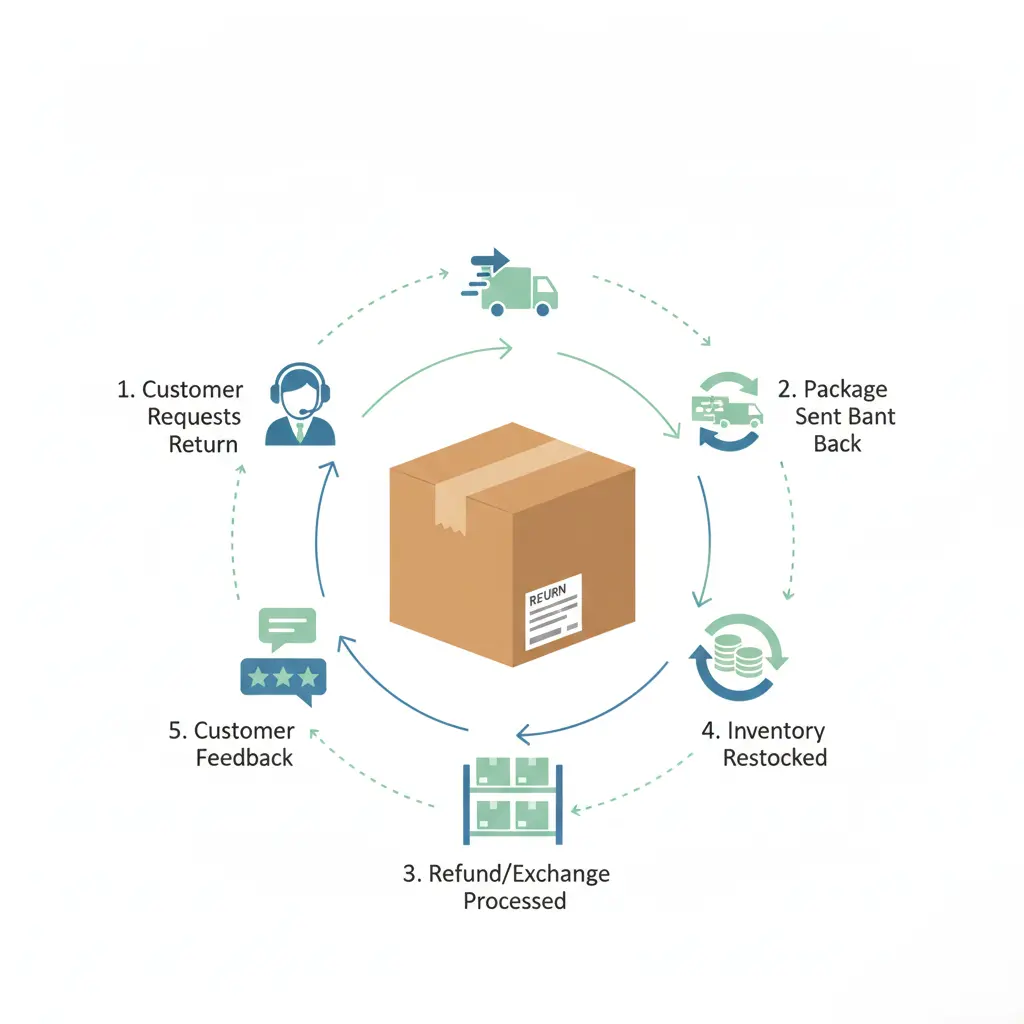
    Simplifying returns is crucial. Make it easy for customers to request a return, print labels, and track the status. Use automation tools to reduce errors and speed up the workflow. These return process tips work hand-in-hand with your e-commerce returns policy to deliver a hassle-free experience.

    Using Returns to Enhance Sales

    Interestingly, a strong e-commerce returns policy can help boost online sales when combined with effective e-commerce marketing strategies. Customers are more likely to buy when they know returns are easy, which increases overall conversion rates and encourages repeat purchases.

    Communicating Your E-Commerce Returns Policy

    Make your e-commerce returns policy visible on your website, in emails, and during checkout. Clear communication reduces confusion and customer complaints. Integrating your return process tips into marketing messaging can also highlight your store’s commitment to customer satisfaction.

    Conclusion

    A transparent and efficient e-commerce returns policy is more than just a guideline—it’s a powerful tool for customer trust and retention. When combined with smart e-commerce marketing strategies and effective return process tips, it ensures your online store handles returns smoothly while supporting long-term growth. Consistently applying these practices makes your e-commerce returns policy a key driver of customer satisfaction and repeat business.

  • How to Increase Your E-Commerce Sales Fast

    How to Increase Your E-Commerce Sales Fast

    If you’re looking to boost online sales, there are proven techniques that can help your e-commerce business grow quickly. With competition rising, implementing the right strategies is essential for long-term success. Leveraging effective e-commerce marketing strategies and optimizing your store with practical online store tips can make a big difference.

    Proven Ways to Boost Online Sales

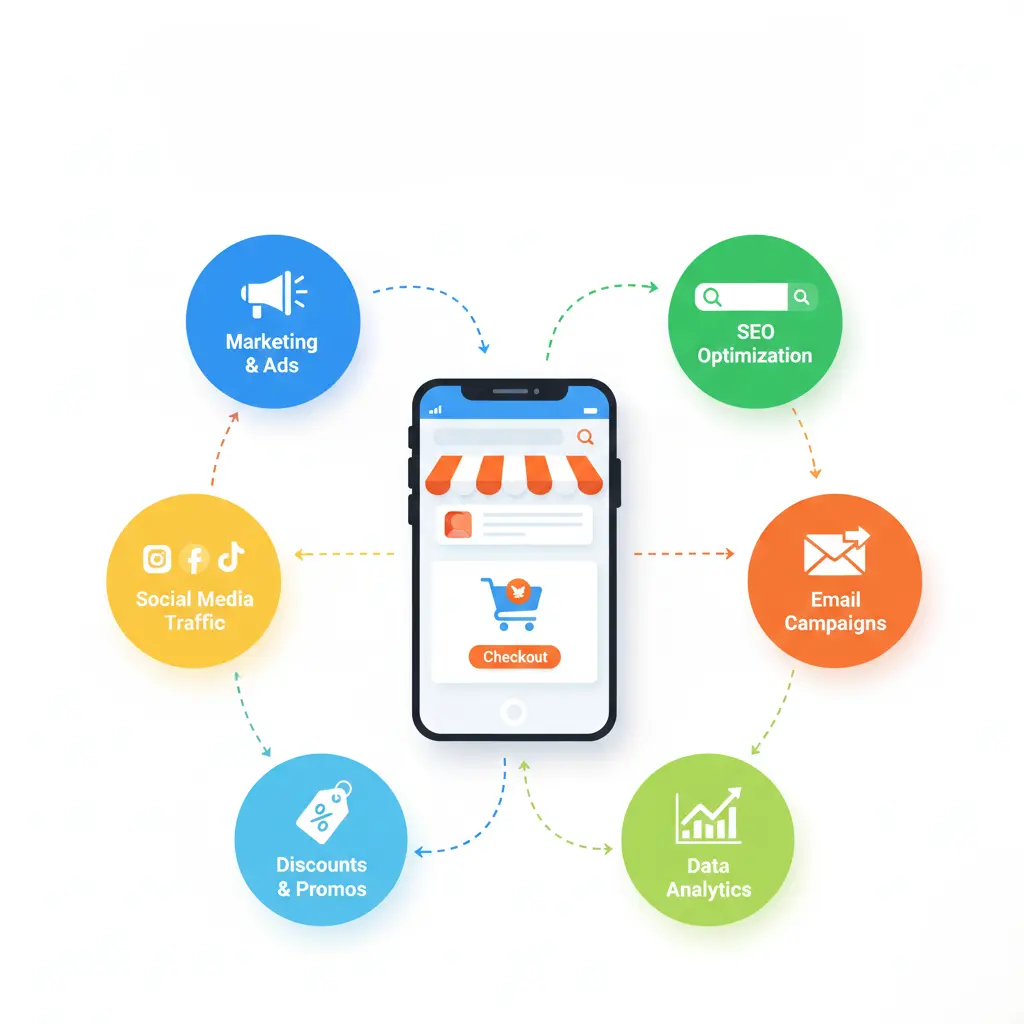
    One of the first steps to boost online sales is understanding your audience. Use data analytics to track customer behavior, identify top-selling products, and tailor promotions accordingly. Integrating a personalized shopping experience with smart e-commerce marketing strategies can increase engagement and encourage repeat purchases.

    Optimize Your Website to Boost Online Sales

    Your website is the foundation of your e-commerce business. Fast loading times, clear navigation, mobile-friendly design, and simple checkout processes are critical. Applying these online store tips helps reduce cart abandonment and increases conversions, allowing you to boost online sales consistently.

    Leverage Promotions and Discounts

    Offering targeted discounts, bundle deals, or limited-time offers is a practical way to boost online sales quickly. Pair these with email campaigns and retargeting ads as part of your e-commerce marketing strategies to capture both new and returning customers.

    Use Social Media and Influencer Marketing

    Social platforms are powerful tools to boost online sales. Engaging content, social proof, and influencer partnerships can attract potential buyers. Incorporating these tactics into your e-commerce marketing strategies ensures your brand reaches a larger, more targeted audience.

    Improve Customer Experience

    A great customer experience is crucial to boost online sales. Provide fast shipping, responsive customer service, easy returns, and loyalty programs. Following proven online store tips ensures your customers feel valued and are more likely to return, increasing lifetime value.

    Conclusion

    By combining a strong focus on user experience, smart promotions, and effective e-commerce marketing strategies, you can consistently boost online sales. Implementing the best online store tips along with data-driven insights allows your e-commerce business to grow quickly and sustainably. Using these methods strategically ensures your ability to boost online sales now and in the future.

    If you want, I can also create a version with H1, H2, H3 headings highlighting all keywords, so it’s fully SEO-optimized. This usually performs even better for search rankings. Do you want me to do that?

  • Best Payment Gateways for eCommerce: Choosing the Right Solution

    Best Payment Gateways for eCommerce: Choosing the Right Solution

    Selecting the right payment solution is one of the most critical decisions for any online business. Reliable checkout experiences build trust, reduce cart abandonment, and protect customer data. That’s why choosing the best ecommerce payment gateways is essential for long-term success and strong ecommerce security.

    Why ecommerce payment gateways matter for online businesses

    Payment gateways act as the bridge between your store and your customer’s bank. They securely process transactions, verify payments, and ensure sensitive data is protected. High-performing ecommerce payment gateways not only improve conversion rates but also strengthen your store’s reputation by providing safe and seamless checkout experiences.

    Customers expect fast payments, multiple payment options, and zero friction—anything less can cost you sales.

    Key features to look for in ecommerce payment gateways

    Not all gateways are created equal. When evaluating ecommerce payment gateways, focus on these essential features:

    • Strong encryption and fraud detection for ecommerce security
    • Support for multiple payment methods (cards, wallets, BNPL)
    • Fast transaction processing and minimal downtime
    • Easy integration with your eCommerce platform
    • Transparent pricing and transaction fees

    The right gateway should grow with your business while keeping customer data protected.

    Top ecommerce payment gateways used by online stores

    Here are some widely trusted options that balance performance and ecommerce security:

    • PayPal – Popular worldwide, easy setup, and trusted by customers
    • Stripe – Developer-friendly with advanced customization options
    • Square – Ideal for businesses selling online and in physical stores
    • Authorize.net – Known for reliability and strong fraud prevention
    • Adyen – Enterprise-level solution with global payment support

    Each of these ecommerce payment gateways offers different strengths depending on your store size, target market, and technical needs.

    How ecommerce payment gateways impact ecommerce security

    Security is non-negotiable in online payments. The best ecommerce payment gateways comply with PCI DSS standards, use tokenization, and deploy real-time fraud monitoring. These measures protect both merchants and customers from data breaches, chargebacks, and unauthorized transactions.

    Strong ecommerce security builds customer confidence, making shoppers more likely to complete purchases and return in the future.

    Choosing the right ecommerce payment gateways for your store

    When selecting among ecommerce payment gateways, consider your audience, geographic reach, and average transaction value. International stores may need multi-currency support, while smaller businesses might prioritize ease of use and low setup costs.

    Testing your checkout flow and monitoring performance metrics can help you refine your choice over time.

    Final thoughts on ecommerce payment gateways

    Your payment gateway is more than just a transaction tool—it’s a trust signal. By choosing reliable ecommerce payment gateways with strong ecommerce security, you create a smoother buying experience and protect your customers at every step. Invest wisely, and your checkout process will become a powerful driver of growth for your eCommerce business.

  • Email Marketing Automation for Online Stores

    Email Marketing Automation for Online Stores

    Running an online store today isn’t just about great products—it’s about building relationships at scale. That’s where ecommerce email marketing becomes one of the highest-ROI channels available to store owners. When paired with automation, it turns one-time visitors into loyal, repeat customers without adding more manual work to your plate.

    Why ecommerce email marketing still converts better than most channels

    Social media algorithms change. Ad costs rise. But email remains a direct line to your customers. With ecommerce email marketing, you own your audience and can communicate with them in a personalized, timely way. Automated emails based on customer behavior consistently outperform generic campaigns because they arrive with relevance and intent.

    From welcome sequences to post-purchase follow-ups, email automation helps online stores stay visible without being intrusive—something every modern shopper appreciates.

    How ecommerce email marketing automation works for online stores

    Automation means your emails are triggered by actions, not guesswork. When someone signs up, browses products, abandons a cart, or completes a purchase, your system responds automatically. This is the core of effective ecommerce email marketing: delivering the right message at the right moment.

    Using ecommerce marketing automation tools, store owners can:

    • Send welcome emails that introduce the brand and set expectations
    • Recover abandoned carts with timely reminders and incentives
    • Recommend products based on browsing or purchase history
    • Follow up after purchases with care tips, reviews, or upsells

    Each workflow runs in the background, generating sales while you focus on growth.

    Essential automation workflows for ecommerce email marketing

    If you’re just getting started, focus on a few high-impact automations:

    • Welcome series to engage new subscribers immediately
    • Abandoned cart emails to recover lost revenue
    • Post-purchase sequences to increase lifetime value
    • Re-engagement campaigns to win back inactive customers

    These workflows form the backbone of successful ecommerce email marketing and can be built once, then optimized over time.

    Best practices to scale with ecommerce email marketing

    To get the most from automation, keep these principles in mind:

    • Segment your audience—one size never fits all
    • Keep emails short, clear, and mobile-friendly
    • Test subject lines, timing, and content regularly
    • Focus on value, not just promotions

    When combined with smart ecommerce marketing automation, these practices help maintain trust while driving consistent revenue.

    Final thoughts on ecommerce email marketing automation

    Automation isn’t about sending more emails—it’s about sending smarter ones. With the right strategy, ecommerce email marketing becomes a predictable, scalable engine for online store growth. Invest in strong workflows, refine them with data, and let automation do what it does best: nurture customers while you build your brand.