Introduction
Businesses that store and ship products often rely on warehouses or fulfillment centers to manage inventory and deliveries. While these two facilities may appear similar, they serve different purposes in the supply chain. Understanding the difference between them is important for companies that want to improve logistics operations and customer satisfaction.
The concept of Warehouse vs Fulfillment Center is especially important for ecommerce businesses that need fast and accurate order deliveries. Both facilities handle storage and shipping, but the way they operate and the services they provide can vary significantly. Choosing the right option depends on business goals, order volume, and customer expectations.
What is a Warehouse?
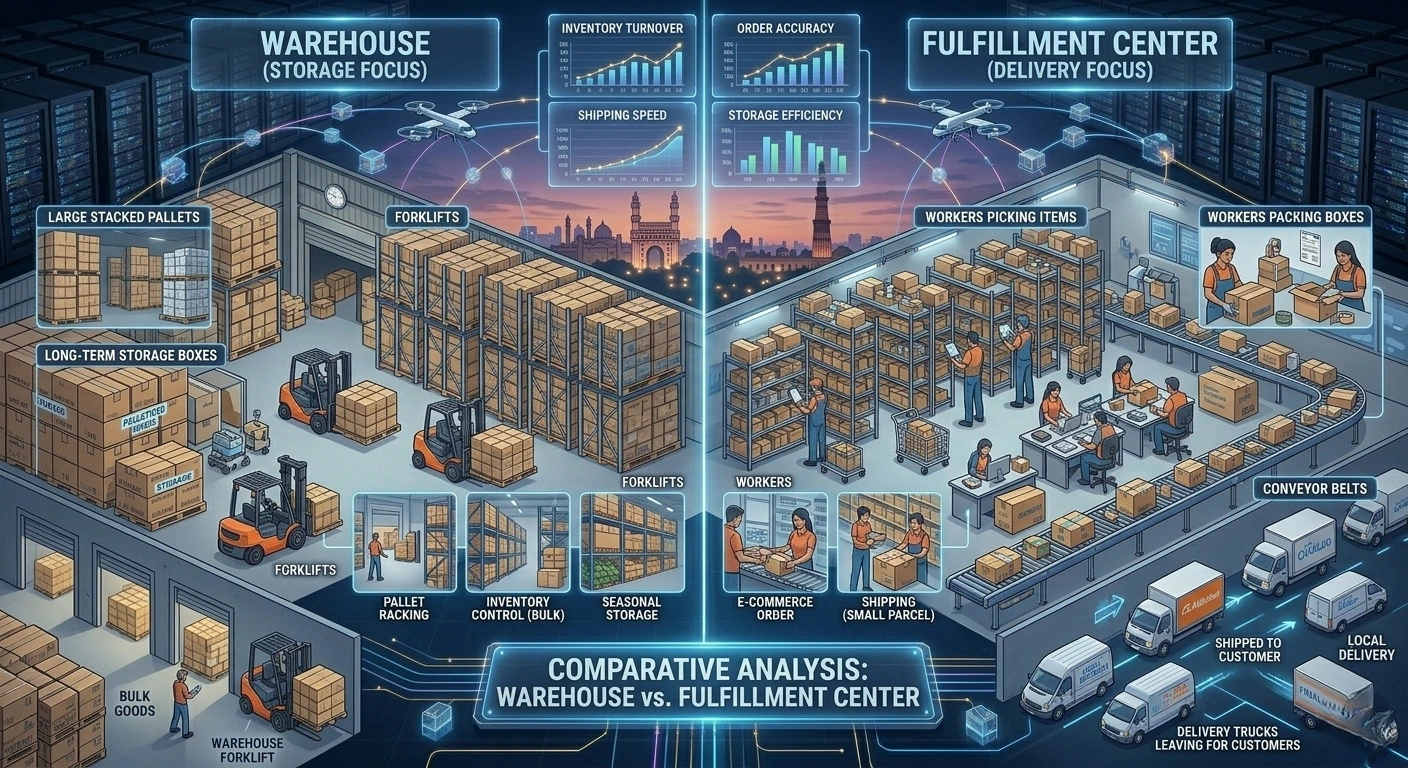
A warehouse is a large storage facility where businesses keep goods for an extended period before they are sold or distributed. Warehouses are primarily designed for inventory storage and are commonly used by manufacturers, wholesalers, and retailers.
In the discussion of Warehouse vs Fulfillment Center, a warehouse typically focuses on storing large quantities of products rather than processing individual customer orders. Goods may stay in a warehouse for weeks or even months until they are needed.
Warehouse operations usually include receiving shipments, organizing inventory, and maintaining stock levels. Many businesses also use warehouse management systems to track inventory and improve efficiency. Warehouses play a vital role in the supply chain because they help businesses manage bulk inventory and maintain product availability.
What is a Fulfillment Center?
A fulfillment center is a specialized facility designed to handle the entire order fulfillment process for businesses, especially ecommerce stores. Instead of just storing products, fulfillment centers focus on processing and shipping customer orders quickly.
When comparing Warehouse vs Fulfillment Center, the key difference lies in how products move through the facility. Fulfillment centers manage high volumes of daily orders and ensure that customers receive their purchases as quickly as possible.
These facilities provide a variety of fulfillment center services, including inventory storage, order picking, packing, shipping, and returns management. Ecommerce companies often partner with third-party logistics providers that operate fulfillment centers to streamline their logistics operations.
Because fulfillment centers are built for speed and efficiency, products usually do not remain there for long periods. Instead, they move quickly through the system as orders are processed and shipped.
Key Differences Between Warehouse and Fulfillment Center
Understanding the major differences between these two facilities helps businesses make better logistics decisions. The comparison of Warehouse vs Fulfillment Center often focuses on purpose, operations, and order processing.
Warehouses are mainly used for long-term storage of goods, while fulfillment centers are designed for fast order processing and shipping. Businesses that need to store bulk inventory for extended periods usually prefer warehouses.
Fulfillment centers, on the other hand, handle individual customer orders and focus on rapid delivery. This makes them ideal for ecommerce businesses that require efficient shipping operations.
Another difference lies in daily operations. Warehouses generally deal with large shipments moving between suppliers, manufacturers, or retailers. Fulfillment centers handle smaller shipments that go directly to customers.
Technology and automation are also more common in fulfillment centers because they need to process a high number of orders each day. These advanced systems support fulfillment center services such as order tracking, packing automation, and shipping optimization.
Warehouse vs Distribution Center
Many people also compare warehouses with distribution centers when discussing logistics facilities. The topic of warehouse vs distribution center highlights another important distinction in supply chain operations.
A warehouse mainly focuses on storing goods, while a distribution center is designed to move products quickly through the supply chain. Distribution centers receive products from manufacturers and then distribute them to retailers or customers.
In many cases, fulfillment centers operate similarly to distribution centers because they process orders and ship products quickly. Understanding the concept of warehouse vs distribution center helps businesses determine which facility best supports their supply chain strategy.
Which One is Right for Your Business?
Choosing between the two depends on your business model and logistics needs. The discussion of Warehouse vs Fulfillment Center becomes especially relevant for growing ecommerce companies.
If your business requires long-term inventory storage and deals with bulk shipments, a warehouse may be the better option. Warehouses are ideal for businesses that supply retailers or maintain large stock levels.
However, if your company sells products directly to customers online, fulfillment centers may be more suitable. Their ability to manage orders quickly and provide efficient fulfillment center services can significantly improve delivery speed and customer satisfaction.
Businesses experiencing rapid growth may also benefit from fulfillment centers because they can handle large volumes of orders without requiring companies to manage their own logistics infrastructure.
Conclusion
Understanding the difference between Warehouse vs Fulfillment Center is essential for businesses that want to optimize their supply chain operations. While warehouses are designed primarily for storage, fulfillment centers focus on fast order processing and shipping.
By evaluating their logistics requirements and customer expectations, businesses can determine which solution best supports their operations. Whether a company chooses a warehouse for inventory storage or a fulfillment center for order processing, selecting the right logistics facility can improve efficiency, reduce costs, and enhance the overall customer experience.