Month: March 2026

  • How to Start an Ecommerce Business in 2026

    How to Start an Ecommerce Business in 2026

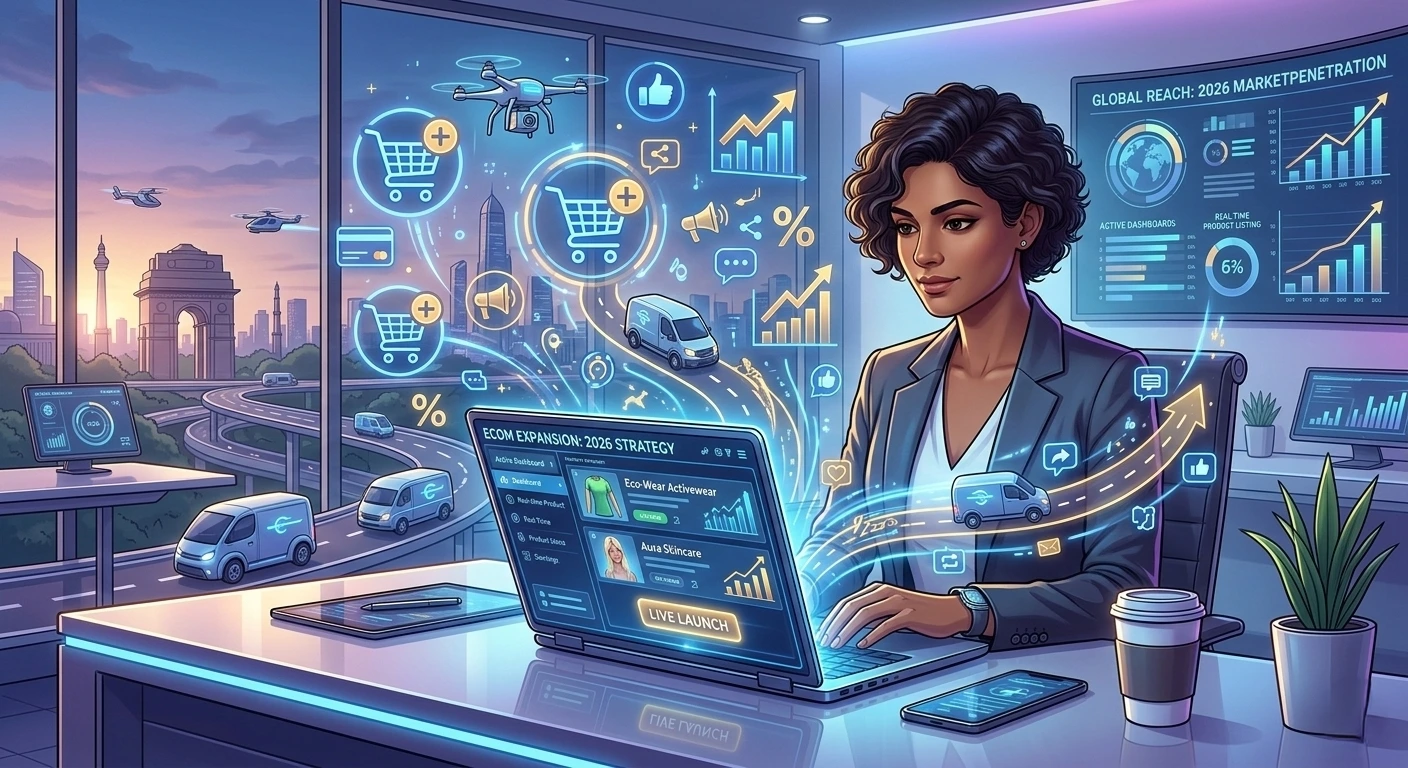
    Starting an online store has become one of the most popular ways to build a profitable venture in today’s digital economy. With global online shopping continuing to grow, many entrepreneurs are exploring how to launch a successful ecommerce business. In 2026, modern technology, automation tools, and digital marketing strategies have made it easier than ever to enter the online marketplace. However, success still requires careful planning, the right platform, and a strong understanding of your target audience.

    This ecommerce business guide will help you understand the key steps needed to launch and grow a successful online store.

    Choose a Profitable Niche

    The first step in building a successful ecommerce business is selecting the right niche. A niche defines the type of products you sell and the audience you serve. Instead of selling a wide range of unrelated products, it is often better to focus on a specific category.

    For example, you might sell eco-friendly home products, pet supplies, or fitness equipment. Choosing a niche with consistent demand and limited competition can make it easier to stand out in the market. Researching customer needs, trending products, and market gaps is an important part of this process.

    Following proven ecommerce startup tips, entrepreneurs should focus on niches where they have interest or knowledge, as this helps create better marketing and branding strategies.

    Select the Right Ecommerce Platform

    The next important step is choosing the platform where your online store will operate. Many platforms allow beginners to launch an online store without advanced technical skills.

    Popular options include hosted solutions that provide templates, payment integrations, and inventory management tools. These platforms simplify the process of launching an ecommerce business, allowing entrepreneurs to focus more on product sourcing and marketing.

    When choosing a platform, consider factors such as customization options, payment gateways, mobile optimization, and scalability. A flexible platform ensures your store can grow as your business expands.

    Source High-Quality Products

    Product quality plays a crucial role in customer satisfaction and long-term growth. Whether you manufacture your own products, purchase from wholesalers, or use dropshipping, reliable suppliers are essential.

    Many successful entrepreneurs build their ecommerce business by partnering with suppliers who provide consistent product quality and timely delivery. Research supplier reviews, request samples, and test products before selling them.

    Another strategy mentioned in many ecommerce startup tips is private labeling, where businesses sell products under their own brand name. This approach helps create a unique brand identity and improves customer loyalty.

    Build a Professional Online Store

    Your website is the digital storefront of your brand. A well-designed site builds trust and encourages visitors to make purchases. Important elements include clear product descriptions, high-quality images, secure payment options, and easy navigation.

    A strong ecommerce business guide always emphasizes the importance of user experience. If customers find it difficult to browse products or complete purchases, they may leave your store and shop elsewhere.

    Mobile optimization is also essential. A large percentage of online shoppers now use smartphones, so ensuring that your store functions smoothly on mobile devices can significantly improve conversions.

    Develop a Marketing Strategy

    Marketing is the driving force behind every successful ecommerce business. Without effective promotion, even great products may go unnoticed.

    Digital marketing channels such as search engine optimization (SEO), social media marketing, email campaigns, and paid advertisements can help attract potential customers. Creating valuable content and engaging with audiences on social platforms also increases brand visibility.

    One of the most effective ecommerce startup tips is building an email list. Email marketing allows businesses to promote new products, offer discounts, and maintain long-term relationships with customers.

    Focus on Customer Experience

    Customer satisfaction plays a major role in the growth of any online store. Fast shipping, responsive customer support, and clear return policies help build trust and encourage repeat purchases.

    A successful ecommerce business also pays attention to customer feedback. Reviews and ratings provide valuable insights that help improve products and services.

    Providing personalized shopping experiences, such as product recommendations and loyalty rewards, can further enhance customer relationships and increase long-term sales.

    Scale Your Ecommerce Business

    Once your store begins generating consistent sales, the next step is scaling. Expansion strategies may include introducing new products, entering international markets, or investing in advanced marketing campaigns.

    Automation tools can help manage tasks such as inventory tracking, customer service, and order fulfillment. These tools allow entrepreneurs to focus on growth strategies rather than daily operational challenges.

    Scaling an ecommerce business requires careful planning and continuous monitoring of performance metrics such as traffic, conversion rates, and customer retention.

    Conclusion

    Starting an online store in 2026 presents exciting opportunities for aspiring entrepreneurs. With the right niche, reliable suppliers, effective marketing strategies, and a customer-focused approach, anyone can build a successful ecommerce business.

    By following a structured ecommerce business guide and applying proven ecommerce startup tips, beginners can avoid common mistakes and build a strong foundation for long-term success in the digital marketplace.

    FAQs

    How much money is needed to start an ecommerce business?

    The startup cost can vary widely depending on the platform, product sourcing method, and marketing budget. Some online stores can start with a few hundred dollars, while others require larger investments.

    What is the best platform for beginners?

    Many beginners prefer user-friendly platforms that offer ready-made templates, payment integrations, and simple store management tools.

    How long does it take to make profit from an ecommerce store?

    Profit timelines vary depending on marketing strategy, product demand, and competition. Some stores see results within a few months, while others take longer to grow.
  • Warehouse vs Fulfillment Centers: What’s the Difference?

    Warehouse vs Fulfillment Centers: What’s the Difference?

    Introduction

    Businesses that store and ship products often rely on warehouses or fulfillment centers to manage inventory and deliveries. While these two facilities may appear similar, they serve different purposes in the supply chain. Understanding the difference between them is important for companies that want to improve logistics operations and customer satisfaction.

    The concept of Warehouse vs Fulfillment Center is especially important for ecommerce businesses that need fast and accurate order deliveries. Both facilities handle storage and shipping, but the way they operate and the services they provide can vary significantly. Choosing the right option depends on business goals, order volume, and customer expectations.

    What is a Warehouse?

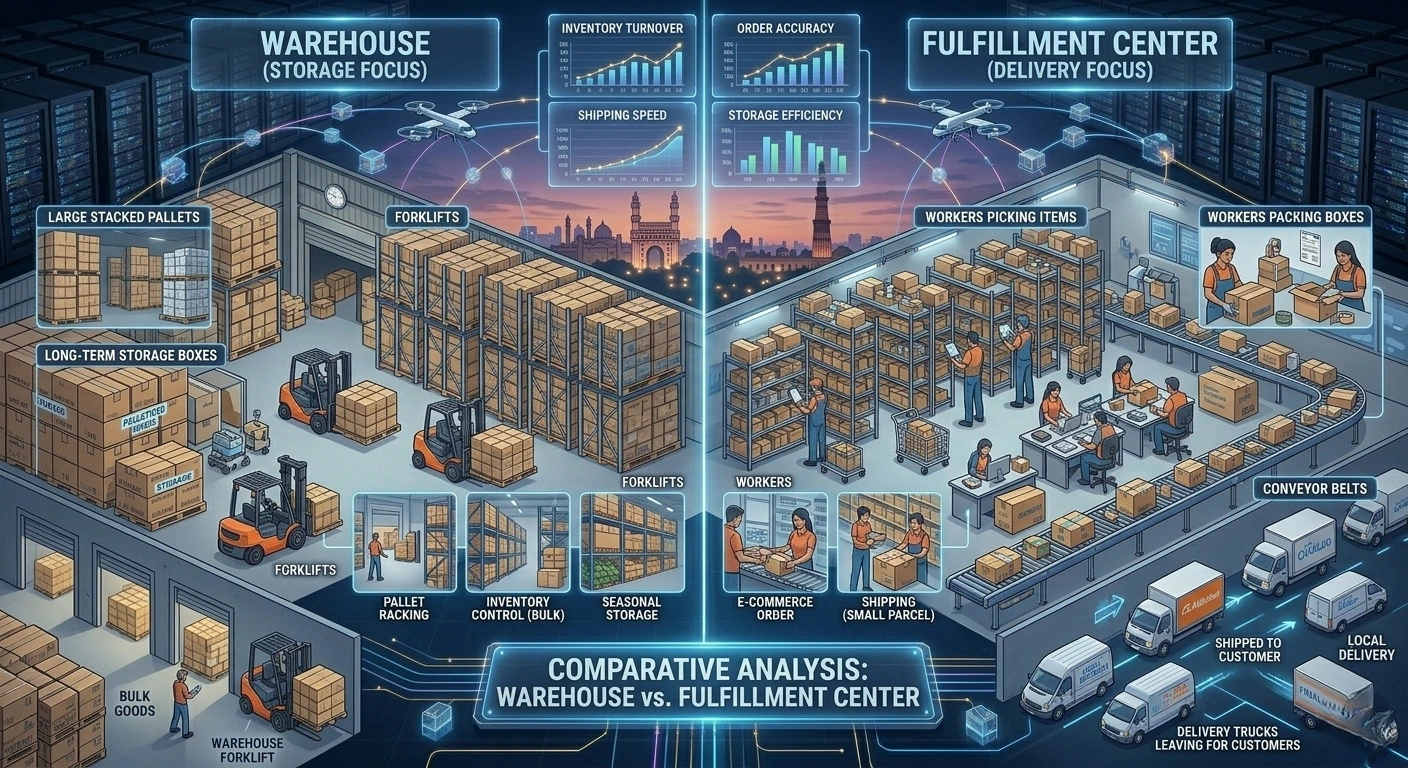
    A warehouse is a large storage facility where businesses keep goods for an extended period before they are sold or distributed. Warehouses are primarily designed for inventory storage and are commonly used by manufacturers, wholesalers, and retailers.

    In the discussion of Warehouse vs Fulfillment Center, a warehouse typically focuses on storing large quantities of products rather than processing individual customer orders. Goods may stay in a warehouse for weeks or even months until they are needed.

    Warehouse operations usually include receiving shipments, organizing inventory, and maintaining stock levels. Many businesses also use warehouse management systems to track inventory and improve efficiency. Warehouses play a vital role in the supply chain because they help businesses manage bulk inventory and maintain product availability.

    What is a Fulfillment Center?

    A fulfillment center is a specialized facility designed to handle the entire order fulfillment process for businesses, especially ecommerce stores. Instead of just storing products, fulfillment centers focus on processing and shipping customer orders quickly.

    When comparing Warehouse vs Fulfillment Center, the key difference lies in how products move through the facility. Fulfillment centers manage high volumes of daily orders and ensure that customers receive their purchases as quickly as possible.

    These facilities provide a variety of fulfillment center services, including inventory storage, order picking, packing, shipping, and returns management. Ecommerce companies often partner with third-party logistics providers that operate fulfillment centers to streamline their logistics operations.

    Because fulfillment centers are built for speed and efficiency, products usually do not remain there for long periods. Instead, they move quickly through the system as orders are processed and shipped.

    Key Differences Between Warehouse and Fulfillment Center

    Understanding the major differences between these two facilities helps businesses make better logistics decisions. The comparison of Warehouse vs Fulfillment Center often focuses on purpose, operations, and order processing.

    Warehouses are mainly used for long-term storage of goods, while fulfillment centers are designed for fast order processing and shipping. Businesses that need to store bulk inventory for extended periods usually prefer warehouses.

    Fulfillment centers, on the other hand, handle individual customer orders and focus on rapid delivery. This makes them ideal for ecommerce businesses that require efficient shipping operations.

    Another difference lies in daily operations. Warehouses generally deal with large shipments moving between suppliers, manufacturers, or retailers. Fulfillment centers handle smaller shipments that go directly to customers.

    Technology and automation are also more common in fulfillment centers because they need to process a high number of orders each day. These advanced systems support fulfillment center services such as order tracking, packing automation, and shipping optimization.

    Warehouse vs Distribution Center

    Many people also compare warehouses with distribution centers when discussing logistics facilities. The topic of warehouse vs distribution center highlights another important distinction in supply chain operations.

    A warehouse mainly focuses on storing goods, while a distribution center is designed to move products quickly through the supply chain. Distribution centers receive products from manufacturers and then distribute them to retailers or customers.

    In many cases, fulfillment centers operate similarly to distribution centers because they process orders and ship products quickly. Understanding the concept of warehouse vs distribution center helps businesses determine which facility best supports their supply chain strategy.

    Which One is Right for Your Business?

    Choosing between the two depends on your business model and logistics needs. The discussion of Warehouse vs Fulfillment Center becomes especially relevant for growing ecommerce companies.

    If your business requires long-term inventory storage and deals with bulk shipments, a warehouse may be the better option. Warehouses are ideal for businesses that supply retailers or maintain large stock levels.

    However, if your company sells products directly to customers online, fulfillment centers may be more suitable. Their ability to manage orders quickly and provide efficient fulfillment center services can significantly improve delivery speed and customer satisfaction.

    Businesses experiencing rapid growth may also benefit from fulfillment centers because they can handle large volumes of orders without requiring companies to manage their own logistics infrastructure.

    Conclusion

    Understanding the difference between Warehouse vs Fulfillment Center is essential for businesses that want to optimize their supply chain operations. While warehouses are designed primarily for storage, fulfillment centers focus on fast order processing and shipping.

    By evaluating their logistics requirements and customer expectations, businesses can determine which solution best supports their operations. Whether a company chooses a warehouse for inventory storage or a fulfillment center for order processing, selecting the right logistics facility can improve efficiency, reduce costs, and enhance the overall customer experience.

  • What is Logistics Management? A Beginner’s Guide

    What is Logistics Management? A Beginner’s Guide

    Introduction

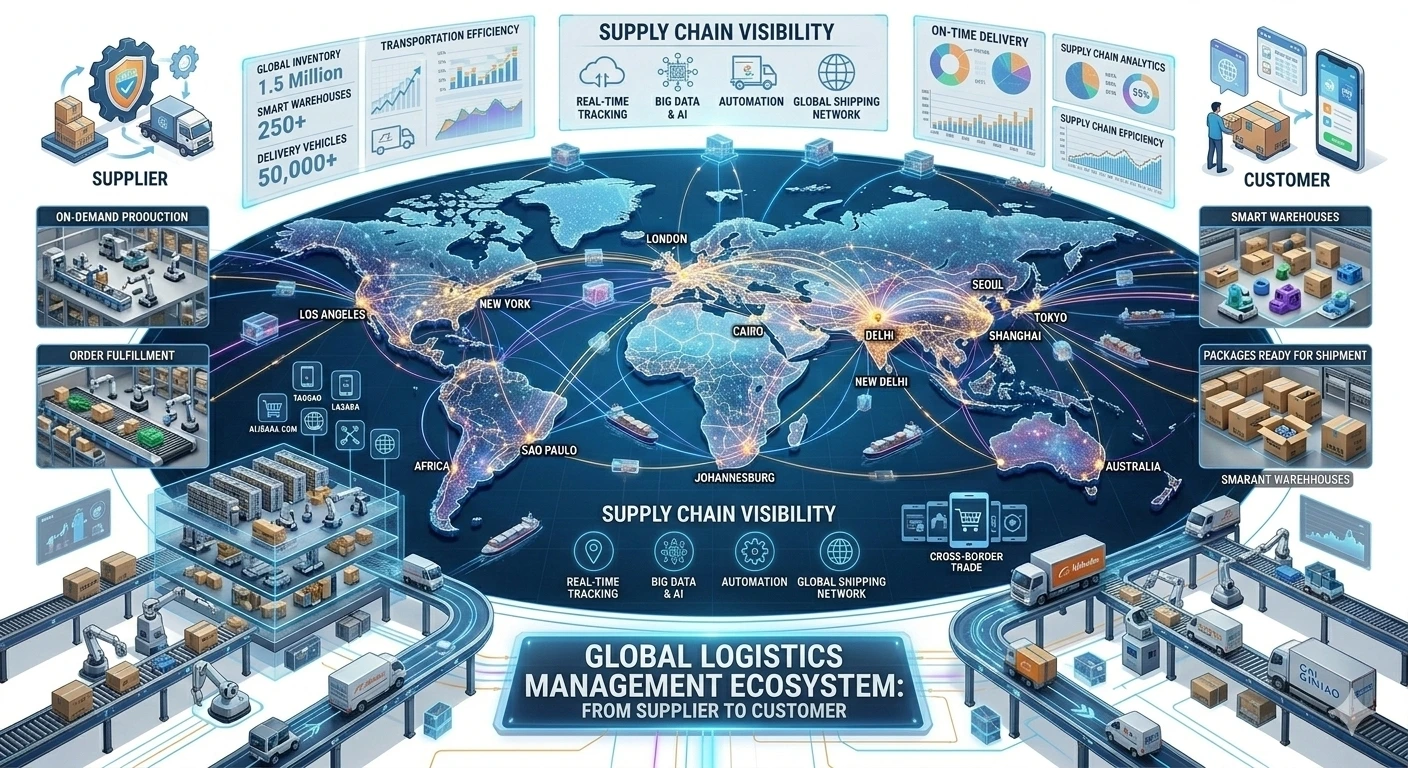
    In today’s fast-paced global economy, businesses rely heavily on efficient transportation, storage, and delivery of goods. This entire process is controlled through Logistics Management, which plays a critical role in ensuring that products move smoothly from suppliers to customers. Whether a company sells products online or operates a traditional retail business, effective Logistics Management helps maintain operational efficiency and customer satisfaction.

    For beginners, understanding Logistics Management is essential because it directly impacts cost control, inventory handling, and timely delivery. Without proper Logistics Management, businesses may face delays, increased expenses, and dissatisfied customers.

    Understanding Logistics Management

    At its core, Logistics Management refers to the planning, implementation, and control of the movement and storage of goods, services, and related information within a supply chain. The goal is to ensure that the right product reaches the right customer at the right time and at the lowest possible cost.

    Businesses use Logistics Management to coordinate transportation, inventory storage, warehouse operations, and order fulfillment. A well-organized system ensures that products are available when customers need them while reducing waste and operational delays.

    Many modern companies rely on advanced software tools and technologies to manage their logistics activities. These tools help track shipments, monitor inventory levels, and improve delivery accuracy. As a result, companies can improve their Logistics Management efficiency and maintain a competitive advantage in the market.

    Logistics Management Process

    The logistics management process involves several key stages that work together to move goods efficiently through the supply chain.

    First is procurement and sourcing. Businesses must obtain raw materials or products from suppliers. Proper planning ensures that the right quantity of goods is purchased at the right time.

    Second is inventory management. Companies store products in warehouses or distribution centers until they are ready to be shipped to customers. Maintaining accurate inventory levels helps prevent stock shortages and overstocking.

    The next stage is transportation management. Goods must be transported from suppliers to warehouses and finally to customers. Companies choose transportation methods such as road, rail, air, or sea depending on cost, speed, and distance.

    Order fulfillment is another critical step. This includes picking, packing, and shipping customer orders quickly and accurately. An efficient logistics management process ensures smooth coordination between these activities.

    Finally, companies track and monitor shipments to ensure timely delivery. Modern tracking systems allow businesses and customers to monitor the movement of goods in real time.

    Logistics Management Benefits

    Implementing an effective logistics system provides several important advantages for businesses. One of the most significant logistics management benefits is improved operational efficiency. When logistics activities are well organized, businesses can reduce delays and avoid unnecessary costs.

    Another major logistics management benefits is better customer satisfaction. Customers expect fast and reliable deliveries, and efficient logistics ensures that orders arrive on time and in good condition.

    Cost reduction is also a key advantage. Efficient planning and transportation management help businesses minimize fuel costs, storage expenses, and inventory losses.

    In addition, businesses gain improved visibility into their supply chain operations. With better tracking and monitoring systems, companies can quickly identify problems and make informed decisions to improve performance.

    Scalability is another benefit. As businesses grow, a strong logistics system allows them to handle increased order volumes without disrupting operations.

    The Role of Technology in Logistics

    Technology has transformed Logistics Management in recent years. Businesses now use digital platforms, automation tools, and data analytics to improve logistics operations.

    Warehouse management systems help organize storage spaces and streamline picking and packing activities. Transportation management systems help businesses plan optimal delivery routes and reduce shipping costs.

    Real-time tracking technology also allows businesses and customers to monitor shipments. This transparency improves trust and helps companies quickly respond to delays or disruptions.

    Conclusion

    For any business that deals with physical products, Logistics Management is a fundamental component of success. It ensures that goods move efficiently through the supply chain, from suppliers to customers.

    By understanding the logistics management process and recognizing the key logistics management benefits, businesses can improve efficiency, reduce costs, and deliver better customer experiences. As technology continues to evolve, effective Logistics Management will become even more important for companies looking to stay competitive in a rapidly changing marketplace.

  • Mobile Commerce Trends Shaping Online Shopping

    Mobile Commerce Trends Shaping Online Shopping

    The rise of smartphones and mobile technology has drastically changed the way consumers shop. Mobile Commerce Trends are reshaping online shopping by making it faster, more convenient, and more personalized than ever before. Businesses are adapting to this shift to stay competitive, as customers increasingly prefer to browse, compare, and buy products directly from their mobile devices.

    Understanding Mobile Commerce Trends

    Mobile Commerce Trends refer to the evolving patterns, technologies, and strategies that shape mobile shopping. Unlike traditional e-commerce, mobile commerce focuses on the unique experience of shopping on smartphones and tablets. With mobile devices becoming the primary way many users access the internet, companies must pay close attention to these trends to optimize their digital strategies.

    One key aspect of these trends is the rise of smartphone shopping behavior. Consumers now use their devices for product research, price comparisons, and reading reviews before making purchases. They expect fast-loading apps, easy navigation, and secure payment options. Businesses that understand these behaviors can improve engagement and increase sales.

    Key Drivers of Mobile Commerce Trends

    1. Mobile-First Shopping Experience

    Many e-commerce platforms now prioritize mobile design to ensure a seamless shopping experience. From responsive websites to dedicated apps, the mobile-first approach ensures that users can navigate easily, view products, and complete transactions without friction.

    2. AI in Mobile Commerce

    Artificial intelligence is a significant part of Mobile Commerce Trends. AI enables personalized recommendations, predictive search, and intelligent customer support. For example, apps use AI algorithms to suggest products based on past purchases or browsing behavior, creating a highly tailored shopping experience that boosts conversions.

    3. Mobile Payment Innovations

    Secure and convenient mobile payment options are central to mobile commerce. Digital wallets, one-click payments, and contactless methods have become standard expectations. The adoption of these payment methods encourages more consumers to complete transactions directly on their devices.

    4. Social Commerce Integration

    Social media platforms have become key players in mobile commerce. Shoppable posts and in-app purchases allow users to buy products directly while browsing their feeds. This integration aligns with Mobile Commerce Trends, combining convenience with the social discovery of products.

    5. Voice and Visual Search

    Voice assistants and image-based search features are emerging as part of Mobile Commerce Trends. Consumers can speak commands or upload photos to find products instantly. Retailers adopting these tools provide a modern, intuitive shopping experience that meets the expectations of tech-savvy users.

    Impact on Businesses

    Businesses that embrace Mobile Commerce Trends gain a competitive advantage. Understanding smartphone shopping behavior allows companies to tailor marketing, optimize apps, and improve the checkout experience. AI-driven personalization further increases engagement, encourages repeat purchases, and strengthens brand loyalty.

    Additionally, mobile analytics provide valuable insights into user behavior. Companies can track how consumers interact with their apps and websites, enabling continuous improvements. As a result, businesses that leverage these trends can achieve higher conversion rates and better overall customer satisfaction.

    Future of Mobile Commerce

    The future of mobile commerce will continue to be shaped by technology, consumer expectations, and evolving Mobile Commerce Trends. Emerging technologies such as augmented reality (AR), virtual reality (VR), and AI-enhanced product recommendations will further enhance mobile shopping experiences.

    Retailers must stay agile and adopt these innovations early to remain relevant. As mobile devices continue to dominate online access, the focus on personalized, fast, and convenient mobile shopping will remain critical for business success.

    Conclusion

    Mobile Commerce Trends are redefining the way people shop online. With the rise of smartphone shopping behavior and the integration of AI in mobile commerce, businesses can provide faster, smarter, and more personalized experiences. Companies that adopt these trends are better positioned to meet consumer expectations, increase sales, and thrive in the competitive e-commerce landscape.

    FAQs

    1. What are Mobile Commerce Trends?

    Mobile Commerce Trends are the evolving patterns, strategies, and technologies that shape how consumers shop using smartphones and mobile devices.

    2. How does AI impact mobile commerce?

    AI in mobile commerce enables personalized recommendations, predictive search, and intelligent customer support, enhancing the mobile shopping experience.

    3. Why is understanding smartphone shopping behavior important?

    Understanding smartphone shopping behavior helps businesses optimize apps, improve navigation, and offer personalized experiences that drive conversions.

  • Alibaba Business Model: How Alibaba Group Transformed Global E-Commerce

    Alibaba Business Model: How Alibaba Group Transformed Global E-Commerce

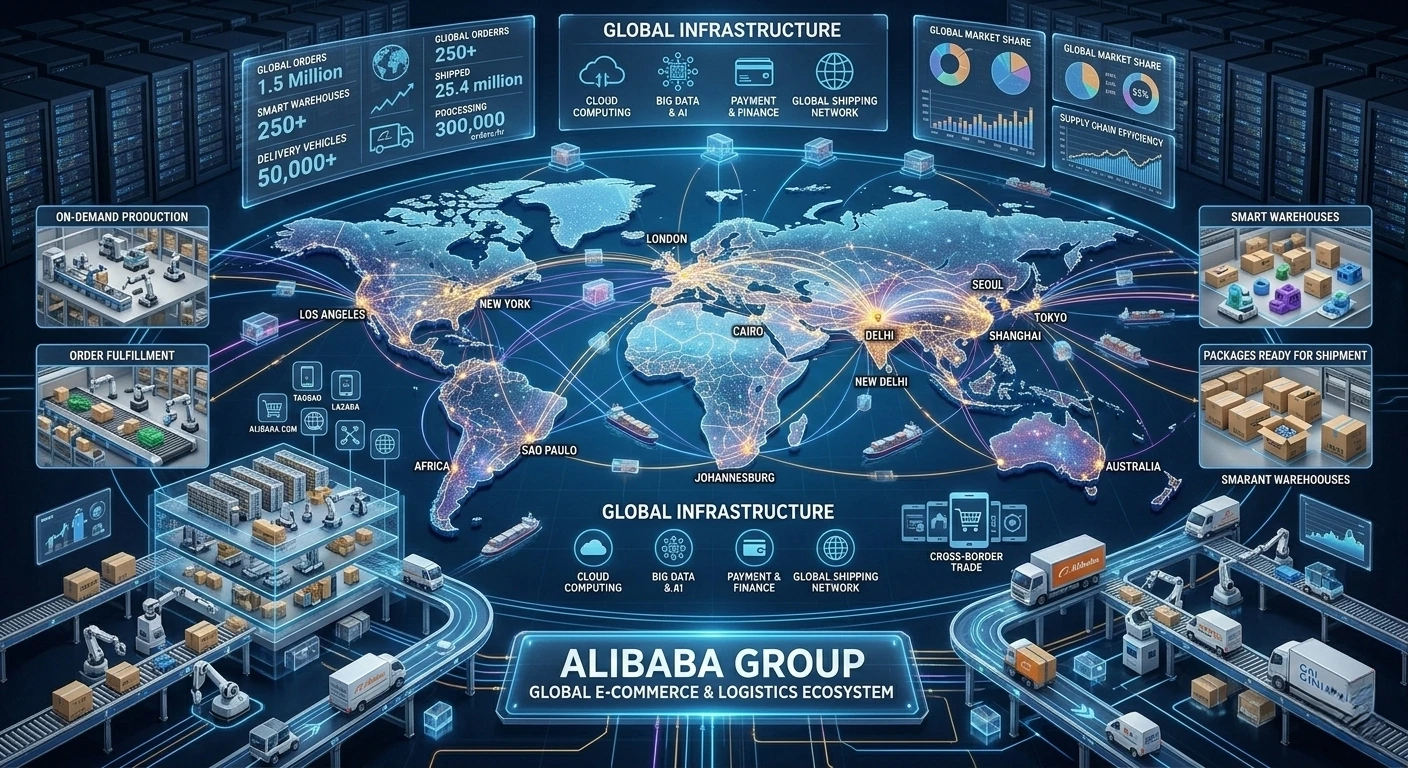
    The rise of Alibaba Group has reshaped the global retail landscape. Founded in 1999 by Jack Ma, the company created a powerful ecosystem connecting buyers, sellers, and service providers. At the center of this success lies the Alibaba Business Model, a platform-based strategy that revolutionized how people buy and sell products online.

    Unlike traditional retailers that manage inventory and logistics directly, Alibaba focuses on building digital platforms where businesses can interact and trade. This unique approach has helped the company grow into one of the world’s most influential players in global e-commerce.

    Understanding the Alibaba Business Model

    The Alibaba Business Model is built around connecting millions of merchants with consumers through an advanced digital ecosystem. Instead of acting as a conventional retailer, Alibaba provides the technology, infrastructure, and services that enable online transactions.

    Through platforms such as Taobao, Tmall, and AliExpress, the company supports small businesses, brands, and international sellers. These platforms form the backbone of the Alibaba digital marketplace, enabling millions of products to be listed and sold to consumers worldwide.

    This ecosystem approach allows Alibaba to scale rapidly while minimizing operational costs associated with warehousing and inventory.

    Key Components of the Alibaba Business Model

    The Alibaba Business Model relies on multiple interconnected platforms that serve different segments of the market.

    1. Marketplace Platforms

    Alibaba operates several online marketplaces designed for different audiences. Taobao primarily focuses on consumer-to-consumer transactions, while Tmall allows established brands to sell directly to customers. These platforms power the Alibaba digital marketplace and create opportunities for businesses of all sizes.

    2. Revenue Through Services

    Rather than earning primarily through product sales, the Alibaba Business Model generates revenue through advertising, commissions, and premium merchant services. Sellers pay for marketing tools, data insights, and storefront features that help them attract more customers.

    This service-driven approach has made Alibaba e-commerce platforms extremely profitable while also supporting business growth for merchants.

    3. Logistics and Infrastructure

    Although Alibaba does not directly handle most product deliveries, it has developed strong logistics networks through partners and technology platforms. These systems allow sellers to manage shipping efficiently while ensuring that customers receive their orders quickly.

    Such infrastructure strengthens the Alibaba digital marketplace by improving reliability and customer satisfaction.

    How Alibaba Transformed Global E-Commerce

    The Alibaba Business Model changed the traditional rules of online retail in several important ways.

    First, it empowered small and medium-sized businesses. Merchants who previously lacked access to international markets can now reach millions of buyers through Alibaba e-commerce platforms.

    Second, the model focuses on data and technology. Alibaba uses advanced analytics to understand consumer behavior, helping businesses optimize pricing, marketing, and product offerings.

    Third, Alibaba created large-scale shopping events that drive massive sales volumes. One famous example is Singles’ Day, which has become the biggest online shopping event in the world.

    Global Expansion and Digital Innovation

    The Alibaba Business Model also supports cross-border trade by connecting global buyers and sellers. Platforms like AliExpress allow international customers to purchase products directly from Chinese manufacturers and other suppliers.

    In addition, Alibaba continues investing in cloud computing, digital payments, and artificial intelligence. These technologies strengthen the Alibaba digital marketplace and enhance the overall Alibaba e-commerce experience.

    By integrating commerce, technology, and logistics, Alibaba has created a powerful ecosystem that continues to influence global retail trends.

    Lessons from the Alibaba Business Model

    Businesses around the world can learn several important lessons from the Alibaba Business Model. Building a strong digital platform can create long-term value by connecting multiple stakeholders within a single ecosystem. Supporting small businesses and providing tools for growth can also help expand the entire marketplace.

    Finally, focusing on innovation and data-driven decision-making enables companies to adapt quickly to changing consumer behaviors.

    Conclusion

    The Alibaba Business Model has played a crucial role in transforming online retail. By focusing on platform technology, merchant services, and global connectivity, Alibaba built a thriving ecosystem that supports millions of businesses and consumers. As digital commerce continues to evolve, the strategies behind Alibaba’s success will remain an important reference point for companies seeking to compete in the modern e-commerce landscape.

    FAQs

    1. What is the Alibaba Business Model?

    The Alibaba Business Model is a platform-based strategy that connects buyers and sellers through digital marketplaces rather than selling products directly.

    2. How does Alibaba make money?

    Alibaba generates revenue through advertising, commissions, merchant services, and technology solutions offered within its e-commerce ecosystem.

    3. Why is Alibaba important in global e-commerce?

    Alibaba has transformed global trade by enabling small businesses to reach international customers through its digital platforms and advanced marketplace infrastructure.