Author: vCuestore_blogs

  • Embracing the Future: Mobile‑First Ecommerce Website Design Trends You Need to Know

    Embracing the Future: Mobile‑First Ecommerce Website Design Trends You Need to Know

    In 2025, mobile shopping isn’t the future—it’s the present. More than 70% of online purchases now happen on smartphones, which means your ecommerce store must deliver a fast, seamless, and mobile-optimized experience. That’s where mobile‑first ecommerce website design trends come in.

    Brands that focus on mobile-first design aren’t just improving looks—they’re increasing speed, engagement, and conversion.


    🚀 What Is Mobile‑First Design?

    Mobile-first design means building your ecommerce website for smartphones and small screens first, then expanding the design for tablets and desktops. This approach ensures your most valuable customers—mobile users—get the best experience from the start.


    🔥 Top Mobile‑First Ecommerce Website Design Trends in 2025

    1. Thumb-Friendly Navigation

    Menus, buttons, and product filters are placed where your thumb naturally lands. Easy access = better UX.

    2. Minimalist Layouts with Bold CTAs

    Clean, focused pages with large images and clear calls-to-action are key. Shoppers don’t want clutter—they want speed.

    3. Mobile Checkout Optimization

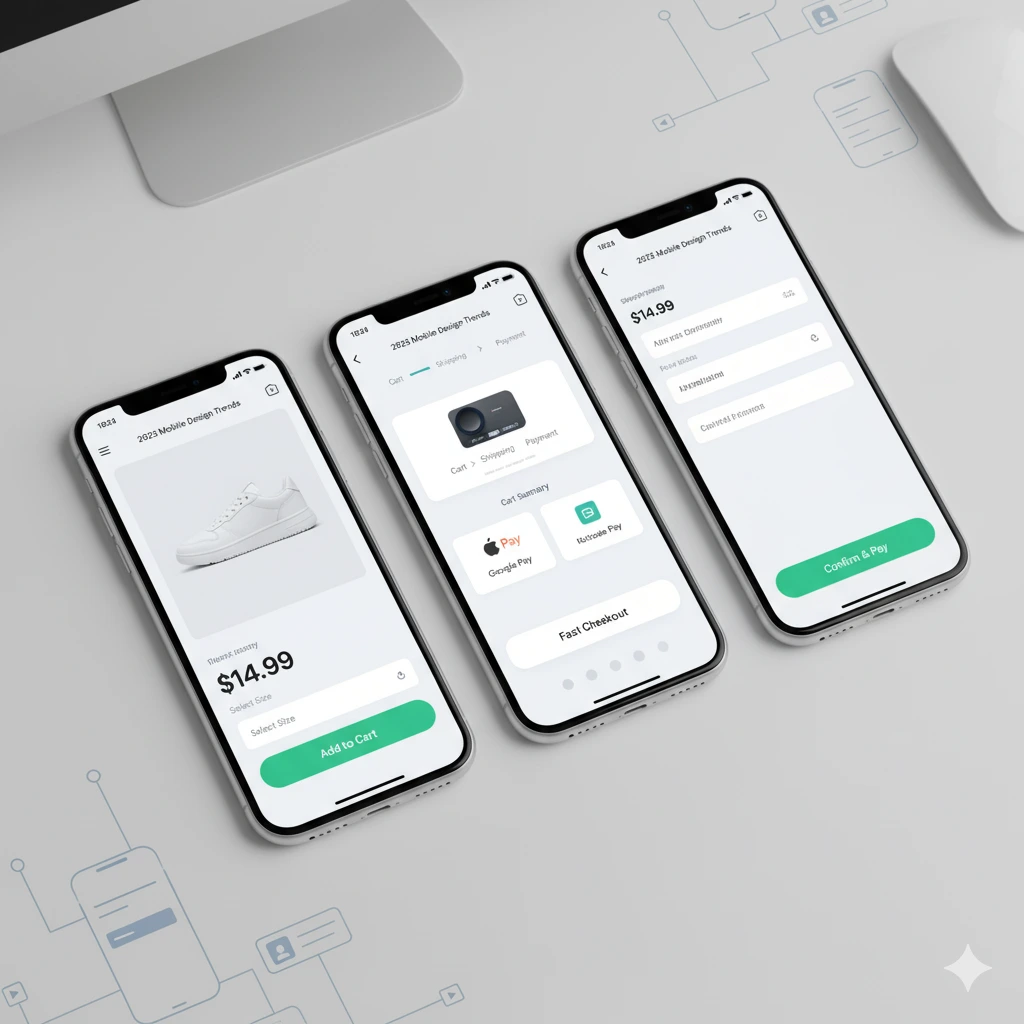
    No one wants to pinch and zoom to fill out forms. One-click checkout, auto-filled fields, and wallet integrations (Apple Pay, Google Pay) are part of modern mobile‑first ecommerce website design trends.

    4. Progressive Web Apps (PWAs)

    PWAs offer app-like experiences without the download. They load faster, work offline, and boost engagement—perfect for mobile-first design.

    5. Voice Search and Smart Filters

    As voice assistants grow, expect more users to search with voice. Mobile-first design now includes speech-friendly interfaces and simplified navigation.


    📈 Why These Trends Matter

    With mobile devices driving the majority of online traffic, following mobile‑first ecommerce website design trends means:

    • Higher conversion rates
    • Faster page loading
    • Lower bounce rates
    • Improved SEO (Google prioritizes mobile-optimized pages)
    • Better customer satisfaction

    Simply put, your mobile design is now your main storefront.


    Final Thoughts

    If you’re still designing your ecommerce site with desktop first, it’s time to rethink. In 2025, mobile‑first ecommerce website design trends are not optional—they’re essential to staying relevant and competitive in a mobile-driven market.


    ❓Frequently Asked Questions

    1. Is mobile-first design only for big brands?

    Answer:
    No. Whether you’re a small startup or an enterprise, mobile-first design benefits everyone. It improves user experience, boosts sales, and helps your brand grow—especially among younger, mobile-native audiences.


    2. What’s the difference between responsive and mobile-first design?

    Answer:
    Responsive design adapts to different screens, starting with desktop. Mobile-first design starts with mobile, ensuring the mobile version is prioritized and fully optimized from the beginning.


    3. How can I check if my ecommerce site is mobile-optimized?

    Answer:
    Use tools like Google’s Mobile-Friendly Test or Lighthouse audit. Or, test your site manually on multiple phones to see how fast it loads, how easy it is to navigate, and if checkout is smooth.

  • Chatbots for E-commerce Customer Service 2025: The Future Is Already Here

    Chatbots for E-commerce Customer Service 2025: The Future Is Already Here

    In the fast-paced world of online shopping, customer expectations are higher than ever. They want quick answers, personalized help, and 24/7 support—all without waiting on hold. That’s where Chatbots for e-commerce customer service 2025 come in.

    These AI-powered assistants are no longer just a trend—they’re becoming essential for any online business looking to scale, save time, and boost customer satisfaction.


    🤖 What Are E-commerce Chatbots?

    Chatbots are software applications designed to simulate conversation with users. In e-commerce, they can handle a wide range of tasks like:

    • Answering product questions
    • Tracking orders
    • Handling returns
    • Recommending products
    • Offering discount codes

    The best part? They do all this instantly and around the clock.

    With Chatbots for e-commerce customer service 2025, these bots are smarter than ever—powered by AI, machine learning, and natural language processing.


    ⚡ Why Are They So Important in 2025?

    In 2025, the online shopping experience is more competitive and customer-driven than ever before. Businesses need to respond quickly and accurately to keep up.

    Here’s why Chatbots for e-commerce customer service 2025 are a game-changer:

    • 24/7 Availability: Serve global customers across time zones.
    • Fast Response Times: No more waiting in long support queues.
    • Reduced Costs: Automate repetitive tasks and save on customer support staff.
    • Personalized Experience: Bots can remember past purchases and recommend similar products.
    • Scalability: Whether you have 100 or 100,000 customers, chatbots can handle the load.

    💡 Real-Life Use Cases

    E-commerce leaders are already seeing the benefits:

    • A fashion brand uses a chatbot to suggest outfits based on past purchases.
    • An electronics store’s chatbot troubleshoots common product issues.
    • A skincare store’s bot handles returns and tracks orders via WhatsApp.

    These are just a few ways Chatbots for e-commerce customer service 2025 are transforming how brands communicate with their customers.


    📈 Future Trends to Watch

    Looking ahead, we’ll see:

    • Voice-enabled chatbots that let customers speak instead of type.
    • Multilingual bots for hyper-local customer experiences.
    • Integration with AR/VR, helping customers “try” products virtually before buying.

    It’s clear: Chatbots for e-commerce customer service 2025 are not just tools—they’re essential business partners.


    ✅ Final Thoughts

    If you’re running an e-commerce business and not using a chatbot, you’re already falling behind. Investing in Chatbots for e-commerce customer service 2025 means delivering faster, smarter, and more personalized customer experiences—something your competitors are already doing.

    FAQs

    1. Are chatbots really better than live agents for customer service?

    Answer:
    Chatbots aren’t here to replace live agents but to support them. In 2025, chatbots can instantly handle common questions like order tracking, product availability, or returns—freeing up your support team to focus on more complex or sensitive issues. The combination of both leads to faster, more efficient customer service.


    2. Can chatbots really personalize the shopping experience?

    Answer:
    Yes! Modern chatbots for e-commerce customer service 2025 use AI to analyze customer behavior, past purchases, and browsing history. This allows them to offer personalized product recommendations, targeted discounts, and tailored responses—creating a more engaging shopping experience.


    3. Are chatbots expensive to implement for small businesses?

    Answer:
    Not at all. Today’s chatbot platforms are scalable and cost-effective. Many offer subscription models or even free versions with basic features. For small e-commerce businesses, investing in a chatbot can lead to major savings in customer service costs over time.