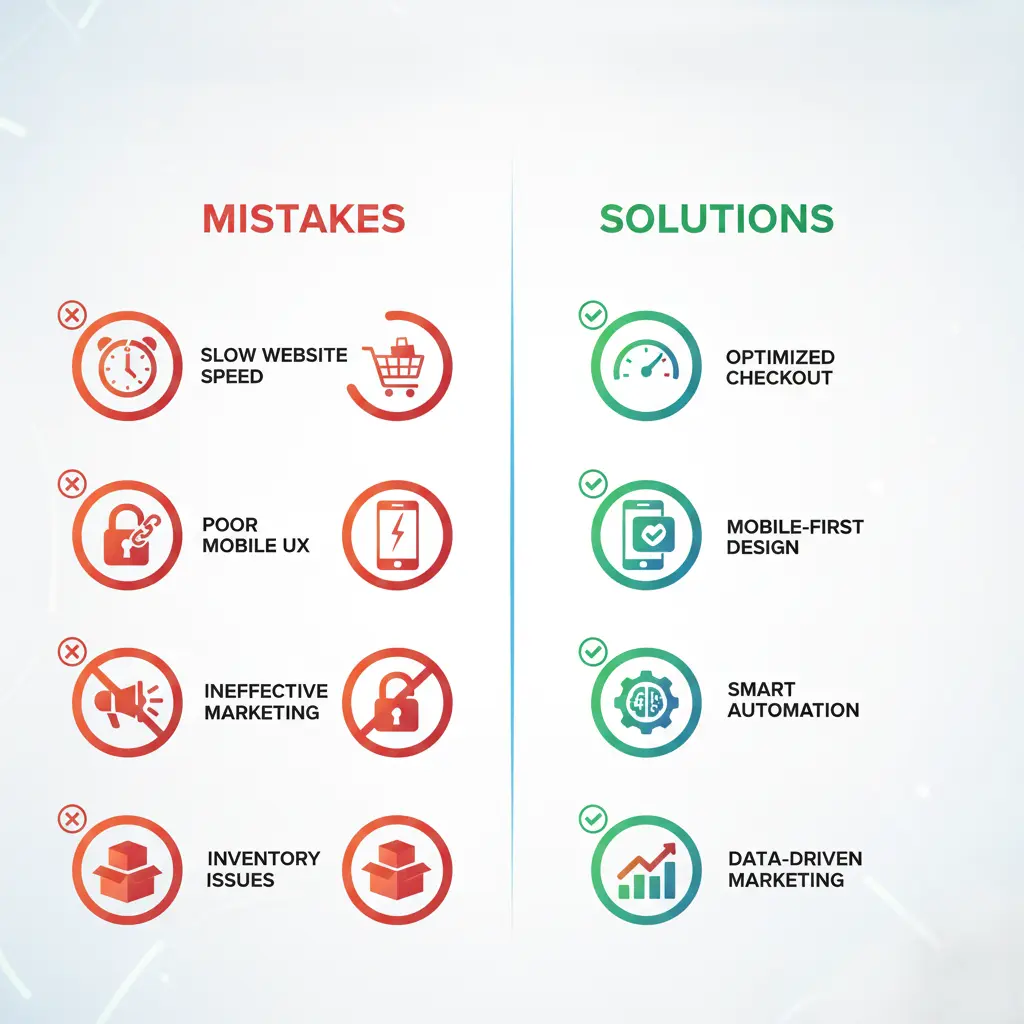
The ecommerce industry is evolving faster than ever, and while new technology creates opportunities, it also introduces new risks. Many brands fail not because of a lack of ideas, but due to avoidable errors. Understanding common ecommerce mistakes in 2026 can help you protect your business, improve performance, and stay competitive in a crowded digital market.
Ignoring Customer Experience
One of the biggest ecommerce mistakes in 2026 is overlooking the customer journey. Shoppers now expect fast-loading websites, easy navigation, and personalized experiences. A confusing checkout process or slow mobile performance can quickly lead to cart abandonment.
How to avoid it:
Focus on user experience (UX) design, optimize for mobile-first shopping, and simplify checkout steps. Use AI-driven personalization to recommend relevant products and improve engagement.
Failing to Optimize for Mobile Commerce
Mobile commerce continues to dominate online sales, yet many businesses still treat mobile as secondary. Poor mobile design directly impacts conversion rates and customer trust.
How to avoid it:
Adopt a mobile-first ecommerce strategy, test site performance across devices, and ensure buttons, images, and payment options work seamlessly on smaller screens.
Relying Too Heavily on Paid Advertising
While paid ads can drive quick traffic, depending solely on them is a costly ecommerce marketing mistake. Rising ad costs in 2026 mean lower profit margins if organic channels are ignored.
How to avoid it:
Invest in ecommerce SEO, content marketing, and email automation. Building organic traffic creates long-term growth and reduces dependency on paid campaigns.
Poor Product Descriptions and Visuals
Generic product descriptions and low-quality images reduce trust and conversions. In 2026, customers expect detailed, interactive, and transparent product information.
How to avoid it:
Use SEO-optimized product descriptions, high-resolution images, videos, and user-generated content. Clearly explain benefits, use cases, and value propositions.
Ignoring Data and Analytics
Many ecommerce brands collect data but fail to act on it. Ignoring analytics is a critical ecommerce growth mistake that leads to missed opportunities and poor decision-making.
How to avoid it:
Track key ecommerce metrics such as conversion rate, customer lifetime value, and cart abandonment. Use AI-powered analytics tools to identify trends and optimize campaigns.
Weak Inventory and Supply Chain Management
Stockouts, delayed deliveries, and inaccurate inventory levels frustrate customers and damage brand reputation. In 2026, efficient logistics are more important than ever.
How to avoid it:
Implement smart inventory management systems, automate stock tracking, and work with reliable fulfillment partners to ensure fast and accurate deliveries.
Neglecting Customer Retention
Many businesses focus only on acquiring new customers while ignoring existing ones. This is a costly ecommerce retention mistake, as retaining customers is more profitable than acquiring new ones.
How to avoid it:
Build loyalty programs, personalize email marketing, and offer exclusive rewards to repeat customers. Strong customer retention strategies improve lifetime value and brand advocacy.
Overlooking Security and Compliance
Cybersecurity threats and data privacy regulations continue to grow. Failing to protect customer data is a serious ecommerce compliance mistake that can lead to legal issues and loss of trust.
How to avoid it:
Ensure secure payment gateways, SSL certificates, and compliance with global data protection laws. Regularly update systems to protect against cyber threats.
Final Thoughts
Avoiding common ecommerce mistakes in 2026 is essential for building a sustainable and profitable online business. By focusing on customer experience, mobile optimization, data-driven decisions, and security, ecommerce brands can stay ahead of the competition and achieve long-term success.