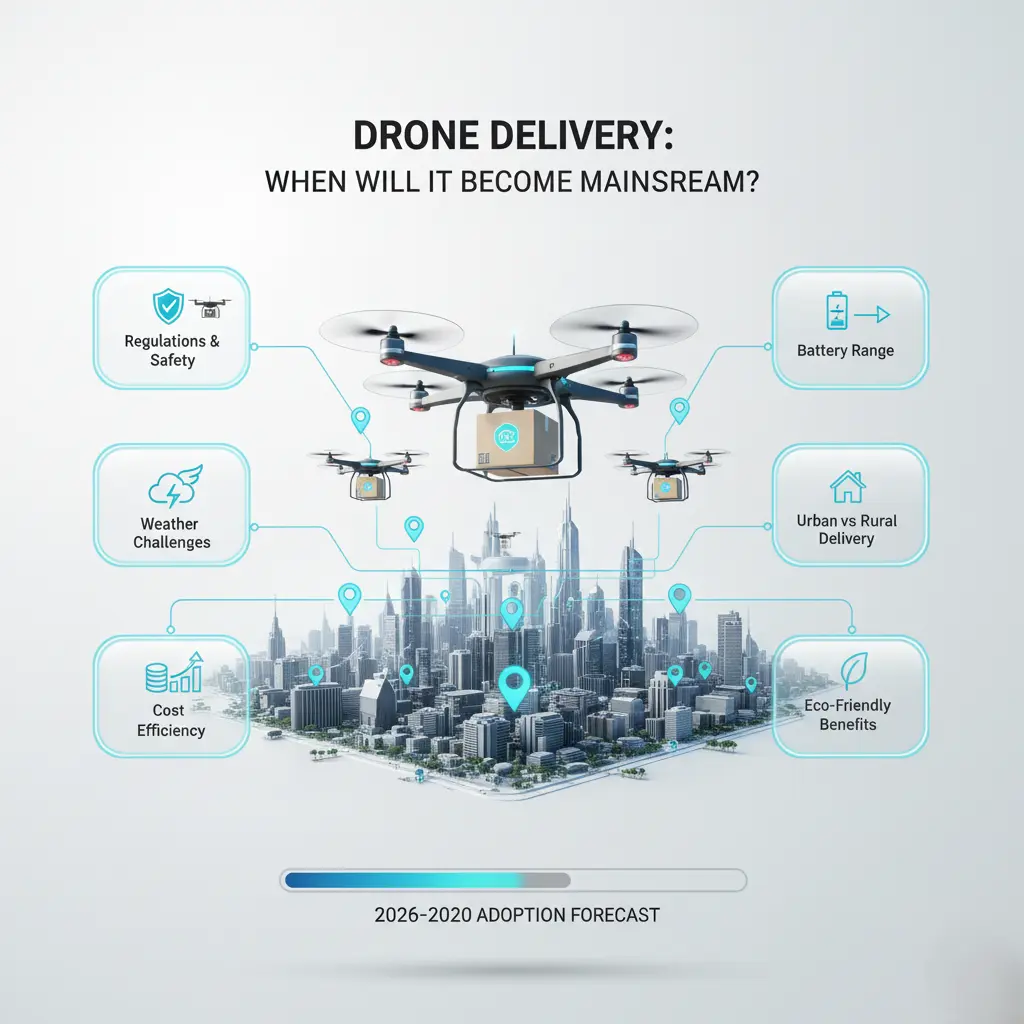
The idea of drones delivering packages directly to our doorsteps once felt futuristic, but rapid advancements in technology have made it closer to reality than ever before. Companies like Amazon, Walmart, UPS, and major logistics startups are already testing drone delivery systems, proving that unmanned aerial vehicles (UAVs) can drastically reduce delivery times and operational costs. But with all the excitement, one question still remains: When will drone delivery truly become mainstream?
The Current State of Drone Delivery
Drone delivery has made significant progress over the past few years. Many pilot programs are already underway, delivering small packages such as:
- Medications
- Groceries
- Electronics
- Essential supplies
These tests have demonstrated drones’ ability to deliver orders within 30 minutes—or even less. However, despite their technological readiness, widespread adoption is still limited by regulatory, infrastructural, and logistical hurdles.
Key Factors Driving Drone Delivery Adoption
1. Faster Delivery Expectations
Consumers expect same-day delivery, and in many cities, they prefer delivery within hours. Drones offer a rapid and reliable solution by:
- Flying directly to the destination
- Avoiding road traffic
- Completing short-distance deliveries faster than vehicles
This makes drones ideal for urgent or time-sensitive shipments.
2. Cost Efficiency for Logistics Companies
Drones reduce fuel consumption, manpower, and operational costs. Once scaled, they can significantly lower the cost per delivery—making last-mile logistics more affordable for companies and customers alike.
3. Environmental Benefits
Compared to fuel-based delivery vehicles, drones produce fewer emissions and help create more sustainable logistics operations. This aligns with the global push toward greener supply chain practices.
4. Technological Advancements
Improved battery capacity, autonomous navigation, AI-based obstacle detection, and better payload capability are making drones safer and more efficient. These innovations are accelerating the shift to widespread implementation.
Challenges Slowing Down Mainstream Adoption
Despite impressive advancements, several challenges are delaying full-scale drone delivery adoption.
1. Strict Government Regulations
Aviation authorities worldwide require:
- Flight approvals
- Safety certifications
- Airspace management systems
Many countries are still developing drone-specific laws. Until regulations become consistent and clear, mass deployment will remain limited.
2. Safety and Risk Management
Drones must operate safely above homes, roads, and public spaces. Issues such as:
- Collisions
- Weather conditions
- System failures
- Privacy concerns
must be addressed before drone delivery becomes mainstream.
3. Limited Payload Capacity
Most delivery drones can only carry 1–5 kg, restricting them to lightweight items. Larger drones are being developed, but they require more robust technology and regulation.
4. Infrastructure Requirements
Drone ports, charging stations, communication hubs, and secure drop-off zones need to be built before large-scale implementation becomes realistic.
When Will Drone Delivery Become Mainstream?
Most experts predict that drone delivery will gradually enter mainstream logistics within the next 5–10 years, depending on the region. Here’s what the timeline looks like:
2025–2027: Expansion of Pilot Programs
- More cities will start test flights
- Regulatory frameworks will become clearer
- Grocery, pharmacy, and food delivery industries will adopt drones faster
2028–2030: Regional Adoption
- Suburban and rural areas will see frequent drone deliveries
- Local businesses will integrate drone logistics
- Drone networks will connect with e-commerce platforms
2030 and Beyond: Widespread Commercial Adoption
- Drone highways and dedicated air corridors will be established
- Large payload drones will handle more types of products
- Drone delivery could become a standard last-mile solution
Urban areas may take longer due to airspace complexities, but rural and semi-urban regions will lead the transition.
Industries That Will Benefit the Most
1. E-Commerce
Fast, affordable deliveries will boost customer satisfaction and reduce logistic costs.
2. Healthcare
Drones will transport:
- Emergency medicines
- Blood samples
- Vaccines
- Critical supplies
Faster delivery can literally save lives.
3. Food & Grocery Delivery
On-demand delivery will become even quicker, enhancing convenience for customers and efficiency for businesses.
4. Agriculture and Rural Services
Drones will deliver tools, products, and supplies to remote areas underserved by traditional logistics.
The Future of Drone Delivery
Drone delivery is more than a trend—it’s a major evolution in logistics. As technology advances and regulations become more supportive, drones are positioned to revolutionize last-mile delivery. They promise:
- Faster service
- Lower costs
- Reduced carbon footprint
- Greater accessibility for rural communities
The shift won’t happen overnight, but one thing is certain: drone delivery is not a question of “if” but “when.” And the “when” is getting closer every year.