Tag: E-Commerce SEO

  • Hyperlocal Delivery Business Model Explained

    Hyperlocal Delivery Business Model Explained

    In recent years, the demand for faster and more convenient delivery services has grown rapidly. The concept of hyperlocal delivery has emerged as a powerful solution, connecting local businesses with nearby customers for quick and efficient service. This model is transforming how goods are delivered, especially in urban areas.

    What is Hyperlocal Delivery?

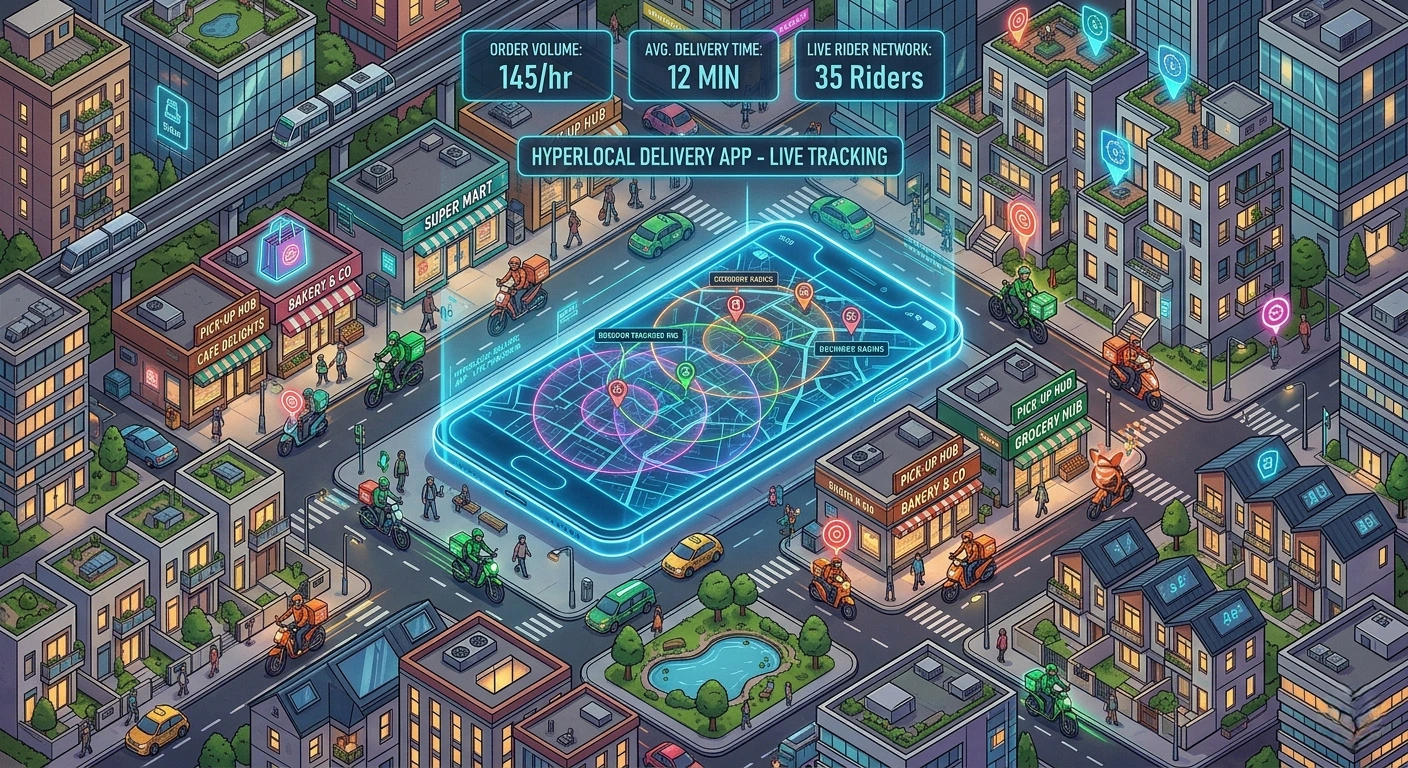
    Hyperlocal delivery refers to the process of delivering goods within a limited geographic area, usually within a few kilometers. It focuses on fulfilling orders from local stores or vendors to customers in real time. For businesses exploring hyperlocal delivery, the goal is to minimize delivery time while maximizing convenience.

    How the Hyperlocal Delivery Model Works

    The business model is simple yet highly effective. It typically involves:

    • A digital platform or app where customers place orders
    • Local merchants or vendors who fulfill those orders
    • Delivery agents who pick up and deliver products

    This system allows businesses to offer on-demand delivery, where customers receive their orders within minutes or hours instead of days.

    Key Components of the Model

    To run a successful hyperlocal delivery business, several components are essential:

    1. Technology Platform
      Mobile apps and websites act as the backbone of the system. These platforms connect customers, vendors, and delivery partners seamlessly.
    2. Local Vendor Network
      Partnering with nearby stores ensures faster order fulfillment and supports small businesses.
    3. Efficient Logistics
      A well-managed fleet of delivery personnel ensures timely and reliable service.
    4. Real-Time Tracking
      Customers expect transparency, so tracking features are a must.

    These elements together create a strong hyperlocal delivery ecosystem that meets modern consumer expectations.

    Role of Local Delivery Apps

    Local delivery apps have made this model more accessible and scalable. They allow users to browse products, compare prices, and place orders instantly. Popular platforms have normalized quick deliveries, making quick commerce a standard expectation.

    For businesses, integrating with local delivery apps can significantly boost reach and customer engagement. These apps are a key driver behind the growth of hyperlocal delivery services worldwide.

    Benefits of Hyperlocal Delivery

    There are several advantages to adopting this model:

    • Faster Deliveries: Orders are fulfilled within hours or even minutes
    • Lower Logistics Costs: Short distances reduce transportation expenses
    • Support for Local Businesses: Encourages customers to shop locally
    • High Customer Satisfaction: Quick service improves user experience

    These benefits make hyperlocal delivery an attractive option for startups and established businesses alike.

    Challenges in the Model

    Despite its advantages, there are challenges to consider:

    • Managing delivery personnel efficiently
    • Handling peak-time demand
    • Ensuring product availability
    • Maintaining consistent service quality

    Overcoming these challenges is crucial for scaling a hyperlocal delivery business successfully.

    Future of Hyperlocal Delivery

    The future looks promising as consumer demand for speed continues to rise. With advancements in technology, automation, and AI, the model is becoming more efficient. The rise of on-demand delivery and quick commerce platforms indicates that instant fulfillment will soon become the norm.

    Businesses investing in hyperlocal delivery today are likely to gain a competitive advantage in the evolving digital marketplace.


    Conclusion

    The hyperlocal delivery model is reshaping the way goods and services reach customers. By leveraging local networks, technology, and efficient logistics, businesses can meet the growing demand for speed and convenience. As local delivery apps and quick commerce continue to expand, this model will play a crucial role in the future of e-commerce.


    FAQs

    1. What is hyperlocal delivery in simple terms?
    It is a delivery model where products are delivered from nearby stores to customers within a short time frame and limited area.

    2. How does hyperlocal delivery differ from traditional delivery?
    Traditional delivery involves long distances and longer timelines, while hyperlocal delivery focuses on nearby locations and faster fulfillment.

    3. Why is hyperlocal delivery becoming popular?
    It offers faster service, supports local businesses, and aligns with the growing demand for convenience and instant delivery.


  • Product Photography Tips for E-Commerce That Actually Convert

    Product Photography Tips for E-Commerce That Actually Convert

    In e-commerce, your product images are your silent sales team. Shoppers can’t touch or feel products online, so visuals must communicate quality, detail, and trust instantly. This is where Product Photography Tips become essential. Done right, your images can increase conversions, reduce returns, and build brand credibility.

    Why Product Photography Matters

    High-quality product photos influence purchasing decisions more than descriptions or reviews in many cases. Customers judge professionalism, reliability, and value based on what they see. If your images are blurry, inconsistent, or poorly lit, shoppers hesitate. Conversely, well-crafted visuals make products irresistible.

    For e-commerce beginners or seasoned marketers alike, mastering Product Photography Tips is an investment that pays for itself in higher sales.

    1. Invest in Proper Lighting

    Lighting makes or breaks product photos. Natural light works well for small items, but softbox or LED lighting provides control and consistency. Avoid harsh shadows or uneven highlights that distort the product’s appearance.

    Pro Tip: Diffused lighting creates soft, appealing visuals that highlight texture and color without distractions.

    2. Use a Clean Background

    Minimalism works best. White or neutral backgrounds keep the focus on your product and prevent visual clutter. Many marketplaces, like Amazon and Shopify, require white backgrounds for main images.

    Secondary shots can include lifestyle or context images, but the main product photo should be crisp, clean, and clear.

    3. Shoot From Multiple Angles

    Showcase every important feature. Front, side, back, top-down, and close-up shots give customers confidence in what they’re buying. For products with intricate details or textures, macro shots are invaluable.

    When applying Product Photography Tips, think like a shopper: what would you want to see before clicking “Add to Cart”?

    4. Focus on Consistency

    Consistency across your product catalog builds a professional look. Use the same lighting, background, and angle style. Shoppers can compare products easily, and your store feels organized.

    For larger stores, creating a photography template saves time and ensures a cohesive aesthetic across all product images.

    5. Highlight Features and Benefits

    Product images aren’t just about showing the item—they tell a story. Include images that show size, scale, or usability. Lifestyle shots—people using your product—help shoppers imagine it in their own lives.

    These product image tips not only enhance visual appeal but also communicate value clearly.

    6. Optimize for E-Commerce

    High-resolution images are essential, but they must also load quickly. Compress files without losing quality, and use the correct dimensions for desktop and mobile. Google and marketplaces favor fast-loading images for better user experience.

    Also, name your files descriptively and use alt text. This improves SEO and helps shoppers who rely on screen readers.

    7. Test and Iterate

    Even with expert photos, performance can vary. Track which images convert better using A/B testing. Small changes in angle, background, or lighting can impact click-through and conversion rates significantly.

    Remember, Product Photography Tips aren’t one-size-fits-all. Continuous testing ensures your visuals resonate with your audience.

    Final Thoughts

    High-quality product photography is more than a visual necessity—it’s a conversion tool. By following these Product Photography Tips, creating consistent, appealing, and informative images, e-commerce brands can boost sales and strengthen customer trust. Prioritizing lighting, angles, context, and optimization ensures your products not only look good but actually sell.

    Implementing these strategies transforms standard product images into product images that sell, turning casual browsers into loyal customers.


    FAQs

    1. How many product images should I use for each item?

    Use at least 5–7 images showing multiple angles, close-ups, and lifestyle shots. This gives customers confidence and reduces hesitation to buy.

    2. Can I take product photos with a smartphone?

    Yes. Modern smartphones with good cameras can produce high-quality images if you control lighting, background, and stability. A tripod and natural or soft lighting make a huge difference.

    3. Should I edit product photos professionally?

    Editing is recommended to correct colors, remove distractions, and maintain consistency. Avoid over-editing, which can misrepresent the product and lead to returns.

  • Top Logistics Technology Trends in 2026: Transforming Supply Chains

    Top Logistics Technology Trends in 2026: Transforming Supply Chains

    The logistics industry is evolving at a breakneck pace. In 2026, staying competitive means understanding the Logistics Technology Trends shaping supply chains. From AI-powered route optimization to IoT-enabled tracking, technology is no longer a supporting tool—it’s the backbone of efficient, resilient logistics operations.

    Why Logistics Technology Trends Matter

    Supply chains have faced unprecedented disruptions in recent years. Companies that adopt emerging logistics technologies gain better visibility, faster deliveries, and lower operational costs. Businesses that ignore these trends risk inefficiency, delays, and lost revenue.

    Understanding Logistics Technology Trends helps logistics managers, e-commerce brands, and supply chain professionals plan strategically, invest wisely, and stay ahead of competitors.

    1. AI in Logistics

    Artificial intelligence is transforming supply chain management. Predictive analytics allows companies to anticipate demand, reduce stockouts, and optimize inventory levels. AI also improves route planning, helping fleets avoid traffic, reduce fuel consumption, and meet delivery deadlines consistently.

    Robotic process automation (RPA) powered by AI streamlines administrative tasks, such as order processing and shipment tracking, freeing staff to focus on higher-value activities.

    When exploring Logistics Technology Trends, AI in logistics remains the most impactful driver of operational efficiency and cost savings.

    2. IoT in Supply Chain

    The Internet of Things is connecting products, vehicles, and warehouses in real time. IoT sensors track location, temperature, humidity, and handling conditions, ensuring perishable or fragile goods arrive in perfect condition.

    IoT dashboards provide actionable insights, allowing managers to detect bottlenecks, reduce delays, and improve overall supply chain responsiveness. Combining IoT data with AI analytics enhances predictive maintenance and fleet optimization.

    3. Autonomous Vehicles and Drones

    Self-driving trucks and delivery drones are no longer futuristic concepts—they’re being deployed to reduce last-mile delivery costs and improve speed. Autonomous logistics vehicles can operate 24/7, minimize human error, and reduce labor costs, reshaping how goods move from warehouses to customers.

    These innovations are a critical part of Logistics Technology Trends, driving efficiency and redefining delivery standards in 2026.

    4. Blockchain for Transparency

    Blockchain technology ensures supply chain transparency and traceability. Every shipment is recorded in an immutable ledger, making it easier to verify authenticity, prevent fraud, and comply with regulations.

    Companies adopting blockchain gain customer trust, improve accountability, and streamline auditing processes, positioning them ahead of competitors who rely on traditional record-keeping.

    5. Robotics and Automation in Warehouses

    Robotic picking, packing, and sorting systems increase warehouse efficiency dramatically. Automated guided vehicles (AGVs) transport goods with precision, while smart conveyor systems reduce human error.

    By integrating robotics with AI and IoT, warehouses can operate seamlessly, even under high demand, which makes this a standout entry in current Logistics Technology Trends.

    6. Sustainable Logistics Technologies

    Sustainability is no longer optional. Electric delivery vehicles, energy-efficient warehouses, and route optimization for lower carbon emissions are increasingly critical. Logistics companies adopting green technologies not only comply with regulations but also appeal to environmentally conscious consumers.

    Tracking carbon footprints using IoT sensors and AI analytics allows companies to continually refine and improve eco-friendly practices.

    7. Cloud-Based Supply Chain Platforms

    Cloud technology enables real-time collaboration among suppliers, manufacturers, and logistics partners. Cloud platforms allow for dynamic inventory management, order tracking, and data analytics, reducing errors and speeding decision-making.

    For supply chain leaders, leveraging cloud systems is now a baseline expectation in modern logistics, aligning with broader Logistics Technology Trends for efficiency and scalability.

    Final Thoughts

    The logistics landscape in 2026 is driven by technology. From AI in logistics to IoT in supply chain, these innovations enhance speed, accuracy, and transparency. Companies that embrace these Logistics Technology Trends position themselves to reduce costs, improve customer satisfaction, and future-proof their operations. Ignoring these trends is no longer an option—innovation is the new competitive edge.


    FAQs

    1. Which logistics technology trend will have the biggest impact in 2026?

    AI in logistics is expected to have the most significant influence, optimizing routes, predicting demand, and automating processes across the supply chain.

    2. How does IoT improve supply chain efficiency?

    IoT provides real-time tracking of products, vehicles, and warehouse conditions, enabling predictive maintenance, faster issue resolution, and better inventory management.

    3. Are autonomous vehicles and drones widely used today?

    Yes, pilot programs and limited commercial deployments are underway, especially for last-mile delivery and long-haul trucking, and adoption is expected to grow rapidly in 2026.

  • Top Startup E-commerce Platforms for Beginners in 2026

    Top Startup E-commerce Platforms for Beginners in 2026

    Starting an online store is easier than ever, but choosing the right platform can make or break your launch. The right solution helps you build a professional storefront, manage products, process payments, and scale as your business grows. For entrepreneurs entering the digital marketplace in 2026, selecting the right Startup E-commerce Platforms is one of the most important early decisions.

    New founders often look for platforms that balance affordability, flexibility, and strong built-in tools. Beyond basic functionality, modern platforms now include automation, analytics, and advanced integrations that simplify store management. Understanding what makes a platform beginner-friendly will help you choose a solution that supports long-term growth.

    What Beginners Should Look for in Startup E-commerce Platforms

    Before choosing among the many Startup E-commerce Platforms available today, beginners should focus on features that reduce technical complexity. A platform should allow you to launch quickly without requiring advanced coding knowledge.

    Ease of use is the first factor. A simple dashboard, drag-and-drop design tools, and clear product management features make it easier for beginners to build and maintain a store.

    Scalability also matters. Many businesses start small but grow rapidly, so the platform should support expanding product catalogs, marketing integrations, and increased traffic without forcing a complete migration later.

    Cost transparency is another important consideration. Beginners should evaluate monthly pricing, transaction fees, and app costs to avoid unexpected expenses.

    Finally, strong SEO features for e-commerce websites help new stores gain visibility on search engines, making it easier for customers to discover products organically.

    Best Startup E-commerce Platforms for Beginners in 2026

    Many founders compare several Startup E-commerce Platforms before making a decision. Each platform offers different strengths depending on business goals, technical experience, and budget.

    Shopify

    Shopify remains one of the most popular Startup E-commerce Platforms for beginners because it provides a fully hosted solution with minimal setup. Entrepreneurs can create a store, upload products, and start selling in a matter of hours.

    Shopify also includes built-in payment processing, marketing integrations, and strong SEO features for e-commerce websites, making it easier for new brands to build search visibility.

    WooCommerce

    For entrepreneurs who prefer flexibility, WooCommerce is another powerful option. Built on the popular WordPress ecosystem, WooCommerce offers extensive customization and access to thousands of plugins.

    Many startups choose WooCommerce because it integrates easily with various small business e-commerce tools, including marketing automation, inventory management, and analytics platforms.

    Wix eCommerce

    Wix eCommerce has evolved significantly and now competes strongly among beginner-focused Startup E-commerce Platforms. Its drag-and-drop website builder makes store design simple, even for users with no technical background.

    The platform also includes built-in marketing tools, product galleries, and mobile optimization features that help startups create visually appealing online stores.

    BigCommerce

    Another platform gaining traction among growing brands is BigCommerce. It offers robust built-in features without relying heavily on third-party apps.

    Many entrepreneurs consider BigCommerce one of the most scalable Startup E-commerce Platforms because it supports large product catalogs, multi-channel selling, and advanced analytics. Businesses that expect rapid growth often find it a strong long-term solution.

    Squarespace

    Squarespace is especially popular with entrepreneurs who prioritize design and brand presentation. Its templates allow startups to create visually compelling storefronts quickly.

    For small product catalogs or niche brands, Squarespace provides a streamlined way to launch an online store while integrating essential small business e-commerce tools such as email marketing and product analytics.

    Why the Right Platform Matters for Startup Success

    Choosing the right platform isn’t just a technical decision—it shapes how efficiently your business operates. The best Startup E-commerce Platforms simplify daily operations while giving entrepreneurs access to automation, marketing insights, and customer data.

    Platforms that integrate well with small business e-commerce tools allow startups to automate inventory tracking, manage orders, and analyze sales performance without complex systems. This efficiency allows founders to focus more on product development, branding, and customer relationships.

    Search visibility is equally important. Platforms that offer strong SEO features for e-commerce websites help businesses optimize product pages, improve site speed, and structure metadata properly. These factors contribute to higher rankings and increased organic traffic.

    For beginners entering the digital marketplace, the ideal platform balances simplicity with scalability. Starting with a reliable solution ensures your store can grow without unnecessary technical challenges.

    FAQs

    What are the best startup e-commerce platforms for beginners?

    Popular options include Shopify, WooCommerce, Wix eCommerce, BigCommerce, and Squarespace. Each platform offers different strengths depending on your budget, customization needs, and technical experience.

    How do I choose the right e-commerce platform for a startup?

    Start by evaluating ease of use, pricing structure, scalability, integrations, and built-in marketing capabilities. Platforms with strong SEO and automation features can help new businesses grow faster.

    Do startup e-commerce platforms support SEO?

    Yes. Most modern platforms include essential SEO tools such as customizable URLs, metadata editing, mobile optimization, and fast page loading. These SEO features help online stores rank higher in search results and attract organic traffic.

  • The Future of Direct-to-Consumer Brands

    The Future of Direct-to-Consumer Brands

    The last decade reshaped how products reach customers. Traditional retail once controlled discovery, pricing, and distribution, but digital platforms shifted power toward brands that speak directly to buyers. At the center of this shift are Direct-to-Consumer brands, companies that sell through their own digital channels rather than relying entirely on wholesalers or marketplaces. From niche startups to global disruptors, these brands have proven that strong storytelling, customer data, and agile product development can outperform slower legacy systems.

    The Evolution of the Model

    What began as a way to bypass retail markups has matured into a sophisticated business model. Early DTC brands focused on price transparency and online convenience, but competition quickly pushed them to differentiate through brand identity and experience. As acquisition costs rose and digital advertising became crowded, the most successful companies realized that owning the customer relationship mattered more than simply owning the sale.

    Today, Direct-to-Consumer brands operate less like pure e-commerce stores and more like media companies, product labs, and community hubs combined. They gather first-party data, experiment with rapid product launches, and speak to customers across multiple platforms. This shift has laid the foundation for the next wave of innovation in the DTC ecosystem.

    Changing Consumer Expectations

    Modern shoppers expect speed, transparency, and authenticity from the brands they support. Direct-to-Consumer brands thrive because they can respond quickly to these expectations without layers of retail intermediaries. Whether through personalized product recommendations or transparent supply chains, they build trust by staying close to their audience.

    A modern DTC marketing strategy is increasingly built on personalization. Instead of broadcasting generic campaigns, brands analyze behavior, preferences, and purchase history to tailor communication. Email flows, loyalty programs, and community-driven content help transform one-time buyers into long-term advocates.

    Technology Reshaping the Landscape

    Technology is accelerating the evolution of Direct-to-Consumer brands. Artificial intelligence can predict purchasing patterns, automate support, and deliver hyper-personalized recommendations. Brands that combine AI insights with human storytelling will create experiences that feel both efficient and authentic.

    Another powerful force shaping direct-to-consumer trends is social commerce. Platforms like short-form video apps and creator communities allow products to spread through storytelling rather than advertising alone. The most effective DTC brands collaborate with creators, encourage user-generated content, and turn customers into ambassadors.

    Emerging Growth Models

    Many Direct-to-Consumer brands are expanding beyond one-time purchases into recurring relationships. Subscription models for everyday products create predictable revenue while strengthening loyalty. When customers receive consistent value, convenience becomes a powerful retention tool.

    Community-led growth is another defining shift. Successful DTC brands are investing in forums, private groups, and events that turn customers into participants rather than passive buyers. When people feel connected to a brand’s mission, they willingly share feedback, ideas, and advocacy.

    Omnichannel Is the Next Frontier

    While the model began online, the future of Direct-to-Consumer brands will be omnichannel. Physical showrooms, pop-up stores, and retail partnerships are helping brands blend digital insights with real-world experiences. Customers might discover a product on social media, test it in a store, and reorder through an app.

    This convergence requires a smarter DTC marketing strategy built on unified data. Brands must understand customers across channels, not just within a single platform. The companies that connect online behavior with offline interactions will deliver seamless journeys and stronger loyalty.

    What the Future Looks Like

    The next generation of Direct-to-Consumer brands will look less like online stores and more like adaptive ecosystems. They will combine product innovation, community engagement, and data intelligence to respond instantly to shifting demand. Agility, not scale alone, will define long-term success.

    For entrepreneurs and marketers, the message is clear: the opportunity is still enormous, but the rules are evolving. Winning brands will prioritize customer relationships over quick transactions, invest in meaningful storytelling, and treat data as a strategic asset rather than a byproduct. They will test new formats, collaborate with creators, and build communities that extend far beyond a single purchase. Those willing to experiment with technology, embrace transparency, and listen closely to their audience will shape the next era of commerce. The brands that thrive will not simply sell products; they will build experiences, trust, and long-term loyalty in an increasingly competitive digital marketplace. Customer centricity will remain the most durable advantage in modern commerce.


    FAQs

    Q: What makes Direct-to-Consumer brands different from traditional retail brands?
    A:
    Direct-to-Consumer brands sell directly to customers through their own digital platforms or stores, allowing them to control pricing, gather first-party data, and build direct relationships without relying on wholesalers or large retailers.

    Q: What are the biggest direct-to-consumer trends shaping the future?
    A:
    Key trends include AI-driven personalization, social commerce, subscription-based products, community-led growth, and omnichannel experiences that combine digital and physical shopping journeys.

    Q: Why is customer data so important for DTC brands?
    A:
    First-party data allows DTC brands to understand customer behavior, personalize marketing, improve products, and create stronger long-term relationships that drive retention and lifetime value.