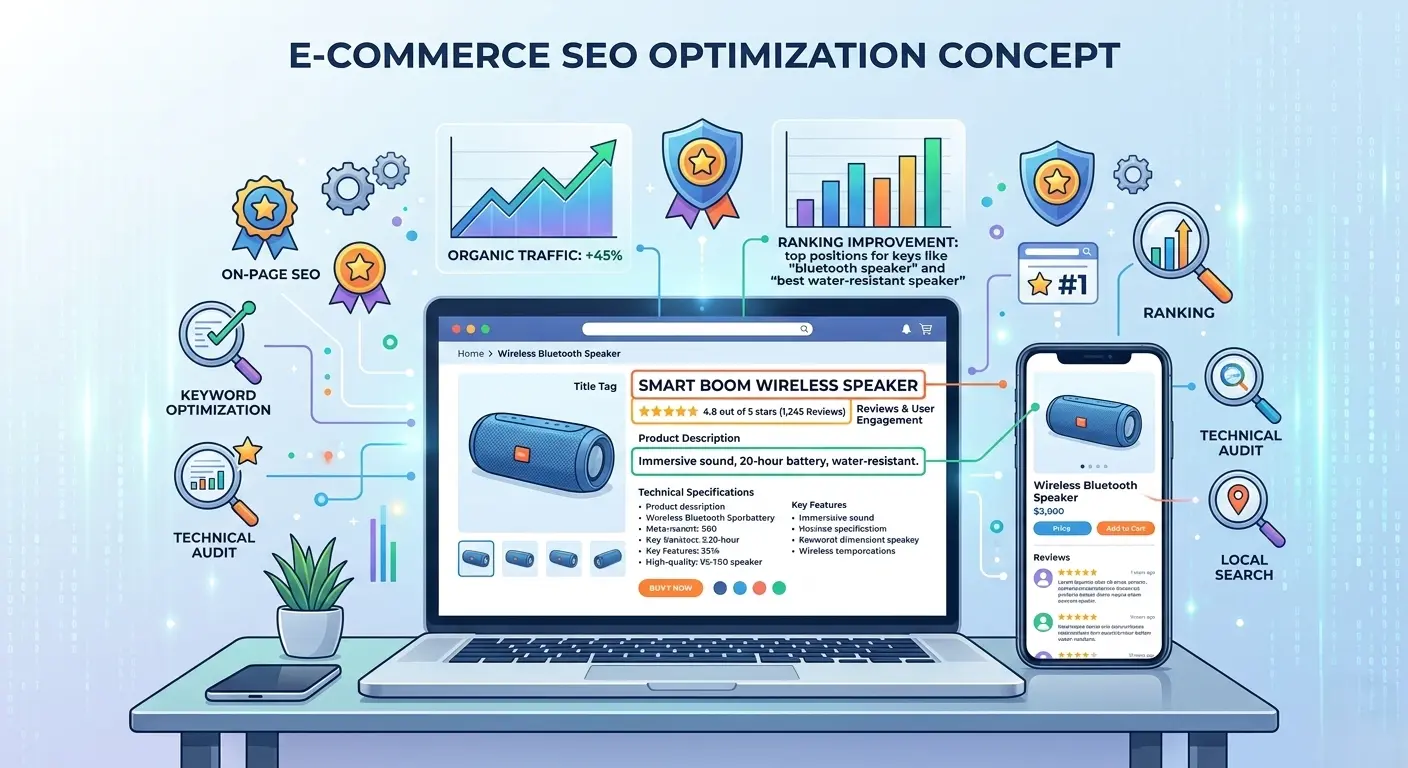
In the competitive world of online retail, eCommerce SEO is essential for driving traffic, increasing visibility, and boosting sales. Optimizing product pages for search engines ensures that your offerings appear in front of the right audience at the right time. Without proper SEO strategies, even the best products can go unnoticed. Understanding how to enhance your product pages can make a significant difference in attracting potential buyers and improving your overall search engine ranking.
The Importance of eCommerce SEO
eCommerce SEO focuses on improving your online store’s visibility in search results. Unlike general SEO, which targets broader content, eCommerce SEO zeroes in on product pages, category pages, and technical aspects of your website that influence online shopping behavior. A well-executed strategy increases organic traffic, enhances user experience, and helps convert visitors into paying customers.
High-quality product pages, when optimized correctly, provide search engines with clear signals about relevance and authority. This improves your search engine ranking while offering users the information they need to make informed purchasing decisions.
Conduct Keyword Research for Product Pages
The first step in product page optimization is conducting keyword research. Identify terms that potential buyers use when searching for products similar to yours. Tools like Google Keyword Planner, Ahrefs, and SEMrush can help uncover high-volume, low-competition keywords relevant to your niche.
Incorporate these keywords naturally into product titles, descriptions, meta tags, and URLs. Avoid keyword stuffing, which can hurt readability and lead to search engine penalties. Instead, focus on crafting content that balances SEO needs with user intent, providing clear and concise information about your products.
Optimize Product Titles and Meta Descriptions
Your product title is one of the most critical eCommerce SEO elements. Include your primary keyword while keeping it descriptive and compelling. A clear title not only improves search visibility but also increases click-through rates from search results.
Meta descriptions play a complementary role. Although they don’t directly influence ranking, they impact how your page appears in search listings. A well-written meta description should summarize the product’s benefits, include a target keyword, and entice users to click. Combining strong titles and meta descriptions is a fundamental aspect of product page optimization.
High-Quality Images and Alt Text
Visual content is a major factor in product pages. High-resolution images help customers understand the product, while eCommerce SEO requires that these images be optimized for search engines. Use descriptive filenames and include keywords in alt text to improve accessibility and indexing.
Optimized images also contribute to faster page loading times, which is critical for both user experience and search engine ranking. Slow-loading pages can increase bounce rates, negatively impacting your overall SEO performance.
Detailed and Unique Product Descriptions
Search engines favor unique content, so avoid copying manufacturer descriptions. Create detailed product descriptions that highlight features, benefits, specifications, and potential use cases. Integrate your primary keyword naturally, along with related terms, to improve relevancy.
Effective descriptions answer common customer questions, reduce return rates, and encourage conversions. Well-crafted content also signals authority to search engines, enhancing your site’s credibility and improving eCommerce SEO results.
User Reviews and Ratings
Customer reviews not only build trust but also enhance product page optimization. Reviews provide fresh, user-generated content that search engines value. They often include relevant keywords naturally, contributing to better indexing and search engine ranking.
Encouraging honest feedback and showcasing ratings can increase engagement and conversion rates. Positive reviews can also improve click-through rates from search results, further supporting your SEO strategy.
Internal Linking and Structured Data
Internal linking between product pages and category pages helps search engines crawl your website effectively. Proper linking ensures that authority flows through your site and that users can navigate easily, which improves both eCommerce SEO and the overall shopping experience.
Structured data, such as Schema markup, allows search engines to display rich snippets, including ratings, prices, and availability. This additional information can increase visibility in search results and encourage higher click-through rates.
Mobile Optimization and Page Speed
With more consumers shopping on mobile devices, mobile-friendly design is a key component of product page optimization. Responsive layouts, easy navigation, and fast loading times enhance user experience while contributing to higher search engine ranking.
Page speed, in particular, is a critical ranking factor. Optimizing images, leveraging browser caching, and minimizing unnecessary scripts can significantly improve load times, keeping users engaged and reducing bounce rates.
Conclusion
Optimizing your product pages for eCommerce SEO is crucial for attracting traffic, improving search engine ranking, and increasing conversions. By focusing on product page optimization, including keyword research, compelling descriptions, high-quality images, and mobile-friendly design, online retailers can create pages that satisfy both search engines and customers.
A strategic approach to SEO ensures that your products are visible, accessible, and compelling, ultimately driving sales and establishing a strong online presence. By implementing these practices, businesses can stay competitive in the ever-growing digital marketplace and maximize the potential of their eCommerce platforms.