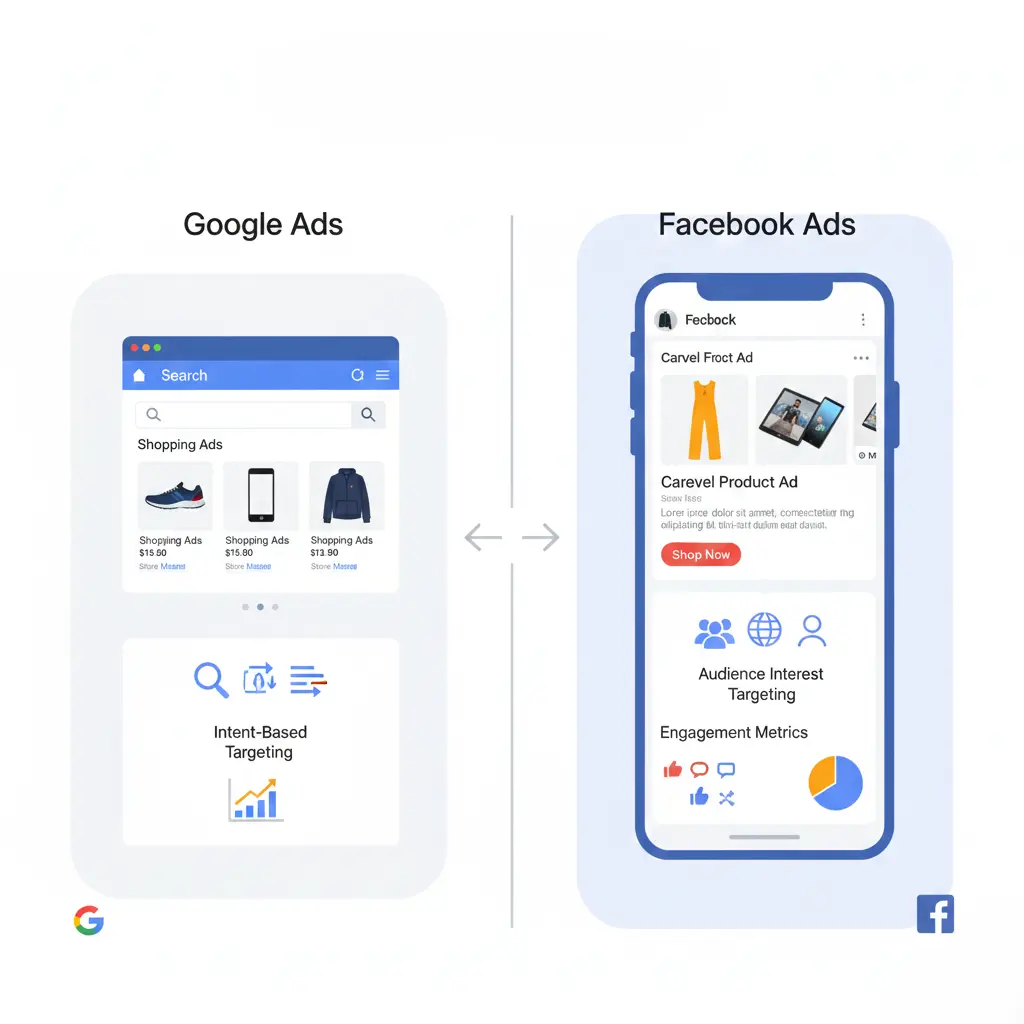
For ecommerce businesses, paid advertising is one of the fastest ways to drive traffic, generate sales, and scale revenue. Two of the most powerful platforms dominate this space: Google Ads and Facebook Ads. While both are highly effective, they work in very different ways. Understanding the strengths, differences, and best use cases of Google Ads vs Facebook Ads for ecommerce can help you choose the right platform or combine both for maximum results.
What Is Google Ads for Ecommerce?
Google Ads focuses on intent-based advertising. It allows ecommerce brands to show ads to users who are actively searching for products or solutions.
Key Google Ads Formats for Ecommerce
Search Ads
These ads appear at the top of Google search results when users search for product-related keywords. They are highly effective for capturing high-intent shoppers.
Shopping Ads
Google Shopping Ads display product images, prices, brand names, and reviews directly in search results, making them ideal for ecommerce conversions.
Display and YouTube Ads
These ads help with brand awareness and retargeting by reaching users across websites and video platforms.
What Are Facebook Ads for Ecommerce?
Facebook Ads focus on discovery-based advertising. They help ecommerce brands reach users based on interests, behaviors, and demographics, even if they are not actively searching for a product.
Key Facebook Ad Formats for Ecommerce
Image and Video Ads
Visually engaging ads that appear in Facebook and Instagram feeds, Stories, and Reels.
Carousel Ads
Allow brands to showcase multiple products or features in a single ad, ideal for ecommerce catalogs.
Dynamic Product Ads
Automatically show relevant products to users who have visited your website or viewed specific items.
Google Ads vs Facebook Ads for Ecommerce: Key Differences
Understanding how these platforms differ is essential for making the right advertising decision.
User Intent vs User Interest
Google Ads targets users with high purchase intent. When someone searches for “buy running shoes online,” they are already close to making a purchase. Facebook Ads, on the other hand, target users based on interests and behavior, helping brands create demand rather than capture it.
Cost and Competition
Google Ads often have higher cost-per-click, especially in competitive ecommerce niches. However, the traffic tends to convert better due to strong intent. Facebook Ads usually offer lower costs and wider reach but may require more nurturing before conversion.
Ad Creatives and Content Style
Facebook Ads rely heavily on strong visuals, storytelling, and emotional appeal. Google Ads, especially Search and Shopping campaigns, focus more on relevance, keywords, pricing, and product details.
Which Platform Is Better for Ecommerce?
There is no single winner in the Google Ads vs Facebook Ads for ecommerce debate—it depends on your business goals.
When Google Ads Is the Better Choice
Google Ads is ideal if you want to:
- Capture ready-to-buy customers
- Promote specific products with clear demand
- Drive fast and measurable sales
- Compete on product quality, price, and availability
When Facebook Ads Is the Better Choice
Facebook Ads works best if you want to:
- Build brand awareness
- Launch new or innovative products
- Retarget website visitors
- Create demand through visual storytelling
Why Ecommerce Brands Should Use Both
The most successful ecommerce brands combine Google Ads and Facebook Ads into a single strategy.
Full-Funnel Ecommerce Marketing
Facebook Ads are excellent for top-of-funnel awareness and engagement, while Google Ads are powerful for bottom-of-funnel conversions. Together, they create a complete customer journey from discovery to purchase.
Better Retargeting and Scaling
You can use Facebook Ads to retarget users who engaged with your brand and Google Ads to capture them when they search again, increasing conversion rates and return on ad spend.
Conclusion
When comparing Google Ads vs Facebook Ads for ecommerce, the real advantage comes from understanding how each platform works and using them strategically. Google Ads excels at capturing high-intent shoppers, while Facebook Ads shines at discovery, branding, and retargeting. By aligning each platform with the right goals, ecommerce businesses can drive consistent traffic, boost conversions, and scale profitably in a competitive digital marketplace.