Tag: Paid Ads

  • How Paid Ads Can Boost Your Online Store Revenue

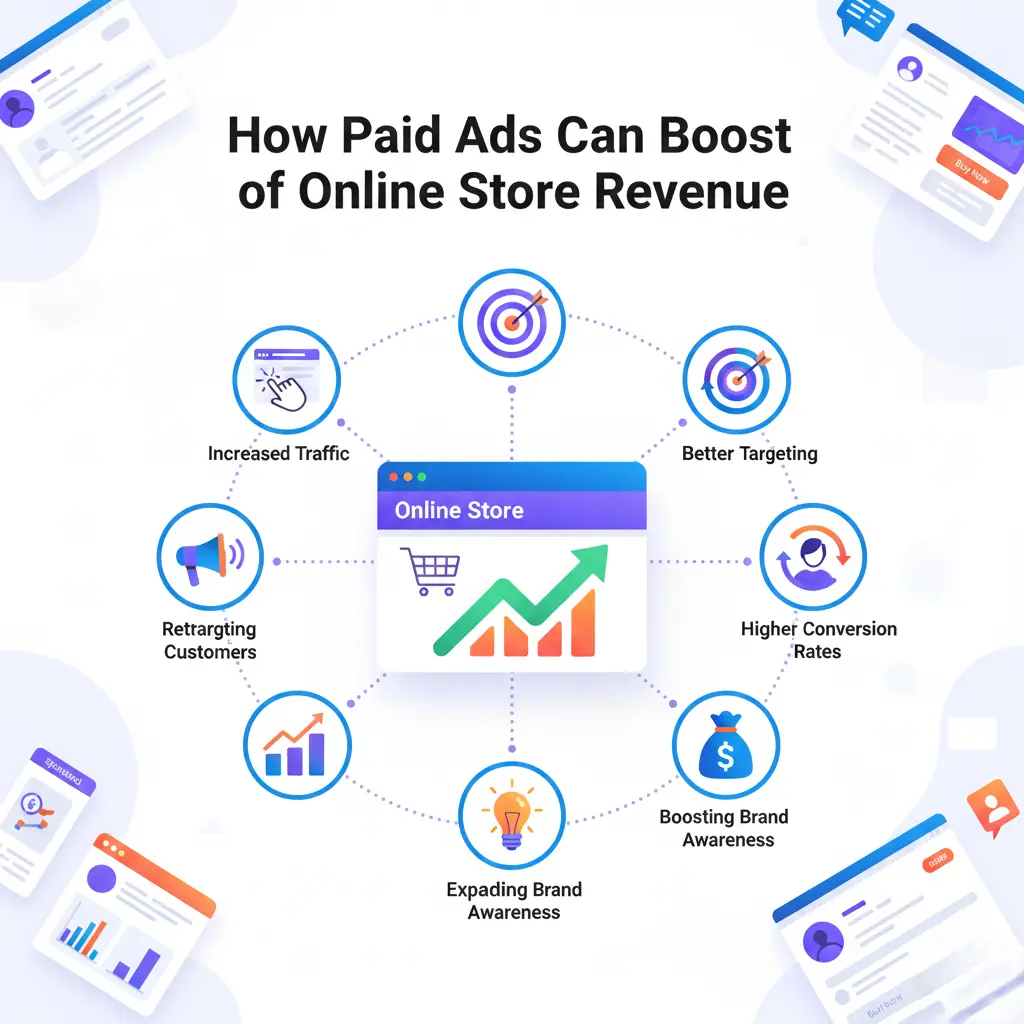
    How Paid Ads Can Boost Your Online Store Revenue

    In today’s highly competitive e-commerce world, getting your products in front of the right audience is more challenging than ever. While organic traffic is valuable, it often takes time and consistency to deliver results. That’s where paid advertising comes into play. Paid ads provide online stores with instant visibility, measurable performance, and predictable growth. When used strategically, they can significantly increase traffic, conversions, and overall revenue.

    1. Paid Ads Put Your Store in Front of a Targeted Audience

    One of the biggest advantages of paid ads is audience targeting. Platforms like Meta Ads, Google Ads, TikTok Ads, and Amazon Ads allow you to reach people who are most likely to buy your products. You can target users based on:

    • Interests and behaviours
    • Demographics
    • Location
    • Search intent
    • Past interactions with your brand

    This ensures your budget is spent on users who actually have an interest in your products, increasing your chances of generating quality sales.

    2. Immediate Traffic and Faster Results

    Unlike SEO, which takes months to build, paid ads can send traffic to your store within minutes. This is extremely beneficial when:

    • Launching a new product
    • Running a limited-time offer
    • Competing in a saturated market
    • Testing new marketing angles

    Fast visibility allows you to drive revenue quickly and gather real-time data to optimize your strategy.

    3. Helps You Retarget Visitors and Recover Lost Sales

    Most online shoppers don’t buy on their first visit. This is where retargeting ads make a huge difference. Retargeting helps you reconnect with:

    • Visitors who viewed products
    • Users who added items to cart
    • Shoppers who abandoned checkout

    By showing them relevant ads reminding them of what they left behind, you can significantly increase your conversion rate and recover lost revenue.

    4. Paid Ads Provide Measurable and Scalable Results

    Every click, conversion, and sale can be tracked through analytics. This gives you full control over your ROI. You can measure:

    • Cost per click (CPC)
    • Cost per acquisition (CPA)
    • Return on ad spend (ROAS)
    • Customer lifetime value (CLV)

    Because paid ads deliver clear data, scaling becomes easier. Once you find a profitable ad campaign, you can simply increase the budget to amplify results.

    5. Enhances Brand Awareness and Visibility

    Paid ads don’t just generate sales—they also boost brand recognition. Even if users don’t purchase immediately, seeing your brand repeatedly builds trust and familiarity. This increases the likelihood of:

    • Higher future conversions
    • Organic searches for your brand
    • Repeat purchases

    A strong online presence is a major driver of long-term revenue growth.

    6. Supports Product Testing and Market Research

    Paid ads are one of the fastest ways to test:

    • New product ideas
    • Pricing strategies
    • Creative designs
    • Marketing messages
    • Offers and bundles

    Instead of guessing what works, you can use real customer data to refine your product strategy. This reduces the risk of stocking products that won’t sell and helps you understand what your audience truly wants.

    7. Helps Improve Organic Performance Over Time

    Successful paid ad campaigns generate traffic, engagement, and signals that improve your website’s overall performance. More clicks, more time on site, and consistent brand visibility can also support:

    • Improved SEO results
    • Higher brand searches
    • Better customer trust

    Paid and organic strategies work best when used together.

    8. Drives Higher Average Order Value (AOV)

    Paid ads allow you to promote:

    • Upsells
    • Cross-sells
    • Bundled products
    • Limited-time offers

    By strategically targeting customers with relevant offers, you can increase the average order value, helping boost overall revenue even further.

    9. Access to AI Optimization and Automation

    In 2026, ad platforms use powerful AI to:

    • Automatically optimize bidding
    • Create dynamic audiences
    • Generate ad creatives
    • Adjust placements for higher performance

    This means you can achieve better results with less manual effort. AI-driven ads help maximize your budget and deliver consistent revenue growth.

    10. Competitive Advantage in Crowded Markets

    If your competitors are running ads and you are not, you lose visibility and potential customers. Paid ads allow you to:

    • Outrank competitors
    • Promote offers more aggressively
    • Capture a larger share of the market

    With the right strategy, even small businesses can compete with large brands.

    Final Thoughts

    Paid ads are one of the most effective ways to increase your online store revenue quickly and consistently. From precise targeting to real-time performance data, retargeting, and AI optimization, paid advertising gives you full control over your growth.

    Whether you’re launching a new product or scaling your e-commerce brand, investing in paid ads can help you drive traffic, improve conversions, and stay ahead of your competitors.

  • Influencer Marketing vs Paid Ads: Which Works Better for E-Commerce Brands?

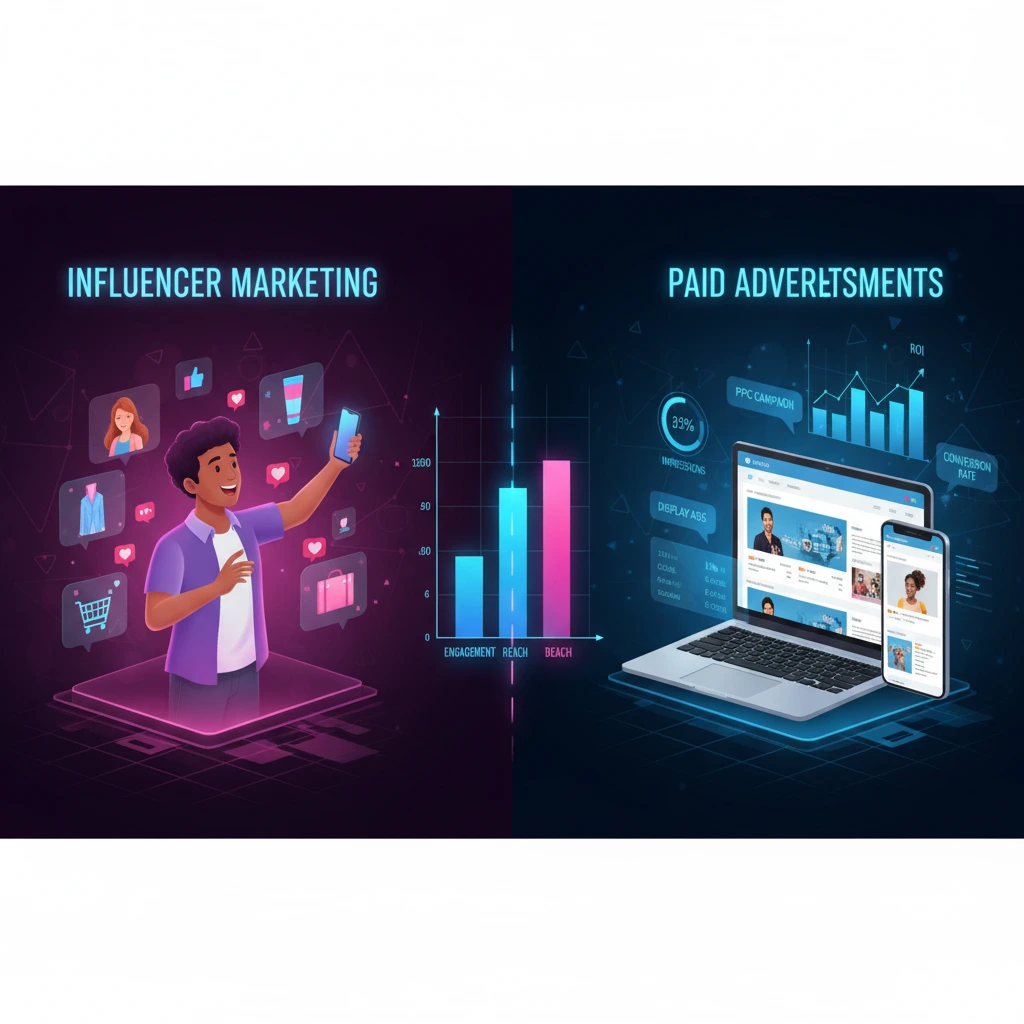
    Influencer Marketing vs Paid Ads: Which Works Better for E-Commerce Brands?

    E-commerce brands are constantly looking for strategies to drive traffic, increase sales, and build brand awareness. Two of the most popular approaches are influencer marketing and paid advertising. Both strategies have their benefits, but they serve different purposes and deliver different results. Understanding the strengths and limitations of each can help brands optimize marketing budgets and achieve long-term growth.

    What Is Influencer Marketing?

    Influencer marketing involves collaborating with social media personalities or content creators to promote your products. These influencers have built trust with their audience and can sway purchasing decisions through authentic content. Platforms like Instagram, TikTok, and YouTube have made influencer campaigns more accessible, even for small e-commerce businesses.

    Influencers can be categorized by their follower count:

    • Nano-influencers (1k-10k followers) often have highly engaged niche audiences.
    • Micro-influencers (10k-100k followers) provide a balance of reach and engagement.
    • Macro-influencers (100k-1M followers) and mega-influencers (1M+ followers) offer broad visibility but come at a higher cost.

    The key benefit of influencer marketing is authenticity. Followers trust influencers’ opinions, which often translates into higher engagement and conversion rates compared to traditional ads.

    What Are Paid Ads?

    Paid advertising refers to promotional campaigns where businesses pay to display ads across platforms like Google, Facebook, Instagram, TikTok, or programmatic ad networks. Paid ads come in many forms:

    • Search Ads target users actively searching for products or services.
    • Display Ads appear on websites and apps, often using visuals to grab attention.
    • Social Media Ads reach audiences based on demographics, interests, and behavior.
    • Retargeting Ads focus on users who have previously visited your website or engaged with your content.

    The main advantage of paid ads is control. Brands can define budgets, target audiences, and campaign duration precisely, and measure performance using analytics and ROI metrics.

    Influencer Marketing vs Paid Ads: Key Differences

    1. Trust and Authenticity

    Influencer marketing thrives on credibility. Consumers are more likely to purchase a product recommended by someone they follow and trust. Influencers can create relatable content that feels natural, making the brand message less intrusive.

    Paid ads, on the other hand, are often seen as promotional and can be ignored by users who use ad-blockers or scroll past sponsored content. While ads offer exposure, they don’t inherently build trust.

    2. Reach and Scalability

    Paid advertising provides instant scalability. You can reach thousands or even millions of potential customers immediately, adjust targeting, and scale campaigns quickly based on performance data.

    Influencer marketing grows more organically. While viral campaigns can reach massive audiences, most collaborations are limited by the influencer’s following. Scaling requires engaging multiple influencers, which can be time-consuming and complex.

    3. Cost and ROI

    Influencer marketing can be cost-effective for niche audiences, especially with micro or nano-influencers. Brands often pay via free products, commissions, or flat fees, and ROI depends on engagement and conversions.

    Paid ads offer predictable costs. Platforms allow precise bidding, targeting, and budget control, making it easier to measure ROI. However, competition can increase cost-per-click (CPC) or cost-per-acquisition (CPA), especially in competitive e-commerce niches.

    4. Long-Term Brand Value

    Influencers can contribute to brand storytelling and long-term awareness. Consistent partnerships help build a loyal customer base, create social proof, and improve brand credibility over time.

    Paid ads are more transactional and typically generate short-term results. Once the budget stops, traffic and sales may decline unless sustained campaigns are maintained. They’re excellent for immediate conversions but less effective for long-term brand loyalty.

    When Influencer Marketing Works Best

    Influencer marketing is ideal when your goal is:

    • Building brand awareness with niche or targeted audiences.
    • Creating authentic content that resonates with consumers.
    • Launching new products where social proof matters.
    • Engaging younger demographics like Gen Z or millennials, who value peer recommendations.

    Campaigns that incorporate user-generated content, influencer takeovers, or unboxing videos often see higher engagement and organic reach.

    When Paid Ads Work Best

    Paid advertising is most effective for:

    • Driving immediate sales during promotions or seasonal campaigns.
    • Targeting broad or specific demographics quickly.
    • Retargeting customers who visited your website but didn’t convert.
    • Scaling successful campaigns with measurable ROI.

    Paid ads are particularly useful when you need predictable results and want to complement organic strategies like influencer marketing or SEO.

    Combining Influencer Marketing and Paid Ads

    The most successful e-commerce brands often combine both strategies. For example, an influencer campaign can generate organic buzz, and paid ads can amplify that content to a wider audience. This hybrid approach leverages the trust and engagement of influencers while using the precision and scalability of paid advertising.

    Brands can also repurpose influencer content as ad creatives. User-generated videos and images perform better than traditional stock visuals in paid campaigns because they feel authentic and relatable.

    Measuring Success

    To evaluate which strategy works better for your e-commerce brand, track key metrics:

    • Influencer Marketing: Engagement rate, follower growth, website traffic from influencer links, and conversions.
    • Paid Ads: Click-through rate (CTR), cost-per-click (CPC), conversion rate, and return on ad spend (ROAS).

    Combining analytics from both channels can help identify which approach drives long-term growth versus short-term sales.

    Conclusion

    Both influencer marketing and paid ads have unique strengths for e-commerce brands. Influencers excel at building trust, authenticity, and long-term brand value, while paid ads provide control, scalability, and immediate results.

    The key is not to choose one over the other but to strategically integrate both. Influencer collaborations can create buzz and credibility, while paid ads can amplify reach and conversions. By combining these approaches, e-commerce brands can maximize visibility, engagement, and sales in a competitive online market.

    In 2025, the brands that succeed will be those that understand the balance between authentic storytelling and data-driven advertising—leveraging influencers to build trust and paid ads to scale results.