
Tag: Payment Gateways

  • Best Payment Gateways for eCommerce: Choosing the Right Solution

    Best Payment Gateways for eCommerce: Choosing the Right Solution

    Selecting the right payment solution is one of the most critical decisions for any online business. Reliable checkout experiences build trust, reduce cart abandonment, and protect customer data. That’s why choosing the best ecommerce payment gateways is essential for long-term success and strong ecommerce security.

    Why ecommerce payment gateways matter for online businesses

    Payment gateways act as the bridge between your store and your customer’s bank. They securely process transactions, verify payments, and ensure sensitive data is protected. High-performing ecommerce payment gateways not only improve conversion rates but also strengthen your store’s reputation by providing safe and seamless checkout experiences.

    Customers expect fast payments, multiple payment options, and zero friction—anything less can cost you sales.

    Key features to look for in ecommerce payment gateways

    Not all gateways are created equal. When evaluating ecommerce payment gateways, focus on these essential features:

    • Strong encryption and fraud detection for ecommerce security
    • Support for multiple payment methods (cards, wallets, BNPL)
    • Fast transaction processing and minimal downtime
    • Easy integration with your eCommerce platform
    • Transparent pricing and transaction fees

    The right gateway should grow with your business while keeping customer data protected.

    Top ecommerce payment gateways used by online stores

    Here are some widely trusted options that balance performance and ecommerce security:

    • PayPal – Popular worldwide, easy setup, and trusted by customers
    • Stripe – Developer-friendly with advanced customization options
    • Square – Ideal for businesses selling online and in physical stores
    • Authorize.net – Known for reliability and strong fraud prevention
    • Adyen – Enterprise-level solution with global payment support

    Each of these ecommerce payment gateways offers different strengths depending on your store size, target market, and technical needs.

    How ecommerce payment gateways impact ecommerce security

    Security is non-negotiable in online payments. The best ecommerce payment gateways comply with PCI DSS standards, use tokenization, and deploy real-time fraud monitoring. These measures protect both merchants and customers from data breaches, chargebacks, and unauthorized transactions.

    Strong ecommerce security builds customer confidence, making shoppers more likely to complete purchases and return in the future.

    Choosing the right ecommerce payment gateways for your store

    When selecting among ecommerce payment gateways, consider your audience, geographic reach, and average transaction value. International stores may need multi-currency support, while smaller businesses might prioritize ease of use and low setup costs.

    Testing your checkout flow and monitoring performance metrics can help you refine your choice over time.

    Final thoughts on ecommerce payment gateways

    Your payment gateway is more than just a transaction tool—it’s a trust signal. By choosing reliable ecommerce payment gateways with strong ecommerce security, you create a smoother buying experience and protect your customers at every step. Invest wisely, and your checkout process will become a powerful driver of growth for your eCommerce business.
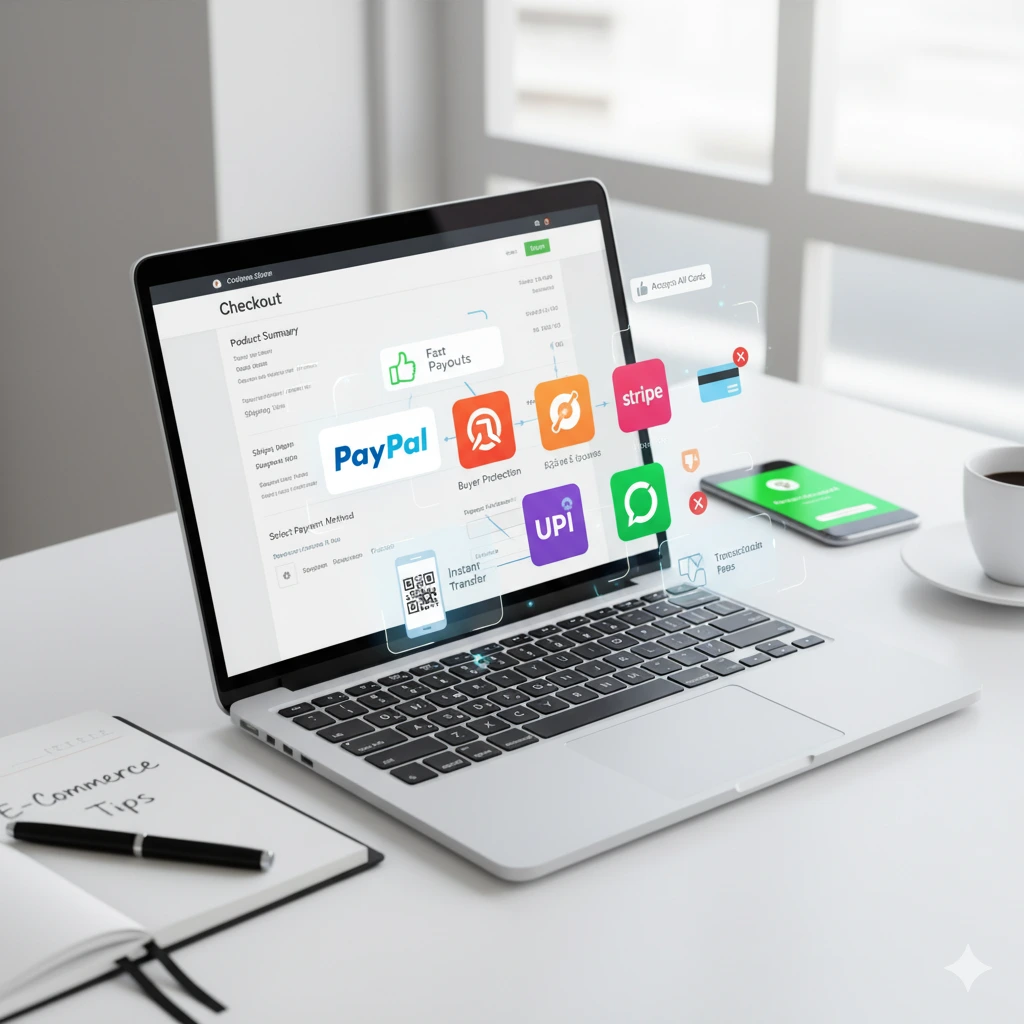
  • Top Payment Gateways for E-Commerce Businesses: Pros, Cons, and Tips

    Top Payment Gateways for E-Commerce Businesses: Pros, Cons, and Tips

    Choosing the right payment gateway is crucial for the success of your online store. It affects customer experience, conversion rates, operational efficiency, and overall business growth. With so many options available, understanding the pros, cons, and best practices can help you make an informed decision.

    Why Payment Gateway Choice Matters

    The payment gateway you choose impacts:

    • Conversion Rates: A smooth, trusted checkout process encourages customers to complete purchases.
    • Costs: Transaction fees, setup fees, and currency conversion rates affect profitability.
    • Payment Options: Supporting multiple payment methods, including cards, wallets, UPI, and net banking, meets customer expectations.
    • Settlement Speed: Faster payouts improve cash flow for operations and reinvestment.
    • Security and Compliance: Protects against fraud and ensures regulatory compliance.

    Top Payment Gateways for E-Commerce

    Razorpay

    Pros:

    • Supports multiple payment modes including UPI, cards, wallets, and net banking.
    • Developer-friendly API for seamless integration.
    • Designed for domestic and international transactions.

    Cons:

    • Transaction fees can add up for high-volume businesses.
    • Onboarding and support may sometimes take longer than expected.

    Best For: Startups and SMEs seeking a modern, flexible solution.

    Cashfree

    Pros:

    • Wide range of payment methods with features like instant settlements.
    • Supports marketplaces with split payments and vendor payouts.

    Cons:

    • Primarily focused on domestic transactions; limited global features.
    • Some advanced features may incur additional fees.

    Best For: Domestic D2C brands and platforms needing fast settlement.

    PayU

    Pros:

    • Strong support for multiple payment methods.
    • Trusted, well-established brand with scalable solutions.

    Cons:

    • Setup and fee structure may be higher for smaller businesses.
    • Customer support can be slower at times.

    Best For: Medium to large e-commerce businesses anticipating growth or cross-border transactions.

    Instamojo

    Pros:

    • Quick and easy setup with minimal monthly fees.
    • Perfect for micro-businesses, freelancers, and small online stores.

    Cons:

    • Limited advanced features compared to larger gateways.
    • Higher per-transaction charges for certain payment methods.

    Best For: Small D2C brands and first-time online sellers.

    Other Notable Gateways

    • CCAvenue: Offers extensive payment methods and enterprise-grade features.
    • Paytm: Strong in UPI and wallet payments; settlement speed may vary.

    Tips for Choosing the Right Payment Gateway

    • Match Payment Methods to Your Audience: Offer the payment methods your customers prefer to avoid cart abandonment.
    • Check Fees Carefully: Consider transaction, setup, settlement, and refund fees.
    • Settlement Speed Matters: Faster payouts help maintain cash flow and operational efficiency.
    • Technical Integration: Ensure the gateway integrates smoothly with your e-commerce platform.
    • Scalability: Choose a solution that can grow with your business, supporting features like subscriptions, multi-currency, or vendor payouts.
    • Security and Compliance: Look for PCI DSS compliance, fraud protection, and secure payment processing.
    • Customer Support: Reliable support ensures quick resolution of issues, which is critical during high-volume sales periods.
    • Chargebacks and Refunds: Understand the gateway’s policies to prevent unexpected losses.

    Conclusion

    There is no one-size-fits-all payment gateway. Your choice depends on factors like customer base, business size, transaction volume, and technical capabilities. For new businesses, Instamojo or Razorpay offers simplicity and flexibility. As your business grows, solutions like PayU or Cashfree can provide advanced features and scalability.

    Selecting the right gateway ensures smooth transactions, builds customer trust, and ultimately boosts sales. A well-chosen payment solution is not just a tool for collecting payments—it’s a key driver of e-commerce success.