Tag: TikTok

  • Influencer Marketing vs Paid Ads: Which Works Better for E-Commerce Brands?

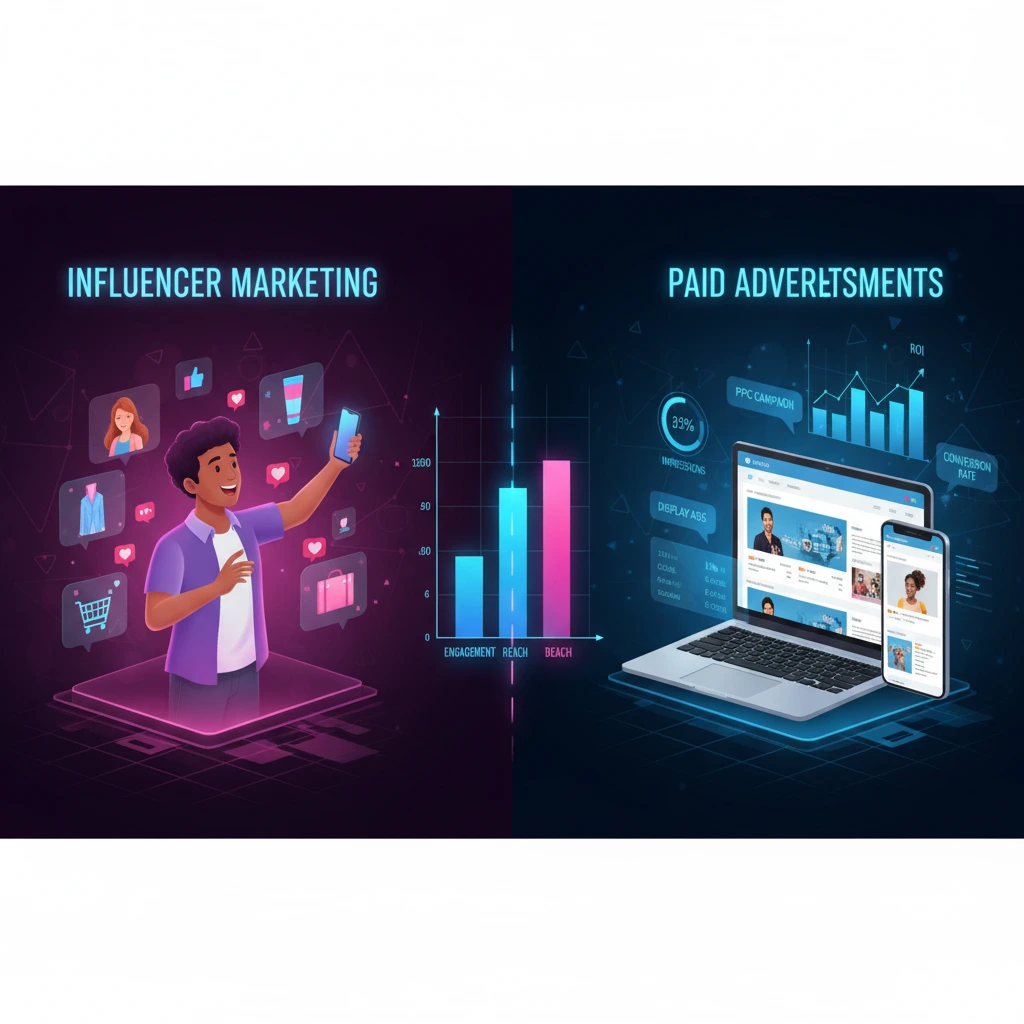
    Influencer Marketing vs Paid Ads: Which Works Better for E-Commerce Brands?

    E-commerce brands are constantly looking for strategies to drive traffic, increase sales, and build brand awareness. Two of the most popular approaches are influencer marketing and paid advertising. Both strategies have their benefits, but they serve different purposes and deliver different results. Understanding the strengths and limitations of each can help brands optimize marketing budgets and achieve long-term growth.

    What Is Influencer Marketing?

    Influencer marketing involves collaborating with social media personalities or content creators to promote your products. These influencers have built trust with their audience and can sway purchasing decisions through authentic content. Platforms like Instagram, TikTok, and YouTube have made influencer campaigns more accessible, even for small e-commerce businesses.

    Influencers can be categorized by their follower count:

    • Nano-influencers (1k-10k followers) often have highly engaged niche audiences.
    • Micro-influencers (10k-100k followers) provide a balance of reach and engagement.
    • Macro-influencers (100k-1M followers) and mega-influencers (1M+ followers) offer broad visibility but come at a higher cost.

    The key benefit of influencer marketing is authenticity. Followers trust influencers’ opinions, which often translates into higher engagement and conversion rates compared to traditional ads.

    What Are Paid Ads?

    Paid advertising refers to promotional campaigns where businesses pay to display ads across platforms like Google, Facebook, Instagram, TikTok, or programmatic ad networks. Paid ads come in many forms:

    • Search Ads target users actively searching for products or services.
    • Display Ads appear on websites and apps, often using visuals to grab attention.
    • Social Media Ads reach audiences based on demographics, interests, and behavior.
    • Retargeting Ads focus on users who have previously visited your website or engaged with your content.

    The main advantage of paid ads is control. Brands can define budgets, target audiences, and campaign duration precisely, and measure performance using analytics and ROI metrics.

    Influencer Marketing vs Paid Ads: Key Differences

    1. Trust and Authenticity

    Influencer marketing thrives on credibility. Consumers are more likely to purchase a product recommended by someone they follow and trust. Influencers can create relatable content that feels natural, making the brand message less intrusive.

    Paid ads, on the other hand, are often seen as promotional and can be ignored by users who use ad-blockers or scroll past sponsored content. While ads offer exposure, they don’t inherently build trust.

    2. Reach and Scalability

    Paid advertising provides instant scalability. You can reach thousands or even millions of potential customers immediately, adjust targeting, and scale campaigns quickly based on performance data.

    Influencer marketing grows more organically. While viral campaigns can reach massive audiences, most collaborations are limited by the influencer’s following. Scaling requires engaging multiple influencers, which can be time-consuming and complex.

    3. Cost and ROI

    Influencer marketing can be cost-effective for niche audiences, especially with micro or nano-influencers. Brands often pay via free products, commissions, or flat fees, and ROI depends on engagement and conversions.

    Paid ads offer predictable costs. Platforms allow precise bidding, targeting, and budget control, making it easier to measure ROI. However, competition can increase cost-per-click (CPC) or cost-per-acquisition (CPA), especially in competitive e-commerce niches.

    4. Long-Term Brand Value

    Influencers can contribute to brand storytelling and long-term awareness. Consistent partnerships help build a loyal customer base, create social proof, and improve brand credibility over time.

    Paid ads are more transactional and typically generate short-term results. Once the budget stops, traffic and sales may decline unless sustained campaigns are maintained. They’re excellent for immediate conversions but less effective for long-term brand loyalty.

    When Influencer Marketing Works Best

    Influencer marketing is ideal when your goal is:

    • Building brand awareness with niche or targeted audiences.
    • Creating authentic content that resonates with consumers.
    • Launching new products where social proof matters.
    • Engaging younger demographics like Gen Z or millennials, who value peer recommendations.

    Campaigns that incorporate user-generated content, influencer takeovers, or unboxing videos often see higher engagement and organic reach.

    When Paid Ads Work Best

    Paid advertising is most effective for:

    • Driving immediate sales during promotions or seasonal campaigns.
    • Targeting broad or specific demographics quickly.
    • Retargeting customers who visited your website but didn’t convert.
    • Scaling successful campaigns with measurable ROI.

    Paid ads are particularly useful when you need predictable results and want to complement organic strategies like influencer marketing or SEO.

    Combining Influencer Marketing and Paid Ads

    The most successful e-commerce brands often combine both strategies. For example, an influencer campaign can generate organic buzz, and paid ads can amplify that content to a wider audience. This hybrid approach leverages the trust and engagement of influencers while using the precision and scalability of paid advertising.

    Brands can also repurpose influencer content as ad creatives. User-generated videos and images perform better than traditional stock visuals in paid campaigns because they feel authentic and relatable.

    Measuring Success

    To evaluate which strategy works better for your e-commerce brand, track key metrics:

    • Influencer Marketing: Engagement rate, follower growth, website traffic from influencer links, and conversions.
    • Paid Ads: Click-through rate (CTR), cost-per-click (CPC), conversion rate, and return on ad spend (ROAS).

    Combining analytics from both channels can help identify which approach drives long-term growth versus short-term sales.

    Conclusion

    Both influencer marketing and paid ads have unique strengths for e-commerce brands. Influencers excel at building trust, authenticity, and long-term brand value, while paid ads provide control, scalability, and immediate results.

    The key is not to choose one over the other but to strategically integrate both. Influencer collaborations can create buzz and credibility, while paid ads can amplify reach and conversions. By combining these approaches, e-commerce brands can maximize visibility, engagement, and sales in a competitive online market.

    In 2025, the brands that succeed will be those that understand the balance between authentic storytelling and data-driven advertising—leveraging influencers to build trust and paid ads to scale results.

  • Social Commerce: How TikTok and Instagram Are Changing the Way We Shop

    Social Commerce: How TikTok and Instagram Are Changing the Way We Shop

    Social media was once a place where people connected with friends, shared photos, and followed trends. Today, it has evolved into a powerful marketplace where entertainment meets e-commerce. Platforms like TikTok and Instagram have transformed the way consumers discover, evaluate, and purchase products, giving rise to what’s now called social commerce. This fusion of social interaction and online shopping is redefining the retail landscape, turning scrolling into shopping and creators into modern-day salespeople.

    What Is Social Commerce?

    Social commerce refers to the buying and selling of products directly within social media platforms. Unlike traditional e-commerce, where users leave a social app to complete a purchase on a website, social commerce keeps the entire shopping journey inside the platform—from discovery to checkout. This seamless experience removes friction and capitalizes on impulse buying behaviors. TikTok, Instagram, and even Facebook now provide integrated shopping tools that allow users to view products, read reviews, and complete payments without ever leaving the app.

    The Rise of TikTok Shopping

    TikTok has quickly become one of the most influential platforms driving the social commerce revolution. Its short-form video format encourages creativity and authenticity, making it ideal for showcasing products in action. When users see someone using a beauty gadget, trying a new recipe, or styling an outfit, they’re often inspired to try it themselves. This organic discovery is what powers TikTok Shopping.

    TikTok’s algorithm amplifies engaging content regardless of the creator’s follower count, allowing small businesses and independent sellers to go viral overnight. The hashtag #TikTokMadeMeBuyIt has become a global phenomenon, generating billions of views and turning everyday items into bestsellers. Products such as skincare tools, kitchen gadgets, and fashion accessories have seen explosive growth thanks to TikTok trends. Unlike traditional advertising, TikTok shopping feels authentic because it’s driven by user-generated content and real-life testimonials.

    Instagram’s Influence on Social Shopping

    Instagram, with its visual-first design, has long been a hub for lifestyle inspiration and brand discovery. Over time, it has evolved into a full-fledged shopping destination. Features like Instagram Shops, product tagging, and checkout within the app allow users to move seamlessly from browsing to purchasing. Influencers and brands can now tag products directly in their posts, stories, and reels, turning ordinary content into interactive storefronts.

    Instagram’s biggest strength lies in its community. Users follow creators, influencers, and brands they trust, which builds authenticity and credibility. When someone sees a favorite influencer wearing a jacket or using a specific brand of makeup, they can instantly tap the post to see the product details and buy it. This form of social validation drives higher engagement and conversion rates compared to traditional online ads.

    Moreover, Instagram’s algorithm favors visual storytelling. Through Reels, Stories, and Live Shopping events, brands can demonstrate products in real-time, answer questions, and showcase customer reviews—all within the app. The result is a shopping experience that feels social, engaging, and personal.

    The Psychology Behind Social Commerce

    Social commerce works so well because it taps into human psychology. People trust recommendations from other people more than from brands. Seeing products used by peers or influencers provides social proof, which reduces the uncertainty that often comes with online shopping. In addition, the constant stream of trending products creates a sense of urgency—consumers feel they might miss out if they don’t act quickly.

    TikTok and Instagram leverage this FOMO (Fear of Missing Out) effect by emphasizing trends and limited-time offers. Viral sounds, hashtags, and influencer collaborations generate buzz, making shoppers feel like they’re part of a community movement. These emotional triggers, combined with a frictionless buying process, explain why social commerce is one of the fastest-growing trends in digital retail.

    The Role of Influencers and Creators

    Influencers have become the backbone of the social commerce ecosystem. They bridge the gap between brands and consumers by providing relatable, trustworthy product endorsements. Instead of traditional ads, followers see real people using real products in real life. Micro-influencers, in particular, often have highly engaged audiences who value their recommendations.

    Both TikTok and Instagram have introduced tools to support creators, such as affiliate links, creator marketplaces, and revenue-sharing programs. These allow influencers to monetize their reach while brands benefit from targeted exposure. As a result, marketing campaigns are becoming more collaborative and performance-driven, where creators are compensated based on engagement or sales generated.

    Why Businesses Are Embracing Social Commerce

    For brands, social commerce offers several advantages. First, it shortens the customer journey. Instead of multiple clicks from ad to website to checkout, customers can now complete purchases within seconds. Second, it enhances discoverability. Social algorithms push engaging content to relevant audiences, helping small businesses reach new potential buyers without massive ad budgets. Third, it provides valuable data insights. Businesses can track engagement, clicks, and sales directly within the platform, allowing them to refine strategies in real time.

    Another major benefit is community building. When shoppers interact with brands on social media, they don’t just buy products—they become part of a lifestyle or culture. This connection fosters loyalty and encourages repeat purchases. Many brands now run hashtag challenges or user-generated content campaigns to turn their customers into brand advocates.

    The Future of Social Commerce

    The future of shopping is social, mobile, and powered by technology. Both TikTok and Instagram are investing heavily in features like AI-powered recommendations, augmented reality try-ons, and live commerce. These innovations will make the shopping experience even more immersive. Imagine watching a live stream of a fashion influencer showcasing outfits, tapping your screen to try one virtually, and completing your purchase instantly—all within the same session.

    Experts predict that social commerce sales will continue to grow exponentially over the next few years, particularly among Gen Z and millennials, who value convenience, entertainment, and authenticity. As the lines between content and commerce continue to blur, brands that adapt quickly will have a competitive edge.

    Challenges and Considerations

    Despite its promise, social commerce also presents challenges. Data privacy and transparency remain major concerns. Platforms must ensure that user data is handled responsibly and that advertising remains ethical. Moreover, not all products or industries are equally suited to social selling. Brands need to craft authentic content that aligns with the platform’s culture; overly promotional content can feel intrusive and backfire.

    Another challenge is customer service. Since transactions occur within social platforms, brands must ensure they provide smooth order tracking, easy returns, and timely responses to inquiries to maintain trust and satisfaction.

    Conclusion

    TikTok and Instagram are reshaping the world of e-commerce by merging entertainment, community, and convenience into one seamless experience. Through short videos, influencer collaborations, and interactive shopping features, these platforms are turning discovery into purchase in ways that feel natural and engaging. For consumers, social commerce offers instant access to trending products and authentic recommendations. For brands, it represents an unparalleled opportunity to reach audiences where they spend most of their time—on social media. As technology evolves and shopping becomes even more integrated into our daily digital lives, one thing is clear: the future of retail is social.