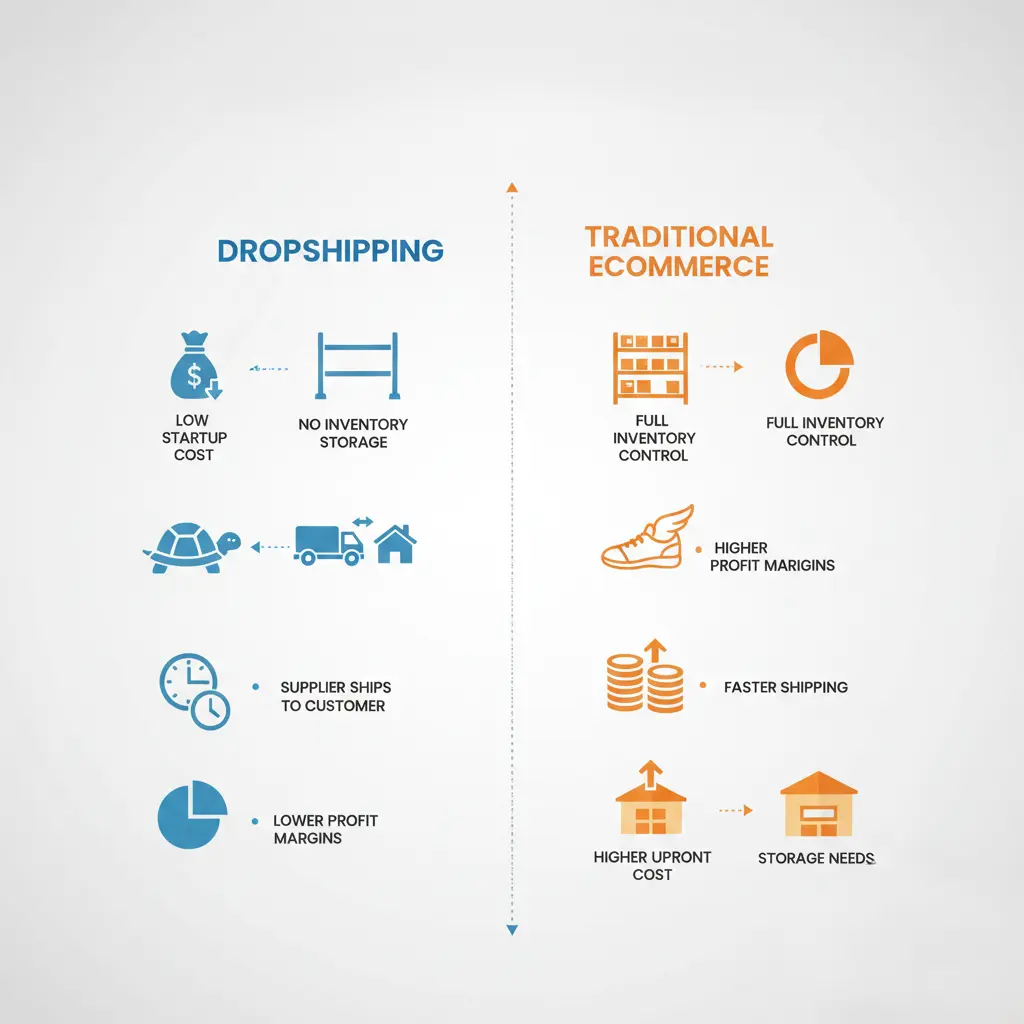
Choosing the right business model is one of the most important decisions for anyone starting an online store. Dropshipping and traditional eCommerce are two popular models, each with distinct advantages and challenges. Understanding their pros and cons can help entrepreneurs make smarter decisions and scale their business effectively.
What Is Dropshipping?
Dropshipping is a retail model where the store sells products without holding inventory. When a customer makes a purchase, the supplier ships the product directly to them. The store acts as a middleman, focusing on marketing, sales, and customer experience.
What Is Traditional Ecommerce?
Traditional ecommerce involves buying inventory in bulk, storing it in a warehouse, and shipping orders directly to customers. This model gives business owners full control over inventory, shipping, and product quality.
Pros of Dropshipping
1. Low Startup Costs
With dropshipping, you don’t need to invest in inventory upfront. This significantly reduces the financial risk, making it easier for beginners to start an online store.
2. Minimal Inventory Management
Since suppliers handle storage and shipping, you save time and resources on logistics, warehousing, and inventory tracking.
3. Wide Product Selection
Dropshipping allows you to list thousands of products without worrying about stock. You can experiment with different niches and products with minimal risk.
4. Location Flexibility
You can run a dropshipping business from anywhere with an internet connection, making it ideal for digital nomads and remote entrepreneurs.
Cons of Dropshipping
1. Lower Profit Margins
Because you don’t buy in bulk, dropshipping products typically have lower margins compared to traditional ecommerce. Competition can further drive prices down.
2. Limited Control Over Shipping and Quality
You rely on suppliers for product quality and delivery times. Delays or defects can negatively impact your brand reputation.
3. Higher Competition
The low barrier to entry means more sellers offer similar products, making it harder to stand out without strong marketing.
Pros of Traditional Ecommerce
1. Higher Profit Margins
Buying in bulk allows for lower product costs, which means higher margins per sale.
2. Greater Control Over Brand Experience
You control inventory, packaging, shipping, and product quality, ensuring a consistent experience for customers.
3. Better Customer Loyalty
Owning the product and fulfillment process allows you to build stronger relationships with customers through personalized packaging, faster delivery, and better service.
Cons of Traditional Ecommerce
1. Higher Startup Costs
You must invest in inventory, storage, and shipping upfront, which increases financial risk.
2. Inventory Management Responsibilities
Tracking stock, handling returns, and managing warehouse operations require time, effort, and infrastructure.
3. Limited Product Testing
Since inventory requires investment, testing new products or niches can be costly and riskier.
Which Model Is Right for You?
If you want to start with low risk and minimal investment, dropshipping is ideal. However, if you’re looking to build a brand with higher margins and full control over customer experience, traditional ecommerce may be the better choice.
Both models have potential for success, but your decision should align with your business goals, budget, and willingness to manage inventory and logistics.