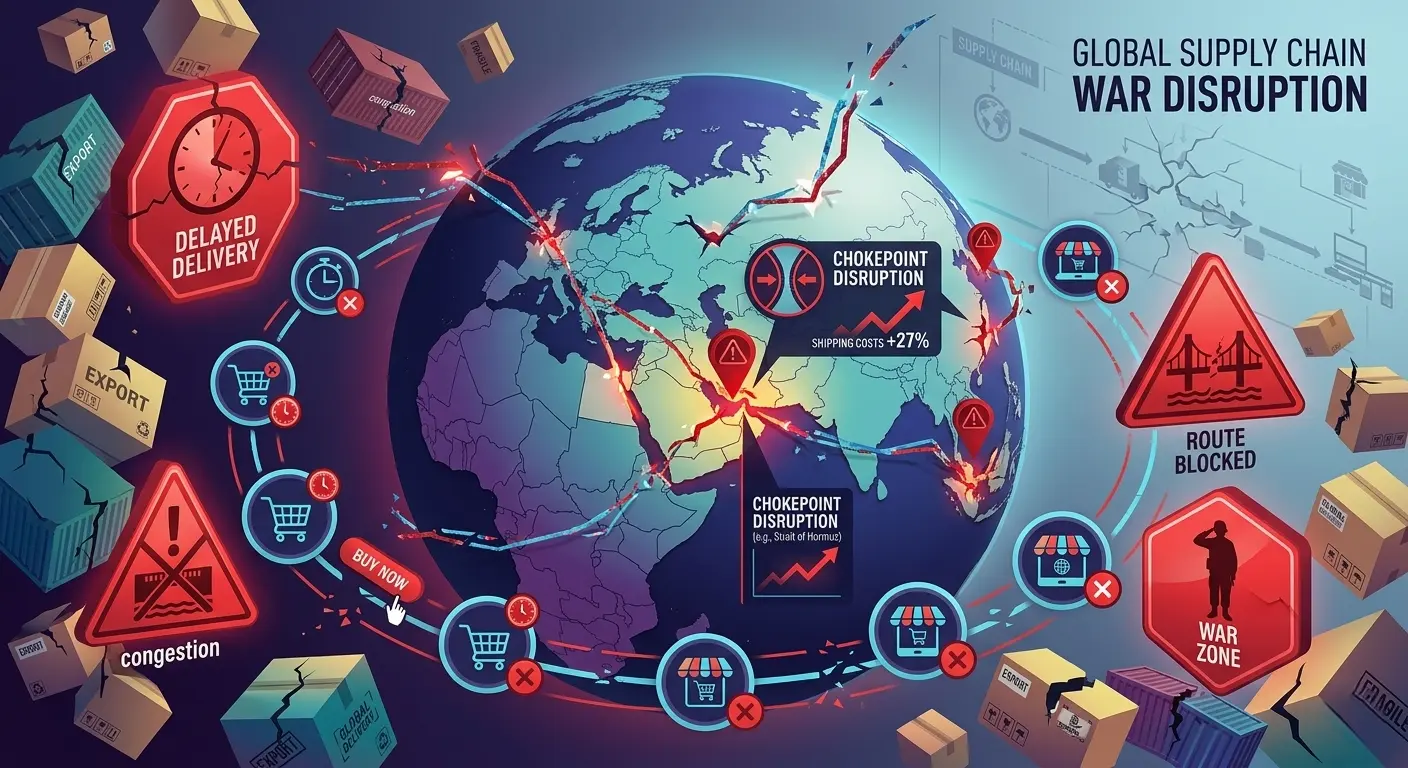
The modern e-commerce ecosystem thrives on globalization, digital connectivity, and smooth international trade. However, geopolitical conflicts can significantly disrupt this delicate balance. Understanding the war impact on global e-commerce is essential for businesses that operate internationally and rely on online marketplaces to reach customers worldwide.
This article explores how wars affect digital commerce, international trade, and supply chains, and provides insights on mitigating risks for online businesses.
How Wars Disrupt Supply Chains
One of the most immediate consequences of conflicts is disruption to supply chains. Manufacturing hubs and shipping routes may be affected by blockades, sanctions, or infrastructure damage.
For e-commerce companies, these disruptions can lead to delayed deliveries, inventory shortages, and increased shipping costs. The war impact on global e-commerce is particularly pronounced in industries that rely on just-in-time inventory systems, where even a short delay can halt operations.
Effect on International Trade
Wars often trigger international sanctions, trade restrictions, and currency fluctuations. These factors make it challenging for businesses to import and export goods, impacting online retailers that serve international markets.
Global e-commerce disruptions may force companies to reroute shipments, seek alternative suppliers, or adjust pricing to accommodate increased costs. Understanding these international trade risks is vital for maintaining profitability during geopolitical instability.
Rising Costs and Inflation
Conflicts can cause a surge in the cost of raw materials, energy, and transportation. These increases often translate into higher prices for consumers, affecting online sales volumes.
The war impact on global e-commerce is not only felt in logistics but also in consumer behavior. Higher prices may reduce discretionary spending, impacting sectors like electronics, fashion, and luxury goods, which are staples of many e-commerce platforms.
Cybersecurity Threats
Modern conflicts are not limited to physical battles; cyberattacks are increasingly used to disrupt economies. E-commerce platforms may face hacking attempts, data breaches, and ransomware attacks during wartime.
Businesses that rely on digital payment systems, cloud storage, and online marketplaces must bolster cybersecurity measures to mitigate the war impact on global e-commerce and protect sensitive customer data.
Changes in Consumer Behavior
Wars and conflicts often create uncertainty and reduce consumer confidence. Shoppers may prioritize essential goods over luxury items or avoid cross-border purchases due to shipping delays and higher costs.
For online businesses, adapting to these shifts is crucial. Companies that respond quickly to changing demand patterns can minimize losses and maintain customer loyalty, even during periods of global e-commerce disruptions.
Supply Chain Diversification
One strategy to counteract the war impact on global e-commerce is diversifying supply chains. Companies can source products from multiple regions, maintain backup suppliers, and invest in regional warehousing.
Diversification reduces reliance on any single country or trade route, helping businesses stay resilient against geopolitical risks and international trade disruptions.
Role of Technology in Mitigation
Technology plays a crucial role in mitigating the effects of conflicts on e-commerce. AI-driven demand forecasting, real-time inventory tracking, and automated logistics planning can help companies respond quickly to disruptions.
By adopting digital tools and agile business models, online retailers can better navigate the uncertainties caused by war and minimize the overall war impact on global e-commerce.
Government Policies and Support
Governments can influence the resilience of global e-commerce through trade agreements, financial assistance, and digital infrastructure support. Companies must stay informed about policy changes and sanctions that could affect cross-border operations.
Being proactive in monitoring regulatory shifts is a key approach to managing international trade risks associated with geopolitical conflicts.
Conclusion
The war impact on global e-commerce underscores the vulnerability of online businesses to geopolitical conflicts. Supply chain disruptions, rising costs, cybersecurity threats, and changing consumer behavior all contribute to a complex landscape that requires strategic planning.
Businesses that diversify supply chains, leverage technology, and monitor regulatory changes are better positioned to withstand disruptions. While conflicts are unpredictable, understanding the risks and implementing mitigation strategies can help e-commerce companies maintain stability in a turbulent global market.
FAQs
1. How does war affect global e-commerce?
Wars disrupt supply chains, increase shipping costs, trigger trade restrictions, and affect consumer behavior, all of which impact the efficiency and profitability of online businesses.
2. What are common international trade risks for online businesses?
Common risks include sanctions, tariffs, currency fluctuations, shipping delays, and restricted access to certain markets, which can complicate cross-border e-commerce operations.
3. How can online businesses mitigate the impact of global conflicts?
Strategies include diversifying supply chains, investing in technology for logistics and in management, enhancing cybersecurity, and staying informed about regulatory and policy changes.
Leave a Reply