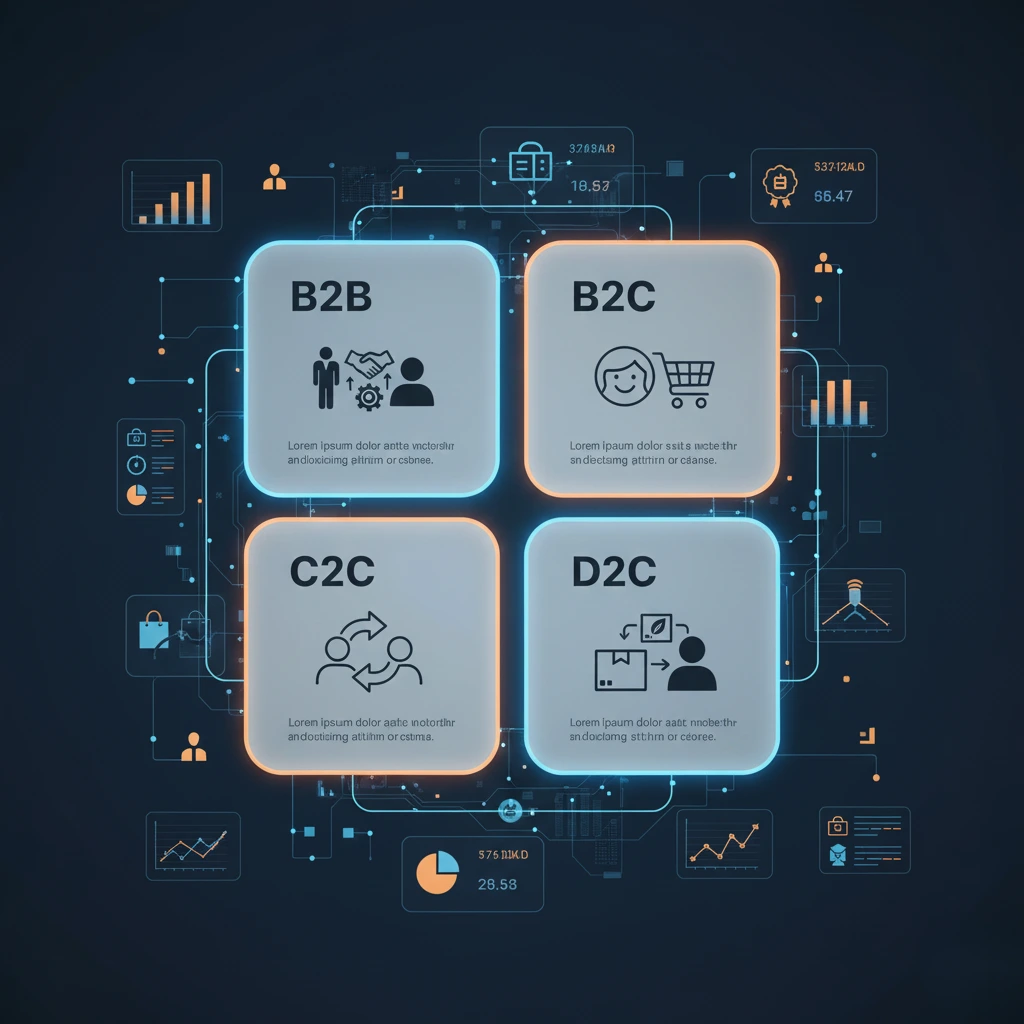
The world of eCommerce continues to grow rapidly, and understanding the different eCommerce business models is essential for anyone starting or scaling an online business. Whether you’re launching a startup or expanding an existing brand, knowing how each model works can help you choose the right path for your goals. The four most common types are B2B, B2C, C2C, and D2C. Each model has unique advantages, challenges, and opportunities for growth.
What Are eCommerce Business Models
An eCommerce business model explains how a company sells products or services online, who it sells to, and how it makes money. These models define the relationship between the buyer and the seller. Understanding them helps you make smart decisions around marketing, pricing, logistics, and customer experience. Let’s explore the main types in detail.
B2B Business to Business
B2B eCommerce involves transactions between two businesses. In this model, one company sells products or services to another company rather than directly to the end consumer. Examples include wholesalers, manufacturers, and service providers selling software, equipment, or bulk items to other companies.
Key Features of B2B eCommerce
- Larger order values because businesses often buy in bulk
- Longer decision-making process since multiple stakeholders are involved
- Strong focus on long-term relationships and repeat purchasing
- Custom pricing and negotiation based on order size or contract terms
Many B2B companies use platforms like Alibaba, Uline, or industry-specific portals to handle orders efficiently. As digital transformation grows, more B2B transactions are moving online to streamline the buying process.
B2C Business to Consumer
B2C eCommerce is the most common and widely recognized model. In this type, businesses sell products directly to individual consumers through online stores or marketplaces. Popular examples include Amazon, Walmart, ASOS, and countless Shopify brands.
Key Features of B2C eCommerce
- Shorter buying cycles because consumers make faster decisions
- Focus on user experience, branding, and emotional purchase triggers
- Competitive pricing and fast delivery expectations
- Marketing relies heavily on SEO, social media, and paid ads
B2C is ideal for entrepreneurs who want to sell directly to everyday shoppers. It offers huge market potential but also higher competition.
C2C Consumer to Consumer
C2C eCommerce allows individuals to sell products or services to other individuals. The platform does not own the products but provides a space where buyers and sellers can connect. Well-known C2C platforms include eBay, Facebook Marketplace, OLX, Etsy, and Poshmark.
Key Features of C2C eCommerce
- Sellers are typically individuals, not businesses
- Platforms earn money through listing fees, transaction fees, or commissions
- Ideal for reselling used items, handmade products, or collectibles
- Builds trust through ratings, reviews, and secure payment systems
C2C continues to grow as the resale economy and sustainability trends become more popular.
D2C Direct to Consumer
D2C eCommerce is a modern model where brands sell their products directly to consumers without relying on traditional retailers, distributors, or wholesalers. This approach has skyrocketed with the rise of social media and online branding. Popular D2C brands include Warby Parker, Glossier, Gymshark, and Allbirds.
Key Features of D2C eCommerce
- Full control over branding, pricing, and customer experience
- Higher profit margins because middlemen are removed
- Strong reliance on digital marketing, influencer partnerships, and content creation
- Direct access to customer data for personalized marketing
D2C gives brands complete ownership of their customer relationships, making it an attractive model for new-age entrepreneurs.
Choosing the Right eCommerce Model for Your Business
Selecting the right eCommerce business model depends on your target audience, product type, and long-term goals. If you want to supply products to other companies, B2B is the best fit. If you want to sell directly to regular shoppers, B2C is ideal. If you prefer running a marketplace-style business, C2C is the way to go. For brands seeking complete independence and stronger customer connections, D2C is highly effective.
Final Thoughts
Understanding the different eCommerce business models helps you create a solid foundation for your online business. Whether you choose B2B, B2C, C2C, or D2C, each model offers valuable opportunities in today’s digital economy. By choosing the right approach and aligning it with your marketing, operations, and customer experience strategies, you can build a sustainable and successful eCommerce business.
Leave a Reply