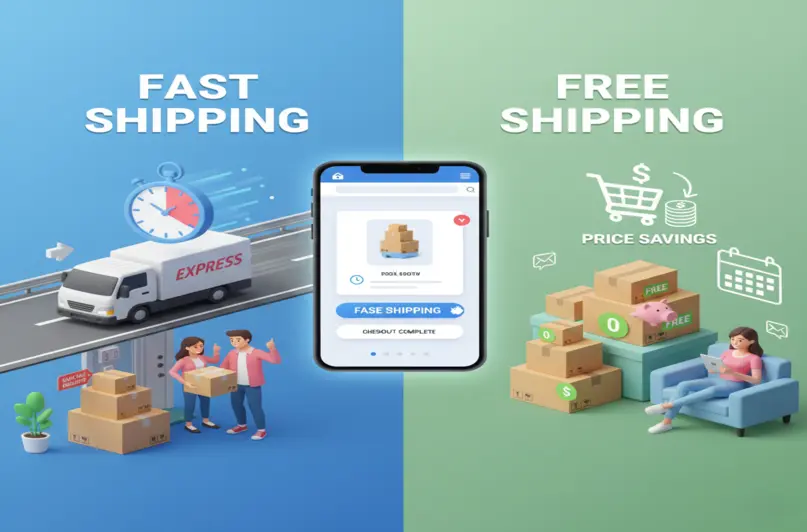
Shipping strategy is one of the most powerful conversion drivers in eCommerce. Customers often abandon carts not because of product price, but due to shipping costs or delivery speed. This raises a critical question for online retailers: Fast shipping vs free shipping, which works better? The answer depends on customer expectations, business margins, and brand positioning. Understanding how each option impacts buyer behavior can help eCommerce brands design a winning shipping strategy.
Understanding Fast Shipping in eCommerce
Fast shipping refers to expedited delivery options such as same-day, next-day, or two-day shipping. Speed-focused fulfillment has become increasingly popular as customers expect quicker deliveries.
Why Customers Value Fast Shipping
Modern consumers prioritize convenience. Fast shipping appeals to customers who need products urgently or value instant gratification. In competitive markets, faster delivery often becomes a deciding factor between similar products.
Benefits of Offering Fast Shipping
Fast shipping improves customer satisfaction, increases repeat purchases, and strengthens brand loyalty. It also provides a competitive advantage, especially in industries like electronics, fashion, and health products where timing matters.
Understanding Free Shipping in eCommerce
Free shipping removes the shipping cost barrier entirely, making the total purchase price more attractive to customers. Even when shipping costs are built into product pricing, customers perceive free shipping as a better deal.
Why Free Shipping Boosts Conversions
Psychologically, customers dislike unexpected fees at checkout. Free shipping reduces friction, lowers cart abandonment rates, and encourages shoppers to complete their purchases. It is often seen as a standard expectation rather than a bonus.
Benefits of Offering Free Shipping
Free shipping increases average order value, especially when paired with minimum purchase thresholds. It also simplifies pricing, making products easier to compare and understand.
Fast Shipping vs Free Shipping: Customer Behavior Insights
Both fast shipping and free shipping influence purchasing decisions differently. Understanding customer behavior is key to choosing the right approach.
Speed vs Cost Sensitivity
Some customers prioritize delivery speed over cost, while others are more price-sensitive. For urgent purchases, fast shipping wins. For everyday or non-urgent items, free shipping often performs better.
Impact on Cart Abandonment
Free shipping consistently reduces cart abandonment, as shipping fees are one of the top reasons customers leave without completing a purchase. Fast shipping, however, can recover sales when customers are willing to pay for speed.
Cost Implications for eCommerce Businesses
Shipping strategy directly affects profitability. Choosing between fast shipping and free shipping requires balancing customer expectations with operational costs.
Cost Challenges of Fast Shipping
Fast shipping involves higher carrier fees, operational complexity, and reliance on efficient fulfillment centers. While customers may pay extra for speed, not all businesses can absorb the costs without affecting margins.
Cost Challenges of Free Shipping
Free shipping is never truly free for the seller. Businesses must either absorb the shipping cost or increase product prices. Without careful planning, free shipping can reduce profit margins significantly.
Which Works Better for Conversion Rates?
When comparing fast shipping vs free shipping, free shipping generally performs better for conversion rates. Customers are more likely to complete a purchase when they see no additional shipping cost at checkout.
Data-Driven Insights
Studies consistently show that free shipping increases checkout completion, while fast shipping increases customer satisfaction post-purchase. This means free shipping helps close the sale, while fast shipping enhances loyalty.
Combining Fast Shipping and Free Shipping Strategies
Many successful eCommerce brands use a hybrid approach rather than choosing one option exclusively.
Free Shipping with Fast Paid Options
Offering free standard shipping alongside paid expedited shipping gives customers flexibility. Price-sensitive shoppers choose free shipping, while urgency-driven customers opt for fast delivery.
Free Shipping Thresholds
Setting a minimum order value for free shipping increases average order value while protecting margins. Customers often add extra items to qualify for free shipping.
The Role of Fulfillment Centers in Shipping Strategy
Efficient fulfillment centers make both fast shipping and free shipping more viable. Strategic warehouse locations reduce delivery times and shipping costs, allowing businesses to offer competitive shipping options.
Distributed Fulfillment for Faster Delivery
By storing inventory closer to customers, fulfillment centers enable faster shipping at lower costs. This makes it easier to offer both speed and affordability.
Automation and Cost Efficiency
Automated fulfillment processes reduce handling costs, helping businesses offset free shipping expenses while maintaining fast delivery timelines.
Choosing the Right Shipping Strategy for Your Brand
The best shipping strategy depends on your target audience, product type, and business model.
When Fast Shipping Works Best
Fast shipping works best for premium brands, urgent-use products, and customers who value convenience over cost. It supports a premium brand image and justifies higher pricing.
When Free Shipping Works Best
Free shipping is ideal for competitive markets, price-sensitive customers, and high-volume sales. It drives conversions and encourages larger orders.
Final Verdict: Fast Shipping vs Free Shipping
So, fast shipping vs free shipping, which works better? Free shipping is more effective for driving conversions and reducing cart abandonment, while fast shipping excels at improving customer satisfaction and loyalty. The most successful eCommerce brands combine both strategies to meet diverse customer needs.
In today’s competitive eCommerce landscape, the winning approach is not choosing one over the other, but designing a flexible shipping strategy that balances speed, cost, and customer expectations.
Leave a Reply