Introduction
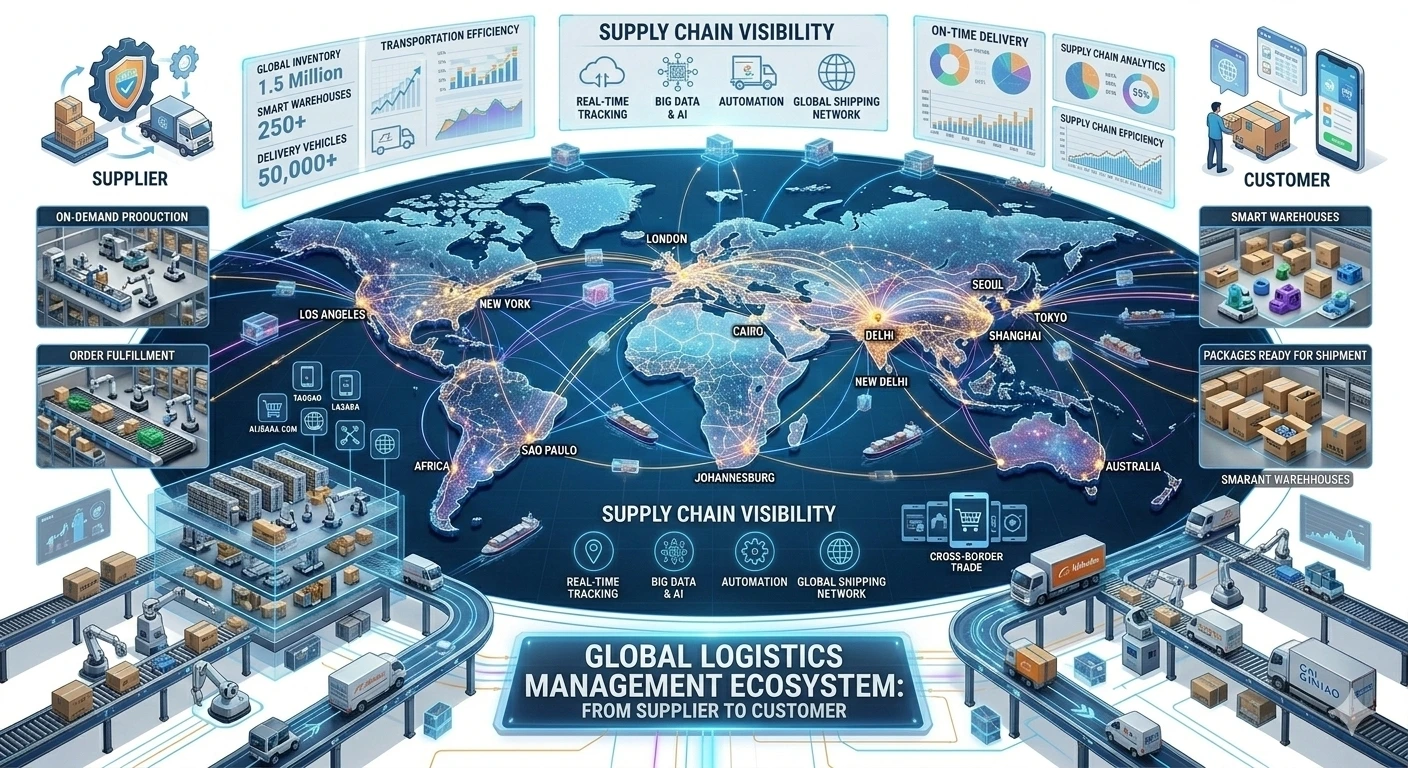
In today’s fast-paced global economy, businesses rely heavily on efficient transportation, storage, and delivery of goods. This entire process is controlled through Logistics Management, which plays a critical role in ensuring that products move smoothly from suppliers to customers. Whether a company sells products online or operates a traditional retail business, effective Logistics Management helps maintain operational efficiency and customer satisfaction.
For beginners, understanding Logistics Management is essential because it directly impacts cost control, inventory handling, and timely delivery. Without proper Logistics Management, businesses may face delays, increased expenses, and dissatisfied customers.
Understanding Logistics Management
At its core, Logistics Management refers to the planning, implementation, and control of the movement and storage of goods, services, and related information within a supply chain. The goal is to ensure that the right product reaches the right customer at the right time and at the lowest possible cost.
Businesses use Logistics Management to coordinate transportation, inventory storage, warehouse operations, and order fulfillment. A well-organized system ensures that products are available when customers need them while reducing waste and operational delays.
Many modern companies rely on advanced software tools and technologies to manage their logistics activities. These tools help track shipments, monitor inventory levels, and improve delivery accuracy. As a result, companies can improve their Logistics Management efficiency and maintain a competitive advantage in the market.
Logistics Management Process
The logistics management process involves several key stages that work together to move goods efficiently through the supply chain.
First is procurement and sourcing. Businesses must obtain raw materials or products from suppliers. Proper planning ensures that the right quantity of goods is purchased at the right time.
Second is inventory management. Companies store products in warehouses or distribution centers until they are ready to be shipped to customers. Maintaining accurate inventory levels helps prevent stock shortages and overstocking.
The next stage is transportation management. Goods must be transported from suppliers to warehouses and finally to customers. Companies choose transportation methods such as road, rail, air, or sea depending on cost, speed, and distance.
Order fulfillment is another critical step. This includes picking, packing, and shipping customer orders quickly and accurately. An efficient logistics management process ensures smooth coordination between these activities.
Finally, companies track and monitor shipments to ensure timely delivery. Modern tracking systems allow businesses and customers to monitor the movement of goods in real time.
Logistics Management Benefits
Implementing an effective logistics system provides several important advantages for businesses. One of the most significant logistics management benefits is improved operational efficiency. When logistics activities are well organized, businesses can reduce delays and avoid unnecessary costs.
Another major logistics management benefits is better customer satisfaction. Customers expect fast and reliable deliveries, and efficient logistics ensures that orders arrive on time and in good condition.
Cost reduction is also a key advantage. Efficient planning and transportation management help businesses minimize fuel costs, storage expenses, and inventory losses.
In addition, businesses gain improved visibility into their supply chain operations. With better tracking and monitoring systems, companies can quickly identify problems and make informed decisions to improve performance.
Scalability is another benefit. As businesses grow, a strong logistics system allows them to handle increased order volumes without disrupting operations.
The Role of Technology in Logistics
Technology has transformed Logistics Management in recent years. Businesses now use digital platforms, automation tools, and data analytics to improve logistics operations.
Warehouse management systems help organize storage spaces and streamline picking and packing activities. Transportation management systems help businesses plan optimal delivery routes and reduce shipping costs.
Real-time tracking technology also allows businesses and customers to monitor shipments. This transparency improves trust and helps companies quickly respond to delays or disruptions.
Conclusion
For any business that deals with physical products, Logistics Management is a fundamental component of success. It ensures that goods move efficiently through the supply chain, from suppliers to customers.
By understanding the logistics management process and recognizing the key logistics management benefits, businesses can improve efficiency, reduce costs, and deliver better customer experiences. As technology continues to evolve, effective Logistics Management will become even more important for companies looking to stay competitive in a rapidly changing marketplace.
Leave a Reply