Category: E-Commerce

  • Mobile Commerce Trends Shaping Online Shopping

    Mobile Commerce Trends Shaping Online Shopping

    The rise of smartphones and mobile technology has drastically changed the way consumers shop. Mobile Commerce Trends are reshaping online shopping by making it faster, more convenient, and more personalized than ever before. Businesses are adapting to this shift to stay competitive, as customers increasingly prefer to browse, compare, and buy products directly from their mobile devices.

    Understanding Mobile Commerce Trends

    Mobile Commerce Trends refer to the evolving patterns, technologies, and strategies that shape mobile shopping. Unlike traditional e-commerce, mobile commerce focuses on the unique experience of shopping on smartphones and tablets. With mobile devices becoming the primary way many users access the internet, companies must pay close attention to these trends to optimize their digital strategies.

    One key aspect of these trends is the rise of smartphone shopping behavior. Consumers now use their devices for product research, price comparisons, and reading reviews before making purchases. They expect fast-loading apps, easy navigation, and secure payment options. Businesses that understand these behaviors can improve engagement and increase sales.

    Key Drivers of Mobile Commerce Trends

    1. Mobile-First Shopping Experience

    Many e-commerce platforms now prioritize mobile design to ensure a seamless shopping experience. From responsive websites to dedicated apps, the mobile-first approach ensures that users can navigate easily, view products, and complete transactions without friction.

    2. AI in Mobile Commerce

    Artificial intelligence is a significant part of Mobile Commerce Trends. AI enables personalized recommendations, predictive search, and intelligent customer support. For example, apps use AI algorithms to suggest products based on past purchases or browsing behavior, creating a highly tailored shopping experience that boosts conversions.

    3. Mobile Payment Innovations

    Secure and convenient mobile payment options are central to mobile commerce. Digital wallets, one-click payments, and contactless methods have become standard expectations. The adoption of these payment methods encourages more consumers to complete transactions directly on their devices.

    4. Social Commerce Integration

    Social media platforms have become key players in mobile commerce. Shoppable posts and in-app purchases allow users to buy products directly while browsing their feeds. This integration aligns with Mobile Commerce Trends, combining convenience with the social discovery of products.

    5. Voice and Visual Search

    Voice assistants and image-based search features are emerging as part of Mobile Commerce Trends. Consumers can speak commands or upload photos to find products instantly. Retailers adopting these tools provide a modern, intuitive shopping experience that meets the expectations of tech-savvy users.

    Impact on Businesses

    Businesses that embrace Mobile Commerce Trends gain a competitive advantage. Understanding smartphone shopping behavior allows companies to tailor marketing, optimize apps, and improve the checkout experience. AI-driven personalization further increases engagement, encourages repeat purchases, and strengthens brand loyalty.

    Additionally, mobile analytics provide valuable insights into user behavior. Companies can track how consumers interact with their apps and websites, enabling continuous improvements. As a result, businesses that leverage these trends can achieve higher conversion rates and better overall customer satisfaction.

    Future of Mobile Commerce

    The future of mobile commerce will continue to be shaped by technology, consumer expectations, and evolving Mobile Commerce Trends. Emerging technologies such as augmented reality (AR), virtual reality (VR), and AI-enhanced product recommendations will further enhance mobile shopping experiences.

    Retailers must stay agile and adopt these innovations early to remain relevant. As mobile devices continue to dominate online access, the focus on personalized, fast, and convenient mobile shopping will remain critical for business success.

    Conclusion

    Mobile Commerce Trends are redefining the way people shop online. With the rise of smartphone shopping behavior and the integration of AI in mobile commerce, businesses can provide faster, smarter, and more personalized experiences. Companies that adopt these trends are better positioned to meet consumer expectations, increase sales, and thrive in the competitive e-commerce landscape.

    FAQs

    1. What are Mobile Commerce Trends?

    Mobile Commerce Trends are the evolving patterns, strategies, and technologies that shape how consumers shop using smartphones and mobile devices.

    2. How does AI impact mobile commerce?

    AI in mobile commerce enables personalized recommendations, predictive search, and intelligent customer support, enhancing the mobile shopping experience.

    3. Why is understanding smartphone shopping behavior important?

    Understanding smartphone shopping behavior helps businesses optimize apps, improve navigation, and offer personalized experiences that drive conversions.

  • Alibaba Business Model: How Alibaba Group Transformed Global E-Commerce

    Alibaba Business Model: How Alibaba Group Transformed Global E-Commerce

    The rise of Alibaba Group has reshaped the global retail landscape. Founded in 1999 by Jack Ma, the company created a powerful ecosystem connecting buyers, sellers, and service providers. At the center of this success lies the Alibaba Business Model, a platform-based strategy that revolutionized how people buy and sell products online.

    Unlike traditional retailers that manage inventory and logistics directly, Alibaba focuses on building digital platforms where businesses can interact and trade. This unique approach has helped the company grow into one of the world’s most influential players in global e-commerce.

    Understanding the Alibaba Business Model

    The Alibaba Business Model is built around connecting millions of merchants with consumers through an advanced digital ecosystem. Instead of acting as a conventional retailer, Alibaba provides the technology, infrastructure, and services that enable online transactions.

    Through platforms such as Taobao, Tmall, and AliExpress, the company supports small businesses, brands, and international sellers. These platforms form the backbone of the Alibaba digital marketplace, enabling millions of products to be listed and sold to consumers worldwide.

    This ecosystem approach allows Alibaba to scale rapidly while minimizing operational costs associated with warehousing and inventory.

    Key Components of the Alibaba Business Model

    The Alibaba Business Model relies on multiple interconnected platforms that serve different segments of the market.

    1. Marketplace Platforms

    Alibaba operates several online marketplaces designed for different audiences. Taobao primarily focuses on consumer-to-consumer transactions, while Tmall allows established brands to sell directly to customers. These platforms power the Alibaba digital marketplace and create opportunities for businesses of all sizes.

    2. Revenue Through Services

    Rather than earning primarily through product sales, the Alibaba Business Model generates revenue through advertising, commissions, and premium merchant services. Sellers pay for marketing tools, data insights, and storefront features that help them attract more customers.

    This service-driven approach has made Alibaba e-commerce platforms extremely profitable while also supporting business growth for merchants.

    3. Logistics and Infrastructure

    Although Alibaba does not directly handle most product deliveries, it has developed strong logistics networks through partners and technology platforms. These systems allow sellers to manage shipping efficiently while ensuring that customers receive their orders quickly.

    Such infrastructure strengthens the Alibaba digital marketplace by improving reliability and customer satisfaction.

    How Alibaba Transformed Global E-Commerce

    The Alibaba Business Model changed the traditional rules of online retail in several important ways.

    First, it empowered small and medium-sized businesses. Merchants who previously lacked access to international markets can now reach millions of buyers through Alibaba e-commerce platforms.

    Second, the model focuses on data and technology. Alibaba uses advanced analytics to understand consumer behavior, helping businesses optimize pricing, marketing, and product offerings.

    Third, Alibaba created large-scale shopping events that drive massive sales volumes. One famous example is Singles’ Day, which has become the biggest online shopping event in the world.

    Global Expansion and Digital Innovation

    The Alibaba Business Model also supports cross-border trade by connecting global buyers and sellers. Platforms like AliExpress allow international customers to purchase products directly from Chinese manufacturers and other suppliers.

    In addition, Alibaba continues investing in cloud computing, digital payments, and artificial intelligence. These technologies strengthen the Alibaba digital marketplace and enhance the overall Alibaba e-commerce experience.

    By integrating commerce, technology, and logistics, Alibaba has created a powerful ecosystem that continues to influence global retail trends.

    Lessons from the Alibaba Business Model

    Businesses around the world can learn several important lessons from the Alibaba Business Model. Building a strong digital platform can create long-term value by connecting multiple stakeholders within a single ecosystem. Supporting small businesses and providing tools for growth can also help expand the entire marketplace.

    Finally, focusing on innovation and data-driven decision-making enables companies to adapt quickly to changing consumer behaviors.

    Conclusion

    The Alibaba Business Model has played a crucial role in transforming online retail. By focusing on platform technology, merchant services, and global connectivity, Alibaba built a thriving ecosystem that supports millions of businesses and consumers. As digital commerce continues to evolve, the strategies behind Alibaba’s success will remain an important reference point for companies seeking to compete in the modern e-commerce landscape.

    FAQs

    1. What is the Alibaba Business Model?

    The Alibaba Business Model is a platform-based strategy that connects buyers and sellers through digital marketplaces rather than selling products directly.

    2. How does Alibaba make money?

    Alibaba generates revenue through advertising, commissions, merchant services, and technology solutions offered within its e-commerce ecosystem.

    3. Why is Alibaba important in global e-commerce?

    Alibaba has transformed global trade by enabling small businesses to reach international customers through its digital platforms and advanced marketplace infrastructure.

  • The Impact of 3D Printing in E-Commerce

    The Impact of 3D Printing in E-Commerce

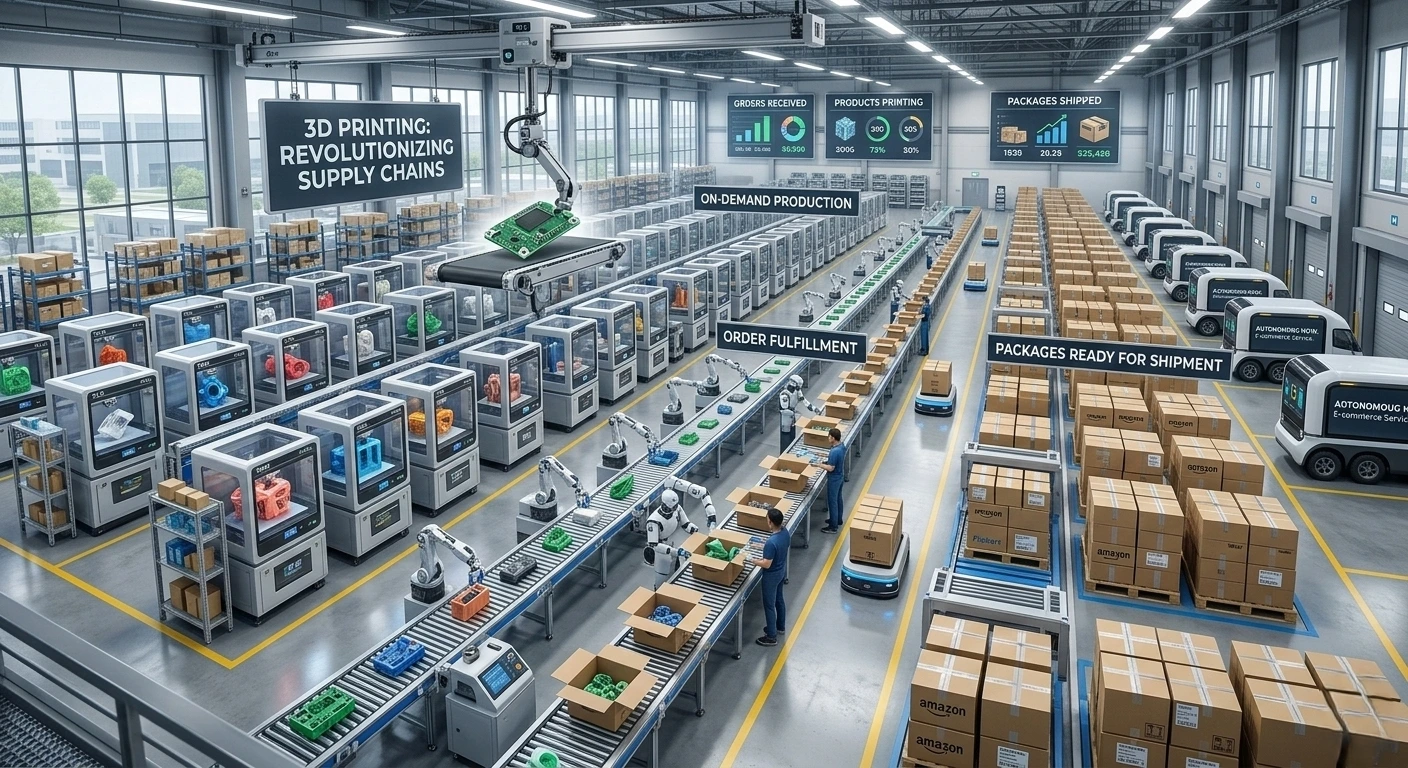
    The world of e-commerce is evolving rapidly, and one of the most transformative technologies driving this change is 3D printing in e-commerce. By enabling businesses to create products on-demand, customize items for individual consumers, and streamline production processes, 3D printing is reshaping the way companies approach manufacturing and fulfillment. This shift has profound implications for supply chains, product personalization, and customer experience.

    How 3D Printing Is Changing E-Commerce

    Traditionally, e-commerce relies on mass-produced inventory that is stored in warehouses until purchased. This model can lead to overstock, storage costs, and delays in product availability. With 3D printing in e-commerce, companies can manufacture items only when orders are placed, significantly reducing the need for large inventories. This not only cuts costs but also allows businesses to respond more flexibly to market trends and customer demands.

    One major advantage of 3D printing is the ability to offer unique and personalized items. Consumers increasingly expect products tailored to their preferences, whether it’s a custom-designed phone case, jewelry, or home décor. By leveraging 3D printed products, e-commerce businesses can provide this level of customization efficiently, enhancing the overall shopping experience.

    Advantages for Supply Chain Innovation

    The adoption of 3D printing in e-commerce also drives significant supply chain innovation. By producing goods on-demand and closer to the end customer, companies can reduce transportation costs, minimize shipping times, and lower their carbon footprint. Localized 3D printing hubs or fulfillment centers allow for faster delivery and a more agile response to customer orders, which is a key advantage in today’s competitive e-commerce environment.

    Moreover, the digital nature of 3D printing simplifies inventory management. Instead of stocking multiple variations of a product, businesses can maintain digital designs and produce them as needed. This approach reduces warehouse space requirements and eliminates the risks associated with unsold stock. Supply chain innovation driven by 3D printing is helping companies achieve higher efficiency and sustainability.

    Expanding Product Offerings

    One of the most exciting aspects of 3D printing in e-commerce is the ability to expand product lines without significant investment in traditional manufacturing. Digital designs can be updated or modified easily, allowing companies to test new ideas or offer limited-edition items without committing to large production runs. This flexibility is particularly beneficial for startups and small businesses that want to compete with larger players in the e-commerce market.

    3D printed products also open opportunities for niche markets. Items that were previously considered too expensive or complex to mass-produce can now be created affordably and efficiently. From custom footwear to specialized electronic components, 3D printing empowers businesses to explore innovative product categories and meet diverse customer needs.

    Enhancing Customer Experience

    Personalization is one of the strongest drivers of customer satisfaction in e-commerce, and 3D printing in e-commerce enables a new level of tailored shopping experiences. Shoppers can customize designs, colors, or sizes, resulting in unique products that reflect their individual tastes. This level of engagement can increase customer loyalty and encourage repeat purchases.

    Additionally, faster production and localized manufacturing reduce delivery times, making the online shopping experience more satisfying. When combined with interactive design tools and real-time previews of 3D printed products, customers gain a sense of control over their purchases that is difficult to achieve with conventional manufacturing methods.

    Challenges and Considerations

    While the benefits of 3D printing in e-commerce are substantial, there are challenges to consider. The cost of high-quality 3D printers and materials can be significant, and not all products are suitable for 3D printing. Intellectual property protection and quality assurance are also important concerns, as digital designs can be copied or modified without authorization.

    Despite these challenges, ongoing advancements in 3D printing technology are steadily reducing costs and expanding capabilities. As printers become faster, more precise, and capable of working with a wider range of materials, the adoption of 3D printing in e-commerce is expected to grow exponentially.

    The Future of E-Commerce with 3D Printing

    The integration of 3D printing in e-commerce represents a paradigm shift in how products are designed, manufactured, and delivered. By enabling on-demand production, personalization, and supply chain innovation, it allows businesses to meet consumer expectations more effectively while reducing operational costs.

    As digital designs and printing technologies continue to evolve, the range of 3D printed products will expand, offering limitless possibilities for creativity and market differentiation. E-commerce businesses that embrace this technology early will likely gain a competitive edge, delivering faster, more personalized, and more sustainable experiences to their customers.

    In conclusion, 3D printing in e-commerce is not just a trend but a transformative force shaping the future of online retail. With its ability to drive efficiency, customization, and innovation, it promises to redefine how products reach consumers in the digital age.

  • The Future of Autonomous Delivery Vehicles in E‑Commerce

    The Future of Autonomous Delivery Vehicles in E‑Commerce

    The rise of e‑commerce has created new demands for faster, more efficient, and reliable delivery systems. Autonomous Delivery Vehicles are emerging as a game‑changer in this landscape, offering solutions to many of the challenges faced by traditional delivery methods. From labour shortages to traffic congestion, these vehicles promise to reshape the way packages reach customers. By leveraging advanced technology, they are becoming a critical component of modern logistics networks and the broader vision of autonomous last‑mile delivery.

    Why Autonomous Delivery Vehicles Are Transformative

    The growth of online shopping has put tremendous pressure on delivery networks. Customers increasingly expect same‑day or two‑hour delivery, which can be difficult to achieve using conventional methods. Autonomous Delivery Vehicles address these challenges by reducing reliance on human drivers and optimizing delivery routes. These vehicles range from small sidewalk robots to larger self‑driving vans capable of navigating urban and suburban streets.

    In addition to improving speed, these vehicles can help reduce delivery costs. By automating routine trips, companies can lower labor expenses and fuel consumption. Many autonomous systems are electric-powered, which also contributes to reducing carbon emissions. As sensor technology, artificial intelligence, and machine learning improve, these vehicles can safely detect obstacles, interact with pedestrians, and navigate complex environments, making them a reliable option for autonomous last‑mile delivery.

    How Autonomous Delivery Vehicles Work

    The process begins at a warehouse or distribution hub, where packages are loaded into autonomous units. These units can then travel independently to designated drop-off points, often using smart lockers or app-based access for secure delivery. Small robotic delivery vehicles food systems are particularly effective in urban areas, as they can navigate sidewalks or designated lanes while minimizing interaction with cars.

    In suburban and rural areas, larger autonomous vans handle longer distances between distribution centers and local delivery points. This combination of vehicle types allows companies to cover different geographies efficiently. The integration of Autonomous Delivery Vehicles into these multi-modal systems ensures faster delivery times and improved service reliability.

    Real-World Deployments and Challenges

    Several companies are already testing Autonomous Delivery Vehicles in real-world scenarios. Grocery chains and food delivery services have deployed robotic delivery vehicles food systems to bring orders directly to customers’ homes. These pilots use advanced mapping, sensors, and real-time communication to ensure accuracy and safety.

    Despite progress, challenges remain. Public safety is a primary concern, especially when autonomous vehicles operate in spaces shared with pedestrians, cyclists, and cars. Regulatory frameworks are still evolving, and companies must demonstrate that their systems are safe and reliable. Public perception is also critical; many people remain cautious about vehicles operating without human drivers. Transparent safety features, robust performance, and responsive customer support are essential for gaining trust.

    Environmental Benefits of Autonomous Delivery Vehicles

    Autonomous Delivery Vehicles can significantly reduce the environmental impact of e‑commerce. By optimizing routes and using electric power, they minimize emissions and traffic congestion. Small sidewalk robots are particularly energy-efficient and help reduce the number of large, fuel-powered vehicles on local streets.

    This shift not only supports sustainability goals but also improves urban living conditions by lowering noise and pollution. Integrating these vehicles into logistics networks demonstrates how technology can enhance both efficiency and environmental responsibility.

    The Future of Autonomous Delivery Vehicles

    As technology continues to advance, Autonomous Delivery Vehicles are likely to become more widespread. Investments from major retailers, tech companies, and logistics providers indicate that this trend will accelerate. AI improvements, infrastructure upgrades, and clearer regulations will enable safer and more efficient operations.

    In the coming years, consumers can expect faster delivery, lower costs, and more reliable service thanks to autonomous systems. Autonomous Delivery Vehicles are transforming the e-commerce logistics landscape, paving the way for an era where deliveries are faster, greener, and more customer-centric. The integration of robotic delivery vehicles food systems and autonomous last‑mile delivery technologies will redefine convenience in online shopping, making it more sustainable and efficient than ever before.

  • Guide to Online Seller VAT Compliance for Global E-Commerce

    Guide to Online Seller VAT Compliance for Global E-Commerce

    As e-commerce expands globally, understanding taxation is critical for online businesses. One of the most important aspects is online seller VAT compliance. Value-Added Tax (VAT) rules differ by country, and failure to comply can lead to fines, blocked accounts on marketplaces, or costly audits. This guide explains everything you need to know to manage VAT obligations efficiently while growing your cross-border business.

    Why Online Seller VAT Compliance Matters

    VAT compliance is not optional for online sellers. Every country that imposes VAT requires sellers to register, collect, and remit tax when certain thresholds are met. For international sellers, ignoring this can result in legal complications, delayed shipments, or frozen marketplace accounts. Understanding online seller VAT compliance ensures your business operates legally while maintaining a positive reputation with customers and authorities.

    Complying with VAT also helps you avoid overpaying taxes, optimize pricing strategies, and streamline bookkeeping. By implementing proper systems early, you can scale operations globally without the risk of non-compliance penalties.

    Understanding VAT for Online Sellers

    A VAT guide for online sellers is essential because different countries have unique rules for registration, invoicing, and reporting. For example, the European Union (EU) requires all sellers exceeding certain sales thresholds to register for VAT in each member country where goods are sold. Similarly, digital products have distinct VAT regulations under the EU’s digital services tax rules.

    Key VAT Compliance Steps:

    1. Register for VAT: Determine in which countries your business crosses VAT thresholds and register accordingly.
    2. Collect VAT at the Point of Sale: Ensure your checkout process calculates VAT based on customer location.
    3. Issue VAT-Compliant Invoices: Invoices must include your VAT number, rate applied, and total VAT charged.
    4. File VAT Returns: Regularly submit returns to the appropriate tax authorities and remit collected VAT.
    5. Maintain Accurate Records: Keep sales, invoices, and refunds organized for audits and reconciliation.

    By following these steps, you achieve proper online seller VAT compliance while avoiding costly errors.

    Cross-Border Tax Considerations

    A cross-border tax guide highlights additional complexities for sellers shipping internationally. Besides VAT, there may be import duties, customs fees, and local sales taxes. Many marketplaces, like Amazon and eBay, provide automated tax calculation tools, but sellers are ultimately responsible for ensuring compliance.

    When selling across borders, consider:

    • Local VAT rates: Rates can vary significantly between countries, even within regions like the EU.
    • Digital vs physical goods: Different VAT rules apply depending on whether your products are tangible or digital.
    • Marketplace responsibilities: Some platforms act as tax collectors for sellers, but verification is crucial.
    • Thresholds and registration: Understanding when and where to register is essential for maintaining legal compliance.

    These factors make online seller VAT compliance more complex but manageable with proper planning and tools.

    Tools and Automation for VAT Compliance

    Automation simplifies compliance and reduces errors. Many sellers use software to manage VAT across multiple countries, integrate with e-commerce platforms, and generate reports for tax authorities. Features to look for include:

    • Multi-country VAT calculation and registration support
    • Automated invoice generation compliant with local rules
    • Filing reminders and submission capabilities
    • Integration with marketplaces and payment gateways

    Using such tools ensures consistent online seller VAT compliance and reduces the administrative burden of managing international taxes manually.

    Common Mistakes to Avoid

    1. Ignoring small sales: Even low-value international sales can trigger VAT obligations.
    2. Using outdated rates: VAT rates change regularly; ensure your systems are updated.
    3. Incomplete recordkeeping: Accurate documentation is critical for audits and reclaiming VAT refunds.
    4. Relying solely on marketplaces: While platforms help, legal responsibility remains with the seller.

    By avoiding these mistakes, sellers can maintain smooth operations and avoid fines while staying compliant.

    Final Thoughts

    Achieving online seller VAT compliance is essential for sustainable global e-commerce. A clear understanding of VAT rules, supported by a VAT guide for online sellers and a practical cross-border tax guide, ensures that you collect, remit, and report taxes accurately. Compliance protects your business, improves customer trust, and allows you to scale internationally without legal complications.

    By implementing robust systems, staying informed about regulatory changes, and using automation tools, online sellers can confidently navigate the complexities of VAT and cross-border taxation. Maintaining online seller VAT compliance is not just a legal requirement—it’s a foundation for building a reliable and scalable e-commerce business.