Tag: automation

  • Hyperlocal Delivery Business Model Explained

    Hyperlocal Delivery Business Model Explained

    In recent years, the demand for faster and more convenient delivery services has grown rapidly. The concept of hyperlocal delivery has emerged as a powerful solution, connecting local businesses with nearby customers for quick and efficient service. This model is transforming how goods are delivered, especially in urban areas.

    What is Hyperlocal Delivery?

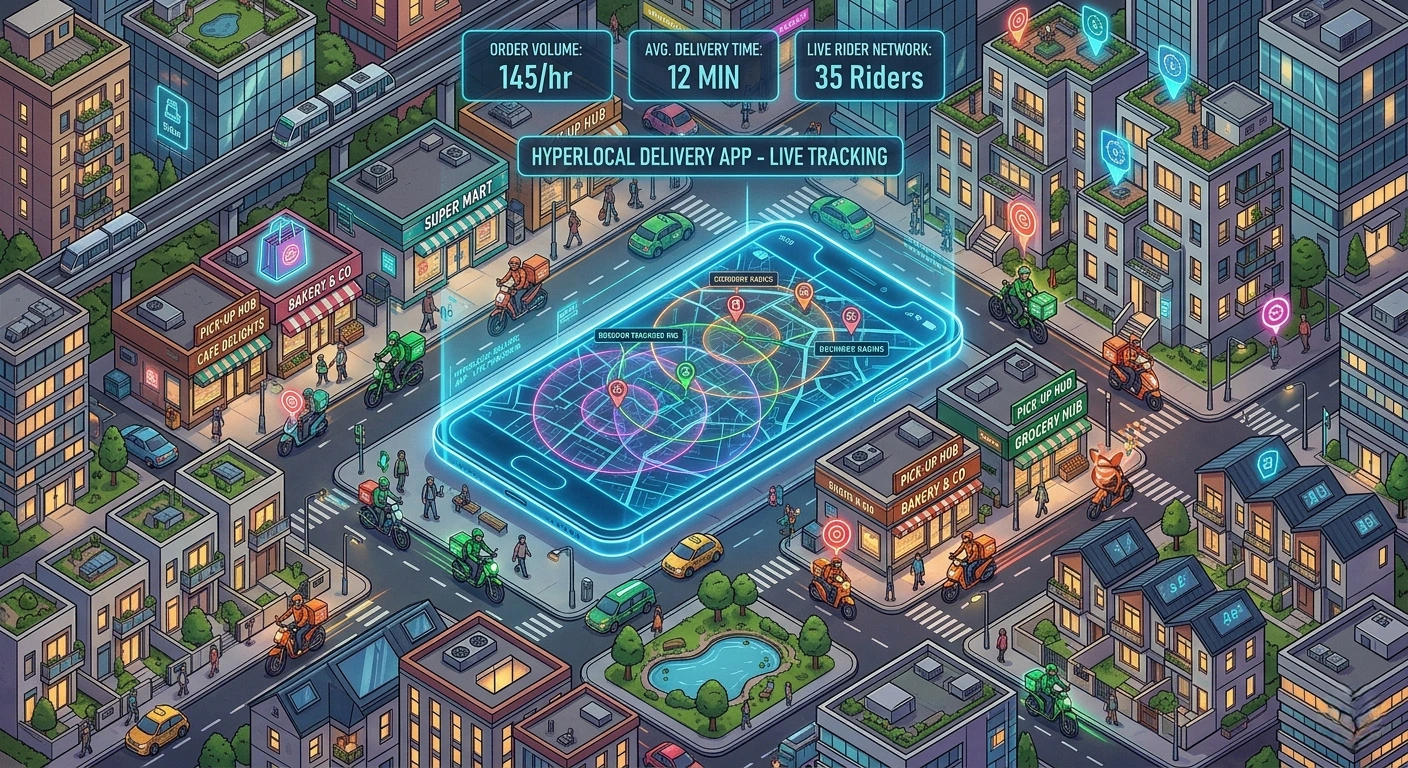
    Hyperlocal delivery refers to the process of delivering goods within a limited geographic area, usually within a few kilometers. It focuses on fulfilling orders from local stores or vendors to customers in real time. For businesses exploring hyperlocal delivery, the goal is to minimize delivery time while maximizing convenience.

    How the Hyperlocal Delivery Model Works

    The business model is simple yet highly effective. It typically involves:

    • A digital platform or app where customers place orders
    • Local merchants or vendors who fulfill those orders
    • Delivery agents who pick up and deliver products

    This system allows businesses to offer on-demand delivery, where customers receive their orders within minutes or hours instead of days.

    Key Components of the Model

    To run a successful hyperlocal delivery business, several components are essential:

    1. Technology Platform
      Mobile apps and websites act as the backbone of the system. These platforms connect customers, vendors, and delivery partners seamlessly.
    2. Local Vendor Network
      Partnering with nearby stores ensures faster order fulfillment and supports small businesses.
    3. Efficient Logistics
      A well-managed fleet of delivery personnel ensures timely and reliable service.
    4. Real-Time Tracking
      Customers expect transparency, so tracking features are a must.

    These elements together create a strong hyperlocal delivery ecosystem that meets modern consumer expectations.

    Role of Local Delivery Apps

    Local delivery apps have made this model more accessible and scalable. They allow users to browse products, compare prices, and place orders instantly. Popular platforms have normalized quick deliveries, making quick commerce a standard expectation.

    For businesses, integrating with local delivery apps can significantly boost reach and customer engagement. These apps are a key driver behind the growth of hyperlocal delivery services worldwide.

    Benefits of Hyperlocal Delivery

    There are several advantages to adopting this model:

    • Faster Deliveries: Orders are fulfilled within hours or even minutes
    • Lower Logistics Costs: Short distances reduce transportation expenses
    • Support for Local Businesses: Encourages customers to shop locally
    • High Customer Satisfaction: Quick service improves user experience

    These benefits make hyperlocal delivery an attractive option for startups and established businesses alike.

    Challenges in the Model

    Despite its advantages, there are challenges to consider:

    • Managing delivery personnel efficiently
    • Handling peak-time demand
    • Ensuring product availability
    • Maintaining consistent service quality

    Overcoming these challenges is crucial for scaling a hyperlocal delivery business successfully.

    Future of Hyperlocal Delivery

    The future looks promising as consumer demand for speed continues to rise. With advancements in technology, automation, and AI, the model is becoming more efficient. The rise of on-demand delivery and quick commerce platforms indicates that instant fulfillment will soon become the norm.

    Businesses investing in hyperlocal delivery today are likely to gain a competitive advantage in the evolving digital marketplace.


    Conclusion

    The hyperlocal delivery model is reshaping the way goods and services reach customers. By leveraging local networks, technology, and efficient logistics, businesses can meet the growing demand for speed and convenience. As local delivery apps and quick commerce continue to expand, this model will play a crucial role in the future of e-commerce.


    FAQs

    1. What is hyperlocal delivery in simple terms?
    It is a delivery model where products are delivered from nearby stores to customers within a short time frame and limited area.

    2. How does hyperlocal delivery differ from traditional delivery?
    Traditional delivery involves long distances and longer timelines, while hyperlocal delivery focuses on nearby locations and faster fulfillment.

    3. Why is hyperlocal delivery becoming popular?
    It offers faster service, supports local businesses, and aligns with the growing demand for convenience and instant delivery.
  • Searching for Trending Products That Boost Your Online Sales?

    Searching for Trending Products That Boost Your Online Sales?

    In the fast-growing world of online business, choosing the right products can make a huge difference in your success. Entrepreneurs and small businesses are constantly looking for ways to increase their sales and attract more customers. One of the most effective strategies is identifying trending products that customers are actively searching for and buying online.

    With the rapid expansion of eCommerce and digital marketplaces, understanding market trends has become essential for businesses that want to grow quickly. Whether you are launching a new online store or expanding an existing one, selecting the right products can help you stay competitive and increase profitability.

    Why Product Trends Matter in eCommerce

    The eCommerce market is highly dynamic, with consumer preferences changing frequently. Businesses that adapt quickly to new trends often gain a competitive advantage. Selling trending products allows online sellers to tap into high demand and attract more buyers without spending excessive amounts on marketing.

    Trending items often gain popularity through social media platforms, influencer recommendations, and viral marketing. When businesses recognize these opportunities early, they can position themselves as leaders in their niche.

    For startups planning to build a successful ecommerce store for startups in Noida, understanding market trends can significantly improve product selection and sales performance.

    How to Identify High-Demand Products

    Finding the right products requires careful research and analysis. Many successful entrepreneurs use tools such as keyword research platforms, online marketplaces, and social media insights to discover trending products.

    Platforms like online marketplaces and search engines reveal what customers are searching for most frequently. Additionally, monitoring customer reviews and feedback can help businesses identify gaps in the market and develop better offerings.

    Digital platforms have also made it easier for sellers to test different product categories before investing heavily in inventory.

    The Growing Demand for Digital Products

    In addition to physical goods, digital products have become a major opportunity for online entrepreneurs. Items such as online courses, design templates, software tools, and downloadable guides are gaining immense popularity.

    Many sellers combine physical trending products with digital products to diversify their revenue streams. Digital products have the advantage of low production costs and unlimited scalability, making them highly profitable for startups.

    Businesses that integrate both product types into their online store can build a more sustainable and flexible business model.

    Using Data to Select the Right Products

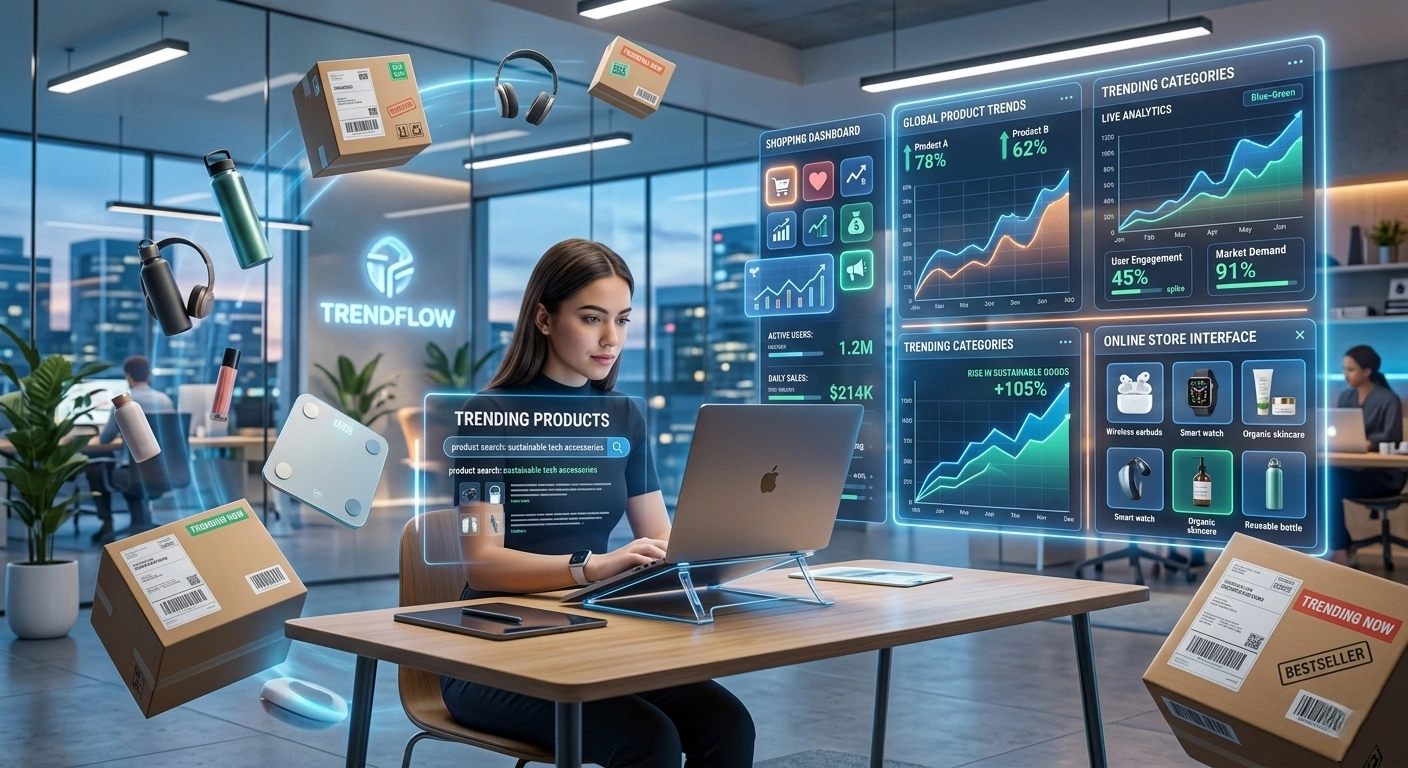
    Data-driven decision-making is one of the most powerful strategies for online success. Instead of guessing what customers might want, businesses can analyze market data to determine which trending products have the highest demand.

    Analytics tools provide insights into customer behavior, search trends, and buying patterns. These insights help businesses identify opportunities and make informed product decisions.

    For startups building an ecommerce store for startups in Noida, using data analytics can help optimize product offerings and improve overall store performance.

    Leveraging Social Media for Product Discovery

    Social media platforms play a major role in shaping consumer preferences. Platforms like Instagram, TikTok, and YouTube often drive product trends and influence buying behavior.

    Entrepreneurs who monitor social media trends can discover trending products before they become mainstream. Influencer collaborations, viral challenges, and product demonstrations can quickly turn ordinary items into best-selling products.

    By actively following social media conversations and customer interests, businesses can stay ahead of competitors and capture emerging opportunities.

    Building a Strong Online Store Strategy

    Choosing the right products is only one part of running a successful eCommerce business. A well-designed store, effective marketing strategies, and strong customer experience are equally important.

    Many entrepreneurs launching an ecommerce store for startups in Noida focus on building a clear brand identity and providing seamless shopping experiences. Combining high-demand trending products with strong marketing campaigns helps attract more traffic and convert visitors into loyal customers.

    Businesses that consistently analyze performance metrics and customer feedback can refine their strategies and maintain long-term growth.

    Future Opportunities in eCommerce

    The future of online retail looks extremely promising. As technology advances and consumer behavior continues to evolve, new product opportunities will constantly emerge.

    Entrepreneurs who stay updated with market insights and regularly research trending products will be better positioned to succeed in the competitive eCommerce environment. By combining innovative product ideas with effective marketing strategies, businesses can create sustainable online ventures.

    In a digital-first economy, the ability to identify and sell the right trending products can significantly boost online sales and open new growth opportunities for startups and established brands alike.


    FAQs

    1. What are trending products in eCommerce?
    Trending products are items that are currently in high demand due to market trends, social media influence, or changing consumer preferences.

    2. How can startups find trending products to sell online?
    Startups can use keyword research tools, marketplace insights, social media trends, and customer feedback to identify products that are gaining popularity.

    3. Are digital products profitable for online businesses?
    Yes, digital products can be highly profitable because they require minimal production costs and can be sold repeatedly without inventory limitations.

  • Warehouse vs Fulfillment Centers: What’s the Difference?

    Warehouse vs Fulfillment Centers: What’s the Difference?

    Introduction

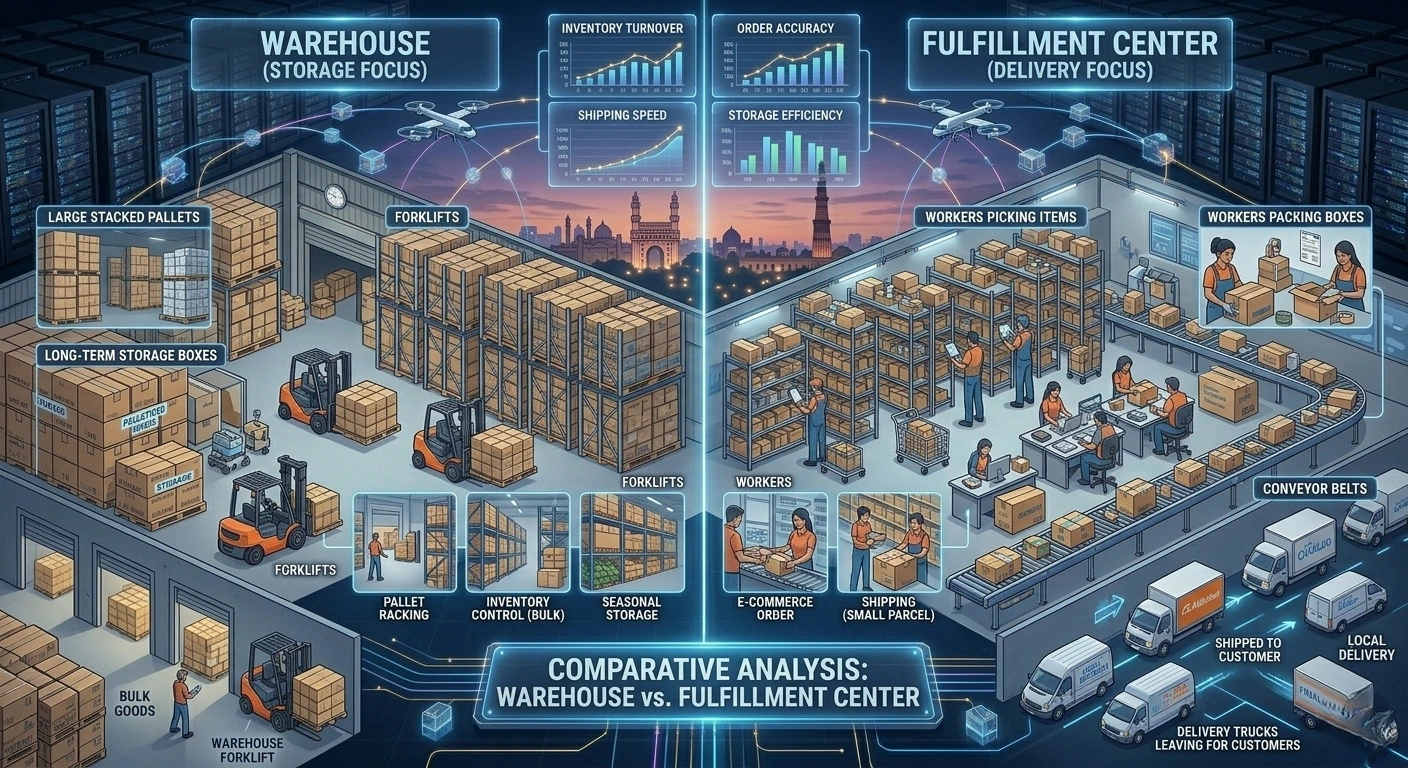
    Businesses that store and ship products often rely on warehouses or fulfillment centers to manage inventory and deliveries. While these two facilities may appear similar, they serve different purposes in the supply chain. Understanding the difference between them is important for companies that want to improve logistics operations and customer satisfaction.

    The concept of Warehouse vs Fulfillment Center is especially important for ecommerce businesses that need fast and accurate order deliveries. Both facilities handle storage and shipping, but the way they operate and the services they provide can vary significantly. Choosing the right option depends on business goals, order volume, and customer expectations.

    What is a Warehouse?

    A warehouse is a large storage facility where businesses keep goods for an extended period before they are sold or distributed. Warehouses are primarily designed for inventory storage and are commonly used by manufacturers, wholesalers, and retailers.

    In the discussion of Warehouse vs Fulfillment Center, a warehouse typically focuses on storing large quantities of products rather than processing individual customer orders. Goods may stay in a warehouse for weeks or even months until they are needed.

    Warehouse operations usually include receiving shipments, organizing inventory, and maintaining stock levels. Many businesses also use warehouse management systems to track inventory and improve efficiency. Warehouses play a vital role in the supply chain because they help businesses manage bulk inventory and maintain product availability.

    What is a Fulfillment Center?

    A fulfillment center is a specialized facility designed to handle the entire order fulfillment process for businesses, especially ecommerce stores. Instead of just storing products, fulfillment centers focus on processing and shipping customer orders quickly.

    When comparing Warehouse vs Fulfillment Center, the key difference lies in how products move through the facility. Fulfillment centers manage high volumes of daily orders and ensure that customers receive their purchases as quickly as possible.

    These facilities provide a variety of fulfillment center services, including inventory storage, order picking, packing, shipping, and returns management. Ecommerce companies often partner with third-party logistics providers that operate fulfillment centers to streamline their logistics operations.

    Because fulfillment centers are built for speed and efficiency, products usually do not remain there for long periods. Instead, they move quickly through the system as orders are processed and shipped.

    Key Differences Between Warehouse and Fulfillment Center

    Understanding the major differences between these two facilities helps businesses make better logistics decisions. The comparison of Warehouse vs Fulfillment Center often focuses on purpose, operations, and order processing.

    Warehouses are mainly used for long-term storage of goods, while fulfillment centers are designed for fast order processing and shipping. Businesses that need to store bulk inventory for extended periods usually prefer warehouses.

    Fulfillment centers, on the other hand, handle individual customer orders and focus on rapid delivery. This makes them ideal for ecommerce businesses that require efficient shipping operations.

    Another difference lies in daily operations. Warehouses generally deal with large shipments moving between suppliers, manufacturers, or retailers. Fulfillment centers handle smaller shipments that go directly to customers.

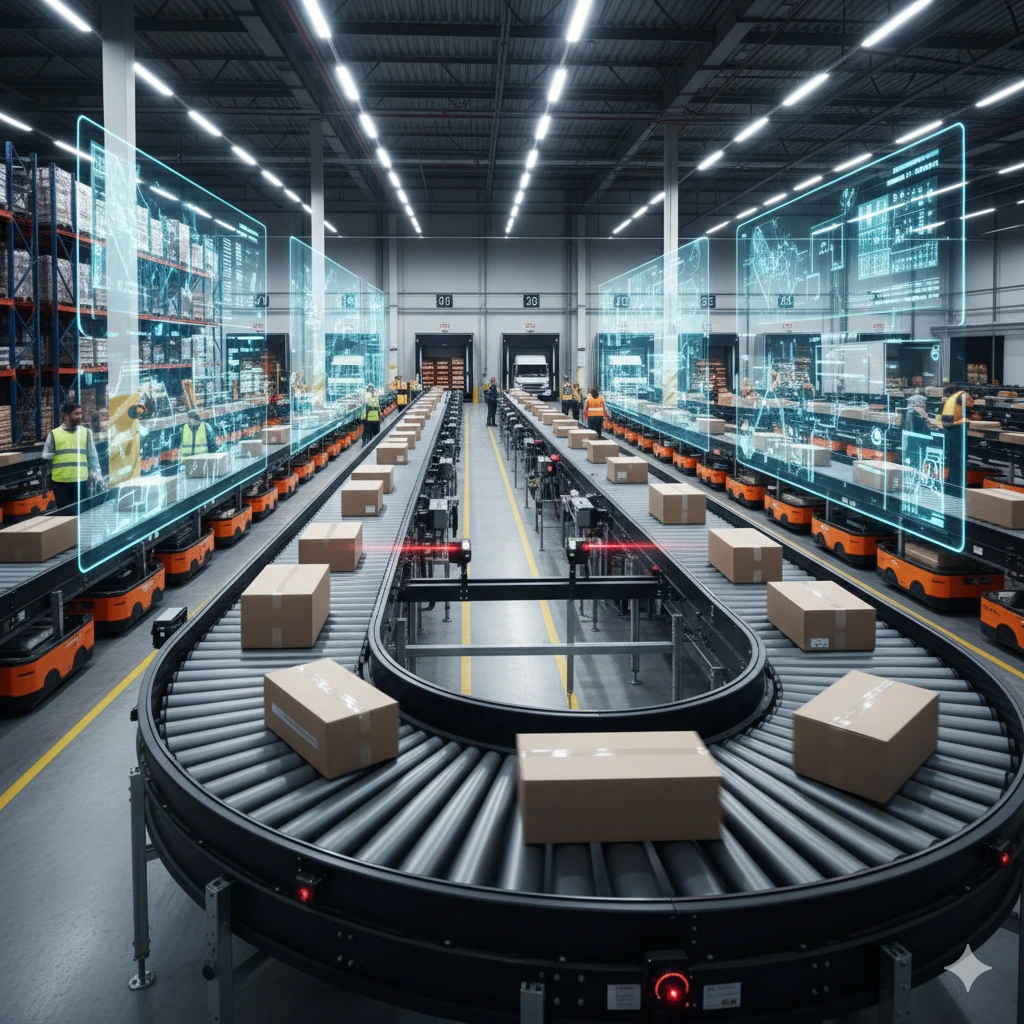
    Technology and automation are also more common in fulfillment centers because they need to process a high number of orders each day. These advanced systems support fulfillment center services such as order tracking, packing automation, and shipping optimization.

    Warehouse vs Distribution Center

    Many people also compare warehouses with distribution centers when discussing logistics facilities. The topic of warehouse vs distribution center highlights another important distinction in supply chain operations.

    A warehouse mainly focuses on storing goods, while a distribution center is designed to move products quickly through the supply chain. Distribution centers receive products from manufacturers and then distribute them to retailers or customers.

    In many cases, fulfillment centers operate similarly to distribution centers because they process orders and ship products quickly. Understanding the concept of warehouse vs distribution center helps businesses determine which facility best supports their supply chain strategy.

    Which One is Right for Your Business?

    Choosing between the two depends on your business model and logistics needs. The discussion of Warehouse vs Fulfillment Center becomes especially relevant for growing ecommerce companies.

    If your business requires long-term inventory storage and deals with bulk shipments, a warehouse may be the better option. Warehouses are ideal for businesses that supply retailers or maintain large stock levels.

    However, if your company sells products directly to customers online, fulfillment centers may be more suitable. Their ability to manage orders quickly and provide efficient fulfillment center services can significantly improve delivery speed and customer satisfaction.

    Businesses experiencing rapid growth may also benefit from fulfillment centers because they can handle large volumes of orders without requiring companies to manage their own logistics infrastructure.

    Conclusion

    Understanding the difference between Warehouse vs Fulfillment Center is essential for businesses that want to optimize their supply chain operations. While warehouses are designed primarily for storage, fulfillment centers focus on fast order processing and shipping.

    By evaluating their logistics requirements and customer expectations, businesses can determine which solution best supports their operations. Whether a company chooses a warehouse for inventory storage or a fulfillment center for order processing, selecting the right logistics facility can improve efficiency, reduce costs, and enhance the overall customer experience.

  • Dropshipping vs Traditional Inventory: Which Model Wins in 2026?

    Dropshipping vs Traditional Inventory: Which Model Wins in 2026?

    The e-commerce landscape continues to evolve rapidly, and entrepreneurs launching online stores in 2026 face a critical decision: dropshipping vs traditional inventory. Both models offer unique advantages, but choosing the right one can significantly impact profitability, scalability, and long-term brand value.

    In this guide, we’ll break down dropshipping vs traditional inventory to help you determine which approach aligns best with your business goals.

    Understanding the Two Models

    Before diving into comparisons, let’s define how each system works.

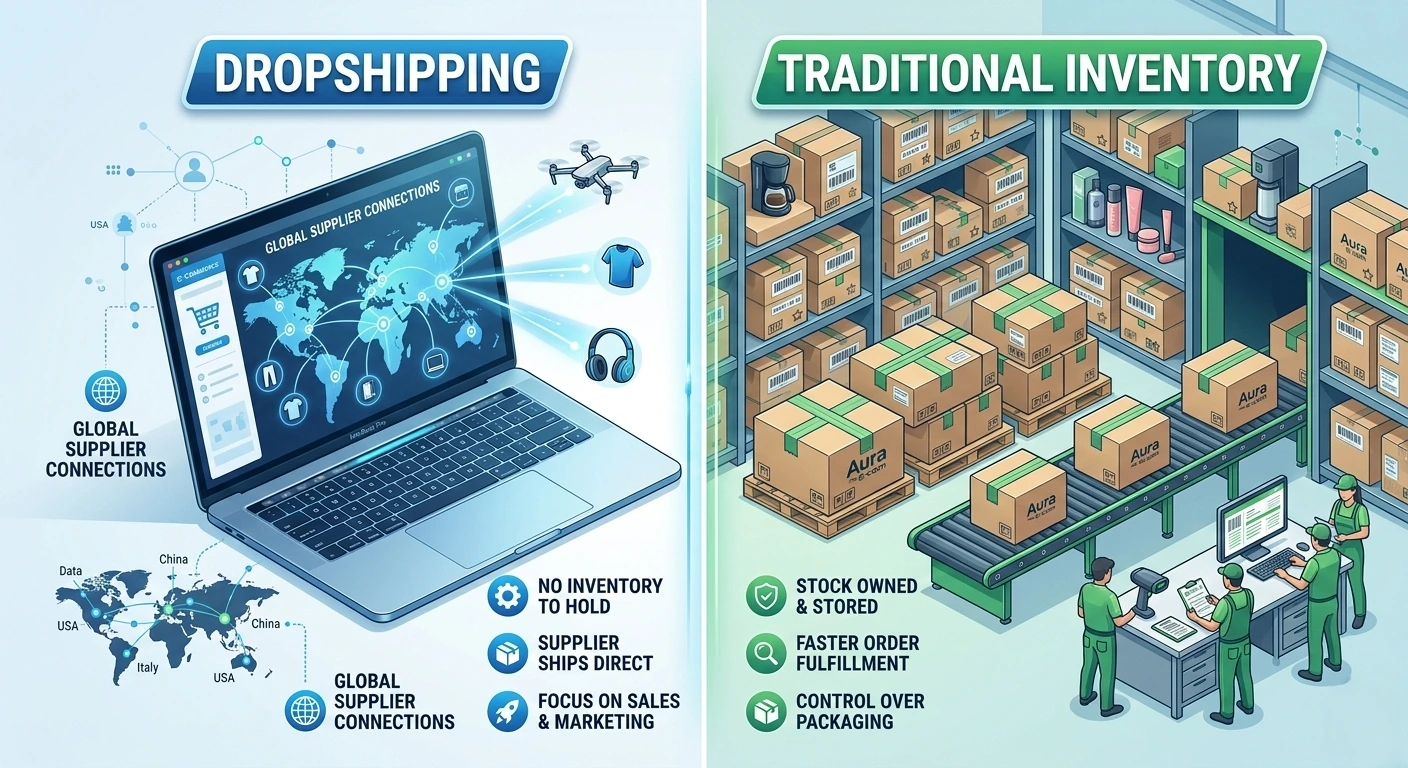
    Dropshipping is a fulfillment method where you sell products without holding stock. When a customer places an order, the product is shipped directly from third-party dropshipping suppliers to the buyer. You never physically handle inventory.

    Traditional inventory, on the other hand, requires purchasing stock upfront, storing it (either at home, in a warehouse, or through a 3PL), and shipping it yourself or via a fulfillment partner.

    When evaluating dropshipping vs traditional inventory, the main difference lies in who owns and manages the stock.

    Startup Costs and Financial Risk

    One of the biggest considerations in dropshipping vs traditional inventory is initial investment.

    Dropshipping has a very low barrier to entry. You don’t need to buy products in bulk, which reduces upfront costs and financial risk. This makes it attractive for new entrepreneurs testing product ideas.

    Traditional inventory requires purchasing products before selling them. While bulk buying often lowers per-unit cost, it increases financial exposure if products don’t sell.

    In 2026, as competition intensifies across ecommerce business models, cash flow management is more important than ever. Dropshipping allows you to preserve capital, while traditional inventory demands stronger financial planning.

    Profit Margins and Pricing Control

    Margins often determine the winner in the dropshipping vs traditional inventory debate.

    Dropshipping typically offers lower profit margins because suppliers handle fulfillment and charge wholesale prices that leave limited room for markup. You also compete with many sellers offering the same products.

    Traditional inventory usually provides higher margins. Buying in bulk reduces cost per unit, giving you more flexibility in pricing and promotions.

    When comparing dropshipping vs traditional inventory, brands focused on long-term profitability often lean toward holding inventory for better cost control.

    Branding and Customer Experience

    Customer experience is another crucial factor in dropshipping vs traditional inventory.

    With dropshipping, packaging and shipping times depend on your suppliers. You have limited control over branding elements like custom inserts or personalized packaging. Shipping delays can also affect customer satisfaction.

    Traditional inventory allows full control over packaging, presentation, and delivery speed. This is especially important for brands aiming to build loyalty and repeat purchases.

    In the broader conversation about ecommerce business models, brand differentiation is becoming essential in 2026. Traditional inventory supports stronger brand identity compared to dropshipping.

    Supply Chain Reliability

    Supply chain stability has become increasingly important over the past few years. When analyzing dropshipping vs traditional inventory, reliability can’t be ignored.

    Dropshipping depends heavily on external suppliers. If your dropshipping suppliers run out of stock, raise prices, or face shipping disruptions, your business is directly affected.

    With traditional inventory, you manage stock levels yourself. While this requires forecasting skills, it reduces dependency on third parties.

    In the dropshipping vs traditional inventory comparison, risk tolerance plays a major role. Entrepreneurs who value control may prefer owning their stock.

    Scalability and Automation

    Automation tools have improved dramatically, making both models more scalable than ever.

    Dropshipping is easier to automate. Product imports, order routing, and tracking updates can all be streamlined. This makes scaling fast and efficient, especially for solo founders.

    Traditional inventory scaling requires warehouse space, fulfillment processes, and logistics management. However, partnering with a third-party logistics provider can make it nearly as automated as dropshipping.

    When discussing dropshipping vs traditional inventory, scalability is no longer about possibility, but about complexity and operational involvement.

    Product Testing and Market Validation

    Product testing is where dropshipping truly shines.

    Because there’s no need for upfront inventory purchases, you can test multiple products quickly and with minimal financial risk. This flexibility gives dropshipping a strong advantage for trend-based or seasonal items.

    Traditional inventory makes testing more expensive, since you must commit to minimum order quantities.

    In the dropshipping vs traditional inventory debate, entrepreneurs focused on rapid experimentation often choose dropshipping first, then transition to inventory once a product proves successful.

    Long-Term Business Value

    If your goal is to build a sellable brand or long-term asset, dropshipping vs traditional inventory becomes a strategic decision.

    Investors and buyers typically value businesses with controlled supply chains, strong branding, and stable margins. Traditional inventory businesses often appear more defensible and scalable in the long run.

    Dropshipping businesses can generate cash flow quickly, but they may face challenges with differentiation and supplier dependency.

    Which Model Wins in 2026?

    So, who wins in dropshipping vs traditional inventory?

    The answer depends on your goals.

    Choose dropshipping if:

    You want low startup costs
    You’re testing product ideas
    You prefer minimal operational complexity
    You’re comfortable relying on dropshipping suppliers

    Choose traditional inventory if:

    You want higher profit margins
    Branding and customer experience are priorities
    You seek stronger supply chain control
    You aim to build a long-term, sellable asset

    Ultimately, the dropshipping vs traditional inventory decision isn’t about which model is universally better. It’s about aligning your fulfillment strategy with your growth vision, financial capacity, and risk tolerance.

    In 2026, the most successful entrepreneurs understand that different ecommerce business models serve different purposes. Some even start with dropshipping and transition to traditional inventory once demand is validated.

    The real winner in dropshipping vs traditional inventory is the model that best supports your long-term strategy.

  • Ecommerce Fulfillment Strategies for Fast Delivery

    Ecommerce Fulfillment Strategies for Fast Delivery

    Fast delivery is no longer a luxury in online retail. It is an expectation. Customers want their orders processed quickly, shipped efficiently, and delivered without errors. That is why Ecommerce Fulfillment plays a critical role in the success of modern online stores. Businesses that optimise their operations can reduce costs, improve customer satisfaction, and gain a competitive edge.

    Why Fast Delivery Matters in Online Retail

    Consumers compare shipping speeds before making purchasing decisions. Major retailers like Amazon have set high standards with same-day and next-day delivery. As a result, smaller businesses must refine their Ecommerce Fulfillment strategies to compete effectively.

    Fast delivery increases repeat purchases, improves brand trust, and reduces cart abandonment rates. A streamlined process ensures that orders move quickly from checkout to the customer’s doorstep.

    Building a Strong Ecommerce Fulfillment Foundation

    A successful Ecommerce Fulfillment system begins with organized operations. From inventory storage to order processing, every step must be carefully managed to avoid delays.

    Inventory accuracy is crucial. When stock levels are not updated in real time, businesses risk overselling or backorders. Implementing automation tools ensures accurate tracking and faster order processing.

    Another important factor is strategic warehouse location. Placing inventory closer to customers reduces shipping times and transportation costs. Many businesses distribute products across multiple fulfillment centers to improve delivery speed nationwide.

    Leveraging Third-Party Logistics (3PL)

    What is Third-Party Logistics (3PL)?

    Third-party logistics, commonly known as 3PL, refers to outsourcing storage, packing, and shipping to specialized providers. Instead of managing warehousing internally, businesses partner with logistics experts who handle daily operations.

    Benefits of Using 3PL Providers

    Using third-party logistics providers allows companies to scale quickly without heavy infrastructure investment. These providers already have warehouse networks, trained staff, and shipping partnerships in place.

    For growing brands, Ecommerce Fulfillment becomes easier with 3PL support. Businesses can focus on marketing, product development, and customer experience while logistics professionals manage distribution.

    Additionally, 3PL companies often negotiate better shipping rates due to high-volume contracts with carriers. This reduces operational costs and improves delivery timelines.

    When to Consider 3PL

    If order volumes increase rapidly or storage space becomes limited, outsourcing may be the right move. Companies expanding internationally also benefit from global 3PL networks that simplify cross-border shipping.

    The Role of a Warehouse Management System

    A warehouse management system is essential for maintaining speed and accuracy. This software controls inventory tracking, order picking, packing workflows, and shipping coordination.

    Real-Time Inventory Tracking

    A warehouse management system provides real-time visibility into stock levels. This reduces human error and prevents delays caused by misplaced items.

    Faster Picking and Packing

    Advanced systems use barcode scanning and automated picking routes to speed up operations. Employees can locate products quickly, reducing processing time and improving Ecommerce Fulfillment efficiency.

    Data-Driven Decision Making

    Analytics from a warehouse management system help businesses identify slow-moving products, peak demand periods, and fulfillment bottlenecks. With these insights, companies can continuously improve operations.

    Multi-Warehouse Distribution Strategy

    Distributing inventory across multiple locations shortens transit times. By storing products in regional hubs, businesses reduce the distance between warehouse and customer.

    This approach strengthens Ecommerce Fulfillment performance by cutting shipping zones and enabling faster ground delivery options. It also minimizes risks associated with supply chain disruptions in a single location.

    However, managing multiple warehouses requires careful coordination. That is where integrated software systems and third-party logistics partners provide strong support.

    Automation and Technology Integration

    Automation is transforming Ecommerce Fulfillment. Robotics, AI-powered inventory forecasting, and automated sorting systems reduce labor costs and processing time.

    For example, companies like Shopify integrate fulfillment technology with online storefronts, allowing seamless order synchronization. This ensures faster communication between sales platforms and warehouses.

    Automated shipping label generation and carrier selection tools also accelerate dispatch. The fewer manual steps involved, the faster the order moves through the pipeline.

    Optimizing Last-Mile Delivery

    The last mile is often the most expensive and time-consuming stage of shipping. Partnering with reliable carriers and offering multiple delivery options improves customer satisfaction.

    Businesses should provide tracking updates and estimated delivery times to build trust. Clear communication reduces support inquiries and enhances the overall Ecommerce Fulfillment experience.

    Local courier partnerships can further reduce delivery times in metropolitan areas. Some companies even explore micro-fulfillment centers to serve dense urban regions more efficiently.

    Returns Management and Reverse Logistics

    Fast delivery must be matched with smooth returns. A clear and simple return policy builds buyer confidence. Efficient reverse logistics ensures returned items are processed quickly and restocked when possible.

    An optimized Ecommerce Fulfillment process includes automated return approvals, prepaid labels, and systematic inspection procedures to minimize delays.

    Final Thoughts

    Speed, accuracy, and scalability define successful online retail operations. By combining advanced technology, strategic warehouse placement, and third-party logistics partnerships, businesses can create a powerful fulfillment ecosystem.

    A strong warehouse management system supports inventory accuracy, while distributed storage and automation accelerate delivery times. When implemented effectively, Ecommerce Fulfillment becomes a competitive advantage rather than an operational challenge.

    Businesses that invest in streamlined processes today will not only meet customer expectations but exceed them, building loyalty and long-term growth in the evolving ecommerce landscape.