Tag: customer service

  • Global Growth Unlocked: Understanding Cross-Border E-Commerce Logistics for 2025

    Global Growth Unlocked: Understanding Cross-Border E-Commerce Logistics for 2025

    In the rapidly expanding digital economy, cross-border e-commerce logistics has become the heartbeat of international online trade. Businesses that once sold locally now reach customers in every corner of the world with just a few clicks. But behind every successful international sale lies a complex network of logistics processes ensuring products move efficiently, affordably, and reliably across borders.

    What is Cross-Border E-Commerce Logistics

    Cross-border e-commerce logistics refers to the systems and processes that enable goods purchased online to move from a seller in one country to a buyer in another. It encompasses every step in the supply chain—from order fulfillment and international shipping to customs clearance, last-mile delivery, and reverse logistics.

    The main goal of cross-border logistics is to ensure that international shipments reach customers smoothly while minimizing costs and delivery times. As global e-commerce continues to surge, logistics providers are investing heavily in technologies like automation, AI-driven route optimization, and digital tracking systems to simplify international trade.

    Why Cross-Border E-Commerce is Booming

    The growth of cross-border e-commerce is fueled by increasing internet penetration, social media marketing, and global marketplaces like Amazon, Alibaba, and eBay. Consumers today are more open to purchasing products from overseas if they find better prices, unique products, or superior quality.

    In 2025, experts estimate that over 25% of global e-commerce sales will come from international transactions. Small and medium-sized businesses are leveraging cross-border logistics to expand their reach, bypassing traditional retail barriers.

    The Key Components of Cross-Border E-Commerce Logistics

    To understand how cross-border logistics operates, it’s important to break down its major components.

    1. International Fulfillment

    Fulfillment begins when an order is placed. Sellers can choose to ship directly from their home country or use international fulfillment centers located closer to their customers. These centers store inventory and handle packaging, reducing delivery times and shipping costs.

    Fulfillment models like Dropshipping and Third-Party Logistics (3PL) have made it easier for e-commerce sellers to manage global orders without maintaining large warehouses.

    2. Customs Clearance and Documentation

    Customs is one of the most critical aspects of cross-border logistics. Every international shipment must comply with the import and export regulations of both the origin and destination countries.

    Proper documentation such as invoices, packing lists, and product classification codes is essential for smooth clearance. Failure to meet these requirements can lead to delays, fines, or even returned shipments.

    3. International Shipping

    Shipping is the backbone of cross-border e-commerce logistics. Sellers can choose between various shipping modes—air freight for speed, sea freight for cost efficiency, or rail and road for regional trade.

    Many logistics providers offer end-to-end shipping solutions that include insurance, customs handling, and real-time tracking to ensure transparency throughout the delivery journey.

    4. Last-Mile Delivery

    Last-mile delivery refers to the final stage of the delivery process—getting the product from the local distribution center to the customer’s doorstep. This stage often determines customer satisfaction.

    To meet rising consumer expectations, companies are using local courier partnerships, smart lockers, and even drone delivery in some regions.

    5. Returns and Reverse Logistics

    Returns are inevitable in e-commerce, especially when customers purchase products they haven’t physically seen. Efficient reverse logistics ensures that returned goods are processed, refunded, or resold quickly.

    Cross-border returns can be complex due to customs regulations, but innovative solutions like local return hubs and consolidated shipping are helping businesses simplify the process.

    Challenges in Cross-Border E-Commerce Logistics

    While the opportunities are vast, cross-border logistics comes with its own set of challenges.

    Complex Customs Regulations

    Different countries have different import duties, taxes, and documentation requirements. Keeping track of these variations can be overwhelming for businesses without international trade expertise.

    Shipping Costs and Delivery Times

    Shipping internationally can be expensive. Fluctuating fuel prices, long transit times, and unexpected delays can impact customer satisfaction and profitability.

    Payment and Currency Barriers

    Accepting multiple currencies and handling international payment systems can be difficult. Businesses need secure payment gateways and transparent pricing strategies to build trust with global buyers.

    Data Security and Compliance

    With global operations comes the responsibility of complying with international data protection laws such as GDPR. Secure handling of customer data is crucial for maintaining trust and avoiding legal complications.

    The Future of Cross-Border E-Commerce Logistics

    The future of cross-border logistics is being shaped by technology, sustainability, and customer expectations.

    Automation and Artificial Intelligence

    AI-powered systems are transforming the way international logistics operates. Predictive analytics help forecast demand, while automation optimizes inventory management and order processing.

    Blockchain for Transparency

    Blockchain technology is being adopted to improve transparency and traceability across the supply chain. It ensures that every transaction is secure and verifiable, reducing fraud and shipment discrepancies.

    Green Logistics

    Sustainability is becoming a core focus in cross-border e-commerce. Companies are adopting eco-friendly packaging, carbon-neutral shipping options, and optimized routing to reduce their environmental footprint.

    Regional Trade Agreements

    Trade agreements like RCEP and USMCA are simplifying customs procedures and reducing tariffs, enabling smoother cross-border trade between partner countries.

    How Businesses Can Succeed in Cross-Border E-Commerce

    To thrive in international e-commerce, businesses must adopt a strategic approach to logistics.

    Partner with the Right Logistics Provider

    Choosing a reliable logistics partner can make or break your international operations. Look for providers that offer integrated solutions, global coverage, and expertise in customs compliance.

    Optimize Inventory and Warehousing

    Use data-driven demand forecasting to position inventory closer to your target markets. This reduces delivery times and operational costs.

    Localize Customer Experience

    Offering localized websites, multiple currency options, and multilingual customer support enhances trust and improves conversion rates.

    Leverage Technology

    Use automation tools, real-time tracking systems, and digital documentation platforms to streamline operations and enhance visibility across the supply chain.

    Final Thoughts on Cross-Border E-Commerce Logistics

    Cross-border e-commerce logistics is no longer a luxury—it’s a necessity for businesses aiming to compete globally. By mastering logistics operations, understanding customs regulations, and leveraging technology, brands can create a seamless international shopping experience that delights customers and drives growth.

    In 2025 and beyond, companies that invest in efficient, transparent, and customer-centric cross-border logistics will lead the next wave of global e-commerce expansion.

  • The Rise of Service as a Product SAAP What It Is and Why It Matters for Small Businesses

    The Rise of Service as a Product SAAP What It Is and Why It Matters for Small Businesses

    The digital economy has revolutionized the way people buy, sell, and interact with services. What used to be complex, intangible, and relationship-driven has now evolved into something more structured, predictable, and scalable. This transformation has given rise to a new concept called Service as a Product (SAAP). At vCue Store, we believe this model is reshaping how small businesses and professionals deliver value to customers. It’s not just a trend—it’s a future-ready way of doing business that empowers both service providers and clients.

    Understanding Service as a Product SAAP

    In simple terms, Service as a Product (SAAP) means packaging a service as if it were a product. Instead of offering open-ended or custom service agreements, providers define clear deliverables, timelines, and pricing. For example, instead of saying “I offer marketing services,” a small agency could sell a fixed package like “30-day social media management with 10 posts and engagement tracking.”

    This approach removes confusion and increases transparency for both sellers and buyers. Customers know exactly what they’re paying for, and service providers can streamline operations, automate processes, and scale more efficiently.

    At vCue Store, we have adopted this concept to give professionals, freelancers, and small businesses a platform where they can list, price, and sell their services just like physical products. Whether you are a designer, consultant, developer, or content creator, you can convert your expertise into tangible offerings with clear descriptions and instant purchasing options.

    Why SAAP Is Changing the Game for Small Businesses

    The SAAP model bridges the gap between traditional service-based work and modern eCommerce. For small businesses, it means less dependence on manual negotiations, easier marketing, and improved scalability. Here’s why it’s a game-changer.

    1. Simplified Selling Process

    Selling a service used to involve lengthy discussions, proposals, and contracts. With SAAP, that complexity disappears. Services are listed like products—complete with titles, pricing, images, and descriptions. Buyers can instantly purchase a service package that suits their needs.

    This streamlined process saves time for both parties and increases conversion rates. Small businesses no longer have to chase leads; their services become discoverable and purchasable instantly.

    2. Predictable Revenue and Workflows

    Traditional service providers often face inconsistent income due to fluctuating client demand. SAAP introduces predictability by turning recurring services into structured offerings. Monthly packages, fixed-rate tasks, or subscription-based services can all create steady cash flow.

    This predictability helps small business owners plan ahead, manage their resources better, and grow sustainably without worrying about feast-or-famine cycles.

    3. Enhanced Customer Trust

    Transparency is key to building trust. When services are clearly defined with measurable outcomes and fixed prices, customers feel more confident buying them. The SAAP model eliminates hidden costs, vague deliverables, or surprise invoices.

    At vCue Store, verified service providers can showcase ratings, testimonials, and previous projects. This visibility helps customers make informed decisions and fosters long-term business relationships.

    4. Scalability and Automation

    SAAP allows small businesses to scale more effectively. Instead of customizing each project from scratch, service providers can develop standardized packages that can be sold repeatedly. With automation tools like booking calendars, email templates, and online payment systems, the entire service delivery process becomes more efficient.

    By productizing services, entrepreneurs can focus more on quality, marketing, and innovation rather than administrative tasks.

    5. Competitive Advantage in the Marketplace

    As eCommerce continues to dominate, customers increasingly prefer quick, convenient, and transparent transactions. SAAP helps service providers meet those expectations. It gives them a competitive edge over traditional service providers who still rely on manual quoting and offline processes.

    Platforms like vCue Store provide small businesses with digital storefronts, SEO tools, and AI-driven recommendations that improve their visibility and conversion rates.

    Examples of Service as a Product

    To understand SAAP in action, let’s look at some real-world examples.

    A graphic designer can offer “Logo Design Starter Pack – 3 Concepts and 2 Revisions” with a fixed price and timeline.
    A digital marketer can sell “30-Day Instagram Growth Package” that includes content planning, hashtags, and analytics.
    A consultant might list “1-Hour Strategy Call + Action Plan PDF” as a ready-to-purchase product.
    A photographer could offer “Product Photography Package – 10 Edited Images” directly through their online shop.

    These clearly defined services simplify purchasing decisions and open doors to a broader online audience.

    How vCue Store Supports SAAP Sellers

    At vCue Store, our mission is to empower local entrepreneurs and service providers by making digital selling easier and more transparent. Our SAAP model gives small businesses the tools they need to succeed in today’s economy.

    Seamless Listing and Selling

    We make it easy for service providers to upload their offerings, set prices, and showcase their expertise. Each service gets its own page with optimized descriptions and visuals that attract customers. Sellers can manage everything from one dashboard—bookings, messages, and payments included.

    AI-Powered Recommendations

    Our intelligent recommendation system ensures that the right customers discover the right services. By analyzing browsing behavior and keywords, our AI highlights relevant SAAP listings to increase engagement and conversions.

    Fair Commissions and Transparent Policies

    Unlike traditional marketplaces that impose high fees, vCue Store maintains fair and transparent policies. Service providers retain most of their earnings, allowing them to reinvest in growth, skill development, or marketing efforts.

    Empowering Freelancers and Micro-Businesses

    Freelancers and micro-entrepreneurs often struggle to compete with large agencies. By providing a professional storefront, secure payments, and built-in marketing tools, vCue Store levels the playing field. It allows independent professionals to build credibility and scale without huge overhead costs.

    The Future of SAAP and Digital Entrepreneurship

    As more businesses embrace digital transformation, the SAAP model will continue to gain traction. The rise of remote work, gig economy platforms, and automation tools all point toward a world where expertise is productized and sold online.

    For small businesses, adopting SAAP means greater efficiency, better customer experience, and increased revenue potential. It encourages clarity, consistency, and confidence in service delivery.

    The combination of technology, accessibility, and entrepreneurial spirit makes SAAP a revolutionary step forward. It aligns perfectly with vCue Store’s mission—to empower individuals and local businesses to thrive in the digital marketplace.

    Final Thoughts

    The rise of Service as a Product (SAAP) represents a powerful shift in how we think about services. For small businesses, it’s an opportunity to simplify, scale, and succeed in a competitive online world. By packaging expertise into clear, valuable offerings, entrepreneurs can turn their skills into sustainable businesses.

    At vCue Store, we are proud to be at the forefront of this transformation—providing tools, visibility, and community support to help service providers grow. Whether you’re a freelancer, consultant, or creative professional, the time to embrace SAAP is now.

  • Green Supply Chains: Why Eco-Friendly Delivery Matters in E-Commerce

    Green Supply Chains: Why Eco-Friendly Delivery Matters in E-Commerce

    The world of e-commerce is expanding at lightning speed, transforming how we shop, live, and consume. Yet, as digital shopping grows, so does its environmental footprint. From packaging waste to fuel emissions, every delivery comes at an ecological cost. In response, the concept of green supply chains has emerged as a powerful solution—reshaping logistics with sustainability at its core. Eco-friendly delivery is no longer a nice-to-have; it’s a business imperative driving the next era of responsible commerce.

    The Environmental Cost of E-Commerce

    While e-commerce offers unmatched convenience, it has also brought new sustainability challenges. The demand for fast, same-day delivery means more vehicles on the road, more packaging waste, and higher carbon emissions. Studies suggest that global logistics operations contribute significantly to greenhouse gas emissions, with last-mile delivery being one of the biggest culprits.

    Every click-to-doorstep transaction involves energy-intensive activities: from warehouse lighting and air conditioning to the transport networks that bring goods to customers. When multiplied across billions of deliveries, the environmental toll becomes immense. That’s where green supply chains step in—to balance growth with responsibility.

    What Are Green Supply Chains?

    A green supply chain is a logistics system designed to minimize environmental impact at every stage—from sourcing raw materials to delivering the final product. It integrates sustainable practices such as renewable energy, eco-friendly packaging, efficient route planning, and waste reduction. The goal is not just operational efficiency but environmental stewardship.

    In e-commerce, this means adopting cleaner technologies, optimizing transportation, and making conscious choices about packaging and materials. Businesses that invest in sustainability today are future-proofing themselves against rising regulations, fuel costs, and shifting consumer expectations.

    Why Eco-Friendly Delivery Matters

    Sustainability is no longer a buzzword; it’s a demand from conscious consumers. As awareness of climate change grows, customers are actively choosing brands that align with their values. Eco-friendly delivery isn’t just about protecting the planet—it’s about winning customer loyalty and long-term trust.

    Growing Consumer Awareness

    Modern consumers, especially millennials and Gen Z, are highly attuned to environmental issues. They prefer shopping with brands that demonstrate a genuine commitment to sustainability. Offering eco-friendly delivery options, such as electric vehicle shipping or minimal packaging, can significantly enhance a brand’s reputation.

    In fact, surveys show that more than 70% of consumers are willing to pay a small premium for sustainable delivery choices. This shift in consumer mindset makes sustainability a strategic advantage for e-commerce players.

    Corporate Responsibility and Regulatory Pressure

    Governments around the world are tightening environmental regulations, pushing companies to reduce their carbon footprints. From stricter emission norms to packaging waste management laws, businesses must now rethink how they move goods.

    E-commerce companies that proactively adopt green logistics practices are not only staying compliant but also building brand resilience. Corporate responsibility is becoming a key factor in long-term profitability, and sustainable logistics is at the heart of that transformation.

    The Building Blocks of Green Supply Chains

    Creating a green supply chain requires innovation, investment, and collaboration across the entire logistics ecosystem. From warehousing to last-mile delivery, every link in the chain must be optimized for sustainability.

    1. Green Warehousing and Energy Efficiency

    Sustainable warehouses are leading the charge in reducing logistics emissions. Companies are installing solar panels, LED lighting, and energy-efficient cooling systems to cut down on electricity use. Smart sensors and automation tools help monitor energy consumption and reduce waste.

    Some leading e-commerce brands have even started designing carbon-neutral fulfillment centers, powered entirely by renewable energy. Green warehousing doesn’t just help the planet—it also lowers operational costs in the long run.

    2. Sustainable Packaging Solutions

    Packaging waste is one of the biggest environmental challenges in e-commerce. To tackle this, companies are shifting toward recyclable, biodegradable, and reusable materials. Paper-based mailers, compostable wraps, and minimalistic designs are replacing plastic-heavy packaging.

    Brands are also experimenting with returnable packaging models, where customers can send back delivery boxes for reuse. This circular approach significantly reduces waste and builds stronger customer engagement around sustainability.

    3. Electric and Alternative Fuel Vehicles

    The transportation sector is a major contributor to carbon emissions. To create eco-friendly delivery systems, logistics companies are investing in electric vehicles (EVs), hybrid fleets, and alternative fuels like bio-CNG and hydrogen.

    EVs are particularly well-suited for last-mile delivery, offering quiet, zero-emission operations within city limits. Several e-commerce giants in India and globally have committed to transitioning their entire delivery fleet to electric by the end of the decade.

    4. Route Optimization and Smart Logistics

    Technology plays a pivotal role in making supply chains greener. AI and machine learning enable companies to plan optimal routes, reducing travel distance, fuel consumption, and idle time. Real-time tracking systems help monitor fleet performance and identify inefficiencies.

    By leveraging predictive analytics, logistics managers can anticipate demand spikes, optimize vehicle utilization, and minimize empty returns—significantly cutting emissions and costs.

    5. Reverse Logistics and Recycling

    Sustainability doesn’t end with delivery; it extends to returns and end-of-life management. Reverse logistics focuses on efficiently handling product returns, recycling, and refurbishing. Instead of discarding returned goods, companies can repair, resell, or repurpose them—creating a circular economy that benefits both business and the environment.

    The Business Case for Green Supply Chains

    Contrary to common belief, sustainable logistics isn’t just good for the planet—it’s good for business too. Companies that invest in green technologies often enjoy cost savings, brand differentiation, and long-term resilience.

    Cost Savings Through Efficiency

    Energy-efficient warehouses, optimized routes, and reduced packaging materials lead to significant cost reductions. As fuel prices rise, shifting to EVs or hybrid models offers major operational savings. Green initiatives often pay for themselves over time through improved efficiency and customer loyalty.

    Enhanced Brand Value and Customer Loyalty

    A brand’s sustainability commitment directly influences customer perception. Consumers are more likely to stay loyal to companies that prioritize environmental responsibility. Green supply chains not only attract eco-conscious buyers but also help retain them—building trust and emotional connection.

    Competitive Advantage in a Crowded Market

    In the hyper-competitive e-commerce landscape, differentiation is key. Businesses that pioneer eco-friendly delivery models stand out as leaders in innovation and responsibility. This differentiation can drive higher conversions, stronger partnerships, and long-term growth.

    The Road Ahead: Toward a Sustainable Future

    As e-commerce continues to evolve, green supply chains will play a central role in defining the future of retail logistics. Companies must embrace sustainability not as an afterthought but as a core business strategy.

    Collaboration will be essential—between logistics providers, technology startups, policymakers, and consumers—to build infrastructure that supports clean energy and low-emission transport. The journey toward sustainable delivery is challenging but essential for creating a future where commerce thrives in harmony with the planet.

    The next phase of e-commerce growth will not be measured solely by speed or scale, but by sustainability. Brands that commit to eco-friendly delivery and green supply chains today will shape the responsible, resilient, and profitable e-commerce ecosystems of tomorrow.

  • AI, Automation & Real-Time Visibility: The New Logistics Playbook for E-Commerce in 2025

    AI, Automation & Real-Time Visibility: The New Logistics Playbook for E-Commerce in 2025

    As e-commerce continues to redefine global trade, logistics has emerged as its beating heart. In 2025, the pace of innovation is accelerating faster than ever, powered by artificial intelligence, automation, and real-time visibility. Together, these technologies are rewriting the rules of efficiency, reliability, and customer satisfaction. The new logistics playbook isn’t just about moving goods—it’s about delivering intelligence, speed, and transparency across every touchpoint of the supply chain.

    The Evolution of Logistics in the E-Commerce Era

    Over the past decade, e-commerce logistics has evolved from a support function into a strategic differentiator. Consumer expectations have shifted dramatically: same-day delivery, order tracking, and flawless returns are now standard. To keep up, companies are turning to AI-driven logistics automation and real-time data visibility as key enablers of performance.

    In 2025, the e-commerce industry faces mounting pressure to optimize costs, reduce delivery times, and enhance customer experiences—all while maintaining sustainability and resilience. The solution lies in leveraging technology to make logistics not only faster but also smarter.

    The Rise of Intelligent Supply Chains

    Today’s logistics networks are no longer linear or reactive—they are dynamic, data-driven ecosystems. From predictive demand planning to intelligent routing and autonomous delivery systems, AI and automation are enabling logistics networks that can think, adapt, and self-correct in real time. This shift marks the beginning of what experts call the “Smart Logistics Revolution.”

    AI: The Brain Behind the New Logistics Playbook

    Artificial Intelligence is the cornerstone of modern logistics. It empowers e-commerce companies to analyze massive amounts of data, identify inefficiencies, and make intelligent decisions across the supply chain.

    Predictive Analytics and Demand Forecasting

    AI algorithms process real-time sales data, weather conditions, local events, and consumer behavior patterns to predict product demand with unprecedented accuracy. This ensures that inventory is positioned in the right place at the right time, reducing stockouts and overstocking.

    For example, AI-driven demand forecasting allows fulfillment centers to prepare for seasonal surges, flash sales, and regional buying trends. The result is optimized warehousing, lower operational costs, and faster order fulfillment.

    Route Optimization and Last-Mile Efficiency

    AI also plays a vital role in optimizing delivery routes. Advanced algorithms consider multiple factors—traffic conditions, delivery density, road closures, and even fuel efficiency—to find the fastest and most cost-effective routes. This not only improves delivery times but also reduces carbon emissions and enhances driver productivity.

    In 2025, many logistics players are integrating AI-powered route optimization tools with real-time visibility platforms, ensuring continuous tracking and adaptive decision-making during deliveries.

    Automation: The Engine Driving E-Commerce Logistics

    While AI acts as the brain, automation serves as the muscle behind modern logistics operations. From warehouse robotics to autonomous vehicles, automation technologies are revolutionizing how goods move from warehouse shelves to consumers’ doorsteps.

    Smart Warehousing and Robotics

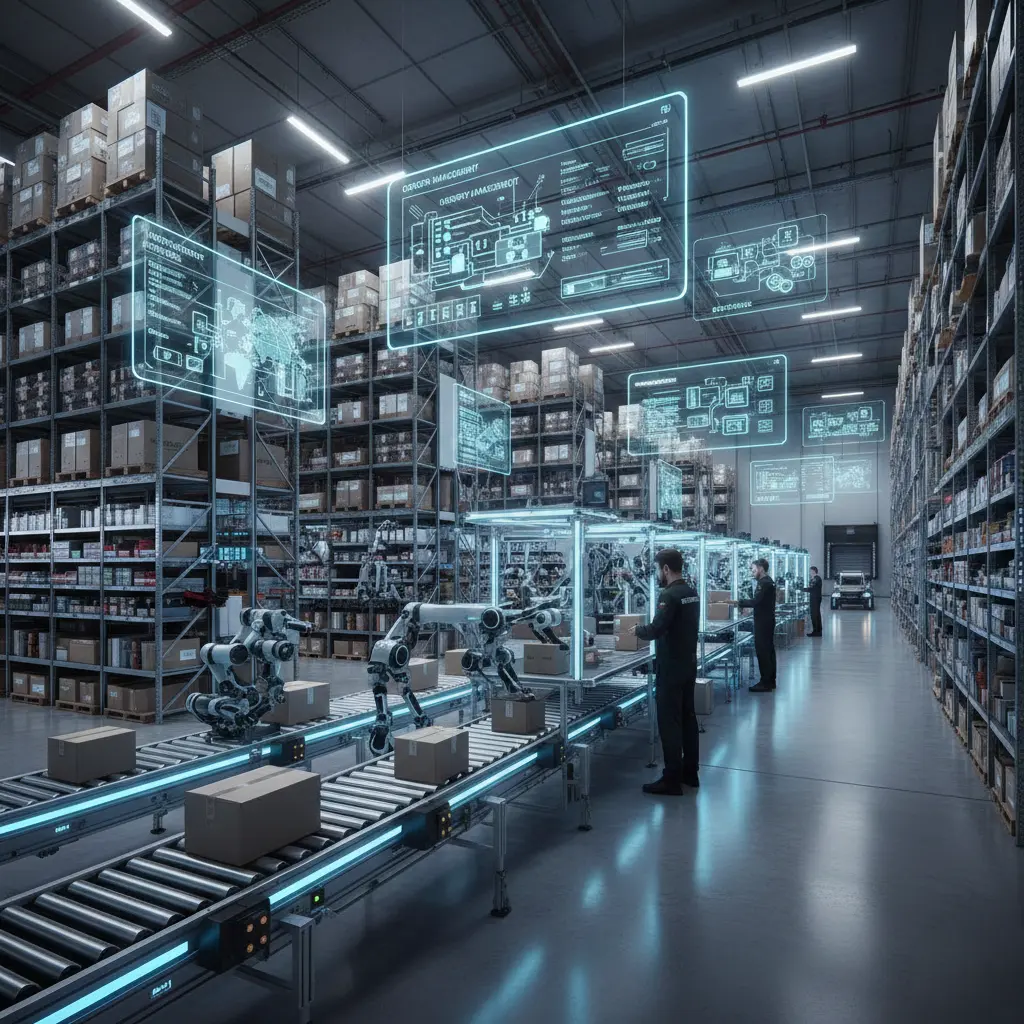
    The modern warehouse is no longer a chaotic maze of manual labor—it’s a synchronized ecosystem powered by automated guided vehicles (AGVs), robotic arms, and smart conveyor systems. These robots work alongside human workers, picking, packing, and sorting items with incredible accuracy and speed.

    Automation minimizes human error, enhances operational throughput, and allows businesses to handle large order volumes—especially during festive or flash-sale periods—without compromising delivery timelines.

    Drones and Autonomous Delivery Vehicles

    2025 is witnessing a major leap in drone and autonomous vehicle technology. E-commerce giants are piloting drone deliveries in urban and semi-urban areas, cutting delivery times from hours to minutes. Ground-based autonomous vehicles are also being deployed for last-mile deliveries, particularly in gated communities and business districts.

    These automated delivery methods not only improve efficiency but also support sustainability goals by reducing fuel consumption and congestion in urban centers.

    Real-Time Visibility: The Backbone of Customer Trust

    In today’s digital-first economy, real-time visibility has become synonymous with customer confidence. Shoppers want to know exactly where their order is at every stage—from dispatch to doorstep. For businesses, visibility translates to better control, reduced losses, and improved accountability.

    IoT and Connected Logistics

    The Internet of Things (IoT) is a game-changer for logistics visibility. Smart sensors and RFID tags enable companies to monitor shipments, track temperature-sensitive goods, and ensure the integrity of every delivery in real time.

    IoT devices also feed continuous data into analytics dashboards, allowing logistics managers to respond instantly to disruptions—whether it’s a route delay, a vehicle breakdown, or a weather-related challenge. This real-time data sharing creates a seamless, transparent supply chain ecosystem.

    Visibility Beyond Delivery

    Real-time visibility doesn’t end at last-mile tracking. It extends into reverse logistics, helping businesses manage returns efficiently. By integrating visibility tools into every stage of the logistics process, companies can minimize losses, speed up refunds, and enhance customer satisfaction—key factors that determine brand loyalty in 2025.

    The Human Element in a Tech-Driven Logistics World

    While AI and automation dominate logistics innovation, the human element remains essential. Technology enhances capabilities, but human decision-making, empathy, and creativity continue to drive customer-centric logistics strategies.

    In 2025, logistics professionals are evolving from manual operators to data interpreters and strategic planners, using AI-generated insights to make better business decisions. Upskilling the workforce in digital tools, robotics management, and analytics will be critical to maintaining a balance between automation and human oversight.

    Sustainability Through Smart Logistics

    Another defining aspect of the 2025 logistics playbook is sustainability. E-commerce companies are under growing pressure to reduce carbon footprints and adopt eco-friendly practices.

    AI and automation enable smarter energy usage, efficient fleet management, and reduced waste through precise inventory control. Many logistics networks are transitioning to electric vehicles (EVs) and carbon-neutral warehouses, demonstrating how technology can align operational excellence with environmental responsibility.

    Challenges on the Road Ahead

    Despite the transformative benefits of AI, automation, and visibility, challenges remain. High implementation costs, data privacy concerns, and infrastructure disparities can slow down adoption—especially for small and mid-sized logistics players.

    However, as technology becomes more accessible and cloud-based logistics platforms gain traction, the barriers are gradually falling. Collaboration between tech startups, logistics providers, and government initiatives will further accelerate this digital transformation.

    The Future of Logistics in 2025 and Beyond

    The logistics industry in 2025 stands at the intersection of intelligence, automation, and visibility. The new playbook is built on data-driven agility, where every movement in the supply chain is measurable, predictable, and optimizable.

    E-commerce companies that harness AI and automation effectively will achieve not just faster deliveries but also smarter, greener, and more resilient operations. Real-time visibility will continue to be the linchpin of customer trust, shaping how consumers perceive reliability in the online shopping experience.

    In essence, the future of logistics is not just about moving goods—it’s about moving with intelligence, precision, and purpose. The integration of AI, automation, and real-time visibility marks the dawn of a new era where logistics becomes the ultimate competitive advantage in the e-commerce landscape.

  • Gamified Shopping Journeys – Turning E-Commerce into Entertainment

    Gamified Shopping Journeys – Turning E-Commerce into Entertainment

    The Rise of Entertainment Commerce

    E-commerce is no longer just about convenience and transactions — it’s about creating experiences. In today’s digital world, where customers are bombarded with choices, gamified shopping journeys are emerging as one of the most powerful ways to engage, entertain, and retain consumers. Gamification transforms online shopping from a passive activity into an interactive adventure — making customers feel like players in a rewarding game rather than just shoppers.

    This new trend, often called “shoppertainment” or entertainment commerce, is reshaping the landscape of digital retail. By blending game mechanics such as rewards, levels, points, badges, and challenges into online shopping, brands are making the experience more immersive and emotionally engaging. It’s no longer about what customers buy, but how they feel while buying it.

    Understanding Gamified Shopping

    Gamification in e-commerce means applying elements from video games — like challenges, leaderboards, and achievements — to the shopping process. The goal is to trigger intrinsic motivation, such as curiosity, competition, and satisfaction. Instead of scrolling through endless product listings, customers participate in mini-games, spin virtual wheels, complete missions, or unlock discounts as they interact with the brand.

    This approach taps into psychology. Humans love goals, progress, and rewards. Gamified shopping triggers the brain’s dopamine system, making users more likely to stay longer, explore more, and return frequently. When done right, gamification transforms ordinary shopping into a memorable experience that drives sales and loyalty simultaneously.

    How Gamified E-Commerce Works

    At its core, gamified e-commerce combines three elements: engagement, progression, and reward. Here’s how it works:

    1. Engagement – Users are invited to interact with fun, game-like activities. Examples include spin-the-wheel offers, trivia quizzes, or virtual treasure hunts on websites.
    2. Progression – As customers engage, they earn points, badges, or levels that unlock new rewards or exclusive access. This creates a sense of achievement and anticipation.
    3. Reward – Players are rewarded with discounts, coupons, loyalty points, or early access to limited products. The satisfaction of “winning” drives repeat engagement.

    Many brands now integrate augmented reality (AR) and AI personalization to make these experiences even more interactive. For example, customers can play AR-based games to virtually “try on” products or complete digital challenges that align with their interests.

    Examples of Successful Gamified Shopping

    Leading global brands have already embraced the gamification wave:

    • Nike Run Club connects physical activity with rewards. Users earn badges, achievements, and product discounts based on their running goals — blending fitness, competition, and shopping seamlessly.
    • AliExpress and Shopee host in-app games like “Shake & Win” and “Daily Coins,” where users earn virtual currency by completing tasks or sharing promotions with friends.
    • Sephora’s Beauty Insider Program gamifies loyalty by assigning tiers (Insider, VIB, Rouge) that unlock different privileges based on spending and engagement.
    • Starbucks Rewards allows customers to collect “stars” for each purchase, which can be redeemed for drinks, merchandise, or experiences — an example of gamified loyalty at scale.

    These strategies have proven effective in boosting user engagement, encouraging repeat purchases, and enhancing brand loyalty.

    The Role of Technology in Gamification

    Modern technology is the driving force behind gamified shopping. AI, AR, and data analytics allow brands to design personalized experiences that feel unique to each user.

    • Artificial Intelligence (AI) analyzes customer behavior to tailor challenges and rewards. For instance, an AI system might suggest different games or achievements based on a shopper’s browsing history.
    • Augmented Reality (AR) turns shopping into an adventure. Customers can explore virtual stores, participate in scavenger hunts, or visualize products in real-life settings through their smartphones.
    • Mobile Apps and Progressive Web Apps (PWAs) offer smooth, game-like interactions — from instant feedback animations to progress tracking.
    • Blockchain and NFTs are introducing new layers of digital ownership. Customers can win collectible digital items or exclusive membership tokens through gameplay, merging e-commerce with Web3 experiences.

    As technology continues to evolve, the line between gaming, shopping, and social interaction is becoming increasingly blurred.

    Benefits of Gamified Shopping for Brands

    Gamification offers more than just entertainment; it delivers measurable business benefits:

    1. Higher Engagement – Interactive elements encourage users to spend more time on websites and apps. The longer customers engage, the higher the conversion rates.
    2. Stronger Loyalty – Rewards and progress systems foster a sense of connection and achievement, motivating customers to return.
    3. Viral Growth – Social sharing features built into games help brands reach new audiences organically.
    4. Enhanced Data Collection – Games provide valuable behavioral insights. Brands can analyze how customers interact, what rewards motivate them, and which products attract attention.
    5. Emotional Connection – Gamification makes shopping fun and memorable, building emotional ties that traditional e-commerce often lacks.

    The Psychology Behind Gamified Shopping

    Gamified e-commerce works because it leverages key psychological drivers of motivation:

    • Achievement – Customers love completing challenges and earning recognition.
    • Competition – Leaderboards or timed events stimulate excitement and urgency.
    • Curiosity – Mystery boxes, spin wheels, and surprise rewards trigger curiosity-driven behavior.
    • Reward Anticipation – The thrill of potentially winning something — even a small discount — creates dopamine-driven engagement.

    This combination of pleasure and anticipation keeps customers returning. It’s not about discounts alone; it’s about how those discounts are earned.

    Challenges and Risks

    Despite its benefits, gamified e-commerce requires balance. Poorly designed games or overly complex mechanics can frustrate users instead of engaging them. There’s also the risk of “reward fatigue,” where customers lose interest once the novelty wears off.

    To avoid this, brands must ensure that their gamified systems are authentic, relevant, and user-centered. Rewards should feel meaningful, not manipulative. Additionally, gamification must integrate naturally with the shopping experience rather than disrupt it.

    Data privacy is another consideration. As gamified platforms collect user data for personalization, transparency and ethical data use become critical for maintaining trust.

    The Future of Gamified Shopping

    As digital and physical retail merge, gamification will play an even bigger role in shaping the future of e-commerce. Emerging technologies like virtual reality (VR), metaverse platforms, and AI-powered personalization will allow brands to create immersive, game-like shopping universes.

    Imagine entering a virtual store in the metaverse, completing mini-missions to unlock exclusive drops, or competing with friends in live shopping tournaments. These experiences blend entertainment, community, and commerce in unprecedented ways.

    Moreover, social gamification — combining live streaming, influencer collaborations, and interactive shopping games — is set to dominate in the coming years. Platforms like TikTok Shop and YouTube Shopping are already integrating playful, community-based experiences that turn shopping into social entertainment.

    Conclusion

    Gamified shopping journeys represent the next evolution of e-commerce — a fusion of fun, engagement, and innovation. By transforming the act of shopping into an entertaining experience, brands can deepen emotional connections, boost loyalty, and stand out in a crowded market.

    As AI, AR, and immersive technologies continue to evolve, the boundary between gaming and shopping will disappear entirely. The future of e-commerce isn’t just transactional; it’s experiential. Gamified shopping is the bridge between consumer enjoyment and commercial success — turning every purchase into play and every shopper into a player.