Tag: international shipping

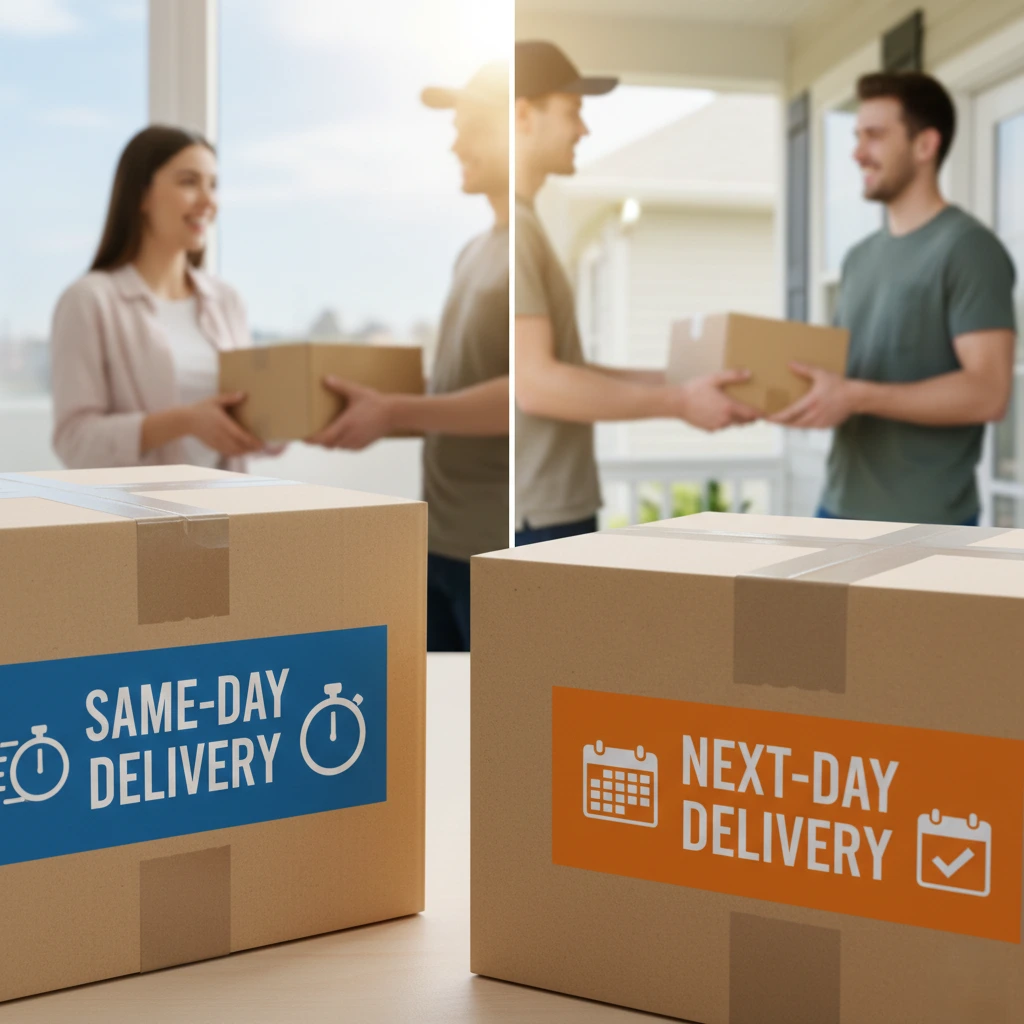
  • Same-Day vs. Next-Day Delivery: Customer Preferences

    Same-Day vs. Next-Day Delivery: Customer Preferences

    In today’s fast-paced ecommerce world, delivery speed plays a critical role in shaping customer satisfaction. Shoppers increasingly expect quick and reliable shipping when making online purchases. Understanding the debate of same-day vs next-day delivery is essential for online retailers seeking to meet consumer expectations and stay competitive.

    Offering the right delivery options can influence purchase decisions, brand loyalty, and repeat business. By analyzing customer delivery preferences and understanding the benefits of fast shipping options, businesses can optimize their logistics strategy and improve overall customer experience.

    Why Delivery Speed Matters

    Fast delivery has become a key factor for online shoppers. Research shows that customers are more likely to abandon a cart if shipping is slow or unclear. The rise of platforms like Amazon and Walmart, which offer rapid delivery services, has set high expectations across the ecommerce industry.

    Consumers value transparency in delivery times. Providing clear choices, whether same-day vs next-day delivery, allows customers to select what suits their schedule and urgency. Offering multiple options also caters to varying needs—from urgent orders to planned purchases.

    Understanding Customer Delivery Preferences

    Every shopper has unique requirements. Some prioritize speed, while others weigh cost, reliability, or convenience. A growing segment of consumers now prefers fast shipping options even if it comes at a slightly higher price.

    Surveys indicate that customer delivery preferences often depend on the type of product. For example:

    • Essentials or urgent items, like groceries or gifts, often require same-day delivery.
    • Larger purchases or non-urgent items can be satisfied with next-day delivery.

    Understanding these preferences allows retailers to optimize warehouse placement, inventory management, and courier partnerships, ensuring faster fulfillment without sacrificing efficiency.

    Same-Day vs Next-Day Delivery: Key Differences

    Same-day delivery offers the fastest option, promising customers their order within hours. This option is ideal for urgent needs, last-minute gifts, or time-sensitive purchases.

    Next-day delivery guarantees arrival by the following day, balancing speed with cost efficiency. It is suitable for customers who want fast shipping but do not require immediate fulfillment.

    Retailers must consider factors such as:

    • Operational capabilities: Not all businesses can manage same-day logistics efficiently.
    • Cost implications: Same-day delivery often comes with higher expenses.
    • Geographical coverage: Urban areas are easier to serve than rural locations.

    Offering both options allows customers to choose based on urgency and budget, aligning with customer delivery preferences while maintaining operational efficiency.

    Advantages of Fast Shipping Options

    Investing in fast shipping options benefits both the retailer and the customer. Key advantages include:

    • Increased customer satisfaction: Quick deliveries enhance the shopping experience.
    • Higher conversion rates: Shoppers are more likely to complete a purchase when delivery is fast and reliable.
    • Competitive advantage: Brands offering same-day vs next-day delivery stand out in a crowded market.
    • Encourages repeat business: Consistently meeting or exceeding delivery expectations fosters loyalty.

    By analyzing order patterns and delivery demands, businesses can implement the most effective fulfillment strategy, ensuring that speed does not compromise accuracy or quality.

    Challenges of Offering Same-Day Delivery

    While same-day vs next-day delivery is attractive to customers, same-day delivery presents operational challenges. Retailers must maintain:

    • Sufficient inventory across multiple locations
    • Efficient picking, packing, and dispatch processes
    • Real-time tracking and communication systems

    Despite these hurdles, the benefits of meeting urgent customer needs often outweigh the logistical complexity, especially in competitive markets.

    Implementing the Right Strategy

    Retailers should leverage data to understand customer delivery preferences. Key steps include:

    • Segmenting customers by urgency and location
    • Offering clear delivery options at checkout
    • Using fulfillment centers strategically located near high-demand areas
    • Communicating shipping times transparently

    Balancing fast shipping options with operational costs ensures profitability while keeping customers satisfied.

    Conclusion

    In conclusion, same-day vs next-day delivery is more than a logistics decision—it is a critical component of the modern shopping experience. By recognizing customer delivery preferences and offering flexible fast shipping options, retailers can increase satisfaction, drive conversions, and enhance loyalty.

    Businesses that successfully implement these strategies gain a competitive edge, meet rising expectations, and build trust with their customers. Whether through rapid same-day fulfillment or reliable next-day delivery, speed and convenience remain key drivers in today’s ecommerce landscape.


  • Lessons from Successful Online Stores

    Lessons from Successful Online Stores

    Running a successful online store is about more than just selling products—it’s about understanding customers, optimising operations, and building a brand that resonates. By studying the strategies of top-performing e-commerce businesses, you can uncover key lessons to apply to your own store.

    Focus on Customer Experience

    One of the biggest lessons from successful online stores is the emphasis on exceptional customer experience. Fast shipping, easy navigation, responsive support, and personalized recommendations make customers return. A smooth and enjoyable shopping journey often translates directly into higher conversion rates and loyalty.

    Choose the Right Products

    Top online stores don’t just sell products—they solve problems. They focus on high-demand, niche products with strong market potential. Conducting market research and analyzing competitors helps identify what customers truly want. Offering unique or high-quality products sets your store apart in a crowded market.

    Optimize for Mobile and Speed

    With more than half of e-commerce traffic coming from mobile devices, mobile optimization is crucial. Successful stores ensure their websites are fast, responsive, and easy to navigate on all devices. Page load speed, intuitive design, and simplified checkout processes reduce bounce rates and increase sales.

    Build a Strong Brand

    Successful online stores focus on building a strong, recognizable brand. From cohesive visuals and tone of voice to engaging content, a brand that resonates with its audience creates trust and encourages repeat purchases. Consistency in messaging across all channels is key.

    Leverage Data and Analytics

    Top-performing e-commerce stores use data-driven decisions. Tracking metrics like traffic sources, conversion rates, and customer behavior helps identify opportunities for improvement. Continuous testing, learning, and optimization are crucial for long-term success.

    Marketing and Community Engagement

    Finally, successful stores invest in strategic marketing and community building. Email campaigns, social media engagement, influencer partnerships, and user-generated content help expand reach and build trust. A loyal community often becomes a brand’s strongest asset.

    Final Thoughts

    Learning from successful online stores shows that success comes from combining great products, excellent customer experience, data insights, and strategic branding. By applying these lessons thoughtfully, you can create an online store that not only sells but thrives in today’s competitive e-commerce landscape.

  • Digital Product Passports & Supply Chain Transparency: Building Trust in the Modern Economy

    Digital Product Passports & Supply Chain Transparency: Building Trust in the Modern Economy

    In an era where consumers, regulators, and investors demand accountability, Digital Product Passports are emerging as a powerful tool to enable supply chain transparency. Businesses are no longer evaluated solely on price and quality; ethical sourcing, sustainability, and traceability now play a decisive role in brand trust. Digital Product Passports are transforming how companies share product information across the value chain, creating a more transparent, compliant, and sustainable global marketplace.

    What Are Digital Product Passports

    Understanding Digital Product Passports

    A Digital Product Passport (DPP) is a structured digital record that contains detailed information about a product throughout its lifecycle. This includes data on raw materials, manufacturing processes, certifications, environmental impact, usage instructions, and end-of-life options. By making this information accessible to stakeholders, Digital Product Passports support informed decision-making and regulatory compliance.

    Why Digital Product Passports Matter Today

    Governments and regulatory bodies, especially in regions like the European Union, are pushing for product traceability and transparency to support sustainability goals. Digital Product Passports help businesses comply with evolving regulations while meeting growing consumer expectations for openness and responsibility. They also improve internal efficiency by creating a single source of truth for product data.

    The Role of Digital Product Passports in Supply Chain Transparency

    Enhancing End-to-End Supply Chain Visibility

    Supply chain transparency refers to the ability to track and share accurate information across every stage of the supply chain. Digital Product Passports provide end-to-end visibility, allowing companies to trace materials from origin to finished product. This reduces blind spots, improves risk management, and enables faster responses to disruptions or compliance issues.

    Building Trust with Consumers and Partners

    Transparency builds trust. When consumers can scan a QR code or access a digital record to learn where a product comes from and how it was made, confidence increases. Digital Product Passports empower brands to demonstrate authenticity, ethical sourcing, and sustainability claims with verifiable data, strengthening relationships with customers, suppliers, and regulators.

    Sustainability and Circular Economy Benefits

    Supporting Sustainable Product Design

    Digital Product Passports play a critical role in advancing sustainability. By documenting materials, energy usage, and emissions, they help companies identify areas for improvement in product design and manufacturing. This data-driven approach enables smarter decisions that reduce environmental impact and support long-term sustainability goals.

    Enabling Circular Economy Practices

    A key advantage of Digital Product Passports is their support for the circular economy. Detailed product information makes it easier to repair, reuse, refurbish, and recycle products at the end of their lifecycle. This reduces waste, extends product lifespan, and helps businesses transition from linear to circular business models.

    Compliance and Regulatory Advantages

    Meeting Evolving Regulatory Requirements

    Regulatory pressure for transparency is increasing across industries such as fashion, electronics, automotive, and manufacturing. Digital Product Passports simplify regulatory compliance by providing standardized, auditable product data. This reduces reporting complexity and minimizes the risk of penalties or reputational damage.

    Improving Risk Management and Accountability

    With greater visibility into suppliers and processes, companies can better identify risks related to labor practices, environmental impact, or material sourcing. Digital Product Passports enhance accountability across the supply chain, ensuring that standards are met consistently and issues are addressed proactively.

    Technology Powering Digital Product Passports

    Key Technologies Behind Digital Product Passports

    Several technologies enable effective Digital Product Passports, including blockchain, cloud platforms, IoT sensors, and data standards. Blockchain, in particular, ensures data integrity and tamper resistance, while IoT devices provide real-time tracking of products and materials throughout the supply chain.

    Integrating Digital Product Passports with Existing Systems

    For maximum impact, Digital Product Passports should integrate seamlessly with ERP, supply chain management, and sustainability reporting systems. Interoperability ensures that data flows smoothly across platforms, reducing duplication and improving data accuracy across the organization.

    Challenges in Implementing Digital Product Passports

    Data Accuracy and Standardization

    One of the main challenges in adopting Digital Product Passports is ensuring accurate and standardized data across diverse suppliers. Inconsistent data formats and varying levels of digital maturity can slow implementation. Establishing common standards and clear data governance frameworks is essential for success.

    Cost and Change Management Considerations

    Implementing Digital Product Passports requires investment in technology, training, and process redesign. Organizations must manage change carefully, aligning stakeholders and demonstrating the long-term value of improved supply chain transparency to secure buy-in across the business.

    The Future of Digital Product Passports and Supply Chain Transparency

    Driving Competitive Advantage Through Transparency

    As transparency becomes a baseline expectation, companies that adopt Digital Product Passports early will gain a competitive edge. Clear, accessible product information enhances brand reputation, supports sustainability claims, and differentiates businesses in crowded markets.

    Final Thoughts on Digital Product Passports

    Digital Product Passports and supply chain transparency are redefining how products are created, managed, and trusted. By embracing this approach, businesses can improve compliance, support sustainability, and build stronger relationships with consumers and partners. In a world where transparency is power, Digital Product Passports are not just a compliance tool but a strategic asset for long-term success.

  • Agentic AI in eCommerce Operations: Transforming Digital Commerce Through Autonomous Intelligence

    Agentic AI in eCommerce Operations: Transforming Digital Commerce Through Autonomous Intelligence

    The rapid evolution of artificial intelligence is reshaping how online businesses operate, and Agentic AI in eCommerce operations is at the forefront of this transformation. Unlike traditional automation or rule-based AI, agentic AI systems can make decisions, take actions, and learn from outcomes with minimal human intervention. For eCommerce brands striving to scale efficiently, improve customer experience, and remain competitive, agentic AI represents a powerful new operational paradigm.

    Understanding Agentic AI in eCommerce

    What Is Agentic AI

    Agentic AI refers to intelligent systems designed to act autonomously toward specific goals. These systems perceive their environment, reason through complex scenarios, and execute tasks independently. In eCommerce operations, agentic AI can manage workflows such as inventory planning, pricing optimization, customer service, and order fulfillment while continuously learning from data and feedback.

    How Agentic AI Differs from Traditional Automation

    Traditional automation follows predefined rules and scripts. Agentic AI, by contrast, adapts dynamically. It can evaluate multiple variables, prioritize actions, and adjust strategies in real time. This adaptability makes agentic AI in eCommerce operations particularly valuable in fast-changing environments where demand, competition, and customer behavior shift constantly.

    Key Applications of Agentic AI in eCommerce Operations

    Intelligent Inventory and Demand Management

    One of the most impactful uses of agentic AI is in inventory management. Autonomous agents analyze historical sales, seasonal trends, promotions, and external signals to forecast demand accurately. They can trigger replenishment, adjust stock levels across warehouses, and reduce overstock or stockouts without manual oversight.

    Dynamic Pricing and Revenue Optimization

    Agentic AI enables dynamic pricing strategies by continuously monitoring competitor prices, demand elasticity, and customer behavior. AI agents can test pricing scenarios, optimize margins, and respond instantly to market changes. This leads to improved profitability while maintaining competitive positioning.

    Personalized Customer Experience at Scale

    In modern eCommerce, personalization is a key differentiator. Agentic AI systems analyze browsing patterns, purchase history, and real-time behavior to deliver hyper-personalized recommendations, content, and offers. These agents adapt customer journeys dynamically, improving conversion rates and customer lifetime value.

    Agentic AI in Customer Support and Engagement

    Autonomous Customer Service Agents

    Agentic AI-powered chatbots and virtual assistants go beyond scripted responses. They can understand intent, resolve complex issues, and escalate cases when necessary. These AI customer service agents learn from interactions, improving response quality over time and providing 24/7 support at scale.

    Proactive Customer Engagement

    Agentic AI can anticipate customer needs before issues arise. For example, it may detect delayed shipments, trigger proactive notifications, or offer compensation automatically. This proactive engagement improves satisfaction and builds long-term trust with customers.

    Optimizing Supply Chain and Fulfillment Operations

    Smart Order Routing and Fulfillment

    In eCommerce operations, fulfillment speed and accuracy are critical. Agentic AI optimizes order routing by selecting the best warehouse or fulfillment center based on location, inventory availability, and shipping costs. It can dynamically reroute orders during disruptions, ensuring operational resilience.

    Reducing Operational Costs and Errors

    By autonomously managing repetitive and complex tasks, agentic AI reduces human error and operational overhead. Automated decision-making across logistics, returns, and supplier coordination leads to faster processes and lower costs, enhancing overall efficiency.

    Benefits of Agentic AI in eCommerce Operations

    Scalability and Operational Agility

    As eCommerce businesses grow, manual processes struggle to keep pace. Agentic AI provides scalable operations by handling increased transaction volumes without proportional increases in staff or costs. This agility allows businesses to respond quickly to market changes and customer demands.

    Data-Driven Decision Making

    Agentic AI systems continuously analyze vast datasets to inform decisions. This real-time, data-driven approach improves accuracy and consistency across operations, enabling leaders to focus on strategy rather than day-to-day execution.

    Challenges and Considerations in Adoption

    Governance, Trust, and Control

    While agentic AI offers autonomy, businesses must establish clear governance frameworks. Defining boundaries, monitoring performance, and ensuring ethical decision-making are essential to maintaining trust and control over autonomous systems.

    Integration with Existing eCommerce Platforms

    Successful implementation of agentic AI in eCommerce operations requires seamless integration with existing platforms such as ERP, CRM, and order management systems. Careful planning and phased deployment help minimize disruption and maximize value.

    The Future of Agentic AI in eCommerce

    From Automation to Autonomous Commerce

    The future of eCommerce is moving from simple automation toward autonomous commerce, where AI agents manage end-to-end operations with minimal human input. As agentic AI models become more sophisticated, they will collaborate with human teams, augmenting creativity, strategy, and innovation.

    Final Thoughts on Agentic AI in eCommerce Operations

    Agentic AI in eCommerce operations is redefining efficiency, personalization, and scalability in digital commerce. By embracing autonomous intelligence, businesses can streamline operations, enhance customer experiences, and unlock new growth opportunities. As competition intensifies, agentic AI will become not just an advantage, but a necessity for forward-thinking eCommerce brands.

  • How to Ensure an Efficient Ecommerce Shipping & Delivery Solution

    How to Ensure an Efficient Ecommerce Shipping & Delivery Solution

    An efficient ecommerce shipping and delivery solution is essential for online businesses in today’s competitive market. Consumers expect fast delivery, accurate tracking, and reliable customer service, which makes it crucial for ecommerce brands to optimize every stage of their shipping process. A well-managed system not only enhances customer satisfaction but also improves profitability and drives long-term growth. Below are the key strategies to ensure a seamless and efficient ecommerce shipping operation.

    Optimize Your Order Fulfillment Process

    A strong shipping system begins with an efficient order fulfillment process. When orders are processed quickly and accurately, delivery becomes smoother and more predictable.

    Automate Order Processing

    Using automation tools helps reduce human errors and speeds up order handling. Automated systems can sort orders, verify inventory levels, and generate packing slips—ensuring fast and consistent fulfillment.

    Improve Warehouse Operations

    Efficient warehouse management is crucial for timely shipping. Implement warehouse management systems (WMS), organized picking routes, and real-time inventory updates. These improvements help reduce delays and streamline packing and dispatch.

    Choose Reliable Shipping Partners

    Selecting trusted shipping carriers is one of the most important factors in achieving an efficient ecommerce delivery system.

    Compare Shipping Rates and Services

    Evaluate carriers based on delivery speed, cost, reliability, and coverage. Offering multiple delivery options—such as express, standard, and economy—gives customers flexibility and improves satisfaction.

    Negotiate Better Rates

    Shipping cost plays a major role in profitability. Negotiate discounted rates with carriers or use shipping aggregators to access lower prices without compromising delivery quality.

    Offer Multiple Delivery Options

    Modern customers expect choices. Providing several delivery options increases conversion rates and enhances the buying experience.

    Same-Day and Next-Day Delivery

    Fast delivery options are becoming common in ecommerce. Offering same-day delivery or next-day delivery helps you stay competitive and attract more customers.

    Pickup Points and Locker Systems

    Not all customers want home delivery. Offering pickup points, locker deliveries, or in-store pickup reduces failed deliveries and boosts convenience.

    Use Advanced Tracking and Notifications

    Transparent, real-time tracking is now a standard feature in ecommerce shipping.

    Real-Time Order Tracking

    Implement real-time tracking systems that allow customers to monitor their package at every stage. This reduces customer inquiries and builds trust.

    Proactive Delivery Notifications

    Send regular shipping updates via SMS, email, or app notifications. This helps customers stay informed and minimizes delivery-related anxiety.

    Ensure Efficient Packaging

    Smart packaging plays a critical role in speeding up the shipping process and reducing costs.

    Use the Right Packaging Materials

    Choose durable, lightweight, and eco-friendly packaging. This reduces shipping cost and prevents product damage, ensuring a smooth customer experience.

    Optimize Packaging Sizes

    Avoid oversized boxes or excessive material. Right-sized packaging increases efficiency and reduces carrier fees.

    Streamline Last-Mile Delivery

    Last-mile delivery is often the most expensive and time-consuming part of the shipping process.

    Partner with Local Couriers

    Local courier services can help ensure quicker last-mile delivery within specific regions. They are often more flexible and affordable for local shipments.

    Use Route Optimization Tools

    Advanced routing software helps carriers deliver packages faster and reduces fuel costs. This improves delivery accuracy and overall efficiency.

    Implement a Strong Returns Management System

    A seamless returns process is essential for customer satisfaction and brand loyalty.

    Simplify Returns

    Offer easy return options such as prepaid labels and drop-off locations. A customer-friendly reverse logistics system boosts trust and encourages repeat purchases.

    Analyze Return Patterns

    Study return data to identify frequent issues—such as damaged items or incorrect sizes—and fix them to reduce future returns.

    Enhance Customer Communication

    Clear communication builds trust and plays a vital role in the delivery experience.

    Provide Accurate Delivery Estimates

    Customers appreciate transparency. Offer precise delivery timelines and update them if delays occur.

    Offer Responsive Support

    A strong customer support team can quickly resolve issues related to shipping delays, missing items, or tracking confusion.

    Leverage Technology for Efficiency

    Technology is the backbone of an efficient ecommerce shipping solution.

    Integrate Your Systems

    Integrate your ecommerce platform, inventory system, WMS, and shipping software. This eliminates manual work and ensures all data flows seamlessly.

    Use AI and Analytics

    Artificial intelligence helps predict order volumes, optimize packaging, improve delivery routes, and analyze shipping performance—making your processes smarter and faster.

    Conclusion Ensuring an Efficient Ecommerce Shipping System

    Achieving an efficient ecommerce shipping and delivery solution requires a combination of smart planning, strong partnerships, and modern technology. By optimizing fulfillment, offering flexible delivery options, investing in tracking tools, and focusing on customer satisfaction, ecommerce brands can reduce costs, enhance performance, and deliver exceptional experiences. A streamlined shipping system improves your business reputation and ensures long-term success in the competitive ecommerce world.