Customer Lifetime Value (CLV) for ecommerce is one of the most important metrics for measuring long-term business success. Instead of focusing only on individual purchases, CLV helps ecommerce brands understand how much revenue a customer generates over their entire relationship with the business. In this guide, we explain Customer Lifetime Value (CLV) for ecommerce, why it matters, and how to increase it sustainably.
What Is Customer Lifetime Value (CLV) for Ecommerce?
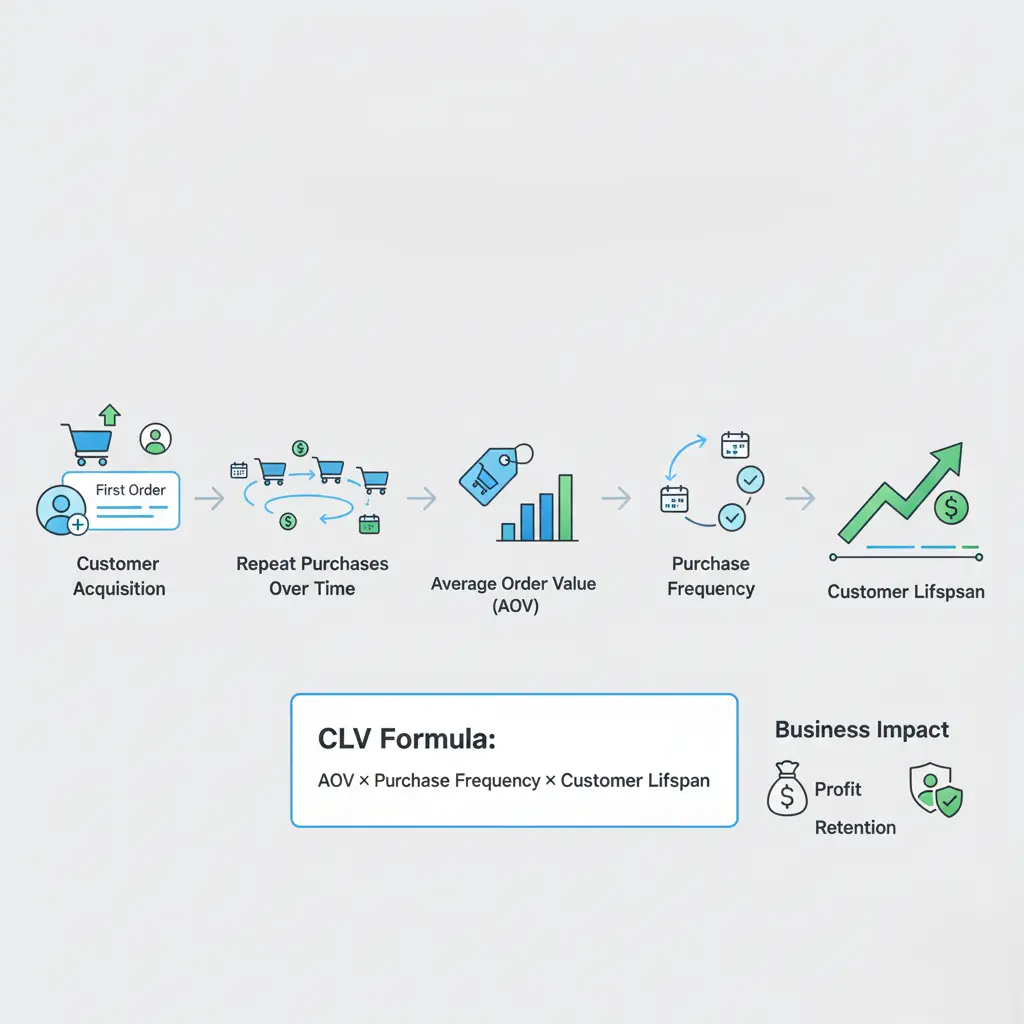
Customer Lifetime Value (CLV) for ecommerce refers to the total revenue a business can expect from a customer throughout their entire buying journey. It takes into account purchase frequency, average order value, and customer lifespan. A higher CLV means customers are more loyal, spend more, and contribute to consistent revenue growth.
Why Customer Lifetime Value (CLV) Is Important for Ecommerce
Understanding Customer Lifetime Value (CLV) for ecommerce helps businesses make smarter marketing and operational decisions. CLV allows you to:
Identify high-value customer segments
Optimize customer acquisition costs
Improve retention and loyalty strategies
Forecast long-term revenue more accurately
When CLV is higher than customer acquisition cost, your ecommerce business becomes more profitable and scalable.
How to Calculate Customer Lifetime Value (CLV) for Ecommerce
Basic CLV Formula
A simple way to calculate Customer Lifetime Value (CLV) for ecommerce is:
Average Order Value × Purchase Frequency × Customer Lifespan
This formula gives a clear estimate of how much a customer is worth over time. More advanced models may include profit margins, churn rate, and discount rates for greater accuracy.
Key Factors That Affect Customer Lifetime Value (CLV)
Average Order Value
Increasing average order value directly boosts Customer Lifetime Value (CLV) for ecommerce. Bundles, upsells, and cross-sells encourage customers to spend more per transaction.
Purchase Frequency
Customers who buy more often have a higher CLV. Loyalty programs, email marketing, and personalized offers can increase purchase frequency and strengthen customer relationships.
Customer Retention Rate
Retention plays a critical role in Customer Lifetime Value (CLV) for ecommerce. Retaining existing customers is usually more cost-effective than acquiring new ones, and even small improvements in retention can significantly increase CLV.
How to Increase Customer Lifetime Value (CLV) for Ecommerce
Personalize the Customer Experience
Personalization is one of the most effective ways to improve Customer Lifetime Value (CLV) for ecommerce. Use customer data to recommend products, send tailored emails, and create personalized shopping experiences.
Improve Customer Support
Excellent customer service builds trust and loyalty. Fast responses, easy returns, and proactive communication encourage repeat purchases and increase CLV over time.
Implement Loyalty Programs
Loyalty programs reward repeat purchases and increase engagement. Points, discounts, and exclusive offers motivate customers to keep coming back, raising Customer Lifetime Value (CLV) for ecommerce.
Use Email and SMS Marketing
Email and SMS campaigns help nurture customer relationships. Regular communication keeps your brand top-of-mind and promotes repeat purchases, directly impacting CLV.
CLV vs Customer Acquisition Cost (CAC)
Finding the Right Balance
A healthy ecommerce business maintains a strong ratio between Customer Lifetime Value (CLV) and Customer Acquisition Cost (CAC). Ideally, CLV should be at least three times higher than CAC. This balance ensures sustainable growth and efficient marketing spend.
Measuring and Tracking Customer Lifetime Value (CLV)
Make CLV an Ongoing Metric
Customer Lifetime Value (CLV) for ecommerce should not be a one-time calculation. Regularly tracking CLV helps you:
Monitor the impact of retention strategies
Adjust marketing budgets
Identify high-performing channels
Improve customer segmentation
Turning CLV Insights into Growth
Understanding Customer Lifetime Value (CLV) for ecommerce enables brands to shift from short-term sales thinking to long-term relationship building. By focusing on retention, personalization, and customer experience, ecommerce businesses can increase profitability, reduce churn, and create loyal customer communities.
Leave a Reply