Tag: Shopping

  • Product Page Optimization Techniques That Increase Sales

    Product Page Optimization Techniques That Increase Sales

    In the competitive world of eCommerce, your product page can make or break a sale. A well-optimized page not only attracts visitors but also converts them into customers. This guide on product page optimization will help you understand the key techniques to improve conversions and boost revenue.

    What is Product Page Optimization?

    Product page optimization is the process of enhancing all elements of a product page to improve user experience and increase sales. It involves content, design, and functionality. For businesses focusing on product page optimization, the aim is to make it easy for customers to find information and make purchase decisions quickly.

    1. Write Compelling Product Descriptions

    Your product descriptions should do more than just describe features—they should sell the product. Focus on:

    • Benefits over features
    • Clear and concise language
    • Addressing customer pain points

    Well-crafted product descriptions play a major role in product page optimization because they influence buying decisions and build trust.

    2. Focus on Image Optimization

    Images are one of the first things customers notice. High-quality visuals can significantly impact conversions. Best practices include:

    • Use high-resolution images
    • Show multiple angles
    • Add zoom functionality
    • Compress images for fast loading

    Image optimization improves both user experience and page speed, making it a crucial element of product page optimization.

    3. Use Strong Call-to-Action Buttons

    Call-to-action buttons guide users toward making a purchase. Effective CTAs should be:

    • Clear and action-oriented (e.g., “Buy Now,” “Add to Cart”)
    • Visually distinct
    • Placed strategically on the page

    A well-designed CTA is essential in product page optimization, as it directly impacts conversion rates.

    4. Improve eCommerce UX

    User experience (UX) plays a vital role in keeping visitors engaged. To enhance ecommerce UX:

    • Ensure easy navigation
    • Use a clean and responsive design
    • Minimize distractions
    • Provide quick access to important information

    A seamless ecommerce UX is a fundamental part of product page optimization, helping users move smoothly from browsing to buying.

    5. Add Social Proof and Reviews

    Customer reviews and ratings build credibility and trust. Include:

    • Verified customer reviews
    • Star ratings
    • Testimonials

    Social proof reassures potential buyers and strengthens your product page optimization efforts by reducing hesitation.

    6. Optimize for Mobile Users

    With a large number of users shopping on mobile devices, mobile optimization is essential. Ensure:

    • Fast loading speed
    • Responsive design
    • Easy-to-click buttons

    Mobile-friendly pages are critical for effective product page optimization in today’s digital landscape.

    7. Highlight Key Information Clearly

    Important details such as price, availability, and shipping information should be easy to find. Use:

    • Bullet points
    • Clear headings
    • Visual emphasis

    Clarity and accessibility are key components of successful product page optimization, ensuring users don’t have to search for essential information.

    8. Use Urgency and Scarcity Tactics

    Creating a sense of urgency can encourage faster decisions. Examples include:

    • “Limited stock available”
    • “Offer ends soon”
    • Countdown timers

    These tactics enhance product page optimization by motivating customers to act quickly.


    Conclusion

    Effective product page optimization is about combining strong content, appealing visuals, and a smooth user experience. By improving product descriptions, focusing on image optimization, using clear call-to-action buttons, and enhancing ecommerce UX, you can significantly increase your sales. Implement these techniques to create high-converting product pages that drive results.


    FAQs

    1. Why is product page optimization important?
    It helps improve user experience, build trust, and increase conversion rates, ultimately leading to higher sales.

    2. How can product descriptions improve conversions?
    Clear and benefit-focused product descriptions address customer needs and make it easier for them to decide to buy.

    3. What role do images play in product page optimization?
    High-quality and optimized images attract attention, showcase the product effectively, and enhance user experience.

  • The Future of Direct-to-Consumer Brands

    The Future of Direct-to-Consumer Brands

    The last decade reshaped how products reach customers. Traditional retail once controlled discovery, pricing, and distribution, but digital platforms shifted power toward brands that speak directly to buyers. At the center of this shift are Direct-to-Consumer brands, companies that sell through their own digital channels rather than relying entirely on wholesalers or marketplaces. From niche startups to global disruptors, these brands have proven that strong storytelling, customer data, and agile product development can outperform slower legacy systems.

    The Evolution of the Model

    What began as a way to bypass retail markups has matured into a sophisticated business model. Early DTC brands focused on price transparency and online convenience, but competition quickly pushed them to differentiate through brand identity and experience. As acquisition costs rose and digital advertising became crowded, the most successful companies realized that owning the customer relationship mattered more than simply owning the sale.

    Today, Direct-to-Consumer brands operate less like pure e-commerce stores and more like media companies, product labs, and community hubs combined. They gather first-party data, experiment with rapid product launches, and speak to customers across multiple platforms. This shift has laid the foundation for the next wave of innovation in the DTC ecosystem.

    Changing Consumer Expectations

    Modern shoppers expect speed, transparency, and authenticity from the brands they support. Direct-to-Consumer brands thrive because they can respond quickly to these expectations without layers of retail intermediaries. Whether through personalized product recommendations or transparent supply chains, they build trust by staying close to their audience.

    A modern DTC marketing strategy is increasingly built on personalization. Instead of broadcasting generic campaigns, brands analyze behavior, preferences, and purchase history to tailor communication. Email flows, loyalty programs, and community-driven content help transform one-time buyers into long-term advocates.

    Technology Reshaping the Landscape

    Technology is accelerating the evolution of Direct-to-Consumer brands. Artificial intelligence can predict purchasing patterns, automate support, and deliver hyper-personalized recommendations. Brands that combine AI insights with human storytelling will create experiences that feel both efficient and authentic.

    Another powerful force shaping direct-to-consumer trends is social commerce. Platforms like short-form video apps and creator communities allow products to spread through storytelling rather than advertising alone. The most effective DTC brands collaborate with creators, encourage user-generated content, and turn customers into ambassadors.

    Emerging Growth Models

    Many Direct-to-Consumer brands are expanding beyond one-time purchases into recurring relationships. Subscription models for everyday products create predictable revenue while strengthening loyalty. When customers receive consistent value, convenience becomes a powerful retention tool.

    Community-led growth is another defining shift. Successful DTC brands are investing in forums, private groups, and events that turn customers into participants rather than passive buyers. When people feel connected to a brand’s mission, they willingly share feedback, ideas, and advocacy.

    Omnichannel Is the Next Frontier

    While the model began online, the future of Direct-to-Consumer brands will be omnichannel. Physical showrooms, pop-up stores, and retail partnerships are helping brands blend digital insights with real-world experiences. Customers might discover a product on social media, test it in a store, and reorder through an app.

    This convergence requires a smarter DTC marketing strategy built on unified data. Brands must understand customers across channels, not just within a single platform. The companies that connect online behavior with offline interactions will deliver seamless journeys and stronger loyalty.

    What the Future Looks Like

    The next generation of Direct-to-Consumer brands will look less like online stores and more like adaptive ecosystems. They will combine product innovation, community engagement, and data intelligence to respond instantly to shifting demand. Agility, not scale alone, will define long-term success.

    For entrepreneurs and marketers, the message is clear: the opportunity is still enormous, but the rules are evolving. Winning brands will prioritize customer relationships over quick transactions, invest in meaningful storytelling, and treat data as a strategic asset rather than a byproduct. They will test new formats, collaborate with creators, and build communities that extend far beyond a single purchase. Those willing to experiment with technology, embrace transparency, and listen closely to their audience will shape the next era of commerce. The brands that thrive will not simply sell products; they will build experiences, trust, and long-term loyalty in an increasingly competitive digital marketplace. Customer centricity will remain the most durable advantage in modern commerce.


    FAQs

    Q: What makes Direct-to-Consumer brands different from traditional retail brands?
    A:
    Direct-to-Consumer brands sell directly to customers through their own digital platforms or stores, allowing them to control pricing, gather first-party data, and build direct relationships without relying on wholesalers or large retailers.

    Q: What are the biggest direct-to-consumer trends shaping the future?
    A:
    Key trends include AI-driven personalization, social commerce, subscription-based products, community-led growth, and omnichannel experiences that combine digital and physical shopping journeys.

    Q: Why is customer data so important for DTC brands?
    A:
    First-party data allows DTC brands to understand customer behavior, personalize marketing, improve products, and create stronger long-term relationships that drive retention and lifetime value.

  • How to Start an Ecommerce Business in 2026

    How to Start an Ecommerce Business in 2026

    Starting an online store has become one of the most popular ways to build a profitable venture in today’s digital economy. With global online shopping continuing to grow, many entrepreneurs are exploring how to launch a successful ecommerce business. In 2026, modern technology, automation tools, and digital marketing strategies have made it easier than ever to enter the online marketplace. However, success still requires careful planning, the right platform, and a strong understanding of your target audience.

    This ecommerce business guide will help you understand the key steps needed to launch and grow a successful online store.

    Choose a Profitable Niche

    The first step in building a successful ecommerce business is selecting the right niche. A niche defines the type of products you sell and the audience you serve. Instead of selling a wide range of unrelated products, it is often better to focus on a specific category.

    For example, you might sell eco-friendly home products, pet supplies, or fitness equipment. Choosing a niche with consistent demand and limited competition can make it easier to stand out in the market. Researching customer needs, trending products, and market gaps is an important part of this process.

    Following proven ecommerce startup tips, entrepreneurs should focus on niches where they have interest or knowledge, as this helps create better marketing and branding strategies.

    Select the Right Ecommerce Platform

    The next important step is choosing the platform where your online store will operate. Many platforms allow beginners to launch an online store without advanced technical skills.

    Popular options include hosted solutions that provide templates, payment integrations, and inventory management tools. These platforms simplify the process of launching an ecommerce business, allowing entrepreneurs to focus more on product sourcing and marketing.

    When choosing a platform, consider factors such as customization options, payment gateways, mobile optimization, and scalability. A flexible platform ensures your store can grow as your business expands.

    Source High-Quality Products

    Product quality plays a crucial role in customer satisfaction and long-term growth. Whether you manufacture your own products, purchase from wholesalers, or use dropshipping, reliable suppliers are essential.

    Many successful entrepreneurs build their ecommerce business by partnering with suppliers who provide consistent product quality and timely delivery. Research supplier reviews, request samples, and test products before selling them.

    Another strategy mentioned in many ecommerce startup tips is private labeling, where businesses sell products under their own brand name. This approach helps create a unique brand identity and improves customer loyalty.

    Build a Professional Online Store

    Your website is the digital storefront of your brand. A well-designed site builds trust and encourages visitors to make purchases. Important elements include clear product descriptions, high-quality images, secure payment options, and easy navigation.

    A strong ecommerce business guide always emphasizes the importance of user experience. If customers find it difficult to browse products or complete purchases, they may leave your store and shop elsewhere.

    Mobile optimization is also essential. A large percentage of online shoppers now use smartphones, so ensuring that your store functions smoothly on mobile devices can significantly improve conversions.

    Develop a Marketing Strategy

    Marketing is the driving force behind every successful ecommerce business. Without effective promotion, even great products may go unnoticed.

    Digital marketing channels such as search engine optimization (SEO), social media marketing, email campaigns, and paid advertisements can help attract potential customers. Creating valuable content and engaging with audiences on social platforms also increases brand visibility.

    One of the most effective ecommerce startup tips is building an email list. Email marketing allows businesses to promote new products, offer discounts, and maintain long-term relationships with customers.

    Focus on Customer Experience

    Customer satisfaction plays a major role in the growth of any online store. Fast shipping, responsive customer support, and clear return policies help build trust and encourage repeat purchases.

    A successful ecommerce business also pays attention to customer feedback. Reviews and ratings provide valuable insights that help improve products and services.

    Providing personalized shopping experiences, such as product recommendations and loyalty rewards, can further enhance customer relationships and increase long-term sales.

    Scale Your Ecommerce Business

    Once your store begins generating consistent sales, the next step is scaling. Expansion strategies may include introducing new products, entering international markets, or investing in advanced marketing campaigns.

    Automation tools can help manage tasks such as inventory tracking, customer service, and order fulfillment. These tools allow entrepreneurs to focus on growth strategies rather than daily operational challenges.

    Scaling an ecommerce business requires careful planning and continuous monitoring of performance metrics such as traffic, conversion rates, and customer retention.

    Conclusion

    Starting an online store in 2026 presents exciting opportunities for aspiring entrepreneurs. With the right niche, reliable suppliers, effective marketing strategies, and a customer-focused approach, anyone can build a successful ecommerce business.

    By following a structured ecommerce business guide and applying proven ecommerce startup tips, beginners can avoid common mistakes and build a strong foundation for long-term success in the digital marketplace.

    FAQs

    How much money is needed to start an ecommerce business?

    The startup cost can vary widely depending on the platform, product sourcing method, and marketing budget. Some online stores can start with a few hundred dollars, while others require larger investments.

    What is the best platform for beginners?

    Many beginners prefer user-friendly platforms that offer ready-made templates, payment integrations, and simple store management tools.

    How long does it take to make profit from an ecommerce store?

    Profit timelines vary depending on marketing strategy, product demand, and competition. Some stores see results within a few months, while others take longer to grow.

  • Warehouse vs Fulfillment Centers: What’s the Difference?

    Warehouse vs Fulfillment Centers: What’s the Difference?

    Introduction

    Businesses that store and ship products often rely on warehouses or fulfillment centers to manage inventory and deliveries. While these two facilities may appear similar, they serve different purposes in the supply chain. Understanding the difference between them is important for companies that want to improve logistics operations and customer satisfaction.

    The concept of Warehouse vs Fulfillment Center is especially important for ecommerce businesses that need fast and accurate order deliveries. Both facilities handle storage and shipping, but the way they operate and the services they provide can vary significantly. Choosing the right option depends on business goals, order volume, and customer expectations.

    What is a Warehouse?

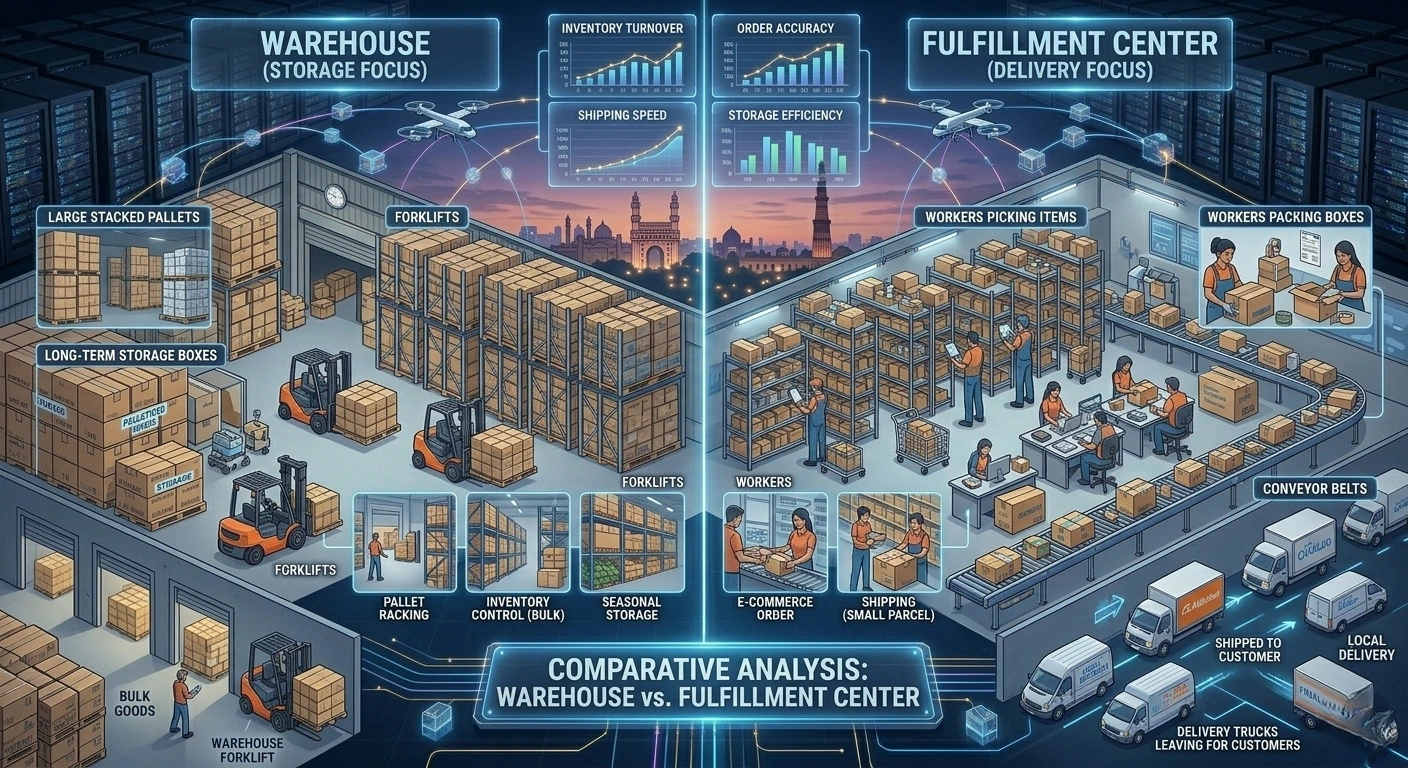
    A warehouse is a large storage facility where businesses keep goods for an extended period before they are sold or distributed. Warehouses are primarily designed for inventory storage and are commonly used by manufacturers, wholesalers, and retailers.

    In the discussion of Warehouse vs Fulfillment Center, a warehouse typically focuses on storing large quantities of products rather than processing individual customer orders. Goods may stay in a warehouse for weeks or even months until they are needed.

    Warehouse operations usually include receiving shipments, organizing inventory, and maintaining stock levels. Many businesses also use warehouse management systems to track inventory and improve efficiency. Warehouses play a vital role in the supply chain because they help businesses manage bulk inventory and maintain product availability.

    What is a Fulfillment Center?

    A fulfillment center is a specialized facility designed to handle the entire order fulfillment process for businesses, especially ecommerce stores. Instead of just storing products, fulfillment centers focus on processing and shipping customer orders quickly.

    When comparing Warehouse vs Fulfillment Center, the key difference lies in how products move through the facility. Fulfillment centers manage high volumes of daily orders and ensure that customers receive their purchases as quickly as possible.

    These facilities provide a variety of fulfillment center services, including inventory storage, order picking, packing, shipping, and returns management. Ecommerce companies often partner with third-party logistics providers that operate fulfillment centers to streamline their logistics operations.

    Because fulfillment centers are built for speed and efficiency, products usually do not remain there for long periods. Instead, they move quickly through the system as orders are processed and shipped.

    Key Differences Between Warehouse and Fulfillment Center

    Understanding the major differences between these two facilities helps businesses make better logistics decisions. The comparison of Warehouse vs Fulfillment Center often focuses on purpose, operations, and order processing.

    Warehouses are mainly used for long-term storage of goods, while fulfillment centers are designed for fast order processing and shipping. Businesses that need to store bulk inventory for extended periods usually prefer warehouses.

    Fulfillment centers, on the other hand, handle individual customer orders and focus on rapid delivery. This makes them ideal for ecommerce businesses that require efficient shipping operations.

    Another difference lies in daily operations. Warehouses generally deal with large shipments moving between suppliers, manufacturers, or retailers. Fulfillment centers handle smaller shipments that go directly to customers.

    Technology and automation are also more common in fulfillment centers because they need to process a high number of orders each day. These advanced systems support fulfillment center services such as order tracking, packing automation, and shipping optimization.

    Warehouse vs Distribution Center

    Many people also compare warehouses with distribution centers when discussing logistics facilities. The topic of warehouse vs distribution center highlights another important distinction in supply chain operations.

    A warehouse mainly focuses on storing goods, while a distribution center is designed to move products quickly through the supply chain. Distribution centers receive products from manufacturers and then distribute them to retailers or customers.

    In many cases, fulfillment centers operate similarly to distribution centers because they process orders and ship products quickly. Understanding the concept of warehouse vs distribution center helps businesses determine which facility best supports their supply chain strategy.

    Which One is Right for Your Business?

    Choosing between the two depends on your business model and logistics needs. The discussion of Warehouse vs Fulfillment Center becomes especially relevant for growing ecommerce companies.

    If your business requires long-term inventory storage and deals with bulk shipments, a warehouse may be the better option. Warehouses are ideal for businesses that supply retailers or maintain large stock levels.

    However, if your company sells products directly to customers online, fulfillment centers may be more suitable. Their ability to manage orders quickly and provide efficient fulfillment center services can significantly improve delivery speed and customer satisfaction.

    Businesses experiencing rapid growth may also benefit from fulfillment centers because they can handle large volumes of orders without requiring companies to manage their own logistics infrastructure.

    Conclusion

    Understanding the difference between Warehouse vs Fulfillment Center is essential for businesses that want to optimize their supply chain operations. While warehouses are designed primarily for storage, fulfillment centers focus on fast order processing and shipping.

    By evaluating their logistics requirements and customer expectations, businesses can determine which solution best supports their operations. Whether a company chooses a warehouse for inventory storage or a fulfillment center for order processing, selecting the right logistics facility can improve efficiency, reduce costs, and enhance the overall customer experience.

  • Amazon FBA vs 3PL: Which Fulfillment Strategy Truly Powers Growing Brands?

    Amazon FBA vs 3PL: Which Fulfillment Strategy Truly Powers Growing Brands?

    As ecommerce brands scale, fulfillment becomes either a growth engine or a bottleneck. One of the most debated topics among modern sellers is Amazon FBA vs 3PL. Both models promise streamlined logistics, faster shipping, and operational efficiency, but the right choice depends on your sales channels, margins, and long-term strategy.

    In this guide, we’ll break down Amazon FBA vs 3PL in detail so you can confidently choose the best fulfillment model for your growing brand.

    What Is Amazon FBA?

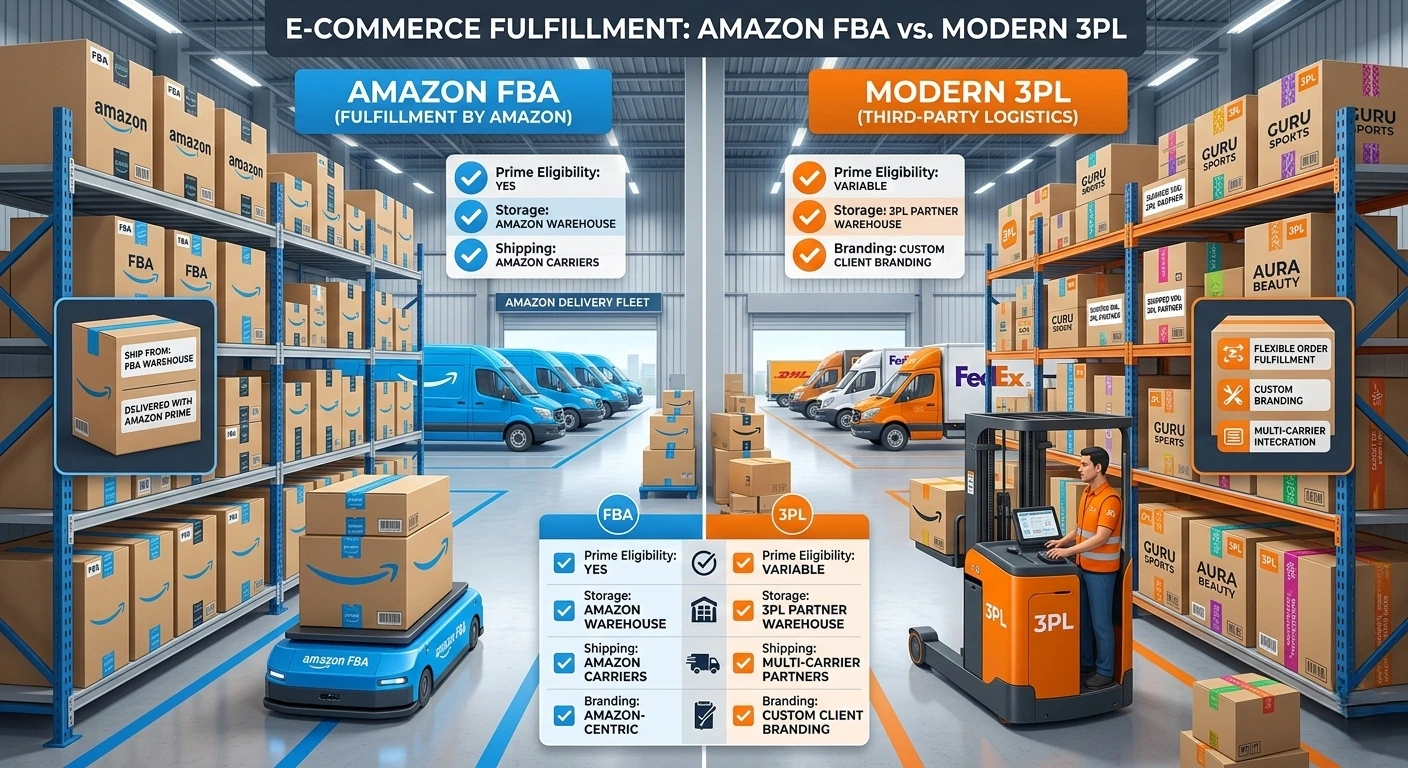
    Amazon offers Fulfillment by Amazon (FBA), a service where sellers store products in Amazon’s warehouses, and Amazon handles picking, packing, shipping, returns, and customer service.

    With FBA, your products qualify for Prime shipping, which can significantly boost conversion rates. For brands selling primarily on Amazon, this is a major advantage.

    However, understanding FBA fees is critical. These include storage fees, fulfillment fees, long-term storage penalties, and seasonal surcharges. While FBA simplifies operations, margins can shrink quickly if inventory turnover slows down.

    Benefits of Amazon FBA

    Prime eligibility and fast shipping
    Access to Amazon’s massive customer base
    Hands-off logistics management
    Built-in customer service and returns handling

    Limitations of Amazon FBA

    Limited branding control
    Complex and rising FBA fees
    Storage limits and restock restrictions
    Multi-channel fulfillment can be costly

    When comparing Amazon FBA vs 3PL, FBA works best for brands heavily dependent on Amazon’s ecosystem.

    What Is a 3PL?

    A Third-Party Logistics (3PL) provider is an independent company that stores inventory and fulfills orders on your behalf. Unlike FBA, a 3PL supports multiple sales channels including your website, marketplaces, and retail distribution.

    Many ecommerce businesses using Shopify rely on a 3PL for Shopify integration to automate order routing and inventory syncing.

    A 3PL offers broader ecommerce fulfillment solutions, including custom packaging, kitting, subscription boxes, and B2B shipping.

    Benefits of Using a 3PL

    Multi-channel fulfillment flexibility
    Stronger branding and packaging customization
    Transparent pricing models
    Better control over inventory distribution

    Limitations of a 3PL

    No built-in marketplace traffic
    You manage customer service separately
    Shipping speeds depend on warehouse locations

    For brands expanding beyond Amazon, Amazon FBA vs 3PL becomes less about convenience and more about control and scalability.

    Cost Comparison: FBA Fees vs 3PL Pricing

    Cost is often the deciding factor in the Amazon FBA vs 3PL debate.

    FBA fees are standardized but can be unpredictable due to peak season surcharges and storage penalties. Long-term storage especially impacts slow-moving products.

    A 3PL typically charges for storage (per pallet, bin, or cubic foot), pick and pack fees, shipping labels, and sometimes onboarding costs. While it may appear more complex, many brands find 3PL pricing more transparent over time.

    If your catalog includes oversized, seasonal, or bundled products, comparing Amazon FBA vs 3PL carefully can reveal major savings opportunities.

    Branding and Customer Experience

    Brand control is another critical factor in Amazon FBA vs 3PL.

    With FBA, orders arrive in Amazon-branded packaging. Customer data is limited, restricting your ability to build direct relationships.

    With a 3PL, you control packaging, inserts, promotional materials, and unboxing experiences. This is essential for DTC brands focused on loyalty and repeat purchases.

    For companies investing in premium ecommerce fulfillment solutions, a 3PL often provides the flexibility required to stand out in competitive markets.

    Multi-Channel Growth and Scalability

    If you plan to sell exclusively on Amazon, FBA may be sufficient. But most modern brands diversify across marketplaces, retail, and direct-to-consumer websites.

    In that scenario, Amazon FBA vs 3PL becomes a scalability question.

    A 3PL for Shopify stores enables seamless fulfillment across your website, Amazon, Walmart, and even wholesale accounts. You avoid splitting inventory across different systems, reducing stockouts and forecasting errors.

    Many growing brands actually adopt a hybrid model, using FBA for Amazon orders and a 3PL for all other channels. When evaluating Amazon FBA vs 3PL, hybrid logistics can offer the best of both worlds.

    Inventory Management and Flexibility

    Inventory restrictions are increasingly common within Amazon’s warehouses. Restock limits can disrupt sales momentum during peak seasons.

    A 3PL typically offers greater flexibility in inbound shipments and storage capacity. For brands launching new SKUs or running flash promotions, that flexibility can be invaluable.

    When analyzing Amazon FBA vs 3PL, consider how much operational control you want over forecasting and replenishment.

    Which Is Better for Growing Brands?

    There is no universal winner in the Amazon FBA vs 3PL comparison. The right solution depends on your growth stage and channel strategy.

    Choose FBA if:

    You sell primarily on Amazon
    Prime eligibility drives most of your revenue
    You prefer hands-off logistics

    Choose a 3PL if:

    You sell across multiple channels
    Branding and customer experience matter deeply
    You want predictable long-term fulfillment costs
    You need flexible ecommerce fulfillment solutions

    For many scaling brands, the smartest move isn’t Amazon FBA vs 3PL as an either-or decision. Instead, it’s about building a fulfillment strategy that evolves with your business.

    By carefully evaluating FBA fees, operational control, and multi-channel expansion plans, you can select the fulfillment infrastructure that supports sustainable, profitable growth.