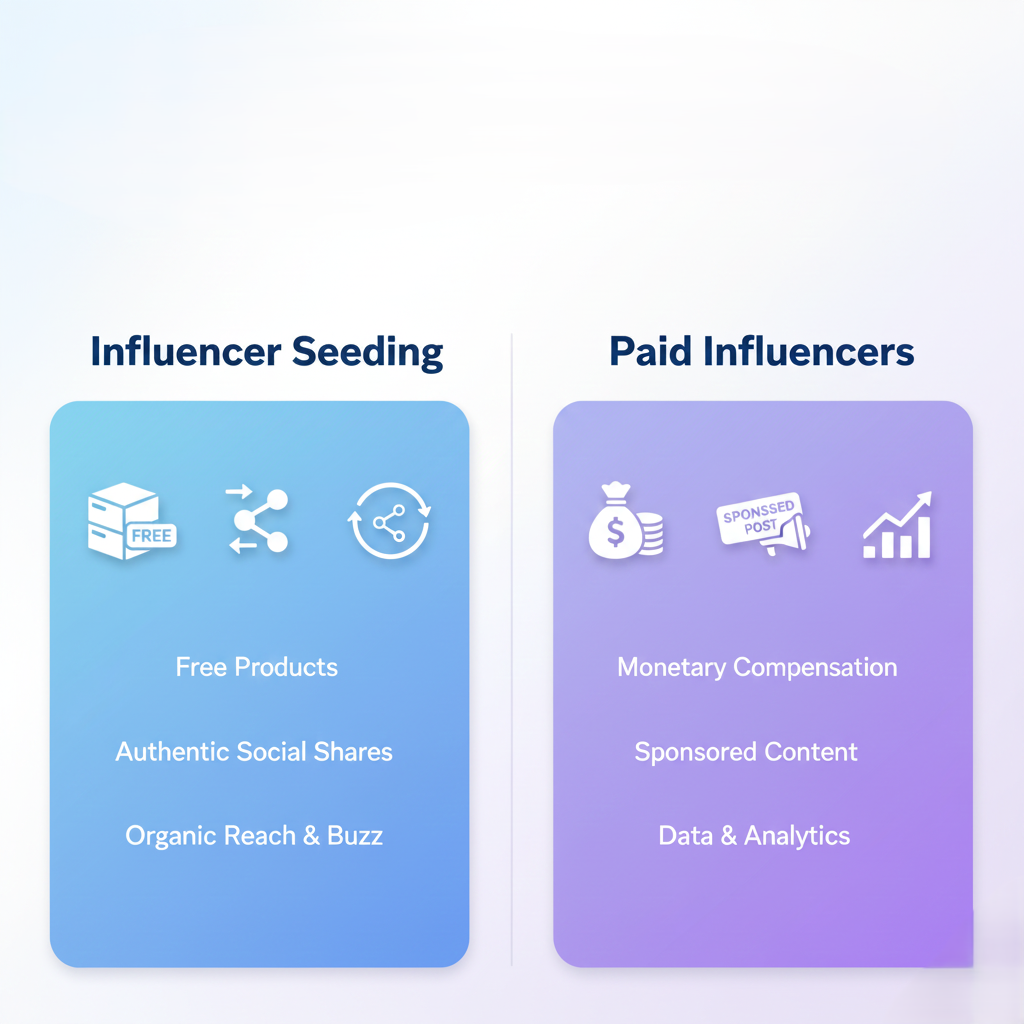
Influencer marketing has become a powerful growth channel for brands, but choosing the right approach can be challenging. Two popular strategies dominate the space: influencer seeding and paid influencers. While both can drive awareness and conversions, they work very differently. Understanding the strengths, limitations, and best-use cases of each approach helps brands build smarter and more cost-effective campaigns.
What Is Influencer Seeding?
Influencer seeding is a strategy where brands send free products to influencers without guaranteed posting requirements. The goal is to encourage authentic content creation and organic brand mentions.
How Influencer Seeding Works
Brands identify creators who align with their values and audience, then ship products hoping influencers genuinely enjoy and share them. There is no formal contract or payment involved.
Key Benefits of Influencer Seeding
Influencer seeding is cost-effective, especially for startups and small brands. Because content is voluntary, it often feels more authentic and trustworthy. This approach also helps brands build long-term relationships with creators.
What Are Paid Influencers?
Paid influencers are creators who receive monetary compensation in exchange for agreed-upon deliverables, such as posts, reels, or stories.
How Paid Influencer Campaigns Work
Brands negotiate contracts outlining content format, posting timelines, usage rights, and performance expectations. Paid campaigns are structured and results-driven.
Key Benefits of Paid Influencers
Paid influencer marketing offers predictability and scale. Brands can control messaging, timelines, and campaign objectives, making it ideal for product launches and performance-focused goals.
Influencer Seeding vs Paid Influencers: Key Differences
Cost and Budget Flexibility
Influencer seeding requires minimal financial investment, making it ideal for brands with limited budgets. Paid influencers, on the other hand, can be expensive but offer measurable reach and guaranteed exposure.
Content Authenticity and Trust
Seeded content often feels more genuine because influencers are not obligated to post. In contrast, paid collaborations may appear more promotional, though high-quality creators can still deliver authentic messaging.
Reach and Scalability
Paid influencer campaigns provide immediate reach and scalability. Influencer seeding delivers slower, organic growth that builds over time.
When to Choose Influencer Seeding
Ideal Use Cases for Influencer Seeding
Influencer seeding works best for brand awareness, community building, and product feedback. It is especially effective for beauty, fashion, lifestyle, and consumer brands looking to generate organic buzz.
When to Choose Paid Influencers
Ideal Use Cases for Paid Influencer Marketing
Paid influencers are better suited for sales-driven campaigns, new product launches, and time-sensitive promotions. Brands seeking guaranteed impressions and ROI often rely on paid collaborations.
Combining Influencer Seeding and Paid Influencers
Many successful brands use a hybrid approach. Influencer seeding helps identify high-performing creators, while paid influencer partnerships amplify results.
Building a Balanced Influencer Marketing Strategy
Start with seeding to test creator alignment, then invest in paid campaigns with influencers who already love your product. This reduces risk and improves campaign performance.
Final Thoughts on Influencer Seeding vs Paid Influencers
There is no one-size-fits-all answer in the debate between influencer seeding vs paid influencers. Seeding delivers authenticity and long-term brand value, while paid influencers provide control and scalability. The most effective strategy depends on your goals, budget, and timeline. Brands that understand how to leverage both approaches strategically will gain a stronger competitive edge in influencer marketing.
Leave a Reply