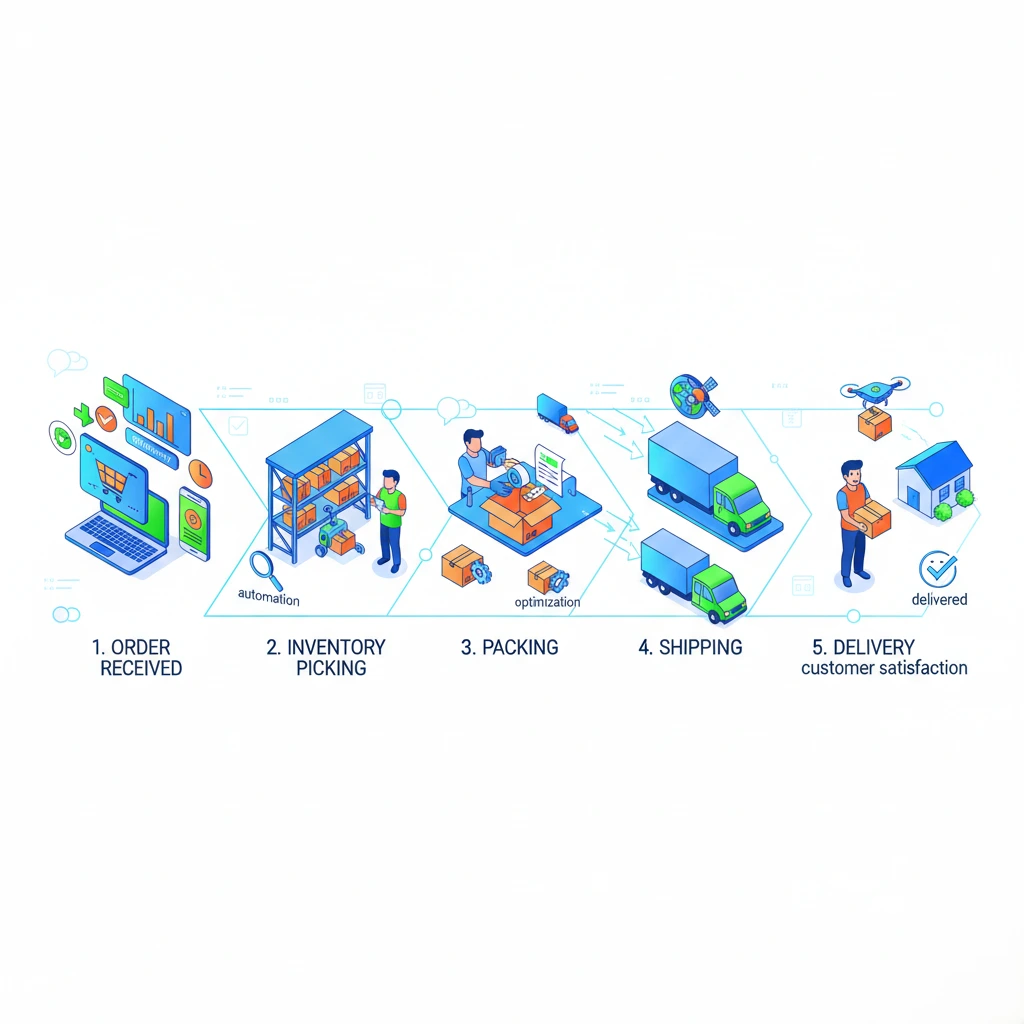
In today’s competitive online retail landscape, a smooth E-commerce Fulfillment Process can make the difference between a satisfied customer and a lost sale. From receiving orders to shipping products, every step matters. Streamlining your fulfillment process not only improves efficiency but also enhances customer experience and reduces operational costs.
Understanding the E-commerce Fulfillment Process
The E-commerce Fulfillment Process encompasses all steps involved in receiving, processing, and delivering customer orders. It typically includes inventory management, picking and packing products, order processing, shipping, and handling returns. A well-organized fulfillment process ensures orders are accurate, delivered on time, and efficiently managed from start to finish.
Key Steps to Optimize Your E-commerce Fulfillment Process
- Streamline Inventory Management
Effective inventory management is the foundation of a smooth fulfillment process. Accurate stock tracking prevents overselling and ensures that products are always available for orders. Using automated tools can provide real-time updates, helping your team stay on top of stock levels and reduce errors. - Improve Order Processing
Efficient order processing is critical to customer satisfaction. Automating order entry, verification, and invoicing reduces delays and errors. By integrating your online store with a centralized system, you can ensure that each order flows seamlessly from purchase to fulfillment. - Implement E-commerce Automation
Integrating ecommerce automation tools can significantly speed up your fulfillment process. Automated picking lists, barcode scanning, and warehouse management software reduce manual work, minimize mistakes, and improve overall efficiency. Automation also helps scale your operations as your business grows. - Optimize Picking and Packing
The picking and packing stage is often the most labor-intensive. Organize your warehouse logically, group frequently ordered items together, and consider using technology like pick-to-light systems. Proper packing materials not only protect products but also reflect a professional brand image, enhancing the customer experience. - Select Reliable Shipping Partners
Shipping is a critical part of the E-commerce Fulfillment Process. Partner with carriers that offer reliability, speed, and tracking options. Offering multiple shipping options to customers, including standard, expedited, and same-day delivery, can boost satisfaction and loyalty. - Monitor Performance Metrics
Tracking key performance indicators (KPIs) allows you to identify bottlenecks and inefficiencies in your fulfillment process. Metrics such as order accuracy, delivery time, return rates, and fulfillment costs provide insights that help refine workflows and improve service quality. - Plan for Returns Efficiently
Returns are an inevitable part of online retail. Establishing a clear, streamlined returns process reduces customer frustration and operational burden. Efficient returns management should include inspection, restocking, or refurbishing items, and integrating returns into your overall fulfillment workflow.
Benefits of Optimizing Your E-commerce Fulfillment Process
A well-optimized E-commerce Fulfillment Process offers multiple benefits:
- Faster Delivery Times – Efficient workflows ensure orders reach customers quickly, enhancing satisfaction.
- Reduced Errors – Automation and organized systems minimize mistakes in picking, packing, and shipping.
- Cost Savings – Streamlined processes reduce labor, shipping errors, and inventory discrepancies.
- Improved Customer Experience – Reliable, on-time deliveries build trust and encourage repeat purchases.
- Scalability – An optimized process can handle growing order volumes without sacrificing quality or speed.
Leveraging Technology in Fulfillment
Modern tools are essential for optimizing the E-commerce Fulfillment Process. Inventory management systems, automated order processing software, and warehouse management platforms work together to reduce human error and enhance efficiency. Additionally, real-time tracking and data analytics allow you to predict demand, manage stock levels, and improve overall operations.
Integrating ecommerce automation into your fulfillment workflow not only saves time but also ensures consistency across multiple sales channels. From order verification to shipping label generation, automation minimizes manual intervention, enabling your team to focus on strategy and growth.
Conclusion
Optimizing your E-commerce Fulfillment Process is no longer optional—it’s a critical component of running a successful online store. By improving inventory management, streamlining order processing, leveraging ecommerce automation, and monitoring key metrics, you can create a fulfillment workflow that boosts efficiency, reduces errors, and delights customers.
A well-executed fulfillment strategy enhances the customer experience, builds brand loyalty, and positions your business for scalable growth. Investing in the right tools, technologies, and processes today ensures that your e-commerce operations run smoothly and profitably tomorrow.
Leave a Reply