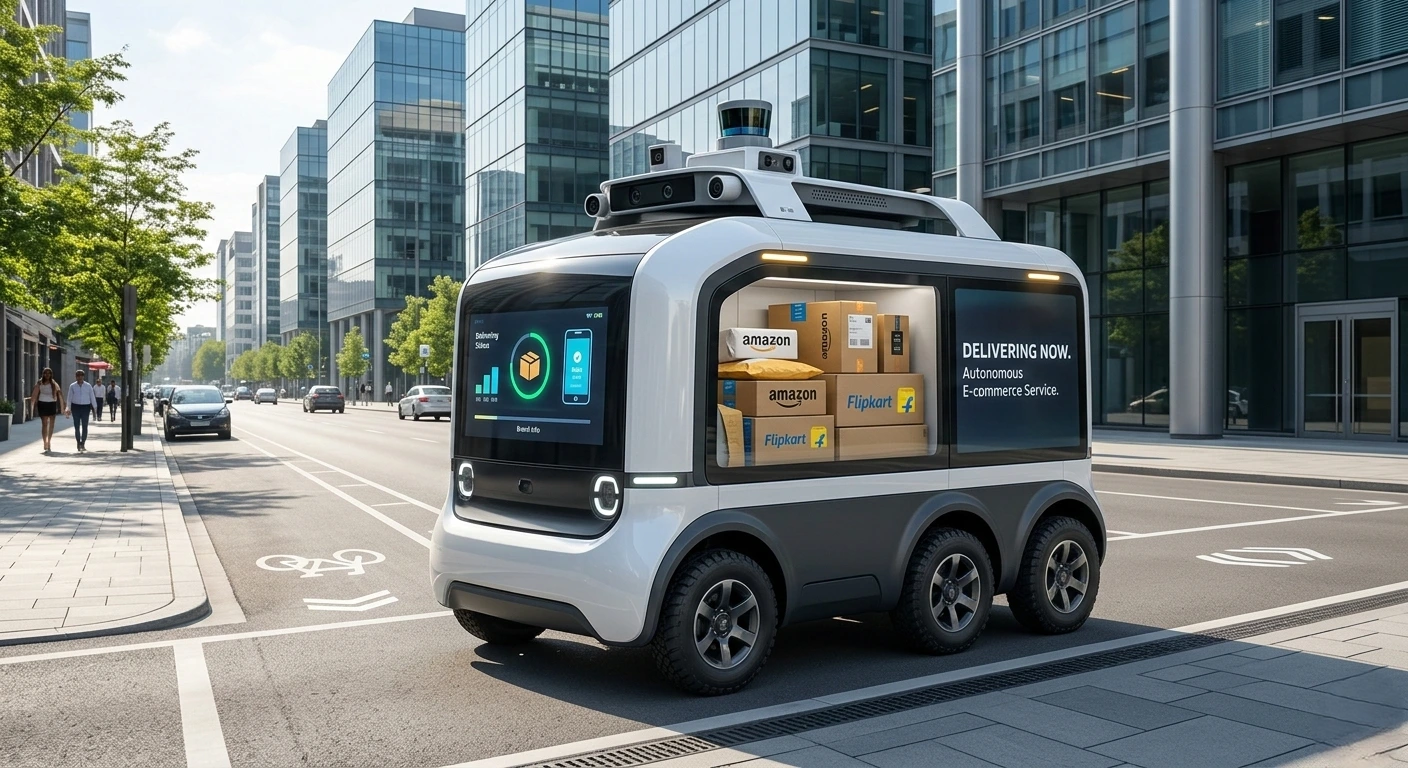
The rise of e‑commerce has created new demands for faster, more efficient, and reliable delivery systems. Autonomous Delivery Vehicles are emerging as a game‑changer in this landscape, offering solutions to many of the challenges faced by traditional delivery methods. From labour shortages to traffic congestion, these vehicles promise to reshape the way packages reach customers. By leveraging advanced technology, they are becoming a critical component of modern logistics networks and the broader vision of autonomous last‑mile delivery.
Why Autonomous Delivery Vehicles Are Transformative
The growth of online shopping has put tremendous pressure on delivery networks. Customers increasingly expect same‑day or two‑hour delivery, which can be difficult to achieve using conventional methods. Autonomous Delivery Vehicles address these challenges by reducing reliance on human drivers and optimizing delivery routes. These vehicles range from small sidewalk robots to larger self‑driving vans capable of navigating urban and suburban streets.
In addition to improving speed, these vehicles can help reduce delivery costs. By automating routine trips, companies can lower labor expenses and fuel consumption. Many autonomous systems are electric-powered, which also contributes to reducing carbon emissions. As sensor technology, artificial intelligence, and machine learning improve, these vehicles can safely detect obstacles, interact with pedestrians, and navigate complex environments, making them a reliable option for autonomous last‑mile delivery.
How Autonomous Delivery Vehicles Work
The process begins at a warehouse or distribution hub, where packages are loaded into autonomous units. These units can then travel independently to designated drop-off points, often using smart lockers or app-based access for secure delivery. Small robotic delivery vehicles food systems are particularly effective in urban areas, as they can navigate sidewalks or designated lanes while minimizing interaction with cars.
In suburban and rural areas, larger autonomous vans handle longer distances between distribution centers and local delivery points. This combination of vehicle types allows companies to cover different geographies efficiently. The integration of Autonomous Delivery Vehicles into these multi-modal systems ensures faster delivery times and improved service reliability.
Real-World Deployments and Challenges
Several companies are already testing Autonomous Delivery Vehicles in real-world scenarios. Grocery chains and food delivery services have deployed robotic delivery vehicles food systems to bring orders directly to customers’ homes. These pilots use advanced mapping, sensors, and real-time communication to ensure accuracy and safety.
Despite progress, challenges remain. Public safety is a primary concern, especially when autonomous vehicles operate in spaces shared with pedestrians, cyclists, and cars. Regulatory frameworks are still evolving, and companies must demonstrate that their systems are safe and reliable. Public perception is also critical; many people remain cautious about vehicles operating without human drivers. Transparent safety features, robust performance, and responsive customer support are essential for gaining trust.
Environmental Benefits of Autonomous Delivery Vehicles
Autonomous Delivery Vehicles can significantly reduce the environmental impact of e‑commerce. By optimizing routes and using electric power, they minimize emissions and traffic congestion. Small sidewalk robots are particularly energy-efficient and help reduce the number of large, fuel-powered vehicles on local streets.
This shift not only supports sustainability goals but also improves urban living conditions by lowering noise and pollution. Integrating these vehicles into logistics networks demonstrates how technology can enhance both efficiency and environmental responsibility.
The Future of Autonomous Delivery Vehicles
As technology continues to advance, Autonomous Delivery Vehicles are likely to become more widespread. Investments from major retailers, tech companies, and logistics providers indicate that this trend will accelerate. AI improvements, infrastructure upgrades, and clearer regulations will enable safer and more efficient operations.
In the coming years, consumers can expect faster delivery, lower costs, and more reliable service thanks to autonomous systems. Autonomous Delivery Vehicles are transforming the e-commerce logistics landscape, paving the way for an era where deliveries are faster, greener, and more customer-centric. The integration of robotic delivery vehicles food systems and autonomous last‑mile delivery technologies will redefine convenience in online shopping, making it more sustainable and efficient than ever before.
Leave a Reply