
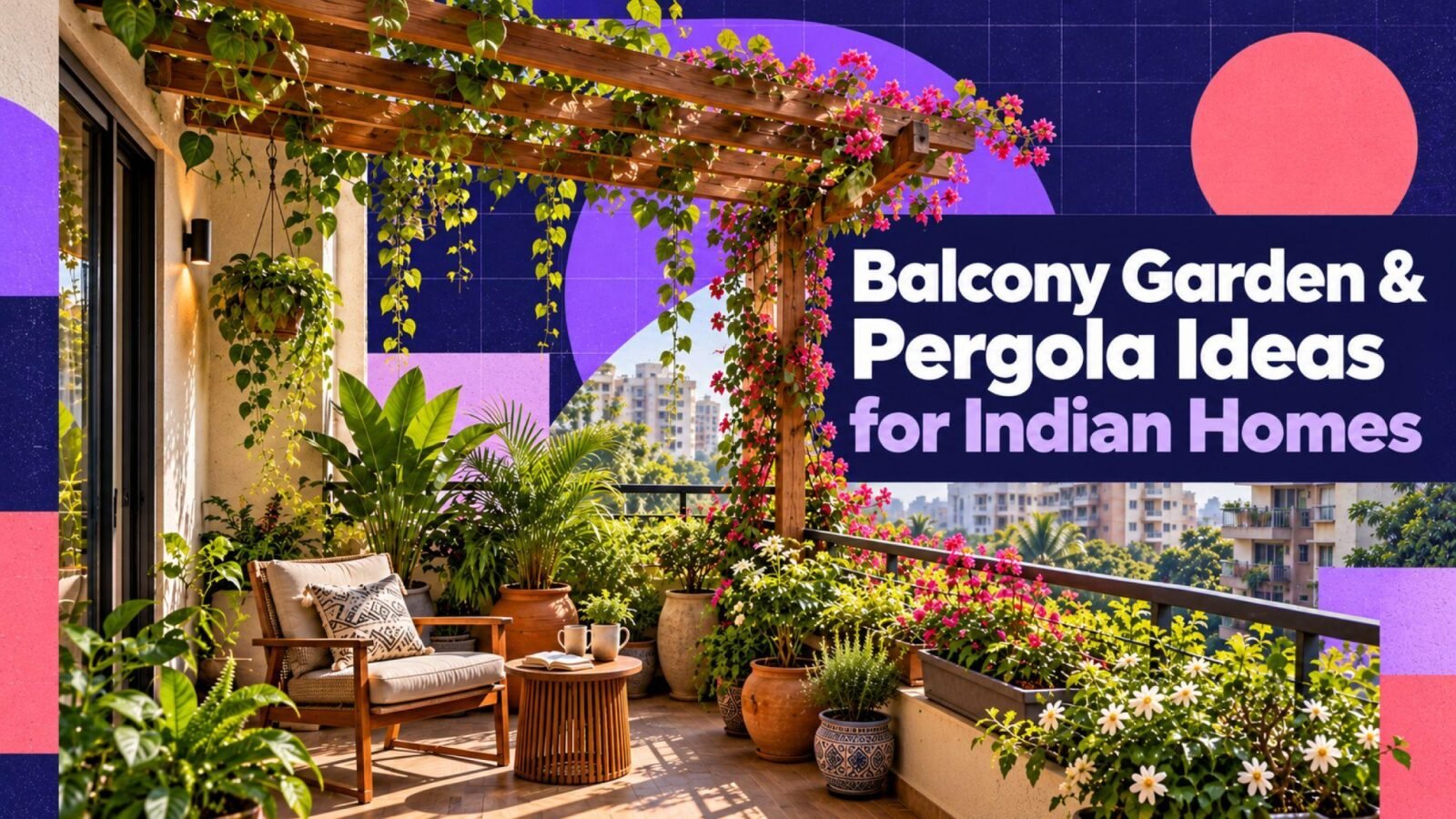
A balcony can be much more than an outdoor extension of your home. With the right plants, comfortable seating, thoughtful lighting, and a well-planned pergola, even a compact balcony can become a relaxing green space for morning tea, evening conversations, reading, or spending time with family.
In Indian homes, balconies often need to accommodate several purposes. They may serve as a garden, a utility area, a seating corner, or a place to enjoy fresh air. The challenge is to create a space that looks attractive while remaining practical in different weather conditions.
This is where balcony gardens and pergolas can make a difference. A balcony garden introduces greenery and natural textures, while a pergola can create a defined outdoor seating area and provide support for climbing plants or a suitable shade covering.
Whether you live in an apartment with a compact balcony or a house with a spacious terrace, these balcony garden and pergola ideas for Indian homes can help you plan an outdoor space that suits your lifestyle, available area, and local climate.
Why Balcony Gardens and Pergolas Are Popular in Indian Homes
Green spaces can make residential areas feel more inviting. A thoughtfully designed balcony offers a place to relax without requiring a large lawn or separate garden.
Pergolas add another design element by introducing structure, partial shade, and visual interest. When combined with plants and suitable furniture, they can help transform an ordinary balcony into a comfortable outdoor retreat.
Some key benefits include:
- Better use of available space: Balconies can accommodate plants, seating, and decorative features without requiring a separate garden.
- A more inviting atmosphere: Greenery and natural materials can soften the appearance of concrete-heavy surroundings.
- Personalised outdoor design: Plants, colours, lighting, and furniture can reflect your preferred style.
- A dedicated relaxation corner: A small seating area can become a pleasant place to read, enjoy tea, or unwind.
- Flexible gardening options: Containers, railing planters, and vertical arrangements can suit different balcony sizes.
Before starting, check the balcony’s dimensions, sunlight exposure, drainage arrangements, and any building restrictions. These factors will influence which plants, furniture, and pergola designs are suitable.
10 Balcony Garden Ideas for Indian Homes
1. Create a Compact Green Balcony Garden
A compact balcony can still accommodate a beautiful selection of plants. The key is to use the available floor space carefully and select plants according to the amount of sunlight your balcony receives.
Start with a few containers placed along the wall or in suitable corners. Choose pots in complementary colours to create a coordinated look.
You can combine foliage plants with flowering varieties to add different textures and colours. Keep frequently used pathways clear so that the balcony remains easy to access and maintain.
Design tip: Use a consistent pot colour, such as terracotta, neutral grey, or white, to create a more organised appearance.
2. Design a Vertical Garden
A vertical garden is an excellent option for balconies where floor space is limited.
Instead of arranging every plant on the ground, use a suitable wall-mounted planter system or a freestanding vertical rack. This allows you to introduce greenery while keeping the centre of the balcony open.
Plants can be arranged according to their watering and sunlight requirements. Place plants that need similar conditions together to make maintenance easier.
Before installing a vertical garden, make sure the structure is secure and appropriate for the wall or balcony surface. Plan for drainage so that excess water does not damage walls or affect neighbouring balconies.
A vertical garden works particularly well alongside a compact seating area or a small pergola.
3. Add Colour With Flowering Plants
Flowering plants can introduce seasonal colour and make a balcony feel lively.
Depending on the local climate and sunlight, suitable options may include marigolds, petunias, vinca, hibiscus, or other varieties appropriate for your growing conditions.
Before selecting plants, consider:
- How many hours of direct sunlight the balcony receives.
- Whether the location experiences intense afternoon heat.
- How much space each plant needs to grow.
- Whether regular watering and pruning will be manageable.
- Whether the plants are suitable for containers.
Avoid overcrowding pots simply to create a dense display. Healthy plants with enough room to grow will generally produce a more attractive and manageable garden.
4. Create a Balcony Herb Garden
A herb garden is a practical way to combine decoration with everyday use.
Many Indian households use fresh herbs in cooking, making a small collection of suitable plants a useful addition to the balcony.
Depending on local conditions, you might consider growing mint, coriander, curry leaves, or other herbs that suit your climate and available sunlight.
Use separate containers where plants have different watering needs. Mint, for example, can spread quickly, so growing it in its own pot can help keep it under control.
Position the containers where you can reach them easily for harvesting and maintenance. Avoid placing pots in areas where excess water can create slippery surfaces.
5. Use Railing Planters Carefully
Railing planters help introduce greenery without using much floor space.
They can be useful for smaller balconies, particularly when you want to keep the centre open for a chair or a small table.
Choose planters that are specifically designed for the type and dimensions of your railing. Make sure they are securely attached and cannot fall due to wind, accidental contact, or the weight of wet soil.
Check your apartment building’s rules before attaching anything to the railing.
For a coordinated appearance, use matching planters and arrange plants according to their mature size. Avoid placing heavy containers in locations where they could become a safety hazard.
6. Add a Small Water Feature
A compact water feature can introduce a calming visual element to a balcony garden.
Depending on the available space, options may include a small tabletop fountain or a self-contained decorative water feature.
Keep the design simple and make sure the installation is stable, easy to clean, and suitable for outdoor use. Water should not spill onto electrical fittings or neighbouring balconies.
In hot weather, standing water may attract mosquitoes if it is not maintained properly. Choose a design that allows regular cleaning and prevents stagnant water from accumulating.
A small water feature is best treated as an optional accent rather than the main focus of a compact balcony.
7. Create a Tropical Balcony Garden
A tropical-inspired balcony uses lush foliage, varied leaf shapes, and natural textures to create a rich green atmosphere.
Depending on light and humidity, you could consider suitable varieties of areca palm, ferns, or other container-friendly foliage plants. The correct selection depends on whether your balcony receives direct sun, bright indirect light, or shade.
Use planters of different heights to add depth without overcrowding the area. Combine taller plants at the back with smaller containers in the foreground.
Natural finishes, woven accessories, and a simple seating arrangement can complement the greenery.
In hot Indian summers, monitor moisture levels carefully. Containers can dry out faster than garden soil, particularly on exposed balconies.
8. Add a Small Seating Corner
A balcony garden becomes more useful when it includes a comfortable place to sit.
For a compact space, consider a single weather-suitable chair, a folding chair, or a small bench. In larger balconies, a two-seat arrangement may provide enough room for relaxing without blocking access.
Choose furniture that fits the balcony’s dimensions and allows doors to open fully.
Materials should be appropriate for the weather exposure. Direct sunlight, monsoon rain, and humidity can affect wood, metal, fabric, and other finishes differently.
Keep cushions and other soft accessories protected when they are not in use, especially during heavy rain.
9. Combine Plants With Warm Lighting
Lighting can make a balcony garden more inviting after sunset.
Warm-toned lights may work well with natural wood, neutral walls, terracotta pots, and leafy plants. Depending on the layout, you could use suitable outdoor-rated wall lights or carefully positioned decorative lighting.
Ensure that electrical fixtures, connections, and extension arrangements are suitable for outdoor conditions and protected from rain.
Avoid running cables where people might trip over them. If you are installing permanent electrical fixtures, use a qualified professional.
Keep lighting subtle enough to create a relaxing atmosphere without overwhelming the balcony or disturbing neighbours.
10. Design a Minimalist Balcony Garden
A minimalist garden focuses on a few well-chosen elements instead of filling every available space.
Choose a small collection of plants with complementary colours and shapes. Pair them with simple containers, clean lines, and compact furniture.
A limited colour palette can help the balcony feel more spacious. For example, green foliage combined with neutral planters and natural wood can create a calm, contemporary look.
This approach is particularly useful for apartments where space, storage, and maintenance time are limited.
The goal is to create a balanced arrangement that is attractive, easy to use, and simple to maintain.
Balcony Pergola Design Ideas for Indian Homes
A pergola can create a distinctive focal point in a balcony or terrace garden. It typically consists of a supporting frame with an open or partially covered top, although modern designs can incorporate additional shade elements.
The right pergola depends on the available space, the building structure, local weather, and the intended use of the balcony.
1. Modern Wooden-Look Pergola
A wooden-look pergola can create a warm, natural appearance that complements plants and outdoor furniture.
Depending on the design and exposure, you may consider treated timber or a suitable alternative designed to resemble wood.
This style works well with neutral seating, terracotta containers, climbing plants, and soft lighting.
However, natural wood requires appropriate maintenance, especially in areas exposed to monsoon rain, humidity, and strong sunlight. Check that the material and protective finish are suitable for outdoor use.
For apartment balconies, the structure must be compatible with the building and installed with appropriate professional guidance.
2. Metal Pergola With a Contemporary Finish
Metal pergolas can complement modern homes with clean architectural lines.
A simple frame can define a seating area while allowing light and air to pass through the open top. Depending on the material and finish, metal structures can provide a relatively streamlined appearance.
When selecting a metal pergola, consider corrosion resistance, outdoor suitability, and maintenance requirements. These are particularly important in humid or coastal locations.
The frame must be appropriately designed for wind exposure and securely installed. Avoid attaching heavy structures to balcony railings or walls without confirming that the supporting structure is suitable.
3. Pergola With Climbing Plants
Climbing plants can soften the appearance of a pergola and create a greener outdoor environment.
Depending on sunlight, climate, and the plant’s growth habit, suitable options may include jasmine or other locally appropriate climbing varieties.
Provide a suitable support system and allow enough room for the plant to grow. Consider its mature size, watering requirements, and how frequently it needs pruning.
Do not assume that every climbing plant is suitable for a small balcony. Fast-growing varieties may require frequent maintenance and can become difficult to manage if left unchecked.
Also, confirm that the pergola can support the expected plant growth and that falling leaves or excess water will not create problems below.
4. Pergola With Retractable Shade
A pergola with a retractable shade system can offer flexibility when the weather changes.
A retractable canopy or another suitable covering can provide additional shade when needed while allowing more sunlight at other times.
This design may be useful in balconies that receive intense sunlight for part of the day.
When considering this option, check the material’s resistance to sun exposure, its ability to handle rain, and its wind limitations. Some retractable systems need to be closed during strong winds or heavy weather.
Do not treat a lightweight shade covering as protection against severe storms. Follow the manufacturer’s operating and maintenance guidance.
5. Pergola With a Small Outdoor Dining Area
If your balcony has sufficient space, a pergola can help define a small dining corner.
A compact table and suitable chairs may create a convenient place for morning tea, light meals, or relaxed conversations.
Arrange the furniture so that there is enough space to move around safely. Keep doors, access routes, and drainage areas unobstructed.
Choose furniture that is easy to maintain and can withstand the balcony’s weather conditions.
For narrow balconies, a smaller arrangement may be more practical than a full dining set.
6. Pergola With Integrated Lighting
Lighting can make a pergola a useful feature during the evening.
Outdoor-rated fixtures or carefully installed decorative lighting can highlight the frame, surrounding plants, and seating area.
Plan the lighting during the design stage rather than adding electrical cables randomly afterward. This helps keep the installation tidy and reduces tripping hazards.
Any permanent electrical work should be completed by a qualified professional using equipment suitable for outdoor conditions.
Avoid placing heat-producing lights too close to dry foliage or materials that may be affected by heat.
7. Compact Pergola for a Small Balcony
A compact pergola can provide visual structure without taking over the entire balcony.
For a small space, use a simple frame and keep furniture minimal. A single chair, a narrow bench, or a small side table may be enough.
Vertical planters can provide greenery around the seating area without occupying too much floor space.
Before choosing a pergola, measure the balcony and consider the height, access, ventilation, and how the design affects natural light inside the home.
Some buildings restrict balcony modifications, so confirm the applicable rules before proceeding.
How to Combine a Balcony Garden With a Pergola
The best balcony designs make the plants, seating, shade, and walking space work together.
Plan the Layout Before Buying Anything
Measure the balcony’s length and width, noting doors, windows, drains, and other fixed features.
Identify where you want to place the seating area and determine how much room remains for planters.
Keep access routes clear and avoid placing containers where they could fall or obstruct drainage.
Match Plants to the Available Light
Observe the balcony throughout the day to understand whether it receives full sun, partial sun, or mostly shade.
Choose plants based on their actual growing requirements rather than their appearance alone.
A pergola can change the amount of sunlight reaching plants beneath it, particularly if a solid or retractable covering is installed. Consider these conditions when arranging containers.
Create Different Levels
A combination of floor planters, suitable railing containers, and secure vertical arrangements can make a garden look fuller without using all the available floor area.
Use different heights thoughtfully. Taller plants can provide a backdrop, while smaller plants can sit near the seating area.
Avoid stacking heavy containers or placing them in unstable positions.
Keep the Design Cohesive
Choose a limited palette of planter colours, furniture finishes, and decorative accessories.
Wood-look finishes, neutral colours, terracotta, and natural greenery can work well together, but the final combination should suit your home’s architecture and personal taste.
A consistent design often looks more organised than a collection of unrelated items.
Choosing Balcony Plants for the Indian Climate
India has diverse climates, so plant selection should reflect local temperatures, rainfall, humidity, and balcony exposure.
A plant that thrives in a sunny balcony may struggle in a shaded one. Likewise, a variety suited to a humid region may need different care in a hot, dry location.
For Sunny Balconies
Choose varieties that tolerate the available sunlight and local heat. Depending on conditions, some flowering plants and sun-tolerant herbs may be suitable.
Use containers with drainage holes and check soil moisture regularly during hot weather.
For Partially Shaded Balconies
Consider plants that grow well with several hours of sunlight or bright indirect light, depending on their specific requirements.
Arrange containers so that larger plants do not unnecessarily block light from smaller ones.
For Shaded Balconies
Choose shade-tolerant foliage plants that suit the available natural light. Remember that shade-tolerant does not necessarily mean that a plant can thrive in a very dark area.
Observe how the balcony’s light changes before making a final selection.
For Monsoon Conditions
Make sure containers drain properly and water does not accumulate around plant roots.
Secure lightweight planters and accessories against strong winds. Remove damaged foliage and check the pergola, shade covering, and other structures after severe weather.
Important Safety Tips Before Installing a Pergola
A pergola can improve the appearance of an outdoor space, but it must be suitable for the building and local conditions.
Before installation:
- Check the apartment association’s or building management’s rules.
- Confirm whether approvals are needed for structural modifications.
- Have a qualified professional assess the installation and attachment points.
- Consider wind exposure and the weight of the frame, shade covering, and mature plants.
- Keep drains and access routes clear.
- Use outdoor-suitable materials and fixtures.
- Avoid drilling into structural elements or attaching heavy objects without professional assessment.
Balcony railings and decorative walls should not automatically be treated as structural supports. A design that appears lightweight can still experience significant wind forces.
If you are renting, check the landlord’s requirements before making permanent changes.
How to Maintain Your Balcony Garden and Pergola
Regular maintenance helps keep the space attractive, safe, and comfortable.
Water Plants According to Their Needs
Different plants require different amounts of water. Check the soil and follow the needs of each variety rather than watering every container on the same schedule.
During hot weather, containers may dry out faster. During the monsoon, excess water can become a problem.
Prune and Clean Regularly
Remove dead leaves, trim plants where necessary, and keep the area around pots clean.
For climbing plants, check that stems are growing along the intended support rather than blocking windows or entering neighbouring spaces.
Inspect the Pergola
Periodically check visible fasteners, connections, finishes, shade coverings, and signs of corrosion or deterioration.
Arrange professional inspection if the structure becomes loose, damaged, or unstable. Do not continue using a pergola that appears unsafe.
Protect Furniture and Accessories
Clean outdoor furniture according to its material and care instructions. Store cushions and other vulnerable accessories during heavy rain or when they are not being used.
Manage Drainage
Ensure that water can flow freely through the balcony’s drainage system. Avoid allowing soil, fallen leaves, or plant debris to accumulate near drains.
Good drainage protects the plants and helps reduce the risk of water seepage or damage to the building.
Explore Home and Lifestyle Products at vCue Store
Creating a welcoming balcony garden involves choosing products that suit your available space and everyday needs. From practical home essentials to lifestyle products, a well-planned shopping approach can help you bring your design ideas together.
vCue Store is a multi-category marketplace featuring physical products, digital products, and Service as a Product (SaaP) offerings.
Explore the following official pages to learn more:
- Discover the marketplace: Visit the vCue Store homepage.
- Browse available products: Explore the physical product catalogue.
- Find assistance: Visit the vCue Store Help Center.
- Review platform policies: Read the Terms and Conditions.
- Contact the team: Use the Contact page.
Check individual product descriptions, dimensions, materials, and care instructions before selecting products for outdoor use.
Frequently Asked Questions
1. How can I create a balcony garden in a small Indian apartment?
Start with a few suitable containers, use vertical planters where appropriate, and choose plants based on the available sunlight. Add compact furniture only if space allows, and keep doors, drains, and walking areas clear.
2. Which plants are suitable for an Indian balcony garden?
Suitable plants depend on your region, sunlight, temperature, and humidity. Options may include marigolds, hibiscus, mint, curry leaves, jasmine, or shade-tolerant foliage plants, provided their growing requirements match your balcony’s conditions.
3. What is the best pergola design for a small balcony?
A simple, compact pergola with a minimal frame is often easier to integrate into a small balcony. Keep the seating arrangement simple and confirm that the building permits the installation before making structural changes.
4. Can I grow climbing plants on a balcony pergola?
Yes, provided the plants are suitable for your climate and the pergola has an appropriate support system. Consider mature plant size, maintenance needs, and the structure’s ability to support the additional weight.
5. Which pergola materials are suitable for Indian weather?
Suitable materials depend on local conditions and maintenance preferences. Properly treated timber and corrosion-resistant metal may be options, but material quality, installation, sun exposure, humidity, and monsoon conditions should all be considered.
6. How do I provide shade on a sunny balcony?
Depending on the building rules and available space, options include a suitable pergola covering, retractable shade, or other appropriately installed outdoor shading systems. Consider wind resistance, rain exposure, ventilation, and how much natural light the covering blocks.
7. How can I maintain a balcony garden during the Indian summer?
Choose plants suited to the local climate, check soil moisture regularly, and use containers with adequate drainage. Protect sensitive plants from excessive heat where needed, and follow the watering requirements of each variety.
8. How do I protect a balcony garden during the monsoon?
Ensure pots drain properly, keep balcony drains clear, and secure lightweight planters and accessories. Inspect the pergola and shade coverings after strong winds, and move vulnerable items to a protected location when necessary.
9. Do I need permission to install a pergola on my apartment balcony?
You may need permission depending on the building rules, ownership arrangements, and the type of installation. Check with the building management or apartment association and seek professional guidance before making structural modifications.
10. How can I make my balcony garden look modern?
Use a consistent colour palette, coordinated planters, clean-lined furniture, and a balanced arrangement of plants. A simple pergola, subtle lighting, and well-organised vertical greenery can create a modern look without overcrowding the space.
Final Thoughts
A well-designed balcony garden can make an Indian home feel greener, more inviting, and more connected to the outdoors. Adding a suitable pergola can create a defined seating area, introduce shade, and provide support for climbing plants.
The best design is not necessarily the largest or most elaborate. It is one that suits your balcony’s dimensions, local climate, available sunlight, maintenance requirements, and building restrictions.
Start with a practical layout, select suitable plants, choose weather-appropriate furniture, and prioritise safe installation. With thoughtful planning and regular care, even a modest balcony can become a comfortable outdoor retreat for everyday relaxation.