Category: E-Commerce

  • How to Start an Ecommerce Business in 2026

    How to Start an Ecommerce Business in 2026

    Starting an online store has never been more accessible, and 2026 ecommerce trends are creating even more opportunities for entrepreneurs. With evolving technology, AI-driven tools, and changing consumer behavior, launching a successful store requires smart planning and the right strategy. This guide explains how to start an ecommerce business in 2026 step by step, with key insights to help you stay competitive.

    Understand the Ecommerce Landscape in 2026

    Before launching, it’s essential to understand the ecommerce industry in 2026. Consumers expect fast delivery, personalized experiences, and seamless mobile shopping. Social commerce, voice search, and AI-powered recommendations are becoming standard features rather than optional add-ons.

    Focusing on customer experience, automation, and sustainability will help new ecommerce businesses stand out.

    Choose a Profitable Ecommerce Niche

    Selecting the right niche is the foundation of any successful online store. In 2026, high-demand niches include eco-friendly products, digital goods, personalized items, and health-related products.

    Conduct market research, analyze competitors, and identify problems you can solve. A clear niche makes it easier to target the right audience and build a strong brand identity.

    Create a Solid Ecommerce Business Plan

    A detailed ecommerce business plan helps you define goals, budget, pricing, and marketing strategies. Your plan should include product sourcing, logistics, branding, and revenue models.

    Planning ahead reduces risk and ensures your ecommerce startup can scale efficiently as demand grows.

    Build Your Ecommerce Website

    Select the Right Ecommerce Platform

    Choosing the right ecommerce platform is critical. Platforms like Shopify, WooCommerce, and headless commerce solutions offer flexibility and scalability. In 2026, many businesses are adopting AI-powered ecommerce platforms for better personalization and automation.

    Optimize for Mobile and Speed

    Mobile-first design is no longer optional. Ensure your site loads quickly, is easy to navigate, and supports multiple payment methods. A smooth user experience improves conversions and reduces cart abandonment.

    Set Up Secure Payments and Logistics

    Payment Gateways

    Offer secure and diverse online payment options, including digital wallets, buy-now-pay-later services, and cryptocurrency where applicable. Trust and security are key factors in purchasing decisions.

    Shipping and Fulfillment

    Reliable ecommerce logistics play a major role in customer satisfaction. Consider third-party fulfillment, same-day delivery, or dropshipping depending on your business model.

    Market Your Ecommerce Business

    Search Engine Optimization (SEO)

    Ecommerce SEO helps your store rank higher in search results. Optimize product pages, use relevant keywords, and create valuable content to drive organic traffic.

    Social Media and Influencer Marketing

    Social platforms are powerful sales channels in 2026. Leverage social commerce, short-form videos, and influencer partnerships to reach and engage your target audience.

    Paid Advertising and AI Automation

    Use AI-driven marketing tools to automate ad campaigns, personalize offers, and analyze customer behavior. This improves efficiency and return on investment.

    Focus on Customer Retention

    Acquiring customers is important, but retention drives long-term success. Use email marketing, loyalty programs, and personalized recommendations to build lasting relationships.

    Excellent customer support and transparent policies also boost trust and repeat purchases.

    Stay Compliant and Secure

    Ensure your ecommerce business follows data protection laws, tax regulations, and consumer rights policies. Cybersecurity and compliance are crucial as online fraud continues to evolve.

    Final Thoughts

    Learning how to start an ecommerce business in 2026 means embracing innovation while focusing on customer needs. By choosing the right niche, building a strong platform, and leveraging modern marketing strategies, you can create a scalable and profitable ecommerce brand ready for the future.


  • How Blogging Helps Ecommerce Sales

    How Blogging Helps Ecommerce Sales

    Introduction to Ecommerce Blogging

    Blogging for ecommerce is one of the most effective long-term strategies to increase visibility, attract customers, and drive consistent sales. A well-planned blog does more than share information—it educates buyers, builds trust, and guides users toward purchasing decisions. When combined with SEO-optimized content, blogging becomes a powerful sales engine for ecommerce businesses.

    Improves Search Engine Visibility

    One of the biggest ways blogging helps ecommerce sales is through search engine optimization (SEO). Blogs allow ecommerce websites to target multiple high-intent keywords, long-tail search queries, and customer pain points that product pages alone cannot cover.

    Targets Informational Keywords

    Many shoppers begin their journey with questions rather than product searches. Blogging helps you rank for keywords like:

    • how-to guides
    • product comparisons
    • buying guides
    • problem-solving queries

    By answering these questions, your ecommerce store attracts potential customers early in the buying funnel.

    Increases Organic Traffic

    More high-quality blog content means more indexed pages on search engines. This increases organic traffic, bringing in users who are actively researching products related to what you sell.

    Builds Trust and Brand Authority

    Trust is essential in ecommerce. Customers are more likely to buy from brands they see as credible and knowledgeable.

    Positions Your Brand as an Expert

    Publishing helpful, accurate, and detailed blog posts positions your brand as an industry authority. When customers trust your expertise, they trust your products too.

    Supports Google E-E-A-T

    Blogging strengthens Experience, Expertise, Authoritativeness, and Trustworthiness (E-E-A-T) by:

    • Sharing real-world experience
    • Providing expert insights
    • Publishing consistent, valuable content
    • Demonstrating transparency and reliability

    Educates Customers and Reduces Buying Hesitation

    Many customers hesitate because they lack information. Blogs educate them and remove doubts.

    Explains Product Benefits Clearly

    Blog posts can explain:

    • How products work
    • Who they are best for
    • What problems they solve

    This education helps customers feel confident in their purchase decisions.

    Reduces Returns and Refunds

    When customers understand what they’re buying, expectations are clearer. This leads to fewer returns, improving overall profitability.

    Supports Product Pages and Conversions

    Blogs act as a bridge between traffic and sales.

    Internal Linking to Product Pages

    Strategic internal links from blogs to product pages, category pages, and landing pages guide users naturally toward conversion.

    Improves Conversion Rates

    Customers who read blogs before buying are often more informed and motivated. This results in higher ecommerce conversion rates compared to cold traffic.

    Drives Long-Term, Cost-Effective Sales

    Unlike paid ads, blog content continues to generate traffic and sales long after publication.

    Evergreen Content Generates Ongoing Revenue

    Well-written evergreen blog posts can bring consistent traffic and sales for months or even years, making blogging a high-ROI strategy.

    Reduces Dependence on Paid Advertising

    With strong organic traffic from blogs, ecommerce businesses can lower ad spend while maintaining sales growth.

    Enhances Social Media and Email Marketing

    Blog content fuels other marketing channels.

    Content for Social Sharing

    Blogs provide valuable content to share on social media, driving referral traffic back to your ecommerce store.

    Boosts Email Marketing Performance

    Blogs can be repurposed into email newsletters, product education emails, and promotional campaigns, increasing engagement and sales.

    Conclusion

    Blogging helps ecommerce sales by improving SEO, building trust, educating customers, and driving long-term organic traffic. It supports every stage of the buyer journey—from awareness to conversion. For ecommerce brands looking for sustainable growth, consistent, keyword-optimized blogging is not optional—it is a powerful and proven sales strategy.

  • How Fast Checkout Improves Ecommerce Conversions

    How Fast Checkout Improves Ecommerce Conversions

    Introduction to Fast Checkout in Ecommerce

    Fast checkout has become a critical factor in ecommerce success. In today’s digital world, online shoppers expect speed, simplicity, and convenience. A slow or complicated checkout process is one of the main reasons for cart abandonment. Fast checkout improves ecommerce conversions by reducing friction, saving time, and creating a smooth buying experience that encourages customers to complete their purchases.

    What Is Fast Checkout?

    Fast checkout is a streamlined checkout process that minimizes the number of steps required to complete an online purchase. It often includes features such as guest checkout, one-click purchasing, saved payment details, autofill forms, and multiple payment options. The goal is to remove unnecessary barriers between the customer and the final purchase.

    Key Features of Fast Checkout

    • Fewer form fields
    • Guest checkout option
    • One-click or express checkout
    • Digital wallets and quick payment methods
    • Mobile-optimized checkout design

    These features work together to create a faster and more user-friendly shopping experience.

    Why Checkout Speed Matters for Conversions

    Checkout speed directly impacts ecommerce conversion rates. When customers reach the checkout stage, they are already motivated to buy. Any delay, confusion, or extra step can cause frustration and lead to abandonment.

    Reducing Cart Abandonment

    One of the biggest benefits of fast checkout is lower cart abandonment. Long registration forms, forced account creation, and slow page loading times push customers away. Fast checkout removes these obstacles, making it easier for shoppers to complete their orders.

    Improving Customer Satisfaction

    A smooth and quick checkout leaves a positive impression on customers. When shoppers can complete a purchase effortlessly, they are more likely to return and recommend the store to others. Customer satisfaction plays a major role in repeat purchases and long-term brand loyalty.

    How Fast Checkout Boosts Ecommerce Conversion Rates

    Fast checkout improves ecommerce conversions by aligning with modern consumer behavior. Shoppers value convenience, especially on mobile devices.

    Optimized for Mobile Shoppers

    Mobile commerce continues to grow rapidly, but small screens make long checkout processes difficult. Fast checkout with mobile-friendly design, autofill options, and digital wallets significantly improves mobile conversion rates.

    Encouraging Impulse Purchases

    Impulse buying depends on speed. If the checkout process is quick, customers are less likely to second-guess their decision. Fast checkout helps capture impulse purchases before distractions or doubts occur.

    Building Trust and Credibility

    A clean, simple, and secure checkout process builds trust. Visible security badges, trusted payment options, and transparent pricing reassure customers that their information is safe. Trust reduces hesitation and increases the likelihood of purchase completion.

    SEO Benefits of Fast Checkout

    Fast checkout also supports ecommerce SEO indirectly. Search engines prioritize user experience, and a smooth checkout contributes to better engagement metrics.

    Lower Bounce Rates

    When users find the checkout process easy, they stay longer on the site and complete actions. Lower bounce rates and higher engagement signal quality to search engines.

    Improved Core Web Vitals

    Fast checkout often requires optimized page speed and performance. Faster loading checkout pages improve Core Web Vitals, which are important for search engine rankings.

    Best Practices for Implementing Fast Checkout

    Offer Guest Checkout

    Allow customers to purchase without creating an account. Account creation can be offered after the purchase instead of during checkout.

    Enable Multiple Payment Options

    Support credit cards, digital wallets, and local payment methods to suit different customer preferences.

    Minimize Form Fields

    Ask only for essential information. Use autofill and address lookup tools to speed up data entry.

    Ensure Mobile Optimization

    Design checkout pages specifically for mobile users with clear buttons and simple navigation.

    Conclusion

    Fast checkout improves ecommerce conversions by removing friction, enhancing user experience, and meeting modern shopper expectations. A quicker, simpler checkout process reduces cart abandonment, increases customer satisfaction, and drives more sales. For ecommerce businesses looking to grow, optimizing checkout speed is not just an improvement—it is a necessity for long-term success.

  • Social Commerce Trends Every Brand Should Watch

    Social Commerce Trends Every Brand Should Watch

    Social media is no longer just a discovery channel. It has evolved into a powerful sales engine, reshaping how consumers browse, engage, and purchase online. Social commerce trends are accelerating as platforms blend content, community, and checkout into a seamless experience. For brands looking to stay competitive, understanding these trends is essential to driving growth and relevance.

    The Rise of Social Commerce in Ecommerce

    Social commerce refers to selling products directly within social media platforms. Instead of redirecting users to an external website, platforms now enable product discovery, engagement, and purchase in one place. This shift reduces friction and aligns perfectly with changing consumer behavior, especially among Gen Z and Millennials.

    In-App Checkout Is Becoming the Norm

    One of the most impactful social commerce trends is the adoption of native checkout features. Platforms like Instagram, Facebook, TikTok, and Pinterest are making it easier for users to complete purchases without leaving the app.

    Why In-App Checkout Matters

    Fewer steps in the buying journey mean higher conversion rates. In-app checkout also allows brands to leverage impulse buying driven by content, trends, and social proof. As platforms continue refining payment and fulfillment options, in-app purchases will become a core revenue stream.

    Short-Form Video Is Driving Product Discovery

    Short-form video has become the backbone of social commerce. Platforms like TikTok, Instagram Reels, and YouTube Shorts are shaping how consumers discover products.

    Content Over Catalogs

    Instead of static product listings, brands are using storytelling, demos, and reviews to sell. Authentic, creator-led videos outperform polished ads, making short-form content one of the most effective social commerce marketing strategies.

    Influencer-Led Commerce Is Evolving

    Influencer marketing is shifting from awareness-driven campaigns to performance-focused social commerce.

    Creators as Sales Channels

    Creators are becoming storefronts. Affiliate links, shoppable posts, and creator-owned product lines allow influencers to drive measurable sales. Micro and nano influencers, in particular, are gaining traction due to higher trust and engagement within niche communities.

    Live Commerce Is Gaining Momentum

    Live shopping blends entertainment and ecommerce, allowing brands to showcase products in real time while interacting with audiences.

    Why Live Commerce Works

    Live commerce builds urgency and trust. Consumers can ask questions, see products in action, and make instant purchases. While live commerce is already mainstream in Asia, Western markets are rapidly adopting this social commerce trend.

    Community-Driven Shopping Experiences

    Social commerce thrives on community. Brands are increasingly leveraging private groups, comments, and direct messages to engage and convert customers.

    Conversations That Convert

    Features like Instagram DMs, WhatsApp, and Facebook Groups enable one-to-one selling at scale. Personalized recommendations and real-time responses create a more human shopping experience.

    AI-Powered Personalization in Social Commerce

    Artificial intelligence is playing a growing role in shaping personalized social commerce experiences.

    Smarter Product Recommendations

    AI analyzes user behavior, preferences, and engagement to deliver tailored product suggestions. This level of personalization improves relevance, engagement, and conversion rates across social platforms.

    User-Generated Content as a Trust Signal

    User-generated content (UGC) continues to be one of the most influential social commerce trends.

    Social Proof Drives Sales

    Reviews, unboxings, and customer testimonials shared on social media act as powerful trust signals. Brands that actively encourage and repurpose UGC see higher credibility and stronger conversions.

    Social Search and Discovery

    Consumers are increasingly using social platforms as search engines, especially for product recommendations.

    Optimizing for Social Search

    Hashtags, keywords in captions, and descriptive video content are becoming essential for visibility. Brands that optimize for social search will gain an edge in product discovery.

    Final Thoughts on Social Commerce Trends

    Social commerce is redefining the ecommerce landscape by merging content, community, and commerce. Brands that adapt to emerging social commerce trends—from in-app checkout and live shopping to influencer-led sales and AI personalization—will be better positioned to capture attention and drive conversions. As platforms continue to innovate, social commerce will move from an experimental channel to a core pillar of digital growth strategies.

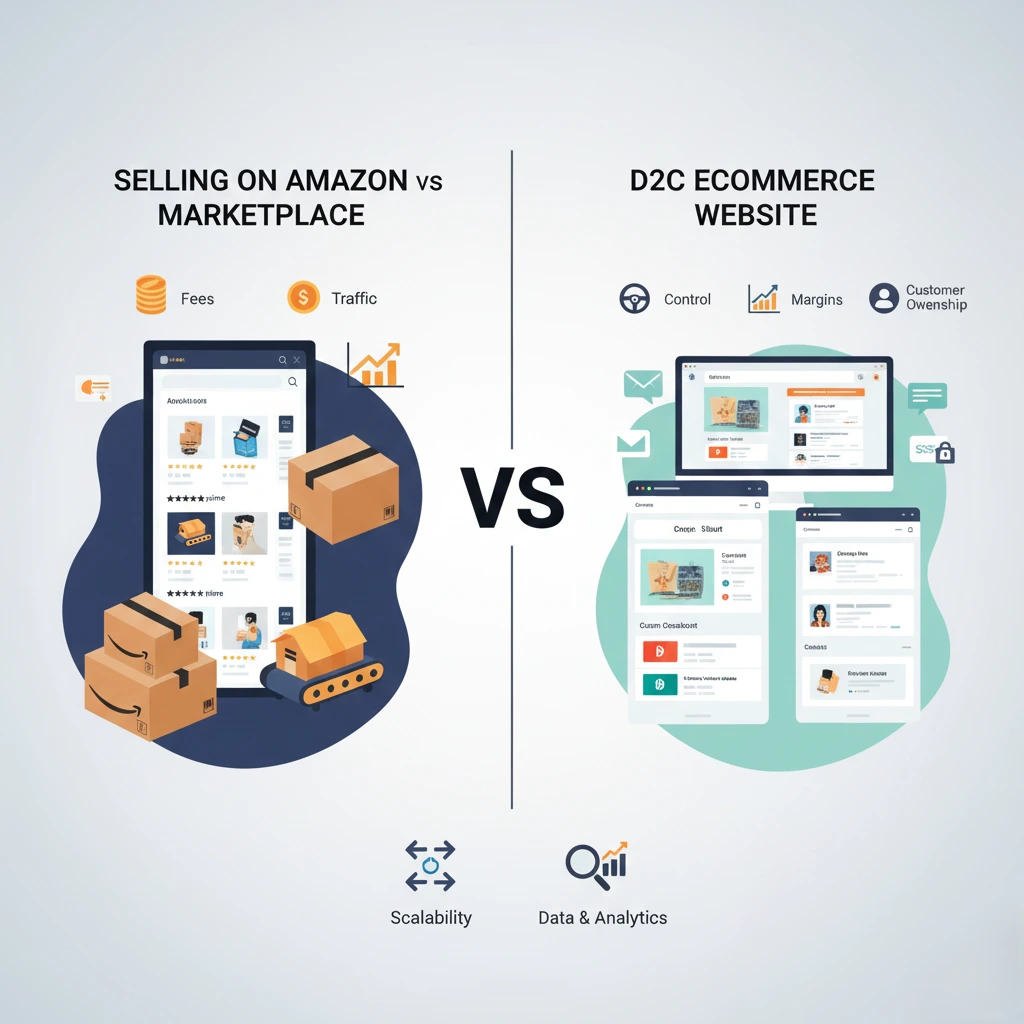
  • Selling on Amazon vs D2C Ecommerce Websites

    Selling on Amazon vs D2C Ecommerce Websites

    For ecommerce brands, one of the most important strategic decisions is choosing where to sell. Selling on Amazon vs D2C ecommerce websites is not a matter of right or wrong, but of goals, margins, and long-term brand vision. While Amazon offers instant scale and trust, Direct-to-Consumer (D2C) websites provide control and customer ownership. Understanding the strengths and limitations of both models helps brands build a sustainable ecommerce strategy.

    Understanding the Amazon Marketplace Model

    Amazon is the world’s largest online marketplace, attracting millions of high-intent shoppers daily. For new and growing brands, selling on Amazon can feel like a fast track to revenue.

    Advantages of Selling on Amazon

    One of the biggest benefits of selling on Amazon is access to a massive customer base. Amazon handles trust, logistics, and payments, reducing operational friction. Programs like Fulfillment by Amazon (FBA) simplify storage, shipping, and returns, allowing brands to focus on sourcing and marketing.

    Amazon also excels at product discovery. Shoppers often search Amazon directly rather than Google, giving sellers exposure to buyers who are already ready to purchase.

    Challenges of Selling on Amazon

    Despite its reach, Amazon comes with trade-offs. High seller fees, intense competition, and limited brand differentiation can impact profitability. Brands also have minimal access to customer data, making it difficult to build long-term relationships. Algorithm changes or account suspensions can significantly affect sales overnight.

    Understanding the D2C Ecommerce Website Model

    A D2C ecommerce website allows brands to sell directly to consumers through their own online store, typically powered by platforms like Shopify or WooCommerce.

    Advantages of D2C Ecommerce Websites

    The biggest advantage of D2C is control. Brands own the customer relationship, data, and experience. This enables personalized marketing, email automation, loyalty programs, and better customer lifetime value.

    Margins are often higher on D2C ecommerce websites since there are no marketplace commissions. Brands can also fully control pricing, branding, storytelling, and user experience, which is essential for long-term brand building.

    Challenges of the D2C Model

    D2C ecommerce requires more effort upfront. Brands must invest in traffic acquisition through SEO, paid ads, social media, and content marketing. Logistics, returns, and customer support are also the brand’s responsibility unless outsourced. Trust takes time to build, especially for new or unknown brands.

    Amazon vs D2C Ecommerce Websites A Direct Comparison

    Customer Ownership

    When comparing Amazon vs D2C ecommerce, customer ownership is a key differentiator. Amazon controls customer data, while D2C brands can nurture direct relationships and remarket effectively.

    Cost and Margins

    Amazon’s fees reduce margins but lower operational complexity. D2C websites offer better margins but require ongoing marketing and technology investment.

    Brand Building

    Amazon prioritizes products over brands, making differentiation difficult. D2C ecommerce websites allow brands to tell their story, build community, and create emotional connections.

    Scalability and Risk

    Amazon enables rapid scaling but comes with platform dependency risks. D2C growth is slower but more stable and defensible over time.

    Which Model Is Right for Your Ecommerce Business

    The choice between selling on Amazon vs D2C ecommerce websites depends on business objectives. Brands focused on quick sales and operational simplicity may benefit from Amazon. Brands aiming for long-term growth, loyalty, and brand equity often prioritize D2C.

    Many successful ecommerce businesses adopt a hybrid strategy. Amazon is used for customer acquisition and volume, while D2C channels focus on retention, upselling, and brand building.

    Final Thoughts on Amazon vs D2C Ecommerce

    Selling on Amazon and running a D2C ecommerce website are not mutually exclusive. Amazon offers reach and convenience, while D2C provides control and sustainability. The most resilient ecommerce brands understand the strengths of both models and align them with their growth strategy. By balancing scale with ownership, businesses can build profitable and future-ready ecommerce operations.