Category: Technology

  • Product Page Optimization Techniques That Increase Sales

    Product Page Optimization Techniques That Increase Sales

    In the competitive world of eCommerce, your product page can make or break a sale. A well-optimized page not only attracts visitors but also converts them into customers. This guide on product page optimization will help you understand the key techniques to improve conversions and boost revenue.

    What is Product Page Optimization?

    Product page optimization is the process of enhancing all elements of a product page to improve user experience and increase sales. It involves content, design, and functionality. For businesses focusing on product page optimization, the aim is to make it easy for customers to find information and make purchase decisions quickly.

    1. Write Compelling Product Descriptions

    Your product descriptions should do more than just describe features—they should sell the product. Focus on:

    • Benefits over features
    • Clear and concise language
    • Addressing customer pain points

    Well-crafted product descriptions play a major role in product page optimization because they influence buying decisions and build trust.

    2. Focus on Image Optimization

    Images are one of the first things customers notice. High-quality visuals can significantly impact conversions. Best practices include:

    • Use high-resolution images
    • Show multiple angles
    • Add zoom functionality
    • Compress images for fast loading

    Image optimization improves both user experience and page speed, making it a crucial element of product page optimization.

    3. Use Strong Call-to-Action Buttons

    Call-to-action buttons guide users toward making a purchase. Effective CTAs should be:

    • Clear and action-oriented (e.g., “Buy Now,” “Add to Cart”)
    • Visually distinct
    • Placed strategically on the page

    A well-designed CTA is essential in product page optimization, as it directly impacts conversion rates.

    4. Improve eCommerce UX

    User experience (UX) plays a vital role in keeping visitors engaged. To enhance ecommerce UX:

    • Ensure easy navigation
    • Use a clean and responsive design
    • Minimize distractions
    • Provide quick access to important information

    A seamless ecommerce UX is a fundamental part of product page optimization, helping users move smoothly from browsing to buying.

    5. Add Social Proof and Reviews

    Customer reviews and ratings build credibility and trust. Include:

    • Verified customer reviews
    • Star ratings
    • Testimonials

    Social proof reassures potential buyers and strengthens your product page optimization efforts by reducing hesitation.

    6. Optimize for Mobile Users

    With a large number of users shopping on mobile devices, mobile optimization is essential. Ensure:

    • Fast loading speed
    • Responsive design
    • Easy-to-click buttons

    Mobile-friendly pages are critical for effective product page optimization in today’s digital landscape.

    7. Highlight Key Information Clearly

    Important details such as price, availability, and shipping information should be easy to find. Use:

    • Bullet points
    • Clear headings
    • Visual emphasis

    Clarity and accessibility are key components of successful product page optimization, ensuring users don’t have to search for essential information.

    8. Use Urgency and Scarcity Tactics

    Creating a sense of urgency can encourage faster decisions. Examples include:

    • “Limited stock available”
    • “Offer ends soon”
    • Countdown timers

    These tactics enhance product page optimization by motivating customers to act quickly.


    Conclusion

    Effective product page optimization is about combining strong content, appealing visuals, and a smooth user experience. By improving product descriptions, focusing on image optimization, using clear call-to-action buttons, and enhancing ecommerce UX, you can significantly increase your sales. Implement these techniques to create high-converting product pages that drive results.


    FAQs

    1. Why is product page optimization important?
    It helps improve user experience, build trust, and increase conversion rates, ultimately leading to higher sales.

    2. How can product descriptions improve conversions?
    Clear and benefit-focused product descriptions address customer needs and make it easier for them to decide to buy.

    3. What role do images play in product page optimization?
    High-quality and optimized images attract attention, showcase the product effectively, and enhance user experience.

  • Hyperlocal Delivery Business Model Explained

    Hyperlocal Delivery Business Model Explained

    In recent years, the demand for faster and more convenient delivery services has grown rapidly. The concept of hyperlocal delivery has emerged as a powerful solution, connecting local businesses with nearby customers for quick and efficient service. This model is transforming how goods are delivered, especially in urban areas.

    What is Hyperlocal Delivery?

    Hyperlocal delivery refers to the process of delivering goods within a limited geographic area, usually within a few kilometers. It focuses on fulfilling orders from local stores or vendors to customers in real time. For businesses exploring hyperlocal delivery, the goal is to minimize delivery time while maximizing convenience.

    How the Hyperlocal Delivery Model Works

    The business model is simple yet highly effective. It typically involves:

    • A digital platform or app where customers place orders
    • Local merchants or vendors who fulfill those orders
    • Delivery agents who pick up and deliver products

    This system allows businesses to offer on-demand delivery, where customers receive their orders within minutes or hours instead of days.

    Key Components of the Model

    To run a successful hyperlocal delivery business, several components are essential:

    1. Technology Platform
      Mobile apps and websites act as the backbone of the system. These platforms connect customers, vendors, and delivery partners seamlessly.
    2. Local Vendor Network
      Partnering with nearby stores ensures faster order fulfillment and supports small businesses.
    3. Efficient Logistics
      A well-managed fleet of delivery personnel ensures timely and reliable service.
    4. Real-Time Tracking
      Customers expect transparency, so tracking features are a must.

    These elements together create a strong hyperlocal delivery ecosystem that meets modern consumer expectations.

    Role of Local Delivery Apps

    Local delivery apps have made this model more accessible and scalable. They allow users to browse products, compare prices, and place orders instantly. Popular platforms have normalized quick deliveries, making quick commerce a standard expectation.

    For businesses, integrating with local delivery apps can significantly boost reach and customer engagement. These apps are a key driver behind the growth of hyperlocal delivery services worldwide.

    Benefits of Hyperlocal Delivery

    There are several advantages to adopting this model:

    • Faster Deliveries: Orders are fulfilled within hours or even minutes
    • Lower Logistics Costs: Short distances reduce transportation expenses
    • Support for Local Businesses: Encourages customers to shop locally
    • High Customer Satisfaction: Quick service improves user experience

    These benefits make hyperlocal delivery an attractive option for startups and established businesses alike.

    Challenges in the Model

    Despite its advantages, there are challenges to consider:

    • Managing delivery personnel efficiently
    • Handling peak-time demand
    • Ensuring product availability
    • Maintaining consistent service quality

    Overcoming these challenges is crucial for scaling a hyperlocal delivery business successfully.

    Future of Hyperlocal Delivery

    The future looks promising as consumer demand for speed continues to rise. With advancements in technology, automation, and AI, the model is becoming more efficient. The rise of on-demand delivery and quick commerce platforms indicates that instant fulfillment will soon become the norm.

    Businesses investing in hyperlocal delivery today are likely to gain a competitive advantage in the evolving digital marketplace.


    Conclusion

    The hyperlocal delivery model is reshaping the way goods and services reach customers. By leveraging local networks, technology, and efficient logistics, businesses can meet the growing demand for speed and convenience. As local delivery apps and quick commerce continue to expand, this model will play a crucial role in the future of e-commerce.


    FAQs

    1. What is hyperlocal delivery in simple terms?
    It is a delivery model where products are delivered from nearby stores to customers within a short time frame and limited area.

    2. How does hyperlocal delivery differ from traditional delivery?
    Traditional delivery involves long distances and longer timelines, while hyperlocal delivery focuses on nearby locations and faster fulfillment.

    3. Why is hyperlocal delivery becoming popular?
    It offers faster service, supports local businesses, and aligns with the growing demand for convenience and instant delivery.

  • How to Master Magento in 2025: The Ultimate Guide for Ecommerce Success

    How to Master Magento in 2025: The Ultimate Guide for Ecommerce Success

    If you’re serious about building a scalable ecommerce brand, learning how to master Magento in 2025 is one of the smartest career and business moves you can make. Magento (now Adobe Commerce) remains a powerful platform trusted by global enterprises because of its flexibility, customization and performance. But as the ecommerce world evolves rapidly, so does Magento—making it crucial to stay updated with the latest tools, features and best practices.

    This guide will walk you through everything you need to master Magento in 2025, from skills to tools to optimization strategies.

    Why Magento Remains a Leader in 2025

    Despite the rise of no-code platforms, Magento continues to dominate for businesses that need advanced customization, high performance and unlimited growth potential.

    Top Reasons Magento Is Still Power-Packed

    • Full customization for design, checkout and backend
    • Enterprise-level performance and scalability
    • Thousands of extensions and integrations
    • Strong support for multi-store management
    • Powerful product catalog features
    • Excellent SEO capabilities

    If you plan to work as a Magento developer, consultant or store owner, mastering this platform gives you a huge competitive advantage.

    Understand the Core Structure of Magento

    To master Magento, you must first understand how the platform is built.

    Key Areas to Learn

    • MVC architecture
    • Modules and components
    • Themes and templates
    • APIs and integrations
    • Entity-Attribute-Value (EAV) model

    Knowing these foundations helps you customize your Magento store efficiently and avoid common development mistakes.

    Learn Magento 2 Frontend Development

    Magento’s frontend is highly flexible, but it requires specific skills to master.

    Essential Frontend Skills

    • HTML5, CSS3, JavaScript
    • Knockout.js (for dynamic frontend elements)
    • LESS & XML layout files
    • Customizing UI components
    • Theme development and overrides

    Understanding Magento’s unique theme layer gives you the ability to create stunning, conversion-focused storefronts.

    Master Magento 2 Backend Development

    If you want to become a true Magento expert, backend knowledge is essential.

    Backend Skills to Focus On

    • PHP and object-oriented programming
    • Creating custom modules
    • Working with dependency injection
    • REST and GraphQL APIs
    • Cron jobs
    • Advanced Magento configuration

    Backend mastery allows you to build powerful custom functionality tailored to business needs.

    Stay Updated With the Latest Magento 2025 Features

    Magento evolves continuously. In 2025, the focus is on:

    • Enhanced Page Builder updates
    • Improved GraphQL APIs
    • Better Adobe Commerce Cloud integrations
    • Faster checkout optimization
    • AI-driven product recommendations

    Make sure you follow Magento’s release notes and community updates to stay ahead.

    Learn to Use Magento Marketplace Extensions Wisely

    Choosing the right extensions can transform your store’s performance.

    Must-Have Categories of Extensions

    • SEO tools
    • Speed optimization
    • Payment gateways
    • Shipping automation
    • Security enhancements
    • Analytics and reporting

    But remember: too many extensions slow down your store. Learn to install only what’s essential.

    Improve Website Speed & Performance Optimization

    Performance is crucial in ecommerce. Magento stores often struggle with speed if not optimized properly.

    Key Optimization Techniques

    • Use Varnish caching
    • Implement Redis for session storage
    • Optimize images with WebP
    • Enable flat catalog
    • Use a CDN
    • Upgrade to PHP 8+
    • Choose a powerful hosting solution

    Fast-loading stores improve conversion rates and SEO rankings.

    Get Comfortable With Magento Cloud & Hosting

    Choosing the right hosting environment can make or break your Magento site.

    Best Hosting Options for Magento

    • Adobe Commerce Cloud
    • Nexcess
    • Cloudways
    • AWS or Google Cloud
    • FastComet

    Learning how to manage cloud hosting, backups and deployments helps you maintain a stable, secure store.

    Master Magento Security Practices

    Security is non-negotiable when handling customer data.

    Essential Security Measures

    • Apply regular patches
    • Enable 2FA
    • Use SSL certificates
    • Limit admin access
    • Install security extensions
    • Perform regular malware scans

    Strong security helps protect your store’s reputation and user trust.

    Become Familiar With Adobe Commerce Integrations

    Magento works beautifully with Adobe’s ecosystem.

    Key Integrations to Learn

    • Adobe Analytics
    • Adobe Experience Manager
    • Adobe Target
    • Adobe Sensei AI

    These tools enhance personalization, reporting and customer experience.

    Join Magento Communities & Keep Learning

    Continuous learning is part of mastering Magento.

    Best Communities to Join

    • Magento Stack Exchange
    • Magento Community Forums
    • Adobe Developer Community
    • LinkedIn Groups
    • GitHub repositories

    Networking with other professionals accelerates your growth.

    Final Thoughts

    Mastering Magento in 2025 means staying updated with modern development practices, using the right tools, learning new features and continuously sharpening your skills. Whether you’re a developer, business owner or ecommerce strategist, Magento offers endless opportunities for customization, scalability and innovation. With dedication and the right guidance, you can become a Magento expert and build high-performing online stores that stand out in the digital marketplace.

  • Subscription 3.0 – Smarter, Flexible, and Sustainable Subscription Models

    Subscription 3.0 – Smarter, Flexible, and Sustainable Subscription Models

    The Evolution of Subscription Commerce

    The subscription economy has evolved far beyond simple monthly boxes and recurring billing. From entertainment platforms like Netflix to software services and even everyday essentials, subscriptions have changed how people consume. However, consumers today demand more control, personalization, and sustainability. This shift has given rise to Subscription 3.0 — a new era of smarter, flexible, and eco-conscious subscription models designed for the modern digital shopper.

    In the early stages, Subscription 1.0 focused on convenience and automation. People enjoyed the ease of having products delivered regularly without reordering. Subscription 2.0 introduced personalization, allowing customers to tailor their subscriptions to their preferences. But now, as markets mature and customer expectations rise, Subscription 3.0 focuses on empowerment, adaptability, and responsible consumption.

    Smarter Subscriptions Driven by AI and Data

    One of the defining features of Subscription 3.0 is intelligence. Artificial Intelligence and machine learning have made it possible for brands to anticipate customer needs before they are even expressed. AI-powered predictive analytics can track user behavior, purchase history, and preferences to deliver hyper-personalized subscription experiences.

    For instance, beauty brands now use AI to recommend products that match a subscriber’s skin tone, climate, and past purchases. Streaming services like Spotify and Netflix already utilize machine learning to personalize content delivery, and e-commerce companies are quickly catching up. These AI-driven subscription models not only increase customer satisfaction but also reduce churn rates by providing continuous value.

    Data-driven insights also allow businesses to forecast demand, optimize inventory, and minimize waste — crucial factors for profitability and sustainability. With the right integration of predictive AI, companies can deliver smarter, faster, and more relevant experiences, turning casual shoppers into long-term subscribers.

    Flexibility as the New Loyalty

    The rigid subscription models of the past are no longer appealing to modern consumers. Today’s subscribers want the freedom to pause, modify, or cancel their plans at any time. Flexibility has become the new definition of customer loyalty.

    Subscription 3.0 is all about adaptability. Brands are offering customizable delivery schedules, interchangeable product choices, and on-demand subscription management through mobile apps. For example, fitness brands now allow members to switch between online and in-person classes, while food subscription services let customers change meal plans weekly based on dietary needs or lifestyle shifts.

    This flexibility builds trust. When customers know they are in control, they are more likely to stay subscribed. Moreover, transparent pricing, easy cancellation policies, and seamless user interfaces help create a positive brand experience. In 2025, subscription flexibility isn’t a bonus feature — it’s a fundamental expectation.

    Sustainability at the Core

    Another key pillar of Subscription 3.0 is sustainability. Modern consumers are increasingly conscious of their environmental impact, and they expect the brands they support to share their values. Sustainable subscription models prioritize eco-friendly packaging, carbon-neutral shipping, and products made from responsibly sourced materials.

    Circular economy concepts are becoming central to subscription commerce. Brands are introducing programs that allow customers to return used items for recycling or reuse. For example, fashion subscription services like Rent the Runway and Nuuly promote clothing reuse and reduce textile waste. Similarly, refillable subscription systems for household goods, beauty products, and cleaning supplies are gaining momentum.

    In addition, companies are leveraging blockchain technology to provide supply chain transparency, ensuring that every product delivered aligns with ethical and environmental standards. Subscription 3.0 embraces sustainability not just as a trend but as a core value — one that appeals to eco-aware customers and builds long-term brand equity.

    The Role of Technology in Subscription 3.0

    Technology is the backbone of modern subscription models. From AI-driven personalization to secure payment systems and data analytics, tech innovations are reshaping the subscription experience. The rise of Internet of Things (IoT) devices adds a new dimension — smart products that can automatically reorder supplies when running low.

    For example, a connected coffee machine might track usage and place an automatic order for coffee pods before they run out. Similarly, fitness wearables can suggest nutrition or training subscriptions based on performance metrics. These smart subscription ecosystems merge convenience with intelligence, making daily life more efficient for consumers.

    Blockchain also enhances trust and transparency by providing immutable records of transactions, ensuring that every recurring payment and delivery is verifiable. Additionally, modern CRM systems powered by AI help brands predict churn and send proactive engagement offers to retain customers.

    Personalization and Customer Experience

    Personalization remains the cornerstone of successful subscription models. With access to big data and behavioral insights, brands can tailor every touchpoint of the customer journey. From onboarding surveys to dynamic pricing and personalized rewards, every interaction can be optimized for relevance.

    Customers no longer want generic experiences. They expect brands to know their preferences and anticipate their needs. Subscription 3.0 uses predictive personalization, which analyzes micro-interactions — clicks, pauses, and even voice data — to deliver curated product selections or exclusive content.

    Moreover, the integration of emotion AI and conversational commerce allows customers to interact naturally with chatbots for assistance or recommendations. This seamless blend of automation and empathy enhances satisfaction while maintaining efficiency.

    Economic and Social Impact

    The shift to smarter, flexible, and sustainable subscription models also impacts the global economy. Businesses benefit from predictable revenue streams and improved customer retention, while consumers enjoy better value and convenience. However, the true value lies in fostering long-term relationships rather than short-term transactions.

    Subscription 3.0 supports local economies by enabling small businesses to launch scalable subscription services through digital platforms. It also promotes conscious consumption — customers buy only what they need when they need it, reducing waste and overproduction.

    Socially, the rise of ethical and transparent brands helps rebuild consumer trust in e-commerce. As more companies adopt fair trade practices, renewable packaging, and carbon offsetting initiatives, subscription commerce becomes a powerful vehicle for positive change.

    The Future of Subscription 3.0

    Looking ahead, the subscription economy is expected to reach trillions in global market value. Future models will integrate AI, blockchain, and green technology even more seamlessly. The focus will move from “ownership” to “access,” as consumers prioritize experiences and convenience over accumulation.

    We may also see the rise of metaverse subscriptions, offering digital goods, experiences, and memberships across virtual spaces. As augmented and virtual reality become mainstream, immersive subscription experiences will redefine engagement and retention.

    Ultimately, Subscription 3.0 is not just about recurring payments — it’s about building sustainable relationships through technology, personalization, and ethical practices. Brands that embrace flexibility, data intelligence, and eco-conscious innovation will lead the next wave of e-commerce growth.

    Conclusion

    Subscription 3.0 represents the evolution of consumer commerce — smarter, flexible, and sustainable. It aligns technology with human values, offering meaningful, convenient, and responsible experiences. Businesses that invest in AI-driven personalization, adaptable subscription plans, and green initiatives will not only retain customers but also create lasting impact.

    As consumers continue to demand transparency and choice, the brands that listen, adapt, and innovate will thrive. Subscription 3.0 isn’t just a trend — it’s the future of e-commerce, redefining how we buy, connect, and sustain in a digital-first world.

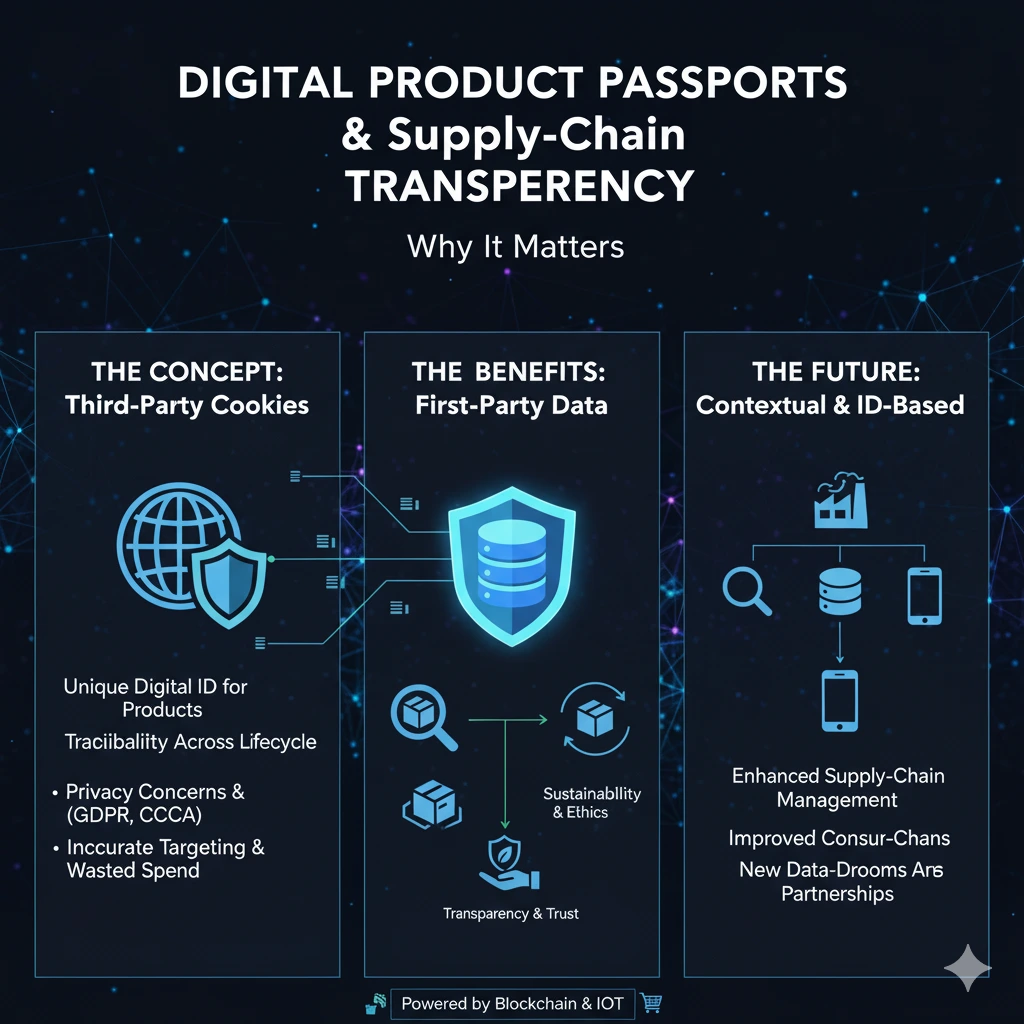
  • Digital Product Passports & Supply-Chain Transparency: Why It Matters

    Digital Product Passports & Supply-Chain Transparency: Why It Matters

    In today’s fast-changing global economy, sustainability and transparency have become non-negotiable for modern businesses. Consumers, regulators, and investors increasingly demand visibility into how products are made, sourced, and distributed. As industries transition toward circular economies and ethical production, Digital Product Passports (DPPs) are emerging as a powerful innovation. These digital identifiers are reshaping supply-chain management, ensuring authenticity, compliance, and sustainability from raw materials to end-of-life recycling.

    Understanding Digital Product Passports

    A Digital Product Passport is a secure digital record that contains key information about a product’s materials, manufacturing process, and lifecycle. It functions like a digital identity card for goods—accessible via QR code, RFID chip, or blockchain ledger. By scanning the code, stakeholders across the value chain—manufacturers, retailers, regulators, and consumers—can view verified data about sourcing, carbon footprint, and recyclability.

    The European Union’s Circular Economy Action Plan has made DPPs a cornerstone of its sustainability goals. By 2027, digital product passports will be mandatory for certain sectors, such as textiles, batteries, and electronics. This global shift marks the beginning of a new era of traceable, transparent, and data-driven commerce.

    Why Supply-Chain Transparency Matters

    Transparency builds trust. In a world where greenwashing and counterfeit products are rampant, consumers want proof of authenticity and sustainability claims. Supply-chain transparency ensures that every stage—from raw material extraction to product delivery—is visible and verifiable.

    For businesses, transparency is not only a compliance issue but also a strategic advantage. Companies that disclose sourcing details and sustainability data can strengthen their brand reputation, attract conscious consumers, and meet growing ESG (Environmental, Social, and Governance) expectations.

    Moreover, transparency allows organizations to identify inefficiencies, monitor emissions, and reduce waste. By integrating real-time supply-chain visibility tools, businesses can anticipate disruptions, enhance risk management, and improve overall resilience.

    The Technology Behind Digital Product Passports

    1. Blockchain for Trust and Immutability

    Blockchain technology underpins many digital product passport systems. It provides a tamper-proof and decentralized ledger, ensuring that data entered along the supply chain remains immutable. Every transaction—from raw material certification to shipping—is recorded in real time. This makes it nearly impossible to falsify sustainability credentials or hide unethical sourcing practices.

    Blockchain’s traceability feature is particularly valuable for industries like luxury goods, pharmaceuticals, and electronics, where counterfeit risks are high. By linking physical items to secure digital identities, blockchain enhances authenticity and consumer confidence.

    2. IoT and Smart Sensors

    Internet of Things (IoT) devices play a crucial role in capturing real-time data for digital product passports. Smart sensors embedded in packaging or products can track temperature, location, and handling conditions. This data helps verify product integrity during transportation and ensures compliance with safety standards.

    In agriculture and food supply chains, IoT-enabled DPPs can trace produce from farm to fork, documenting every step to guarantee freshness, origin, and ethical sourcing.

    3. Artificial Intelligence and Data Analytics

    AI complements digital product passports by analyzing complex data sets to reveal insights about performance, carbon emissions, and supply-chain risks. Machine learning algorithms can predict potential bottlenecks, detect anomalies, and suggest optimizations. With AI-powered analytics, businesses gain actionable intelligence that drives both sustainability and profitability.

    Benefits of Digital Product Passports

    Enhanced Consumer Trust and Engagement

    Today’s consumers care deeply about where and how products are made. DPPs empower shoppers to verify sustainability claims instantly. By scanning a QR code, customers can learn about recycled content, fair-trade sourcing, and product lifespan. This transparency fosters loyalty, builds trust, and strengthens brand differentiation in a competitive marketplace.

    Regulatory Compliance and Risk Reduction

    Global sustainability regulations are tightening rapidly. From the EU’s Eco-Design for Sustainable Products Regulation (ESPR) to carbon disclosure mandates, brands must provide traceable data. DPPs simplify compliance by consolidating all necessary documentation in one secure digital format. This reduces administrative costs and minimizes the risk of penalties for non-compliance.

    Circular Economy and Product Lifecycle Management

    One of the biggest advantages of digital product passports is enabling circular economy models. By storing detailed information about materials and components, DPPs make it easier to repair, reuse, or recycle products at the end of their life. This supports zero-waste goals and promotes resource efficiency across industries such as fashion, automotive, and electronics.

    Improved Supply-Chain Efficiency

    With end-to-end visibility, organizations can track shipments, monitor supplier performance, and optimize logistics in real time. DPPs enhance operational efficiency by connecting all players in the value chain through a shared, trustworthy data ecosystem. This reduces duplication, delays, and resource waste.

    Digital Product Passports Across Industries

    1. Fashion and Textiles

    The fashion industry is among the earliest adopters of digital product passports. Fast fashion’s environmental footprint has prompted brands to embrace DPPs for greater transparency. By tagging garments with digital IDs, consumers can access details about fiber content, dyeing methods, and working conditions. Brands like Stella McCartney and H&M have begun experimenting with blockchain-backed DPPs to track sustainable materials and circular recycling initiatives.

    2. Electronics and Technology

    E-waste is one of the world’s fastest-growing waste streams. Digital product passports in electronics can store repair manuals, component details, and recycling instructions, enabling right-to-repair movements and sustainable disposal. Manufacturers gain better control over materials, while consumers gain confidence that their devices are responsibly sourced.

    3. Automotive and Batteries

    As electric vehicles become mainstream, battery passports are emerging to track the origin and lifecycle of lithium, cobalt, and nickel. This data helps ensure ethical mining practices and supports safe battery recycling. Automotive brands are adopting DPPs to prove sustainability commitments and comply with upcoming EU regulations.

    Challenges to Implementation

    Despite their potential, digital product passports face adoption barriers. The biggest challenges include data standardization, interoperability, and cost of infrastructure. Different industries and countries use varying systems, making it difficult to integrate data across the supply chain. Additionally, privacy concerns arise when handling sensitive business information.

    To overcome these challenges, industry collaboration and government support are essential. Developing global interoperability standards, promoting open data frameworks, and ensuring cybersecurity will accelerate widespread adoption.

    The Future of Supply-Chain Transparency

    The future of supply-chain transparency will be powered by connected ecosystems where every product has a digital twin. Next-gen technologies like Web3, digital twins, and AI-driven automation will merge with DPPs to create smarter, self-regulating supply networks.

    In the coming years, we can expect to see real-time traceability platforms integrated with carbon accounting systems, enabling automatic sustainability scoring. Consumers will be able to check the environmental and social impact of every purchase instantly, redefining how trust and responsibility are built in commerce.

    Conclusion

    Digital product passports are more than a compliance tool—they are the foundation of a transparent, circular, and sustainable economy. By linking data, people, and products through secure digital ecosystems, DPPs empower businesses to prove their commitments and empower consumers to make informed choices.

    As global supply chains become more complex, transparency is not just a trend—it’s the future of business. Companies that adopt digital product passports early will not only meet regulatory demands but also lead the next generation of ethical, intelligent, and accountable commerce.