Tag: automation

  • From Seller to Story How Our Marketplace Empowers Local Entrepreneurs

    From Seller to Story How Our Marketplace Empowers Local Entrepreneurs

    In today’s fast-paced digital world, the rise of local entrepreneurs has become one of the most inspiring movements reshaping global commerce. At vCue Store, we believe every seller has a story worth telling. Our mission goes beyond selling products; we are building a community-driven online marketplace where creativity, sustainability, and empowerment meet opportunity. From handmade crafts to innovative gadgets, every product listed on vCue Store carries the essence of its creator. This blog dives deep into how our marketplace empowers local entrepreneurs, nurtures small businesses, and redefines what it means to shop with purpose.

    Empowering Local Entrepreneurs Through Our Marketplace

    The heart of vCue Store lies in its sellers—the passionate individuals and small businesses that bring originality and heart into their work. Our platform is designed to make entrepreneurship accessible to everyone. Whether you’re a seasoned craftsperson or just starting your business journey, vCue provides the tools and visibility needed to succeed. When local entrepreneurs join vCue Store, they gain access to a global customer base, advanced tools for online selling, and the support of a community that values authenticity over mass production. We ensure that every seller feels seen, supported, and empowered to grow their brand on their own terms.

    Why Local Entrepreneurship Matters More Than Ever

    Local businesses are the backbone of every economy. Supporting them doesn’t just mean buying a product—it means investing in families, cultures, and communities. By connecting local entrepreneurs with modern digital tools, vCue Store bridges the gap between traditional craftsmanship and digital innovation. Many of our sellers start small, creating handmade candles, home décor, or eco-friendly goods from their local workshops. Through vCue Store, they can now share their creativity with customers worldwide. This digital transformation allows small business owners to scale their operations without losing their unique identity.

    How vCue Store Supports Small Business Growth

    Accessible and User-Friendly Platform

    Our marketplace is built to make selling online simple and intuitive. Sellers can easily set up their digital storefronts, upload product listings, and start receiving orders—all with minimal technical knowledge. The interface is mobile-friendly, ensuring sellers can manage their shops on the go.

    Verified Seller Network

    Trust is key in eCommerce. vCue Store verifies each seller to maintain quality and authenticity. This gives buyers confidence and sellers credibility, which helps them grow their customer base faster. Verified profiles stand out in search results, increasing product visibility.

    Fair and Transparent Policies

    Unlike many large eCommerce giants that charge heavy commissions, vCue Store offers fair pricing and transparent policies. Sellers keep more of their profits, which allows them to reinvest in their craft, source better materials, and expand their offerings.

    AI-Driven Recommendations

    Our AI technology ensures products reach the right audience. By analyzing buyer behavior, our system highlights products that match customer interests, increasing conversion rates and visibility for small sellers. This feature is especially valuable for new entrepreneurs looking to reach their first 100 customers.

    From Handmade to High-Tech A Marketplace for Every Dream

    One of the most exciting aspects of vCue Store is its diversity. The platform isn’t just for physical products—it also welcomes digital creators, service providers, and innovators. Through our Service as a Product (SAAP) model, professionals can package their expertise—whether graphic design, consulting, or digital marketing—as sellable offerings. This flexibility gives local entrepreneurs more ways to earn and grow. A home-based artisan and a freelance designer can both thrive under the same roof. By connecting these creators with conscious consumers, vCue Store becomes more than a marketplace—it becomes a growth ecosystem.

    Sustainability and Ethical Commerce

    Today’s shoppers care about more than just what they buy; they care about how it’s made. vCue Store is committed to promoting sustainable commerce. We encourage sellers to use eco-friendly packaging, support fair labor, and adopt responsible sourcing methods. By spotlighting ethical brands and green businesses, we help conscious consumers make informed choices. Every purchase on vCue Store supports not only a small business but also a sustainable future.

    Building Community Through Storytelling

    What makes vCue Store truly unique is our dedication to storytelling. Every seller has a narrative that deserves to be shared. Our “Meet the Maker” blog series highlights inspiring journeys—from a mother turning her passion for handmade soaps into a thriving business, to a young designer creating sustainable home décor from recycled materials. These stories do more than market products—they connect hearts. When customers know the story behind what they buy, they form lasting emotional bonds with brands. This human connection drives loyalty and strengthens the community spirit within our platform.

    The Power of Technology in Local Commerce

    Technology is at the core of vCue Store’s mission to empower entrepreneurs. Beyond our easy-to-use seller dashboard, we offer tools that simplify marketing, inventory management, and analytics. Sellers can track performance, understand their audience, and make data-driven decisions—all without needing technical expertise. We also invest in secure payment gateways and fast logistics partnerships, ensuring a smooth shopping experience for customers while helping sellers maintain reliability and professionalism.

    Creating a Fair Marketplace for All

    We believe that growth should be inclusive. That’s why vCue Store welcomes sellers from diverse backgrounds, regions, and skill levels. Whether it’s women entrepreneurs, artisans from rural areas, or tech innovators, everyone has a place here. By lowering the barriers to entry and providing ongoing mentorship and community support, we’re not just building a store—we’re nurturing dreams. Our goal is to help 10,000 local entrepreneurs achieve digital independence by 2026.

    SEO Optimization and Visibility for Sellers

    In the digital age, visibility equals opportunity. vCue Store incorporates SEO optimization tools to help sellers rank higher in search engines. Product pages are structured for better discoverability with optimized titles, keywords, and metadata. Sellers can also publish blog posts, guides, and promotional content to boost their online presence. The more engaging and keyword-rich the content, the more traffic they attract—helping both the seller and the marketplace grow organically.

    A Future Built on Collaboration and Creativity

    As we look to the future, our vision remains clear—to empower local entrepreneurs and redefine digital commerce through collaboration, innovation, and community. vCue Store is more than a place to shop; it’s a platform for entrepreneurial growth, sustainable practices, and shared success. Every purchase made here tells a story—a story of a dream pursued, a skill refined, and a community uplifted. Together, we can build a marketplace that values people over profit and creativity over competition.

    Final Thoughts

    At vCue Store, we are rewriting the eCommerce narrative—one seller at a time. From handmade artisans to digital innovators, our marketplace celebrates the spirit of local entrepreneurship. We invite buyers to explore not just products but the stories behind them. And we invite sellers to join a growing network that empowers, educates, and elevates. Because when small businesses thrive, communities flourish—and that’s a story worth telling.

  • Green Supply Chains: Why Eco-Friendly Delivery Matters in E-Commerce

    Green Supply Chains: Why Eco-Friendly Delivery Matters in E-Commerce

    The world of e-commerce is expanding at lightning speed, transforming how we shop, live, and consume. Yet, as digital shopping grows, so does its environmental footprint. From packaging waste to fuel emissions, every delivery comes at an ecological cost. In response, the concept of green supply chains has emerged as a powerful solution—reshaping logistics with sustainability at its core. Eco-friendly delivery is no longer a nice-to-have; it’s a business imperative driving the next era of responsible commerce.

    The Environmental Cost of E-Commerce

    While e-commerce offers unmatched convenience, it has also brought new sustainability challenges. The demand for fast, same-day delivery means more vehicles on the road, more packaging waste, and higher carbon emissions. Studies suggest that global logistics operations contribute significantly to greenhouse gas emissions, with last-mile delivery being one of the biggest culprits.

    Every click-to-doorstep transaction involves energy-intensive activities: from warehouse lighting and air conditioning to the transport networks that bring goods to customers. When multiplied across billions of deliveries, the environmental toll becomes immense. That’s where green supply chains step in—to balance growth with responsibility.

    What Are Green Supply Chains?

    A green supply chain is a logistics system designed to minimize environmental impact at every stage—from sourcing raw materials to delivering the final product. It integrates sustainable practices such as renewable energy, eco-friendly packaging, efficient route planning, and waste reduction. The goal is not just operational efficiency but environmental stewardship.

    In e-commerce, this means adopting cleaner technologies, optimizing transportation, and making conscious choices about packaging and materials. Businesses that invest in sustainability today are future-proofing themselves against rising regulations, fuel costs, and shifting consumer expectations.

    Why Eco-Friendly Delivery Matters

    Sustainability is no longer a buzzword; it’s a demand from conscious consumers. As awareness of climate change grows, customers are actively choosing brands that align with their values. Eco-friendly delivery isn’t just about protecting the planet—it’s about winning customer loyalty and long-term trust.

    Growing Consumer Awareness

    Modern consumers, especially millennials and Gen Z, are highly attuned to environmental issues. They prefer shopping with brands that demonstrate a genuine commitment to sustainability. Offering eco-friendly delivery options, such as electric vehicle shipping or minimal packaging, can significantly enhance a brand’s reputation.

    In fact, surveys show that more than 70% of consumers are willing to pay a small premium for sustainable delivery choices. This shift in consumer mindset makes sustainability a strategic advantage for e-commerce players.

    Corporate Responsibility and Regulatory Pressure

    Governments around the world are tightening environmental regulations, pushing companies to reduce their carbon footprints. From stricter emission norms to packaging waste management laws, businesses must now rethink how they move goods.

    E-commerce companies that proactively adopt green logistics practices are not only staying compliant but also building brand resilience. Corporate responsibility is becoming a key factor in long-term profitability, and sustainable logistics is at the heart of that transformation.

    The Building Blocks of Green Supply Chains

    Creating a green supply chain requires innovation, investment, and collaboration across the entire logistics ecosystem. From warehousing to last-mile delivery, every link in the chain must be optimized for sustainability.

    1. Green Warehousing and Energy Efficiency

    Sustainable warehouses are leading the charge in reducing logistics emissions. Companies are installing solar panels, LED lighting, and energy-efficient cooling systems to cut down on electricity use. Smart sensors and automation tools help monitor energy consumption and reduce waste.

    Some leading e-commerce brands have even started designing carbon-neutral fulfillment centers, powered entirely by renewable energy. Green warehousing doesn’t just help the planet—it also lowers operational costs in the long run.

    2. Sustainable Packaging Solutions

    Packaging waste is one of the biggest environmental challenges in e-commerce. To tackle this, companies are shifting toward recyclable, biodegradable, and reusable materials. Paper-based mailers, compostable wraps, and minimalistic designs are replacing plastic-heavy packaging.

    Brands are also experimenting with returnable packaging models, where customers can send back delivery boxes for reuse. This circular approach significantly reduces waste and builds stronger customer engagement around sustainability.

    3. Electric and Alternative Fuel Vehicles

    The transportation sector is a major contributor to carbon emissions. To create eco-friendly delivery systems, logistics companies are investing in electric vehicles (EVs), hybrid fleets, and alternative fuels like bio-CNG and hydrogen.

    EVs are particularly well-suited for last-mile delivery, offering quiet, zero-emission operations within city limits. Several e-commerce giants in India and globally have committed to transitioning their entire delivery fleet to electric by the end of the decade.

    4. Route Optimization and Smart Logistics

    Technology plays a pivotal role in making supply chains greener. AI and machine learning enable companies to plan optimal routes, reducing travel distance, fuel consumption, and idle time. Real-time tracking systems help monitor fleet performance and identify inefficiencies.

    By leveraging predictive analytics, logistics managers can anticipate demand spikes, optimize vehicle utilization, and minimize empty returns—significantly cutting emissions and costs.

    5. Reverse Logistics and Recycling

    Sustainability doesn’t end with delivery; it extends to returns and end-of-life management. Reverse logistics focuses on efficiently handling product returns, recycling, and refurbishing. Instead of discarding returned goods, companies can repair, resell, or repurpose them—creating a circular economy that benefits both business and the environment.

    The Business Case for Green Supply Chains

    Contrary to common belief, sustainable logistics isn’t just good for the planet—it’s good for business too. Companies that invest in green technologies often enjoy cost savings, brand differentiation, and long-term resilience.

    Cost Savings Through Efficiency

    Energy-efficient warehouses, optimized routes, and reduced packaging materials lead to significant cost reductions. As fuel prices rise, shifting to EVs or hybrid models offers major operational savings. Green initiatives often pay for themselves over time through improved efficiency and customer loyalty.

    Enhanced Brand Value and Customer Loyalty

    A brand’s sustainability commitment directly influences customer perception. Consumers are more likely to stay loyal to companies that prioritize environmental responsibility. Green supply chains not only attract eco-conscious buyers but also help retain them—building trust and emotional connection.

    Competitive Advantage in a Crowded Market

    In the hyper-competitive e-commerce landscape, differentiation is key. Businesses that pioneer eco-friendly delivery models stand out as leaders in innovation and responsibility. This differentiation can drive higher conversions, stronger partnerships, and long-term growth.

    The Road Ahead: Toward a Sustainable Future

    As e-commerce continues to evolve, green supply chains will play a central role in defining the future of retail logistics. Companies must embrace sustainability not as an afterthought but as a core business strategy.

    Collaboration will be essential—between logistics providers, technology startups, policymakers, and consumers—to build infrastructure that supports clean energy and low-emission transport. The journey toward sustainable delivery is challenging but essential for creating a future where commerce thrives in harmony with the planet.

    The next phase of e-commerce growth will not be measured solely by speed or scale, but by sustainability. Brands that commit to eco-friendly delivery and green supply chains today will shape the responsible, resilient, and profitable e-commerce ecosystems of tomorrow.

  • AI, Automation & Real-Time Visibility: The New Logistics Playbook for E-Commerce in 2025

    AI, Automation & Real-Time Visibility: The New Logistics Playbook for E-Commerce in 2025

    As e-commerce continues to redefine global trade, logistics has emerged as its beating heart. In 2025, the pace of innovation is accelerating faster than ever, powered by artificial intelligence, automation, and real-time visibility. Together, these technologies are rewriting the rules of efficiency, reliability, and customer satisfaction. The new logistics playbook isn’t just about moving goods—it’s about delivering intelligence, speed, and transparency across every touchpoint of the supply chain.

    The Evolution of Logistics in the E-Commerce Era

    Over the past decade, e-commerce logistics has evolved from a support function into a strategic differentiator. Consumer expectations have shifted dramatically: same-day delivery, order tracking, and flawless returns are now standard. To keep up, companies are turning to AI-driven logistics automation and real-time data visibility as key enablers of performance.

    In 2025, the e-commerce industry faces mounting pressure to optimize costs, reduce delivery times, and enhance customer experiences—all while maintaining sustainability and resilience. The solution lies in leveraging technology to make logistics not only faster but also smarter.

    The Rise of Intelligent Supply Chains

    Today’s logistics networks are no longer linear or reactive—they are dynamic, data-driven ecosystems. From predictive demand planning to intelligent routing and autonomous delivery systems, AI and automation are enabling logistics networks that can think, adapt, and self-correct in real time. This shift marks the beginning of what experts call the “Smart Logistics Revolution.”

    AI: The Brain Behind the New Logistics Playbook

    Artificial Intelligence is the cornerstone of modern logistics. It empowers e-commerce companies to analyze massive amounts of data, identify inefficiencies, and make intelligent decisions across the supply chain.

    Predictive Analytics and Demand Forecasting

    AI algorithms process real-time sales data, weather conditions, local events, and consumer behavior patterns to predict product demand with unprecedented accuracy. This ensures that inventory is positioned in the right place at the right time, reducing stockouts and overstocking.

    For example, AI-driven demand forecasting allows fulfillment centers to prepare for seasonal surges, flash sales, and regional buying trends. The result is optimized warehousing, lower operational costs, and faster order fulfillment.

    Route Optimization and Last-Mile Efficiency

    AI also plays a vital role in optimizing delivery routes. Advanced algorithms consider multiple factors—traffic conditions, delivery density, road closures, and even fuel efficiency—to find the fastest and most cost-effective routes. This not only improves delivery times but also reduces carbon emissions and enhances driver productivity.

    In 2025, many logistics players are integrating AI-powered route optimization tools with real-time visibility platforms, ensuring continuous tracking and adaptive decision-making during deliveries.

    Automation: The Engine Driving E-Commerce Logistics

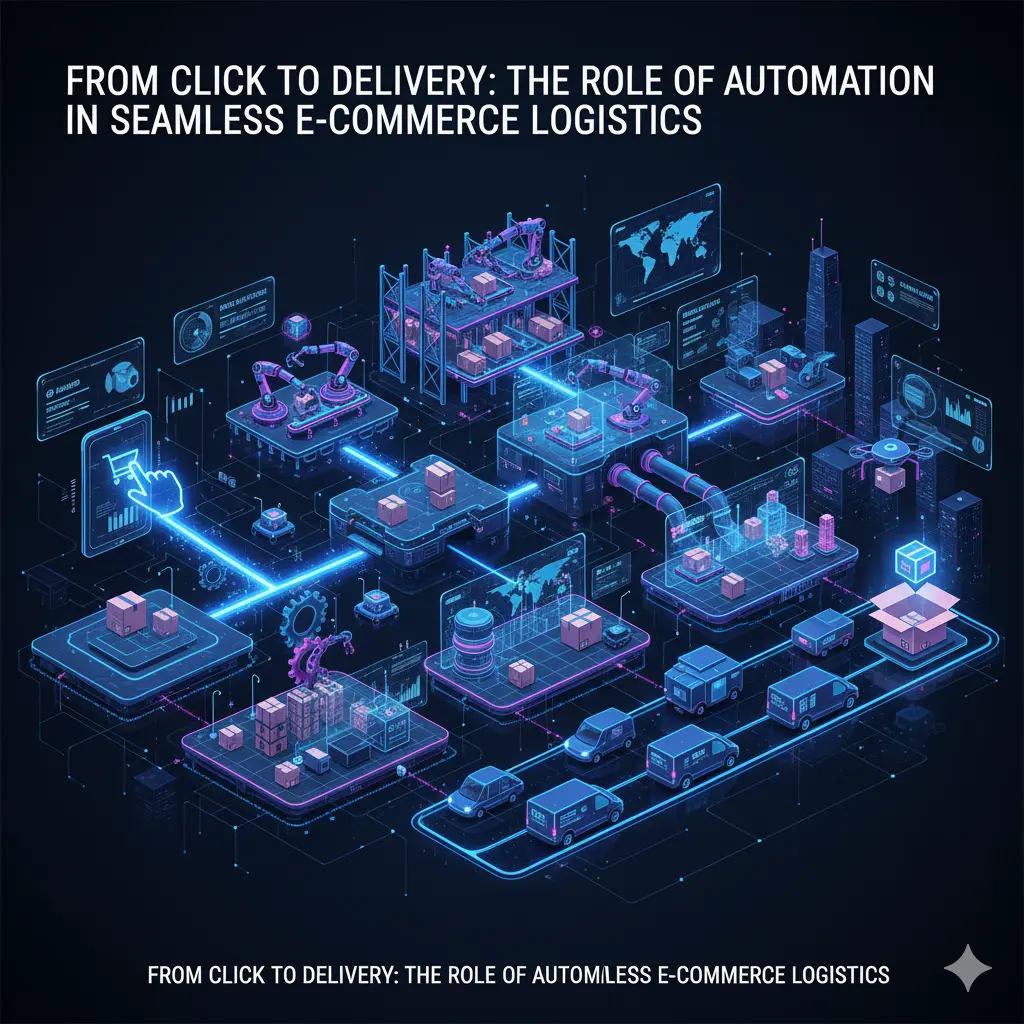
    While AI acts as the brain, automation serves as the muscle behind modern logistics operations. From warehouse robotics to autonomous vehicles, automation technologies are revolutionizing how goods move from warehouse shelves to consumers’ doorsteps.

    Smart Warehousing and Robotics

    The modern warehouse is no longer a chaotic maze of manual labor—it’s a synchronized ecosystem powered by automated guided vehicles (AGVs), robotic arms, and smart conveyor systems. These robots work alongside human workers, picking, packing, and sorting items with incredible accuracy and speed.

    Automation minimizes human error, enhances operational throughput, and allows businesses to handle large order volumes—especially during festive or flash-sale periods—without compromising delivery timelines.

    Drones and Autonomous Delivery Vehicles

    2025 is witnessing a major leap in drone and autonomous vehicle technology. E-commerce giants are piloting drone deliveries in urban and semi-urban areas, cutting delivery times from hours to minutes. Ground-based autonomous vehicles are also being deployed for last-mile deliveries, particularly in gated communities and business districts.

    These automated delivery methods not only improve efficiency but also support sustainability goals by reducing fuel consumption and congestion in urban centers.

    Real-Time Visibility: The Backbone of Customer Trust

    In today’s digital-first economy, real-time visibility has become synonymous with customer confidence. Shoppers want to know exactly where their order is at every stage—from dispatch to doorstep. For businesses, visibility translates to better control, reduced losses, and improved accountability.

    IoT and Connected Logistics

    The Internet of Things (IoT) is a game-changer for logistics visibility. Smart sensors and RFID tags enable companies to monitor shipments, track temperature-sensitive goods, and ensure the integrity of every delivery in real time.

    IoT devices also feed continuous data into analytics dashboards, allowing logistics managers to respond instantly to disruptions—whether it’s a route delay, a vehicle breakdown, or a weather-related challenge. This real-time data sharing creates a seamless, transparent supply chain ecosystem.

    Visibility Beyond Delivery

    Real-time visibility doesn’t end at last-mile tracking. It extends into reverse logistics, helping businesses manage returns efficiently. By integrating visibility tools into every stage of the logistics process, companies can minimize losses, speed up refunds, and enhance customer satisfaction—key factors that determine brand loyalty in 2025.

    The Human Element in a Tech-Driven Logistics World

    While AI and automation dominate logistics innovation, the human element remains essential. Technology enhances capabilities, but human decision-making, empathy, and creativity continue to drive customer-centric logistics strategies.

    In 2025, logistics professionals are evolving from manual operators to data interpreters and strategic planners, using AI-generated insights to make better business decisions. Upskilling the workforce in digital tools, robotics management, and analytics will be critical to maintaining a balance between automation and human oversight.

    Sustainability Through Smart Logistics

    Another defining aspect of the 2025 logistics playbook is sustainability. E-commerce companies are under growing pressure to reduce carbon footprints and adopt eco-friendly practices.

    AI and automation enable smarter energy usage, efficient fleet management, and reduced waste through precise inventory control. Many logistics networks are transitioning to electric vehicles (EVs) and carbon-neutral warehouses, demonstrating how technology can align operational excellence with environmental responsibility.

    Challenges on the Road Ahead

    Despite the transformative benefits of AI, automation, and visibility, challenges remain. High implementation costs, data privacy concerns, and infrastructure disparities can slow down adoption—especially for small and mid-sized logistics players.

    However, as technology becomes more accessible and cloud-based logistics platforms gain traction, the barriers are gradually falling. Collaboration between tech startups, logistics providers, and government initiatives will further accelerate this digital transformation.

    The Future of Logistics in 2025 and Beyond

    The logistics industry in 2025 stands at the intersection of intelligence, automation, and visibility. The new playbook is built on data-driven agility, where every movement in the supply chain is measurable, predictable, and optimizable.

    E-commerce companies that harness AI and automation effectively will achieve not just faster deliveries but also smarter, greener, and more resilient operations. Real-time visibility will continue to be the linchpin of customer trust, shaping how consumers perceive reliability in the online shopping experience.

    In essence, the future of logistics is not just about moving goods—it’s about moving with intelligence, precision, and purpose. The integration of AI, automation, and real-time visibility marks the dawn of a new era where logistics becomes the ultimate competitive advantage in the e-commerce landscape.

  • The Growing Role of 3PLs (Third-Party Logistics) in SME E-Commerce

    The Growing Role of 3PLs (Third-Party Logistics) in SME E-Commerce

    Introduction

    The e-commerce revolution has reshaped how businesses operate, especially for small and medium-sized enterprises (SMEs) looking to compete in a rapidly growing digital marketplace. With rising customer expectations for faster delivery, flexible returns, and seamless fulfillment, managing logistics in-house has become increasingly complex and costly. That’s where Third-Party Logistics (3PL) providers come in. In 2025, 3PLs are no longer just an outsourcing option—they are strategic partners driving efficiency, scalability, and customer satisfaction in SME e-commerce operations.

    Understanding 3PL and Its Importance for SMEs

    A Third-Party Logistics (3PL) provider handles outsourced logistics services for businesses, including warehousing, inventory management, order fulfillment, and transportation. For SMEs that lack the infrastructure or capital to build their own logistics network, partnering with a 3PL offers a cost-effective and scalable solution.

    In the early stages, many small online retailers manage logistics internally, packing boxes in garages or small warehouses. However, as order volumes grow and customers demand same-day or next-day delivery, these manual systems become unsustainable. By collaborating with a 3PL, SMEs can focus on their core business operations—product development, marketing, and customer engagement—while experts handle logistics behind the scenes.

    The Evolution of 3PLs in the E-Commerce Era

    The traditional role of 3PLs was primarily about storage and shipment. But in today’s e-commerce landscape, 3PLs have evolved into technology-driven logistics partners offering real-time visibility, automation, and data analytics. Modern 3PLs integrate with e-commerce platforms like Shopify, WooCommerce, Amazon, and BigCommerce to sync inventory, track orders, and manage returns effortlessly.

    This digital transformation allows SMEs to compete with retail giants by providing Amazon-like fulfillment experiences without massive investments. 3PLs now use tools such as AI-driven forecasting, IoT-enabled tracking, and warehouse robotics to enhance speed and accuracy, helping small businesses operate with the efficiency of enterprise-level logistics systems.

    Key Benefits of 3PLs for SMEs

    1. Cost Efficiency and Scalability
      Outsourcing logistics eliminates the need for SMEs to invest in warehouse space, equipment, and labor. With 3PLs, businesses pay only for the storage and services they use, allowing them to scale up or down based on demand. During peak seasons like holidays or sales events, 3PLs can expand capacity seamlessly, helping SMEs manage surges without disruption.
    2. Faster and More Reliable Delivery
      Speed is one of the most crucial factors in e-commerce success. 3PLs maintain strategically located fulfillment centers that enable faster shipping across regions. Many 3PLs also partner with major carriers such as FedEx, UPS, and DHL, negotiating better shipping rates that SMEs can’t access independently. This helps reduce costs while improving last-mile delivery performance.
    3. Access to Advanced Technology
      Modern 3PLs leverage cutting-edge logistics software to automate order processing, inventory tracking, and performance analytics. SMEs gain access to real-time dashboards, enabling them to monitor inventory levels, forecast demand, and optimize shipping routes. Such transparency enhances operational control and minimizes costly stockouts or overstocks.
    4. Improved Customer Experience
      Reliable and timely delivery is critical for building customer trust. 3PLs ensure smooth order fulfillment, efficient returns processing, and accurate tracking updates. This leads to higher customer satisfaction, positive reviews, and repeat purchases—key metrics for long-term e-commerce growth.
    5. Global Reach
      Expanding internationally can be daunting for SMEs due to customs regulations, shipping costs, and logistical complexity. Many 3PLs specialize in cross-border fulfillment, providing expertise in international shipping, documentation, and customs clearance. This enables SMEs to reach new markets without the burden of managing global logistics in-house.

    Technology Driving the Modern 3PL Industry

    The 3PL industry has embraced innovation to meet the demands of digital commerce. Technologies such as Artificial Intelligence (AI), Machine Learning (ML), Robotic Process Automation (RPA), and Blockchain are transforming logistics operations.

    • AI and Predictive Analytics help forecast demand and optimize inventory placement across warehouses.
    • Automation and Robotics increase picking accuracy and reduce human errors.
    • Blockchain Integration enhances transparency by providing tamper-proof tracking for each shipment.
    • IoT Sensors provide real-time data on shipment location, temperature, and handling conditions.

    These advancements allow 3PLs to deliver data-driven logistics solutions, offering SMEs deeper insights into their supply chain performance and opportunities for cost reduction.

    How 3PLs Empower SMEs to Compete with Big Players

    One of the greatest challenges for SMEs is competing against giants like Amazon, Walmart, and Alibaba, which have massive logistics networks. 3PLs level the playing field by giving smaller businesses access to similar fulfillment infrastructure and speed. For example, by using multi-node fulfillment networks, a 3PL can distribute SME inventory across several regional warehouses, reducing shipping times and costs.

    Furthermore, many 3PLs offer value-added services such as custom packaging, kitting, labeling, and reverse logistics, enabling SMEs to enhance brand identity while maintaining operational efficiency. These features not only improve customer satisfaction but also build a strong brand reputation in the competitive e-commerce landscape.

    Challenges SMEs Face When Working with 3PLs

    While 3PL partnerships offer numerous benefits, they also come with challenges that SMEs must navigate carefully:

    1. Loss of Direct Control: Outsourcing means SMEs must rely on a third party for order accuracy and delivery speed. Choosing the wrong partner can harm customer experience.
    2. Integration Issues: Some SMEs struggle with integrating their e-commerce platforms with 3PL systems, leading to delays or data mismatches.
    3. Hidden Costs: Certain 3PLs charge for additional services such as packaging, returns, or storage during slow seasons, which can impact margins.
    4. Communication Gaps: Misaligned expectations and unclear communication channels can create inefficiencies in order fulfillment.

    To overcome these challenges, SMEs should conduct thorough due diligence before selecting a 3PL partner, ensuring transparent pricing, robust tech integration, and responsive support.

    Trends Shaping the Future of 3PL in SME E-Commerce

    The future of 3PLs is being shaped by several key trends:

    • Micro-Fulfillment Centers: Smaller urban warehouses closer to customers enable ultra-fast delivery for local markets.
    • Green Logistics: As sustainability becomes a priority, 3PLs are adopting eco-friendly packaging, electric vehicles, and carbon-neutral shipping.
    • Omnichannel Fulfillment: With consumers shopping across websites, marketplaces, and social media, 3PLs are developing systems that unify fulfillment across all channels.
    • Data-Driven Decision Making: Advanced analytics are allowing SMEs to make smarter decisions about inventory allocation, supplier selection, and pricing strategies.

    These trends highlight the increasing sophistication of 3PL services and their pivotal role in shaping the future of e-commerce logistics.

    Selecting the Right 3PL Partner

    Choosing the right logistics partner is critical for SME success. Key factors to consider include:

    • Scalability: The 3PL should accommodate your business growth and seasonal demand fluctuations.
    • Technology Integration: Ensure seamless connection between your online store and the 3PL’s system for real-time updates.
    • Geographical Reach: Verify warehouse locations and shipping zones to match your target markets.
    • Customer Service: Look for providers with responsive support teams and transparent communication.
    • Reputation and Reviews: Research client testimonials and case studies to assess reliability and performance.

    A well-chosen 3PL partner can become a long-term collaborator that supports your brand’s logistics strategy and overall business growth.

    Conclusion

    The growing role of 3PLs in SME e-commerce reflects the changing dynamics of the global marketplace. As customer expectations rise and logistics become more complex, partnering with 3PLs allows small businesses to compete efficiently, expand globally, and deliver exceptional customer experiences.

    In 2025 and beyond, Third-Party Logistics providers are not just service vendors—they are essential enablers of digital transformation and business scalability. SMEs that embrace 3PL partnerships strategically will enjoy faster growth, greater agility, and a stronger foothold in the ever-evolving world of e-commerce.

  • Returns? Let a Robot Handle It: Reverse Logistics Automation

    Returns? Let a Robot Handle It: Reverse Logistics Automation

    Returns have always been the headache of e-commerce, especially for small and medium-sized retailers. According to recent data, nearly 30% of online purchases end up being returned, and handling them manually is time-consuming, costly, and prone to errors. But in 2025, the rise of reverse logistics automation is transforming how businesses manage returns, making them faster, cheaper, and more customer-friendly. By leveraging AI, robotics, and automation platforms, companies are turning a traditional pain point into a competitive advantage.

    Why Reverse Logistics Matters

    Reverse logistics refers to the process of moving goods from the customer back to the seller, warehouse, or manufacturer. Traditionally, returns involved manual approvals, inspections, restocking, and refunds, creating delays and operational costs. In a world where customer experience is king, a slow or complicated returns process can hurt loyalty and brand reputation.

    Automation changes that. With reverse logistics automation, every step—from return initiation to restocking or recycling—can be streamlined. This not only improves efficiency but also reduces human error and operational overhead.

    How Automation Transforms Returns

    1. Smart Return Portals: Customers now expect a self-service returns process. Automated return portals allow shoppers to select items, choose reasons for return, print shipping labels, and schedule pickups without human intervention. Tools like Returnly, Loop Returns, and Happy Returns integrate with your e-commerce platform to make this seamless.

    These portals also provide real-time tracking, giving customers peace of mind while reducing inquiries to customer support teams. In 2025, shoppers consider a smooth return process as important as fast delivery.

    2. AI-Powered Decision Making: Not all returns are equal. Some items can be restocked immediately, some need repair, and some should be recycled. AI algorithms analyze return patterns and product conditions to automate these decisions. For example, a system can flag electronics for inspection, clothing for quality assessment, and overstock items for instant resale. This reduces unnecessary human labor and accelerates inventory turnover.

    3. Robotic Sorting and Handling: Warehouses are adopting robots and automated conveyor systems to handle returned items. Robots can sort products based on SKU, condition, and destination, moving them efficiently back into inventory or preparing them for refurbishment. This is especially useful for large-scale retailers where manual sorting can create bottlenecks.

    Benefits of Reverse Logistics Automation

    Implementing automated returns has a direct impact on both the bottom line and customer satisfaction.

    • Reduced Operational Costs: Automation eliminates repetitive manual tasks, cutting labor costs and reducing errors that lead to additional expenses.
    • Faster Refunds and Exchanges: AI-driven processing ensures customers receive refunds or replacements faster, improving loyalty and trust.
    • Sustainability: Automated reverse logistics helps identify items for recycling or donation, reducing waste and supporting green initiatives.
    • Data-Driven Insights: Returns are a goldmine of information. Automation tools track patterns and reasons for returns, enabling brands to improve products, sizing, descriptions, and customer support proactively.

    Integrating Reverse Logistics Automation in Your Store

    For small and medium e-commerce stores, integrating automation doesn’t require a complete overhaul. Here’s a step-by-step approach:

    Step 1: Evaluate Your Return Volume and Policies – Determine which items have the highest return rates and why. This helps prioritize automation.

    Step 2: Implement a Smart Returns Portal – Choose a platform compatible with your e-commerce store (Shopify, WooCommerce, Magento). Enable automated label generation, tracking, and customer notifications.

    Step 3: Automate Decision Rules – Use AI-driven tools to categorize returns and decide on restocking, refurbishment, or recycling. These rules reduce manual inspection needs.

    Step 4: Integrate Warehouse Automation – For stores with high return volume, adopt robotic sorting or conveyor systems to accelerate processing. Smaller stores can start with software automation and scale up as volume grows.

    Step 5: Analyze Data and Optimize – Track return reasons, processing times, and costs. Use this data to refine inventory management, product descriptions, and fulfillment strategies.

    The Future of Reverse Logistics

    In 2025, reverse logistics automation is more than a convenience — it’s a differentiator. Retailers who embrace automation can offer hassle-free returns, faster refunds, and superior customer experiences, all while reducing costs and environmental impact.

    Emerging trends include:

    • Predictive Returns Management: AI predicts which products are likely to be returned and adjusts inventory, packaging, or recommendations proactively.
    • Blockchain-Enabled Tracking: Transparent tracking for returns ensures authenticity, reduces fraud, and provides customers with complete visibility.
    • Robotics and AI Integration: Advanced robotics, AI vision systems, and smart sorting algorithms will handle almost all returns autonomously in high-volume warehouses.

    Why Customers Love Automated Returns

    A smooth return experience builds trust and loyalty. Customers are more likely to buy again if they know that returning an item will be quick and easy. In fact, studies show that businesses with efficient returns processes often enjoy higher repeat purchase rates. Automated reverse logistics ensures that shoppers experience seamless refunds, exchanges, or replacements, reinforcing the perception of a reliable, professional brand.

    Conclusion

    Reverse logistics automation is no longer optional for forward-thinking e-commerce businesses. By combining AI, robotics, and automation software, retailers can reduce operational costs, speed up returns, improve customer satisfaction, and even support sustainability goals. In 2025, when customers say “I want to return this,” your robots, AI algorithms, and automated systems will handle it — fast, accurate, and without a single human hand in the process.

    Returns don’t have to be a pain. With the right automation strategy, they can become a competitive advantage, turning a traditional problem into a smooth, cost-effective, and customer-friendly operation.