
Tag: E-Commerce SEO

  • How to Sell in the Fashion Industry

    How to Sell in the Fashion Industry

    The fashion industry is one of the most dynamic and competitive markets in the world. To succeed, businesses must not only design appealing products but also understand how to effectively sell fashion products in a way that attracts, engages, and retains customers. Whether you are an emerging designer, an e-commerce retailer, or a boutique owner, mastering the art of fashion sales strategies is crucial to growing your brand and increasing revenue.

    Understanding the Fashion Market

    Before you can successfully sell in the fashion industry, you need to understand the market and its trends. The fashion industry is heavily influenced by seasonality, consumer preferences, and cultural movements. Keeping up with the latest trends, knowing your target audience, and identifying niche markets are all key to developing a strong sales strategy.

    Key aspects to consider:

    • Consumer demographics and behavior
    • Market segments (luxury, fast fashion, sustainable fashion)
    • Seasonal trends and emerging styles
    • Competitive landscape

    Understanding these factors helps you craft a tailored approach to fashion sales that resonates with your customers.

    Building a Strong Brand Identity

    A powerful brand identity is essential to selling fashion products. Fashion consumers are drawn not just to clothing or accessories but also to the story and lifestyle behind a brand. Your brand should communicate your values, style, and unique selling proposition.

    To create a strong fashion brand:

    • Develop a distinctive logo, color palette, and design aesthetic
    • Craft a compelling brand story
    • Maintain consistent branding across all platforms, including social media, websites, and packaging
    • Showcase authenticity and transparency

    A recognizable brand identity helps your products stand out in a crowded fashion marketplace.

    Leveraging E-Commerce and Online Presence

    In today’s digital age, a robust online presence is essential for fashion sales. E-commerce allows brands to reach a global audience, increase visibility, and drive revenue.

    Key strategies for selling fashion online include:

    • Creating an intuitive and mobile-friendly e-commerce website
    • Utilizing high-quality product images and videos
    • Offering detailed product descriptions and sizing guides
    • Integrating user reviews and testimonials to build trust

    Additionally, leveraging social media platforms like Instagram, TikTok, and Pinterest allows fashion brands to showcase products, engage with followers, and drive traffic to their online stores.

    Understanding Your Target Audience

    Knowing your audience is critical for effective fashion sales strategies. Different consumers have distinct preferences, spending habits, and buying motivations. By analyzing data and conducting market research, you can tailor your products, messaging, and promotions to meet their needs.

    Tips for targeting the right audience:

    • Segment your customers by age, lifestyle, or buying behavior
    • Monitor trends in your niche market
    • Offer personalized recommendations and promotions
    • Use social listening to understand customer sentiment

    Understanding your audience ensures your fashion marketing efforts are more effective and conversions increase.

    Creating an Effective Fashion Sales Strategy

    To sell in the fashion industry successfully, you need a comprehensive sales strategy that covers product, pricing, placement, and promotion.

    Product strategy

    Ensure your products align with your brand identity and meet consumer expectations. Focus on quality, unique designs, and consistent inventory.

    Pricing strategy

    Competitive pricing is vital, but consider your brand positioning. Luxury fashion commands higher prices, while fast fashion relies on affordability.

    Distribution channels

    Decide whether to sell exclusively online, through retail stores, or a combination of both. Partnering with marketplaces or boutiques can expand your reach.

    Promotional strategy

    Use social media campaigns, influencer marketing, email marketing, and seasonal promotions to drive sales. Offer incentives like discounts, loyalty programs, or free shipping to encourage purchases.

    Leveraging Influencer and Social Media Marketing

    Influencers and social media play a significant role in driving fashion sales today. Collaborating with influencers who align with your brand helps reach new audiences and build credibility.

    Effective social media strategies include:

    • Sharing behind-the-scenes content and product launches
    • Engaging with followers through stories, polls, and live sessions
    • Running targeted ads to reach your ideal audience
    • Encouraging user-generated content to showcase real-life product use

    Social media marketing strengthens brand presence and drives conversions in the fashion industry.

    Providing Exceptional Customer Experience

    Customer experience can make or break your fashion business. Buyers expect seamless interactions, fast shipping, easy returns, and excellent customer support.

    Key elements of a strong fashion customer experience:

    • Responsive customer service
    • Easy-to-navigate online stores
    • Clear return and exchange policies
    • Personalization and loyalty programs

    A positive customer experience increases repeat purchases and generates word-of-mouth marketing, which is invaluable in the fashion sector.

    Tracking Performance and Optimizing Strategies

    To succeed in the fashion industry, you need to continuously monitor your sales performance and optimize strategies based on data. Key performance indicators (KPIs) to track include:

    • Sales conversion rates
    • Average order value
    • Customer retention rates
    • Website traffic and engagement
    • Social media reach and interactions

    Analyzing these metrics allows you to identify areas for improvement and adapt your fashion sales strategies for better results.

    Final Thoughts

    Selling in the fashion industry requires a combination of creativity, market understanding, and strategic execution. By building a strong brand, leveraging digital platforms, understanding your target audience, and continuously optimizing your fashion sales strategies, you can drive growth and establish a loyal customer base. The key is to stay adaptable, track trends, and provide a memorable shopping experience that keeps customers coming back.

  • Applying the Lean Six Sigma Principles to Order Fulfillment

    Applying the Lean Six Sigma Principles to Order Fulfillment

    In today’s competitive e-commerce and logistics environment, order fulfillment has become a critical differentiator for businesses. Customers expect fast, accurate, and reliable delivery, which puts pressure on companies to optimize their supply chains. Applying Lean Six Sigma principles to order fulfillment can help organizations reduce waste, improve efficiency, and enhance overall customer satisfaction. By combining the focus on efficiency from Lean with the data-driven process improvement of Six Sigma, businesses can create streamlined, error-free fulfillment operations.

    Understanding Lean Six Sigma

    Lean Six Sigma is a methodology that combines the waste-reduction techniques of Lean with the quality improvement tools of Six Sigma. Lean focuses on eliminating non-value-added activities, while Six Sigma emphasizes reducing process variation and defects. Together, they provide a powerful framework to enhance operational efficiency in logistics and order fulfillment.

    Key components of Lean Six Sigma include:

    • DMAIC methodology: Define, Measure, Analyze, Improve, Control
    • Continuous improvement culture
    • Data-driven decision-making
    • Waste elimination

    Implementing these principles in order fulfillment ensures processes are optimized for speed, accuracy, and cost-effectiveness.

    Why Lean Six Sigma Matters in Order Fulfillment

    Efficient order fulfillment processes directly impact customer satisfaction and profitability. Mistakes in inventory management, picking, packing, or shipping can lead to delays, returns, and increased costs. Lean Six Sigma addresses these challenges by:

    • Reducing errors in picking and packing
    • Streamlining warehouse layouts
    • Optimizing inventory levels
    • Improving shipment accuracy
    • Reducing lead times

    By applying Lean Six Sigma, businesses can consistently deliver orders faster and more accurately, which enhances trust and customer loyalty.

    Applying Lean Principles to Order Fulfillment

    Lean focuses on eliminating waste in processes. In order fulfillment, waste can occur in many forms:

    Transportation waste

    Excess movement of products within a warehouse or between locations slows operations. Optimizing routes and warehouse layout reduces this waste.

    Inventory waste

    Excess stock ties up capital and space. Using Lean inventory techniques such as just-in-time (JIT) ensures only necessary stock is kept.

    Motion waste

    Unnecessary movement of employees during picking and packing slows fulfillment. Ergonomic design and process mapping minimize this.

    Overprocessing

    Complex or redundant processes increase handling time. Streamlining packing and labeling reduces unnecessary steps.

    Defects

    Incorrect orders or damaged goods increase costs and customer dissatisfaction. Lean focuses on error prevention through standardized processes.

    Using Six Sigma to Improve Accuracy

    Six Sigma emphasizes reducing variation and defects in processes. In order fulfillment, defects can include:

    • Wrong items shipped
    • Delayed deliveries
    • Damaged products
    • Incorrect packaging

    Six Sigma uses statistical analysis to identify root causes of defects and implement corrective measures. The DMAIC process helps:

    • Define: Identify key problem areas, such as delayed shipments or frequent picking errors
    • Measure: Track defect rates, order accuracy, and fulfillment times
    • Analyze: Determine the root causes of inefficiencies or errors
    • Improve: Implement process changes, automation, or training programs
    • Control: Monitor results and maintain improvements over time

    Integrating Lean Six Sigma in Warehouse Operations

    Applying Lean Six Sigma to warehouses improves order fulfillment efficiency and reduces costs. Key strategies include:

    • Process mapping: Visualizing each step of the fulfillment process to identify bottlenecks and inefficiencies
    • 5S methodology: Sort, Set in order, Shine, Standardize, Sustain – ensuring a clean, organized, and efficient workspace
    • Standard work procedures: Defining clear steps for picking, packing, and shipping
    • Error-proofing (Poka-Yoke): Using automated systems and barcodes to prevent mistakes
    • Continuous monitoring: Using KPIs to measure performance and identify areas for improvement

    Benefits of Lean Six Sigma in Order Fulfillment

    Businesses that implement Lean Six Sigma principles in order fulfillment can achieve significant advantages:

    • Higher order accuracy and fewer returns
    • Faster processing and reduced lead times
    • Lower operational costs through waste reduction
    • Improved customer satisfaction and loyalty
    • Enhanced employee productivity and morale

    These benefits help e-commerce, retail, and logistics companies remain competitive in a market where speed and accuracy are essential.

    Challenges and Solutions

    While Lean Six Sigma offers tremendous value, implementing it in order fulfillment comes with challenges:

    Resistance to change

    Employees may be hesitant to adopt new processes. Solution: provide training, communicate benefits, and involve staff in improvement initiatives.

    Data collection difficulties

    Accurate data is essential for Six Sigma analysis. Solution: implement warehouse management systems (WMS) and automated tracking tools.

    Initial costs

    Process redesign and technology investments may require upfront costs. Solution: focus on long-term ROI and incremental improvements.

    Complexity in scaling

    Applying Lean Six Sigma across multiple warehouses can be challenging. Solution: standardize processes and roll out improvements gradually.

    Future of Lean Six Sigma in E-commerce Fulfillment

    As e-commerce continues to grow, applying Lean Six Sigma to order fulfillment will become increasingly vital. Emerging trends include:

    • Automation and robotics in picking and packing
    • AI-powered demand forecasting to optimize inventory
    • Real-time monitoring of fulfillment KPIs
    • Integration with last-mile delivery solutions

    Businesses that embrace these innovations while maintaining Lean Six Sigma principles will deliver faster, more accurate, and more efficient fulfillment services.

    Final Thoughts

    Applying Lean Six Sigma principles to order fulfillment enables businesses to streamline operations, reduce errors, and enhance customer satisfaction. By combining waste elimination with data-driven process improvement, organizations can optimize every step of the fulfillment process. Whether managing a single warehouse or a global logistics network, Lean Six Sigma provides a framework for continuous improvement and long-term competitive advantage.

  • A Guide to Reverse Logistics and Returns for E-commerce

    A Guide to Reverse Logistics and Returns for E-commerce

    In the fast-growing world of online shopping, customer expectations are higher than ever. From fast delivery to easy returns, everything plays a crucial role in shaping overall satisfaction. One area that many businesses overlook is reverse logistics, a key component of the e-commerce ecosystem. As return rates continue to rise, especially in fashion, electronics, and consumer goods, having a strong e-commerce returns strategy has become essential for maintaining trust, efficiency, and profitability.

    What Is Reverse Logistics?

    Reverse logistics refers to the process of moving products from customers back to the retailer or manufacturer. Unlike traditional shipping, which focuses on getting products to buyers, reverse logistics manages returned items, exchanges, recycling, refurbishment, and restocking. This process ensures that returned products are handled efficiently, minimizing costs and maximizing customer satisfaction.

    Common parts of the reverse logistics process include:

    • Product returns
    • Replacement or exchanges
    • Repairs and refurbishment
    • Recycling or disposal
    • Restocking and redistribution

    Efficient reverse logistics can help e-commerce businesses reduce waste, cut costs, and improve brand loyalty.

    Why Returns Matter in E-commerce

    Returns are a natural part of online shopping. Since customers cannot physically inspect products, return rates tend to be higher compared to in-store purchases. This makes an effective e-commerce returns policy essential.

    A clear and customer-friendly returns process helps:

    • Build trust and confidence
    • Increase conversion rates
    • Encourage repeat purchases
    • Reduce customer service issues

    On the other hand, a complicated or costly returns process can damage a brand’s reputation and drive customers toward competitors.

    The Reverse Logistics Workflow

    To manage returns smoothly, businesses must understand each step of the reverse logistics workflow.

    Customer return initiation

    The process begins when a customer requests a return, usually through an online portal or customer support. A clear, simple interface improves customer satisfaction and reduces return-related inquiries.

    Product shipping back to the warehouse

    Once approved, customers send the item back. Pre-paid labels, drop-off locations, and easy packaging significantly improve the overall return experience.

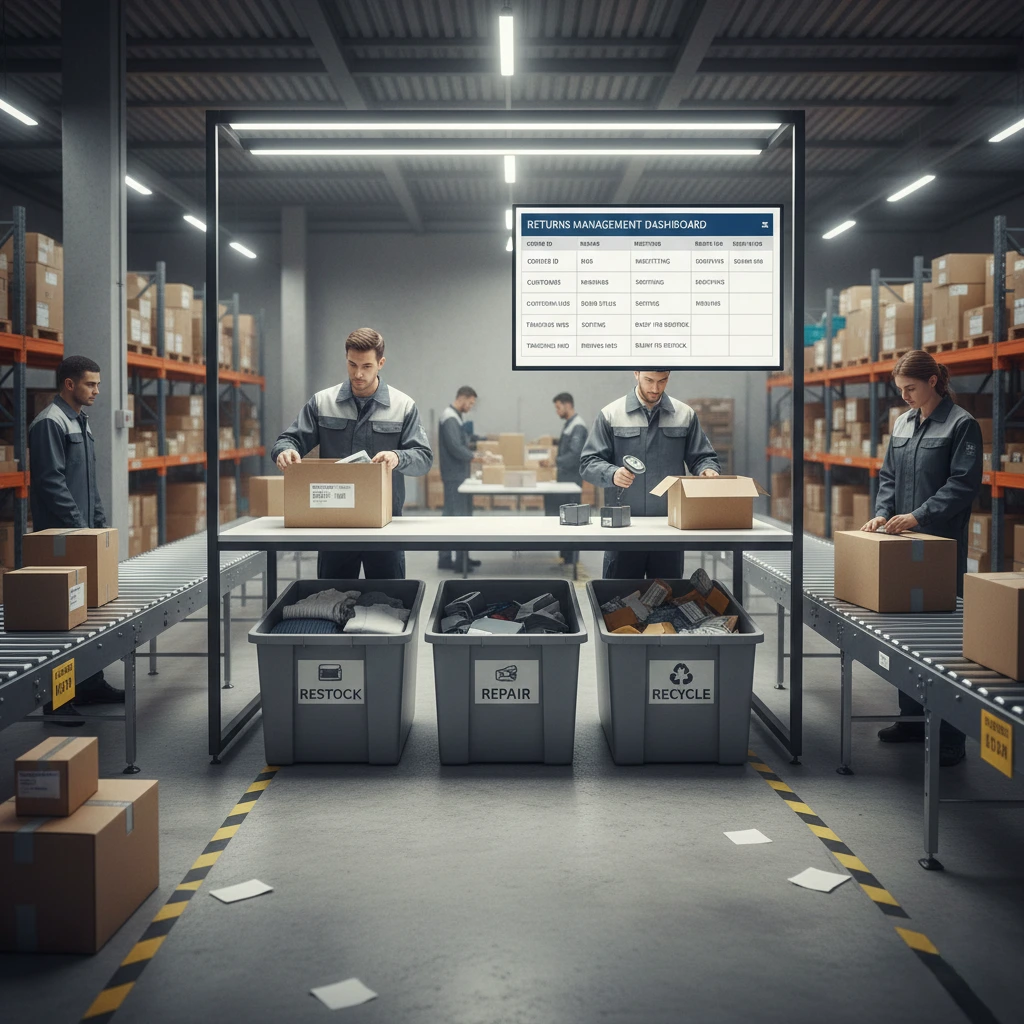
    Inspection and processing

    After receiving the product, the warehouse team examines its condition. This determines whether it should be restocked, repaired, recycled, or disposed of.

    Refund or exchange

    Once the return is processed, the customer receives a refund or replacement. Fast refunds are crucial for a great e-commerce returns experience.

    Benefits of a Strong Reverse Logistics System

    A well-structured reverse logistics system can create both operational and financial advantages.

    Cost savings

    Proper returns management helps reduce shipping costs, labor expenses, and product loss.

    Enhanced customer satisfaction

    Customers value brands that offer hassle-free returns. A smooth experience increases loyalty and repeat purchases.

    Improved inventory management

    Returned items that are quickly inspected and restocked help maintain healthy inventory levels.

    Sustainability

    Recycling, refurbishing, or repurposing items supports environmentally friendly practices and reduces waste.

    Common Challenges in E-commerce Returns

    Even with a great system in place, businesses can face challenges. Understanding these helps create better solutions.

    High return volumes

    Industries like fashion and electronics often see high return rates, which require strong returns management processes.

    Fraudulent returns

    Some customers misuse return policies, costing businesses money.

    Slow processing

    Delays in refunds or product inspections lead to poor customer satisfaction.

    Shipping costs

    Reverse shipping can be expensive without optimized logistics.

    Addressing these challenges helps streamline the entire reverse logistics operation.

    Best Practices for Managing Reverse Logistics

    To create a seamless and efficient e-commerce returns strategy, businesses should follow proven best practices.

    Create a clear and transparent returns policy

    Your policy should outline timelines, conditions, costs, and instructions. A transparent returns policy reduces confusion and builds trust.

    Offer multiple return options

    Give customers choices such as drop-off points, pickup services, or in-store returns (if applicable).

    Use automation tools

    Automated returns portals make the process faster for customers and reduce manual workload for teams.

    Track and analyze return data

    Understanding why customers return products helps improve product quality, descriptions, and sizing accuracy. This makes data-driven returns management essential.

    Partner with reliable logistics providers

    Working with efficient carriers ensures faster reverse shipping and better customer satisfaction.

    The Role of Technology in Reverse Logistics

    Technology is transforming how businesses handle reverse logistics. From AI-powered forecasting to automated return labels, digital tools improve speed, accuracy, and customer experience.

    Key technologies include:

    • Real-time tracking
    • Warehouse automation
    • Smart return portals
    • Data analytics
    • Chatbots for customer support

    Technology creates a more efficient, scalable e-commerce returns process that can grow with the business.

    Creating a Customer-Centric Returns Experience

    Today’s customers expect convenience. To stay competitive, brands must make their returns experience as effortless as possible.

    Ways to improve customer experience:

    • Provide pre-paid return labels
    • Keep the process simple and intuitive
    • Offer fast refunds or store credit
    • Communicate status updates
    • Provide 24/7 support

    A positive experience can turn a potential loss into a repeat customer.

    The Future of Reverse Logistics in E-commerce

    As online shopping continues to expand, reverse logistics will become increasingly important. Trends shaping the future include:

    • Sustainability and eco-friendly packaging
    • Increased automation
    • AI-driven demand and return predictions
    • More flexible return policies
    • Fast, low-cost return shipping solutions

    Businesses that invest in a strong e-commerce returns strategy today will gain a major competitive advantage tomorrow.

    Final Thoughts

    Reverse logistics is no longer a back-end process—it’s a critical part of the customer journey. By creating a smooth, efficient, and customer-focused returns system, e-commerce brands can reduce costs, improve satisfaction, and build long-term loyalty. The key is understanding how returns flow, using technology to optimize operations, and offering a transparent, stress-free experience.

  • Things to Consider When Choosing a Fulfilment Company

    Things to Consider When Choosing a Fulfilment Company

    Selecting the right fulfilment company is one of the most important decisions for any e-commerce business. A reliable partner can streamline your operations, cut costs, and enhance customer satisfaction—while the wrong one can lead to delays, errors, and lost revenue. To help you make an informed choice, this guide covers the essential things to consider when choosing a fulfilment company, highlighting key factors that ensure smooth, scalable, and efficient order management.

    Understand Your Business Needs

    Before you begin searching, take time to understand your specific operational requirements. Every business has unique demands related to storage, order volume, product type, and shipping methods. Clarifying these needs helps you find a provider that aligns with your goals.

    Location and Warehouse Network

    Strategic Location

    A fulfilment partner’s warehouse location plays a huge role in delivery speed and cost-efficiency. Choosing a provider with strategically located fulfilment centres helps reduce shipping time and minimise costs. Look for companies that offer national or global coverage if you serve customers across multiple regions.

    Multi-Warehouse Advantage

    A fulfilment company with multiple warehouses offers added benefits such as faster delivery options, distributed inventory, and reduced risk during peak seasons. Keywords like “nationwide fulfilment network” and “multi-location warehousing” can guide your search.

    Technology and Software Integration

    Seamless Integrations

    Modern e-commerce relies on automation. Ensure the fulfilment provider offers easy integration with your e-commerce platforms such as Shopify, WooCommerce, Amazon, or eBay. The system should automatically sync orders, track inventory, and update shipping details.

    Real-Time Inventory Tracking

    A reliable provider should offer real-time inventory management, enabling you to monitor stock levels and avoid overselling. Access to a detailed dashboard improves forecasting and helps you make stronger business decisions.

    Order Accuracy Through Automation

    Automated systems help reduce picking and packing errors. Ask potential partners about tools like barcode scanning, batch processing, and automated sorting systems.

    Cost Structure and Transparency

    Understanding pricing is crucial, as fulfilment costs directly impact profitability. Review the provider’s pricing model carefully.

    Typical Costs Include

    • Storage fees
    • Picking and packing fees
    • Receiving charges
    • Shipping rates
    • Special handling fees

    Look for transparent pricing with no hidden charges. The ideal partner offers customised plans with cost-effective fulfilment solutions that scale with your business.

    Shipping Speed and Carrier Options

    Fast Shipping Capabilities

    Consumers expect quick and reliable shipping. The right fulfilment company should have strong relationships with reputable carriers and offer multiple delivery options such as standard, express, and international shipping.

    Discounted Shipping Rates

    Many fulfilment companies negotiate lower shipping rates with carriers due to high volumes. This can significantly reduce your operational costs, making it easier to offer competitive shipping prices to customers.

    Scalability and Growth Potential

    Handling Peak Seasons

    Choose a partner capable of managing sudden increases in order volume, especially during holidays, product launches, or promotional events. A scalable fulfilment provider ensures your business can grow without interruptions.

    Long-Term Partnership

    Your fulfilment needs may change as your business expands. A company with robust infrastructure, flexible services, and advanced technology can support you throughout your growth journey.

    Packaging Quality and Customisation

    Professional Packaging

    The packaging your customers receive is part of your brand identity. A dependable fulfilment company should use secure, high-quality packaging to protect your products during transit.

    Custom Packaging Options

    If your brand relies heavily on presentation, look for providers offering custom packaging, branded inserts, eco-friendly materials, or gift-wrapping options. These add a premium feel to the customer experience.

    Returns Management (Reverse Logistics)

    Hassle-Free Returns

    Returns are a natural part of e-commerce. Choose a fulfilment company that offers efficient returns processing, including inspection, restocking, and customer notifications. Smooth reverse logistics improves customer satisfaction and minimises financial losses.

    Transparent Return Policies

    Ask the provider how they handle return costs and processing time. A clear, structured method ensures a seamless experience for both you and your buyers.

    Customer Service and Support

    Dedicated Account Management

    A reliable fulfilment partner should provide prompt customer support through email, phone, or chat. A dedicated account manager helps you resolve issues quickly and ensures strong communication.

    Problem-Solving Response Time

    Whether it’s lost parcels, slow delivery, or tracking issues, the speed at which the fulfilment company responds matters. Look for providers known for responsive customer service and proactive problem-solving.

    Experience and Reputation

    Industry Expertise

    A company with years of experience in your product category understands the specific challenges involved. Look for fulfilment providers that specialise in your niche—whether it’s fashion, electronics, beauty, or subscription boxes.

    Reviews and Testimonials

    Check online reviews, case studies, and client testimonials. Feedback from other businesses gives insight into reliability, accuracy, and overall performance.

    Security and Compliance

    Warehouse Security

    Your fulfilment partner should prioritise security through surveillance systems, controlled access, safe storage methods, and damage prevention measures.

    Compliance with Regulations

    Depending on your product type, certain compliance measures may be necessary—such as handling fragile goods, medical supplies, or restricted items. Ensure the company follows legal and industry-specific regulations.

    Value-Added Services

    Many fulfilment companies now offer additional services that elevate the customer experience:

    • Kitting and assembly
    • Subscription box fulfilment
    • Cross-docking
    • Product labeling
    • Quality inspection

    These value-added fulfilment services can significantly enhance your operations and brand image.

    Final Thoughts

    Choosing the right fulfilment company is more than outsourcing logistics—it’s selecting a long-term partner that supports your growth, enhances customer experience, and improves operational efficiency. By considering factors such as location, technology, pricing, scalability, customer service, and packaging quality, you’ll be better equipped to find a provider who matches your business goals.

  • How to Add Value to Your E-Commerce Products

    How to Add Value to Your E-Commerce Products

    In today’s competitive online marketplace, simply offering a good product is no longer enough. Shoppers now compare features, pricing, reviews, and brand reputation before making a purchase. To stand out, every online seller must learn how to add value to e-commerce products and create an irresistible buying experience. When you focus on boosting perceived value, your conversions rise, customer loyalty increases, and your brand gains long-term credibility. In this comprehensive guide, you’ll discover powerful strategies to elevate your products, enhance customer satisfaction, and position your store above the competition.

    Why Adding Value Matters in E-Commerce

    The digital shopping environment gives customers endless choices. This means a buyer can easily leave your store and purchase from a competitor within seconds. By integrating value addition strategies, you reduce this risk, improve customer trust, and motivate buyers to complete purchases confidently. Adding value doesn’t always mean lowering prices or increasing product cost. Instead, it involves enhancing the overall experience around your product—from presentation and performance to customer support.

    When you strengthen your offering with unique selling points, customers feel they are receiving more than a product—they’re investing in a solution. This emotional connection encourages long-term loyalty and repeat purchases.

    Understand Your Customers’ Needs

    To effectively increase value, start with understanding what your customers truly need. Conduct research to identify their pain points, motivations, and shopping behaviors. Use customer reviews, surveys, and analytics to gather insights. When you tailor your products and messaging based on real needs, you naturally create a more compelling offer.

    Strong value is created when you align your product features with what buyers care about most. This helps you emphasize high-value keywords such as “premium quality,” “exclusive features,” “improved performance,” and “customer-focused design.”

    Improve Product Quality and Presentation

    Enhancing Quality

    One of the most effective ways to add value is by improving the quality of the product itself. Even small upgrades—like better materials, enhanced durability, or improved packaging—can significantly increase perceived worth. Buyers are often willing to pay more for products labeled as “high-quality,” “long-lasting,” or “premium-grade.”

    Elevate Product Presentation

    Presentation plays a major role in online shopping. Since customers can’t physically touch the product, visuals are crucial. Use high-resolution images, 360-degree views, and detailed product videos to showcase every angle. Clear and persuasive descriptions with SEO-optimized keywords like “best e-commerce products,” “value-packed,” or “enhanced features” improve both visibility and conversion rates.

    Offer Exceptional Customer Service

    Fast Response Times

    Buyers quickly lose interest if they must wait too long for responses. Offering quick customer support via chatbots, email, or live chat significantly increases customer satisfaction.

    Easy Returns and Guarantees

    Policies such as “money-back guarantee,” “hassle-free returns,” or “free replacements” enhance trust and reduce purchase anxiety. These phrases act as strong value-driven keywords that improve your search visibility and reassure customers.

    Add Bundles and Extra Perks

    Product Bundling

    Bundles allow you to offer more value without drastically reducing your margins. By combining related items, customers feel they are getting more for their money. Bundle phrases like “exclusive bundle deal,” “value-added combo,” and “complete package” help increase sales.

    Freebies and Bonuses

    Small freebies such as downloadable guides, discount codes for future purchases, or sample products create a memorable experience. Even a simple “free gift with purchase” can significantly enhance perceived value.

    Highlight Social Proof and Customer Reviews

    Customer Testimonials

    Displaying positive reviews gives your store credibility. Use “verified customer reviews,” “real user experiences,” and “top-rated product” as keywords to emphasize trustworthiness.

    Influencer Endorsements

    Partnering with influencers or content creators who align with your niche can tremendously increase perceived value. Phrases like “recommended by experts,” or “trusted by influencers” help boost confidence among potential buyers.

    Provide Detailed Product Information

    In-Depth Product Guides

    Buyers appreciate when a store provides clear usage instructions, sizing details, comparison charts, or maintenance tips. Content such as “how-to guides,” “product care tips,” and “expert recommendations” boosts engagement and positions your brand as helpful and knowledgeable.

    Transparent Specifications

    Share accurate, easy-to-understand specifications. Keywords such as “detailed specs,” “transparent information,” and “complete description” make your product page more trustworthy.

    Optimize Your Store for Better User Experience

    Fast Loading Speeds

    Slow websites turn customers away. Optimize your site for faster loading times to improve user satisfaction and search rankings.

    Mobile-Friendly Design

    Most online shoppers use mobile devices. A mobile-responsive design ensures a seamless shopping experience.

    Easy Navigation

    Improve your site structure so customers can find products quickly. Simplicity increases conversions and reduces bounce rates.

    Personalize the Customer Experience

    Offering personalized recommendations and content increases the perceived value of every product you sell. Use browsing history and customer data to suggest related items or tailor promotions. Phrases like “personalized suggestions,” “custom offers,” and “tailored experience” resonate well with modern shoppers.

    Add Educational Content to Boost Value

    Blogs and Articles

    Publishing informative blogs that relate to your product niche helps educate customers and position your brand as an authority. SEO-driven keywords like “product benefits,” “best tips,” and “expert insights” help attract organic traffic.

    Tutorials and Videos

    Educational videos help explain how to use the product effectively. When customers understand how to use something properly, they value it more and are less likely to return it.

    Offer Fast and Reliable Shipping

    Shipping is a major factor in purchase decisions. Highlight keywords such as “fast shipping,” “secure packaging,” and “trackable delivery” to reassure customers.

    Offering express shipping options or free shipping above a threshold also increases value perception and encourages larger purchases.

    Build a Strong Brand Identity

    A well-defined brand identity increases trust. Use consistent colors, a memorable logo, and a clear mission. Communicate your brand values through keywords like “ethically made,” “eco-friendly materials,” and “customer-first brand.”

    Final Thoughts

    Adding value to your e-commerce products is a strategic process that involves enhancing both the product itself and the overall shopping experience. When you focus on quality, clarity, trust, and customer satisfaction, you naturally increase the perceived worth of your offerings. By applying these methods—and highlighting strong SEO keywords throughout—you can boost engagement, improve conversions, and build a loyal customer base.