Tag: e-commerce

  • Guide to Online Seller VAT Compliance for Global E-Commerce

    Guide to Online Seller VAT Compliance for Global E-Commerce

    As e-commerce expands globally, understanding taxation is critical for online businesses. One of the most important aspects is online seller VAT compliance. Value-Added Tax (VAT) rules differ by country, and failure to comply can lead to fines, blocked accounts on marketplaces, or costly audits. This guide explains everything you need to know to manage VAT obligations efficiently while growing your cross-border business.

    Why Online Seller VAT Compliance Matters

    VAT compliance is not optional for online sellers. Every country that imposes VAT requires sellers to register, collect, and remit tax when certain thresholds are met. For international sellers, ignoring this can result in legal complications, delayed shipments, or frozen marketplace accounts. Understanding online seller VAT compliance ensures your business operates legally while maintaining a positive reputation with customers and authorities.

    Complying with VAT also helps you avoid overpaying taxes, optimize pricing strategies, and streamline bookkeeping. By implementing proper systems early, you can scale operations globally without the risk of non-compliance penalties.

    Understanding VAT for Online Sellers

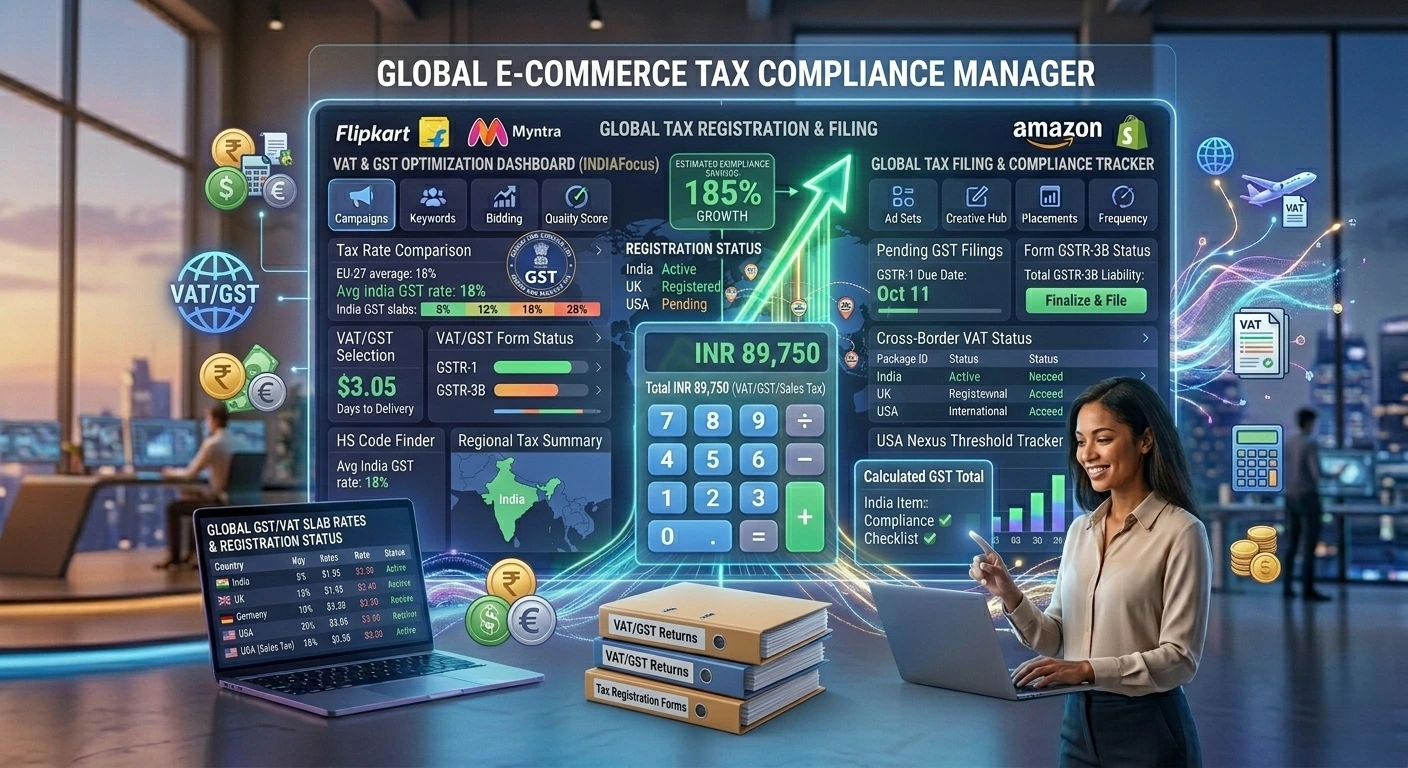
    A VAT guide for online sellers is essential because different countries have unique rules for registration, invoicing, and reporting. For example, the European Union (EU) requires all sellers exceeding certain sales thresholds to register for VAT in each member country where goods are sold. Similarly, digital products have distinct VAT regulations under the EU’s digital services tax rules.

    Key VAT Compliance Steps:

    1. Register for VAT: Determine in which countries your business crosses VAT thresholds and register accordingly.
    2. Collect VAT at the Point of Sale: Ensure your checkout process calculates VAT based on customer location.
    3. Issue VAT-Compliant Invoices: Invoices must include your VAT number, rate applied, and total VAT charged.
    4. File VAT Returns: Regularly submit returns to the appropriate tax authorities and remit collected VAT.
    5. Maintain Accurate Records: Keep sales, invoices, and refunds organized for audits and reconciliation.

    By following these steps, you achieve proper online seller VAT compliance while avoiding costly errors.

    Cross-Border Tax Considerations

    A cross-border tax guide highlights additional complexities for sellers shipping internationally. Besides VAT, there may be import duties, customs fees, and local sales taxes. Many marketplaces, like Amazon and eBay, provide automated tax calculation tools, but sellers are ultimately responsible for ensuring compliance.

    When selling across borders, consider:

    • Local VAT rates: Rates can vary significantly between countries, even within regions like the EU.
    • Digital vs physical goods: Different VAT rules apply depending on whether your products are tangible or digital.
    • Marketplace responsibilities: Some platforms act as tax collectors for sellers, but verification is crucial.
    • Thresholds and registration: Understanding when and where to register is essential for maintaining legal compliance.

    These factors make online seller VAT compliance more complex but manageable with proper planning and tools.

    Tools and Automation for VAT Compliance

    Automation simplifies compliance and reduces errors. Many sellers use software to manage VAT across multiple countries, integrate with e-commerce platforms, and generate reports for tax authorities. Features to look for include:

    • Multi-country VAT calculation and registration support
    • Automated invoice generation compliant with local rules
    • Filing reminders and submission capabilities
    • Integration with marketplaces and payment gateways

    Using such tools ensures consistent online seller VAT compliance and reduces the administrative burden of managing international taxes manually.

    Common Mistakes to Avoid

    1. Ignoring small sales: Even low-value international sales can trigger VAT obligations.
    2. Using outdated rates: VAT rates change regularly; ensure your systems are updated.
    3. Incomplete recordkeeping: Accurate documentation is critical for audits and reclaiming VAT refunds.
    4. Relying solely on marketplaces: While platforms help, legal responsibility remains with the seller.

    By avoiding these mistakes, sellers can maintain smooth operations and avoid fines while staying compliant.

    Final Thoughts

    Achieving online seller VAT compliance is essential for sustainable global e-commerce. A clear understanding of VAT rules, supported by a VAT guide for online sellers and a practical cross-border tax guide, ensures that you collect, remit, and report taxes accurately. Compliance protects your business, improves customer trust, and allows you to scale internationally without legal complications.

    By implementing robust systems, staying informed about regulatory changes, and using automation tools, online sellers can confidently navigate the complexities of VAT and cross-border taxation. Maintaining online seller VAT compliance is not just a legal requirement—it’s a foundation for building a reliable and scalable e-commerce business.
  • How to Accurately Calculate Shipping Charges for Your Business

    How to Accurately Calculate Shipping Charges for Your Business

    Calculating shipping costs is essential for any business that ships products to customers. If you want to maintain profitability while keeping customers happy, it’s critical to calculate shipping charges accurately. Underestimating shipping can eat into your margins, while overcharging may drive customers away. In this guide, we’ll explain how to determine true shipping costs while considering factors like fulfillment expenses and cost of goods sold (COGS).

    Why Accurately Calculating Shipping Charges Matters

    Shipping is one of the most overlooked expenses in e-commerce and retail. Many businesses focus only on product price, ignoring that shipping costs significantly impact profitability. To run a sustainable operation, you must understand the full cost of getting a product into your customer’s hands.

    Accurate calculations help you:

    • Maintain healthy profit margins
    • Avoid surprise losses from underestimated shipping fees
    • Offer competitive pricing to customers
    • Optimize packaging and logistics

    By learning how to calculate shipping charges, you ensure that every order contributes positively to your bottom line.

    Key Components of Shipping Costs

    1. Carrier Rates and Fees

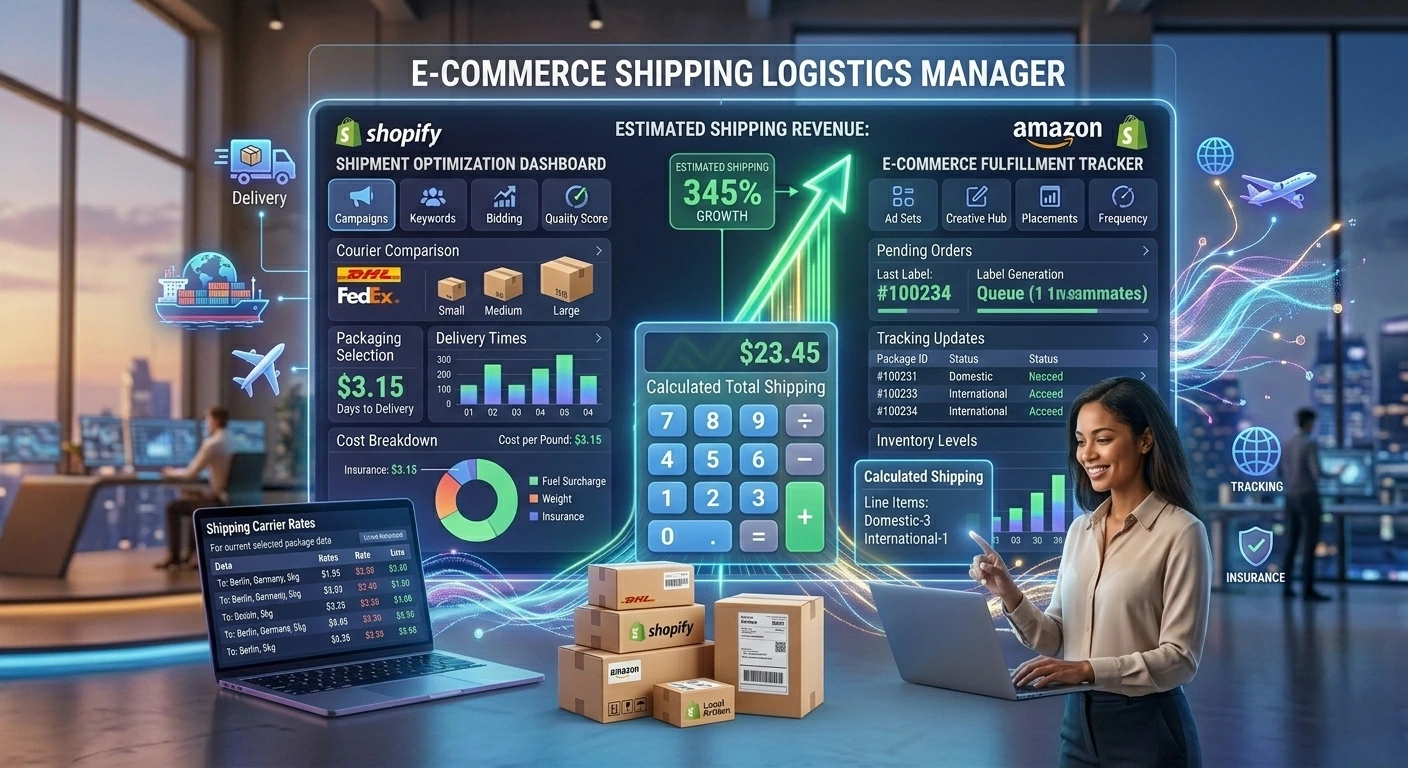
    The first step in calculating shipping charges is understanding your carrier’s rates. Major carriers like USPS, UPS, FedEx, and DHL have different pricing based on:

    • Package weight
    • Dimensions (dimensional weight pricing)
    • Delivery distance
    • Service type (standard, express, overnight)

    By comparing rates and understanding the fee structure, you can select the most cost-effective shipping option.

    2. Packaging Costs

    Packaging isn’t just about presentation—it’s also a cost that affects shipping. Include expenses like boxes, tape, bubble wrap, and labels. These costs are part of your fulfillment expenses and must be added to your calculation to calculate shipping charges correctly.

    3. Fulfillment Expenses

    Fulfillment expenses go beyond packaging. They include labor for picking, packing, and handling orders, as well as warehousing costs. For businesses using third-party logistics (3PL), monthly fees, and per-order handling charges are part of fulfillment expenses. Incorporating these costs ensures that your shipping prices cover all operational aspects.

    4. Insurance and Tracking

    If your products are valuable or fragile, insurance and tracking are important. These costs vary by carrier and package value. While sometimes overlooked, they are essential to include when you calculate shipping charges to prevent unexpected losses.

    5. Cost of Goods Sold (COGS) Integration

    Your shipping costs should be considered alongside your cost of goods sold (COGS). COGS includes the production cost, materials, and manufacturing. Understanding the relationship between COGS and shipping ensures your overall margins remain profitable. For example, a low-margin product might require subsidized or minimal shipping charges, whereas a high-margin item can absorb higher shipping fees.

    Step-by-Step Process to Calculate Shipping Charges

    1. List all expenses: Include packaging, carrier fees, fulfillment expenses, insurance, and any additional handling costs.
    2. Determine per-item costs: Divide total shipping and fulfillment costs by the number of items shipped.
    3. Include COGS: Add the cost of goods sold to understand total per-unit expense.
    4. Decide on pricing strategy: Choose between flat-rate, tiered, weight-based, or free shipping strategies.
    5. Test and adjust: Monitor profitability and customer feedback, then refine your shipping charges as needed.

    By following this process, you ensure that your business can calculate shipping charges that cover all expenses while remaining competitive.

    Tips for Optimizing Shipping Costs

    • Negotiate carrier contracts for better rates if you ship large volumes
    • Use dimensional weight calculators to avoid overpaying on oversized packages
    • Consolidate orders to reduce per-unit shipping costs
    • Automate fulfillment processes to lower labor expenses
    • Monitor COGS and adjust shipping fees in line with changes in production costs

    Implementing these strategies will help you control your fulfillment expenses while ensuring shipping charges are accurate and fair.

    Conclusion

    Learning to calculate shipping charges properly is crucial for maintaining profitability in any shipping-dependent business. By factoring in carrier fees, packaging, fulfillment expenses, insurance, and COGS, you can price shipping effectively and avoid eroding your margins. Accurate shipping cost calculations not only protect your bottom line but also enhance customer satisfaction by providing transparent and reasonable shipping fees.

    Mastering this process allows your business to scale sustainably, improve operational efficiency, and compete effectively in a crowded e-commerce market. By keeping fulfillment expenses under control and aligning shipping charges with total costs, you ensure every order contributes positively to your business growth.

  • Dropshipping vs Traditional Inventory: Which Model Wins in 2026?

    Dropshipping vs Traditional Inventory: Which Model Wins in 2026?

    The e-commerce landscape continues to evolve rapidly, and entrepreneurs launching online stores in 2026 face a critical decision: dropshipping vs traditional inventory. Both models offer unique advantages, but choosing the right one can significantly impact profitability, scalability, and long-term brand value.

    In this guide, we’ll break down dropshipping vs traditional inventory to help you determine which approach aligns best with your business goals.

    Understanding the Two Models

    Before diving into comparisons, let’s define how each system works.

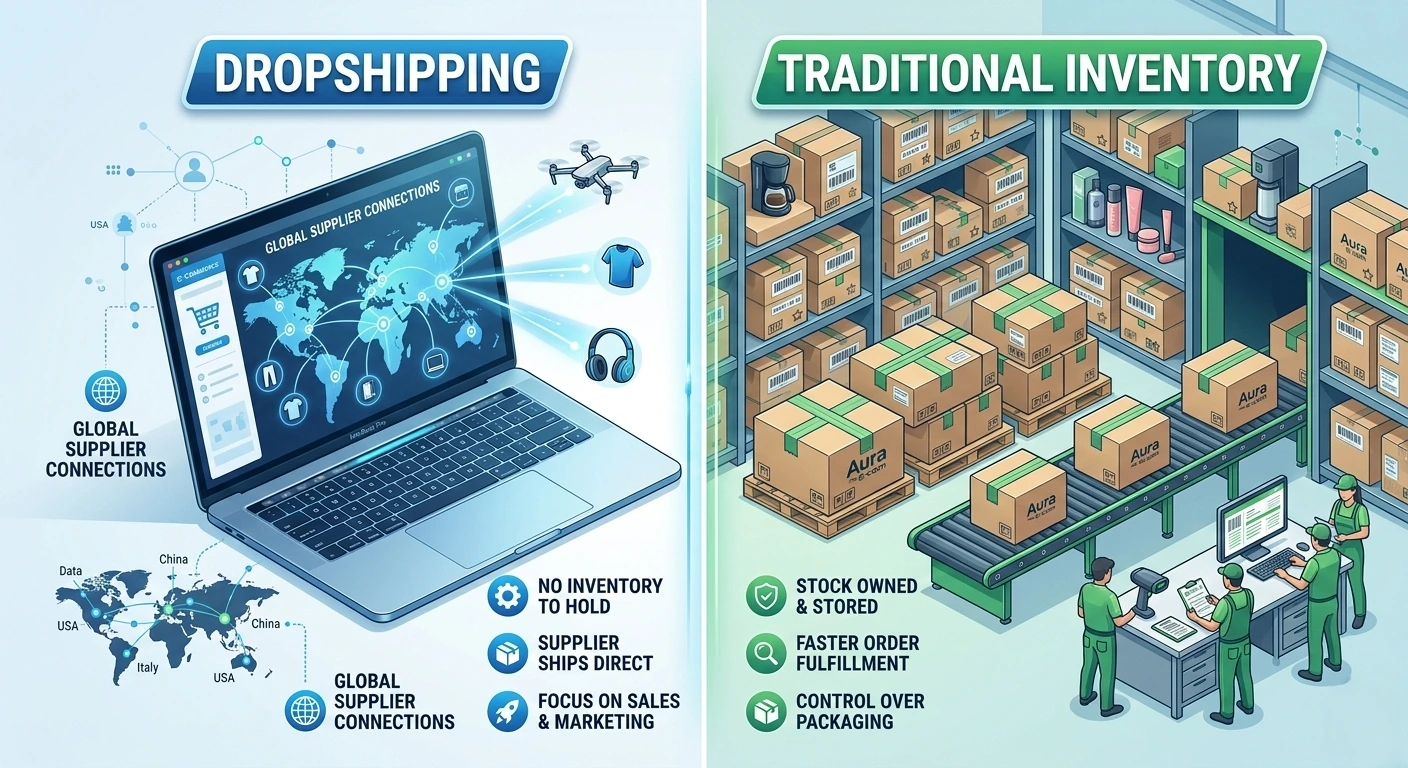
    Dropshipping is a fulfillment method where you sell products without holding stock. When a customer places an order, the product is shipped directly from third-party dropshipping suppliers to the buyer. You never physically handle inventory.

    Traditional inventory, on the other hand, requires purchasing stock upfront, storing it (either at home, in a warehouse, or through a 3PL), and shipping it yourself or via a fulfillment partner.

    When evaluating dropshipping vs traditional inventory, the main difference lies in who owns and manages the stock.

    Startup Costs and Financial Risk

    One of the biggest considerations in dropshipping vs traditional inventory is initial investment.

    Dropshipping has a very low barrier to entry. You don’t need to buy products in bulk, which reduces upfront costs and financial risk. This makes it attractive for new entrepreneurs testing product ideas.

    Traditional inventory requires purchasing products before selling them. While bulk buying often lowers per-unit cost, it increases financial exposure if products don’t sell.

    In 2026, as competition intensifies across ecommerce business models, cash flow management is more important than ever. Dropshipping allows you to preserve capital, while traditional inventory demands stronger financial planning.

    Profit Margins and Pricing Control

    Margins often determine the winner in the dropshipping vs traditional inventory debate.

    Dropshipping typically offers lower profit margins because suppliers handle fulfillment and charge wholesale prices that leave limited room for markup. You also compete with many sellers offering the same products.

    Traditional inventory usually provides higher margins. Buying in bulk reduces cost per unit, giving you more flexibility in pricing and promotions.

    When comparing dropshipping vs traditional inventory, brands focused on long-term profitability often lean toward holding inventory for better cost control.

    Branding and Customer Experience

    Customer experience is another crucial factor in dropshipping vs traditional inventory.

    With dropshipping, packaging and shipping times depend on your suppliers. You have limited control over branding elements like custom inserts or personalized packaging. Shipping delays can also affect customer satisfaction.

    Traditional inventory allows full control over packaging, presentation, and delivery speed. This is especially important for brands aiming to build loyalty and repeat purchases.

    In the broader conversation about ecommerce business models, brand differentiation is becoming essential in 2026. Traditional inventory supports stronger brand identity compared to dropshipping.

    Supply Chain Reliability

    Supply chain stability has become increasingly important over the past few years. When analyzing dropshipping vs traditional inventory, reliability can’t be ignored.

    Dropshipping depends heavily on external suppliers. If your dropshipping suppliers run out of stock, raise prices, or face shipping disruptions, your business is directly affected.

    With traditional inventory, you manage stock levels yourself. While this requires forecasting skills, it reduces dependency on third parties.

    In the dropshipping vs traditional inventory comparison, risk tolerance plays a major role. Entrepreneurs who value control may prefer owning their stock.

    Scalability and Automation

    Automation tools have improved dramatically, making both models more scalable than ever.

    Dropshipping is easier to automate. Product imports, order routing, and tracking updates can all be streamlined. This makes scaling fast and efficient, especially for solo founders.

    Traditional inventory scaling requires warehouse space, fulfillment processes, and logistics management. However, partnering with a third-party logistics provider can make it nearly as automated as dropshipping.

    When discussing dropshipping vs traditional inventory, scalability is no longer about possibility, but about complexity and operational involvement.

    Product Testing and Market Validation

    Product testing is where dropshipping truly shines.

    Because there’s no need for upfront inventory purchases, you can test multiple products quickly and with minimal financial risk. This flexibility gives dropshipping a strong advantage for trend-based or seasonal items.

    Traditional inventory makes testing more expensive, since you must commit to minimum order quantities.

    In the dropshipping vs traditional inventory debate, entrepreneurs focused on rapid experimentation often choose dropshipping first, then transition to inventory once a product proves successful.

    Long-Term Business Value

    If your goal is to build a sellable brand or long-term asset, dropshipping vs traditional inventory becomes a strategic decision.

    Investors and buyers typically value businesses with controlled supply chains, strong branding, and stable margins. Traditional inventory businesses often appear more defensible and scalable in the long run.

    Dropshipping businesses can generate cash flow quickly, but they may face challenges with differentiation and supplier dependency.

    Which Model Wins in 2026?

    So, who wins in dropshipping vs traditional inventory?

    The answer depends on your goals.

    Choose dropshipping if:

    You want low startup costs
    You’re testing product ideas
    You prefer minimal operational complexity
    You’re comfortable relying on dropshipping suppliers

    Choose traditional inventory if:

    You want higher profit margins
    Branding and customer experience are priorities
    You seek stronger supply chain control
    You aim to build a long-term, sellable asset

    Ultimately, the dropshipping vs traditional inventory decision isn’t about which model is universally better. It’s about aligning your fulfillment strategy with your growth vision, financial capacity, and risk tolerance.

    In 2026, the most successful entrepreneurs understand that different ecommerce business models serve different purposes. Some even start with dropshipping and transition to traditional inventory once demand is validated.

    The real winner in dropshipping vs traditional inventory is the model that best supports your long-term strategy.

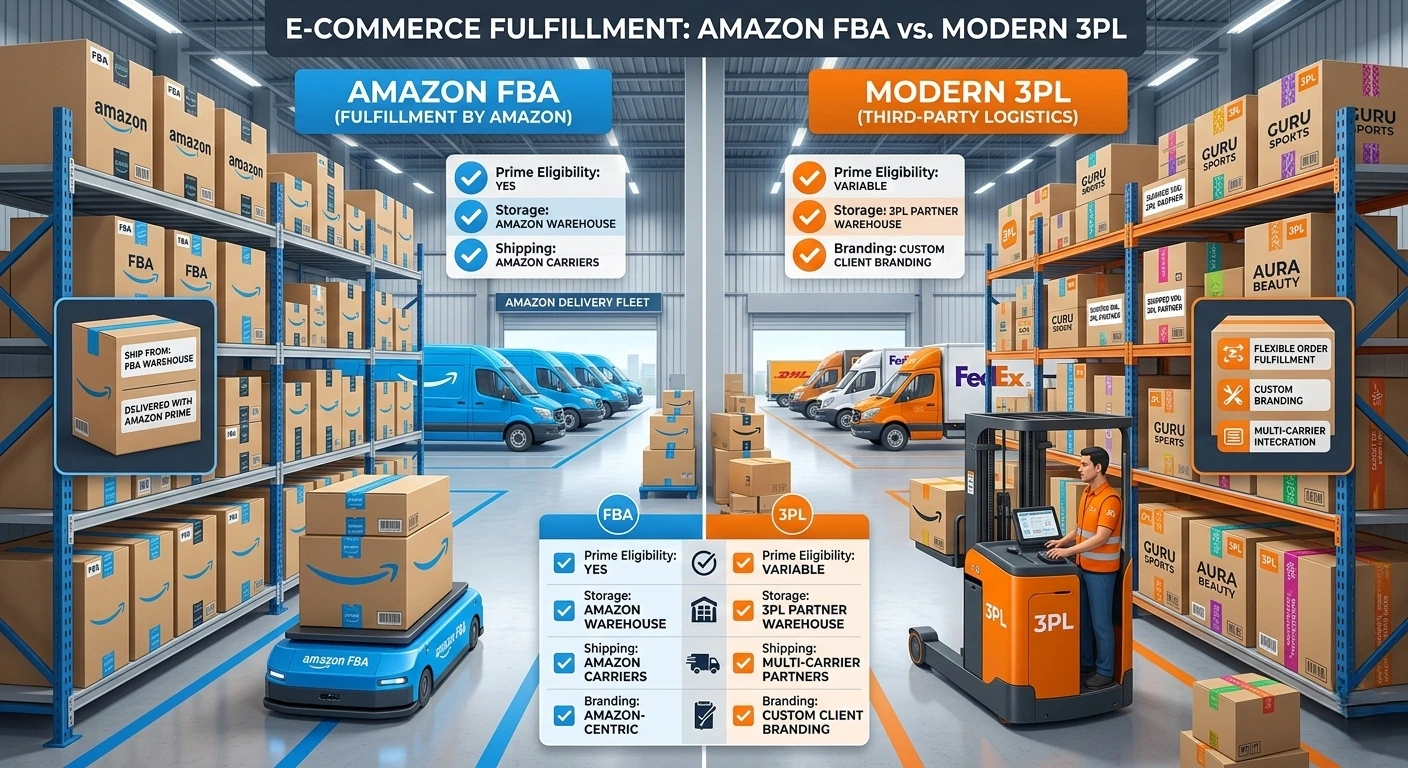
  • Amazon FBA vs 3PL: Which Fulfillment Strategy Truly Powers Growing Brands?

    Amazon FBA vs 3PL: Which Fulfillment Strategy Truly Powers Growing Brands?

    As ecommerce brands scale, fulfillment becomes either a growth engine or a bottleneck. One of the most debated topics among modern sellers is Amazon FBA vs 3PL. Both models promise streamlined logistics, faster shipping, and operational efficiency, but the right choice depends on your sales channels, margins, and long-term strategy.

    In this guide, we’ll break down Amazon FBA vs 3PL in detail so you can confidently choose the best fulfillment model for your growing brand.

    What Is Amazon FBA?

    Amazon offers Fulfillment by Amazon (FBA), a service where sellers store products in Amazon’s warehouses, and Amazon handles picking, packing, shipping, returns, and customer service.

    With FBA, your products qualify for Prime shipping, which can significantly boost conversion rates. For brands selling primarily on Amazon, this is a major advantage.

    However, understanding FBA fees is critical. These include storage fees, fulfillment fees, long-term storage penalties, and seasonal surcharges. While FBA simplifies operations, margins can shrink quickly if inventory turnover slows down.

    Benefits of Amazon FBA

    Prime eligibility and fast shipping
    Access to Amazon’s massive customer base
    Hands-off logistics management
    Built-in customer service and returns handling

    Limitations of Amazon FBA

    Limited branding control
    Complex and rising FBA fees
    Storage limits and restock restrictions
    Multi-channel fulfillment can be costly

    When comparing Amazon FBA vs 3PL, FBA works best for brands heavily dependent on Amazon’s ecosystem.

    What Is a 3PL?

    A Third-Party Logistics (3PL) provider is an independent company that stores inventory and fulfills orders on your behalf. Unlike FBA, a 3PL supports multiple sales channels including your website, marketplaces, and retail distribution.

    Many ecommerce businesses using Shopify rely on a 3PL for Shopify integration to automate order routing and inventory syncing.

    A 3PL offers broader ecommerce fulfillment solutions, including custom packaging, kitting, subscription boxes, and B2B shipping.

    Benefits of Using a 3PL

    Multi-channel fulfillment flexibility
    Stronger branding and packaging customization
    Transparent pricing models
    Better control over inventory distribution

    Limitations of a 3PL

    No built-in marketplace traffic
    You manage customer service separately
    Shipping speeds depend on warehouse locations

    For brands expanding beyond Amazon, Amazon FBA vs 3PL becomes less about convenience and more about control and scalability.

    Cost Comparison: FBA Fees vs 3PL Pricing

    Cost is often the deciding factor in the Amazon FBA vs 3PL debate.

    FBA fees are standardized but can be unpredictable due to peak season surcharges and storage penalties. Long-term storage especially impacts slow-moving products.

    A 3PL typically charges for storage (per pallet, bin, or cubic foot), pick and pack fees, shipping labels, and sometimes onboarding costs. While it may appear more complex, many brands find 3PL pricing more transparent over time.

    If your catalog includes oversized, seasonal, or bundled products, comparing Amazon FBA vs 3PL carefully can reveal major savings opportunities.

    Branding and Customer Experience

    Brand control is another critical factor in Amazon FBA vs 3PL.

    With FBA, orders arrive in Amazon-branded packaging. Customer data is limited, restricting your ability to build direct relationships.

    With a 3PL, you control packaging, inserts, promotional materials, and unboxing experiences. This is essential for DTC brands focused on loyalty and repeat purchases.

    For companies investing in premium ecommerce fulfillment solutions, a 3PL often provides the flexibility required to stand out in competitive markets.

    Multi-Channel Growth and Scalability

    If you plan to sell exclusively on Amazon, FBA may be sufficient. But most modern brands diversify across marketplaces, retail, and direct-to-consumer websites.

    In that scenario, Amazon FBA vs 3PL becomes a scalability question.

    A 3PL for Shopify stores enables seamless fulfillment across your website, Amazon, Walmart, and even wholesale accounts. You avoid splitting inventory across different systems, reducing stockouts and forecasting errors.

    Many growing brands actually adopt a hybrid model, using FBA for Amazon orders and a 3PL for all other channels. When evaluating Amazon FBA vs 3PL, hybrid logistics can offer the best of both worlds.

    Inventory Management and Flexibility

    Inventory restrictions are increasingly common within Amazon’s warehouses. Restock limits can disrupt sales momentum during peak seasons.

    A 3PL typically offers greater flexibility in inbound shipments and storage capacity. For brands launching new SKUs or running flash promotions, that flexibility can be invaluable.

    When analyzing Amazon FBA vs 3PL, consider how much operational control you want over forecasting and replenishment.

    Which Is Better for Growing Brands?

    There is no universal winner in the Amazon FBA vs 3PL comparison. The right solution depends on your growth stage and channel strategy.

    Choose FBA if:

    You sell primarily on Amazon
    Prime eligibility drives most of your revenue
    You prefer hands-off logistics

    Choose a 3PL if:

    You sell across multiple channels
    Branding and customer experience matter deeply
    You want predictable long-term fulfillment costs
    You need flexible ecommerce fulfillment solutions

    For many scaling brands, the smartest move isn’t Amazon FBA vs 3PL as an either-or decision. Instead, it’s about building a fulfillment strategy that evolves with your business.

    By carefully evaluating FBA fees, operational control, and multi-channel expansion plans, you can select the fulfillment infrastructure that supports sustainable, profitable growth.

  • Retargeting Ads: Turning Window Shoppers into Buyers

    Retargeting Ads: Turning Window Shoppers into Buyers

    In the fast-paced world of online shopping, many potential customers visit your website but leave without making a purchase. These “window shoppers” represent lost revenue, but with the right strategy, they can be converted into loyal buyers. eCommerce retargeting is a powerful tool that helps brands re-engage these visitors, keeping their products top of mind and increasing the likelihood of a sale. By incorporating retargeting into your online advertising strategies, businesses can effectively improve customer conversion rates and maximize return on investment.

    What is eCommerce Retargeting?

    eCommerce retargeting is a form of online advertising that targets users who have previously visited your website or interacted with your brand but did not complete a purchase. These ads follow users across platforms, displaying relevant products they viewed or related items that may appeal to them. By reminding potential customers of products they showed interest in, businesses can gently nudge them toward completing their purchase.

    Unlike traditional ads that target broad audiences, retargeting focuses on individuals who have already shown intent. This makes eCommerce retargeting highly efficient, as it reaches people already familiar with your brand and more likely to convert.

    Benefits of eCommerce Retargeting

    One of the primary advantages of eCommerce retargeting is its ability to recover lost sales. Studies show that most online shoppers do not buy on their first visit. By serving targeted ads, businesses can re-engage these visitors and increase customer conversion rates.

    Retargeting also strengthens brand awareness. Even if a user does not click immediately, repeated exposure keeps your brand at the forefront of their mind. Over time, this familiarity can influence purchasing decisions and foster long-term loyalty.

    Furthermore, eCommerce retargeting offers measurable results. Platforms like Google Ads and Facebook Ads provide detailed analytics on impressions, clicks, and conversions, enabling marketers to refine campaigns and optimize ROI.

    Types of eCommerce Retargeting

    There are several approaches to eCommerce retargeting. Dynamic product ads show specific items a user viewed, creating a personalized experience that encourages conversion. Static retargeting ads display broader promotional messages, such as discounts or seasonal offers, to entice return visits.

    Email retargeting is another effective method. By sending personalized emails to users who abandoned their shopping carts, brands can remind them of products left behind and often incentivize purchases with discounts or free shipping offers.

    By integrating multiple approaches, businesses can create a comprehensive online advertising strategy that captures user attention across different touchpoints.

    Strategies to Maximize Customer Conversion

    To get the most out of eCommerce retargeting, it’s important to focus on precision and personalization. Segmenting audiences based on behavior, such as cart abandoners or frequent visitors, allows marketers to deliver relevant ads that resonate with each group. Personalized messaging, highlighting the products users interacted with or suggesting complementary items, significantly boosts customer conversion rates.

    Frequency control is also crucial. Bombarding users with ads can lead to fatigue or negative perceptions of your brand. Carefully managing how often ads are shown ensures engagement remains positive without overwhelming potential customers.

    In addition, aligning retargeting ads with your overall marketing funnel enhances effectiveness. Combining retargeting with promotional campaigns, seasonal offers, and content marketing creates a seamless experience that guides users from initial interest to final purchase.

    Tracking and Measuring Success

    Measuring the performance of eCommerce retargeting campaigns is vital for long-term success. Key metrics include click-through rates, conversion rates, cost per acquisition, and return on ad spend. Analyzing these metrics allows businesses to adjust targeting, messaging, and budgets to maximize results.

    A/B testing different ad creatives, messaging, and call-to-action buttons can further refine campaigns. Continuous optimization ensures that your online advertising strategies remain efficient and effective in converting window shoppers into buyers.

    Common Mistakes to Avoid

    While eCommerce retargeting is highly effective, mistakes can reduce its impact. Common errors include targeting too broad an audience, using generic messaging, and neglecting mobile optimization. Ads should be relevant, visually appealing, and optimized for all devices to ensure a seamless user experience.

    Another mistake is failing to exclude converted users. Showing ads to customers who have already purchased can waste budget and annoy buyers. Using proper audience segmentation and frequency capping can prevent these issues and improve campaign efficiency.

    Conclusion

    eCommerce retargeting is a critical component of modern online advertising strategies, offering businesses the chance to re-engage potential customers and drive customer conversion. By leveraging personalized, well-timed ads across multiple channels, companies can turn window shoppers into loyal buyers, recover lost revenue, and strengthen brand recognition.

    When executed thoughtfully, eCommerce retargeting maximizes ROI while enhancing the overall customer experience. Brands that adopt these strategies not only boost sales but also build lasting relationships with their audience, making retargeting an indispensable tool in the competitive world of digital commerce.