Tag: online shopping

  • Google Ads vs Facebook Ads for Ecommerce

    Google Ads vs Facebook Ads for Ecommerce

    For ecommerce businesses, paid advertising is one of the fastest ways to drive traffic, generate sales, and scale revenue. Two of the most powerful platforms dominate this space: Google Ads and Facebook Ads. While both are highly effective, they work in very different ways. Understanding the strengths, differences, and best use cases of Google Ads vs Facebook Ads for ecommerce can help you choose the right platform or combine both for maximum results.

    What Is Google Ads for Ecommerce?

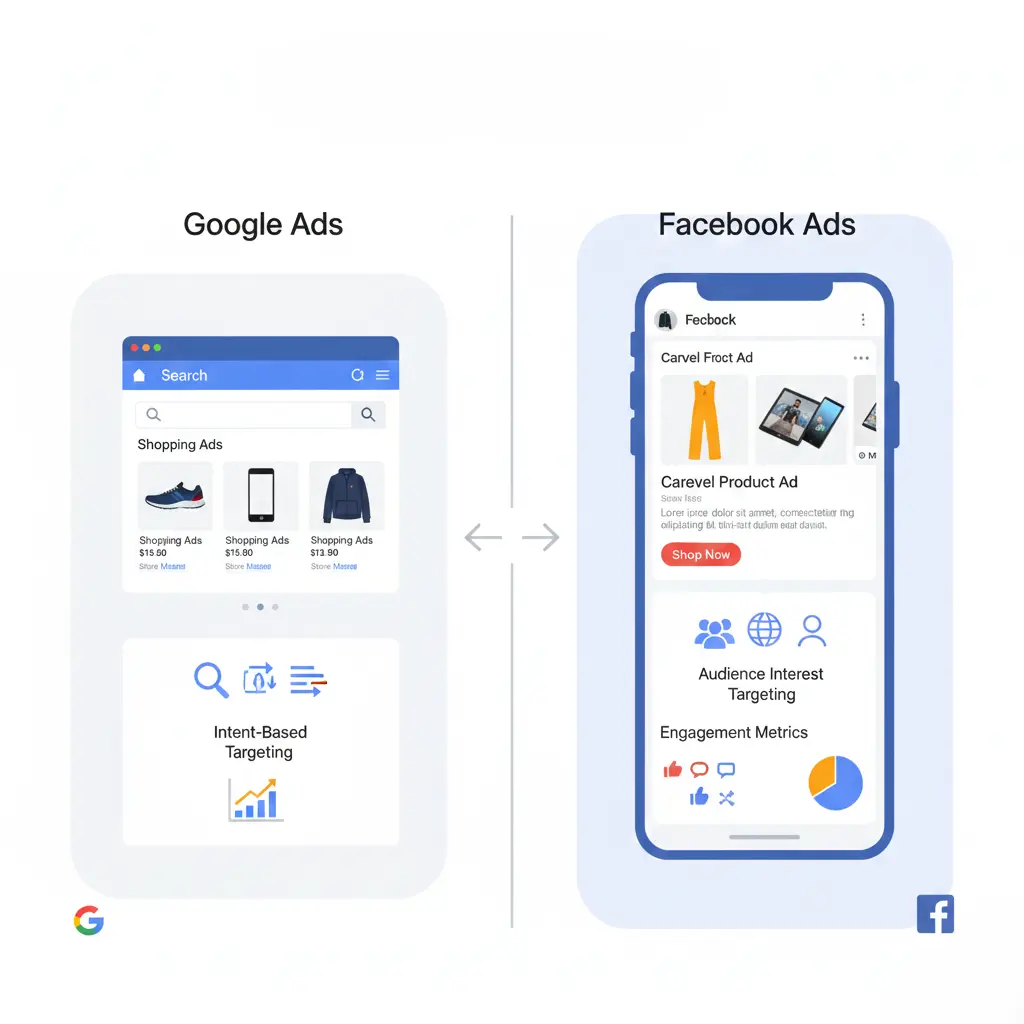
    Google Ads focuses on intent-based advertising. It allows ecommerce brands to show ads to users who are actively searching for products or solutions.

    Key Google Ads Formats for Ecommerce

    Search Ads

    These ads appear at the top of Google search results when users search for product-related keywords. They are highly effective for capturing high-intent shoppers.

    Shopping Ads

    Google Shopping Ads display product images, prices, brand names, and reviews directly in search results, making them ideal for ecommerce conversions.

    Display and YouTube Ads

    These ads help with brand awareness and retargeting by reaching users across websites and video platforms.

    What Are Facebook Ads for Ecommerce?

    Facebook Ads focus on discovery-based advertising. They help ecommerce brands reach users based on interests, behaviors, and demographics, even if they are not actively searching for a product.

    Key Facebook Ad Formats for Ecommerce

    Image and Video Ads

    Visually engaging ads that appear in Facebook and Instagram feeds, Stories, and Reels.

    Carousel Ads

    Allow brands to showcase multiple products or features in a single ad, ideal for ecommerce catalogs.

    Dynamic Product Ads

    Automatically show relevant products to users who have visited your website or viewed specific items.

    Google Ads vs Facebook Ads for Ecommerce: Key Differences

    Understanding how these platforms differ is essential for making the right advertising decision.

    User Intent vs User Interest

    Google Ads targets users with high purchase intent. When someone searches for “buy running shoes online,” they are already close to making a purchase. Facebook Ads, on the other hand, target users based on interests and behavior, helping brands create demand rather than capture it.

    Cost and Competition

    Google Ads often have higher cost-per-click, especially in competitive ecommerce niches. However, the traffic tends to convert better due to strong intent. Facebook Ads usually offer lower costs and wider reach but may require more nurturing before conversion.

    Ad Creatives and Content Style

    Facebook Ads rely heavily on strong visuals, storytelling, and emotional appeal. Google Ads, especially Search and Shopping campaigns, focus more on relevance, keywords, pricing, and product details.

    Which Platform Is Better for Ecommerce?

    There is no single winner in the Google Ads vs Facebook Ads for ecommerce debate—it depends on your business goals.

    When Google Ads Is the Better Choice

    Google Ads is ideal if you want to:

    • Capture ready-to-buy customers
    • Promote specific products with clear demand
    • Drive fast and measurable sales
    • Compete on product quality, price, and availability

    When Facebook Ads Is the Better Choice

    Facebook Ads works best if you want to:

    • Build brand awareness
    • Launch new or innovative products
    • Retarget website visitors
    • Create demand through visual storytelling

    Why Ecommerce Brands Should Use Both

    The most successful ecommerce brands combine Google Ads and Facebook Ads into a single strategy.

    Full-Funnel Ecommerce Marketing

    Facebook Ads are excellent for top-of-funnel awareness and engagement, while Google Ads are powerful for bottom-of-funnel conversions. Together, they create a complete customer journey from discovery to purchase.

    Better Retargeting and Scaling

    You can use Facebook Ads to retarget users who engaged with your brand and Google Ads to capture them when they search again, increasing conversion rates and return on ad spend.

    Conclusion

    When comparing Google Ads vs Facebook Ads for ecommerce, the real advantage comes from understanding how each platform works and using them strategically. Google Ads excels at capturing high-intent shoppers, while Facebook Ads shines at discovery, branding, and retargeting. By aligning each platform with the right goals, ecommerce businesses can drive consistent traffic, boost conversions, and scale profitably in a competitive digital marketplace.


  • eCommerce Automation Tools You Should Be Using

    eCommerce Automation Tools You Should Be Using

    In today’s competitive digital marketplace, eCommerce automation tools are no longer optional — they are essential. Automation helps online businesses save time, reduce errors, improve customer experience, and scale faster. From marketing to inventory management, the right tools can transform how your store operates. This guide explores the eCommerce automation tools you should be using to stay ahead.

    What Is eCommerce Automation?

    eCommerce automation refers to using software and technology to handle repetitive tasks without manual effort. These tasks include order processing, email marketing, inventory updates, customer support, and analytics reporting.

    Benefits of eCommerce Automation

    Time Efficiency – Automate repetitive tasks and focus on growth
    Improved Accuracy – Reduce human errors in orders and inventory
    Better Customer Experience – Faster responses and personalized communication
    Scalability – Handle higher order volumes without increasing workload

    Marketing Automation Tools for eCommerce

    Marketing automation plays a major role in driving traffic and conversions.

    Email Marketing Automation

    Email automation tools allow you to send personalized messages based on customer behavior such as abandoned carts, product views, and purchase history.

    Key Features to Look For
    Automated welcome emails
    Abandoned cart recovery
    Post-purchase follow-ups
    Customer segmentation

    These tools help increase conversion rates and customer retention without manual effort.

    Social Media Automation

    Social media automation tools schedule posts, manage multiple platforms, and track engagement from a single dashboard.

    Why It Matters
    Consistent posting improves brand visibility
    Automated scheduling saves time
    Analytics help refine social media strategy

    Sales and Order Management Automation

    Efficient order processing is critical for any successful online store.

    Order Processing Automation

    Order automation tools automatically process orders, send confirmations, generate invoices, and update order statuses.

    Key Advantages
    Faster order fulfillment
    Reduced processing errors
    Improved customer satisfaction

    Payment and Billing Automation

    Automated billing tools manage invoices, subscriptions, refunds, and payment reminders. This is especially important for subscription-based eCommerce businesses.

    Inventory and Supply Chain Automation Tools

    Managing inventory manually can lead to stockouts or overstocking.

    Inventory Management Automation

    Inventory automation tools track stock levels in real time, update quantities across channels, and send low-stock alerts.

    Why Inventory Automation Is Essential
    Prevents overselling
    Improves cash flow
    Supports multi-channel selling

    Supplier and Fulfillment Automation

    Automation tools can sync with suppliers and fulfillment centers to ensure faster shipping and accurate stock updates.

    Customer Support Automation Tools

    Customer service directly impacts brand trust and loyalty.

    Chatbots and Live Chat Automation

    AI-powered chatbots handle common customer queries 24/7, such as order status, returns, and shipping details.

    Benefits of Customer Support Automation
    Instant responses
    Reduced support workload
    Improved customer satisfaction

    Helpdesk Automation

    Helpdesk tools automate ticket assignment, follow-ups, and issue tracking, ensuring no customer request goes unanswered.

    Analytics and Reporting Automation

    Data-driven decisions are crucial for eCommerce success.

    eCommerce Analytics Automation

    Analytics automation tools collect and visualize data from sales, traffic, marketing, and customer behavior.

    Key Metrics to Track
    Conversion rates
    Customer lifetime value
    Cart abandonment rate
    Revenue by channel

    Automated reports save time and provide actionable insights.

    Best Practices for Using eCommerce Automation Tools

    Start by automating repetitive, time-consuming tasks. Choose tools that integrate seamlessly with your eCommerce platform and other software. Avoid over-automation that removes the human touch from customer interactions.

    Focus on Smart Automation

    The goal is not to replace people, but to enhance productivity and consistency while improving the customer journey.

    Final Thoughts

    Using the right eCommerce automation tools can dramatically improve efficiency, accuracy, and scalability. From marketing automation and inventory management to customer support and analytics, automation empowers businesses to grow without added complexity. In a fast-moving eCommerce landscape, automation is the key to staying competitive and profitable.

  • How Blogging Helps Ecommerce Sales

    How Blogging Helps Ecommerce Sales

    Introduction to Ecommerce Blogging

    Blogging for ecommerce is one of the most effective long-term strategies to increase visibility, attract customers, and drive consistent sales. A well-planned blog does more than share information—it educates buyers, builds trust, and guides users toward purchasing decisions. When combined with SEO-optimized content, blogging becomes a powerful sales engine for ecommerce businesses.

    Improves Search Engine Visibility

    One of the biggest ways blogging helps ecommerce sales is through search engine optimization (SEO). Blogs allow ecommerce websites to target multiple high-intent keywords, long-tail search queries, and customer pain points that product pages alone cannot cover.

    Targets Informational Keywords

    Many shoppers begin their journey with questions rather than product searches. Blogging helps you rank for keywords like:

    • how-to guides
    • product comparisons
    • buying guides
    • problem-solving queries

    By answering these questions, your ecommerce store attracts potential customers early in the buying funnel.

    Increases Organic Traffic

    More high-quality blog content means more indexed pages on search engines. This increases organic traffic, bringing in users who are actively researching products related to what you sell.

    Builds Trust and Brand Authority

    Trust is essential in ecommerce. Customers are more likely to buy from brands they see as credible and knowledgeable.

    Positions Your Brand as an Expert

    Publishing helpful, accurate, and detailed blog posts positions your brand as an industry authority. When customers trust your expertise, they trust your products too.

    Supports Google E-E-A-T

    Blogging strengthens Experience, Expertise, Authoritativeness, and Trustworthiness (E-E-A-T) by:

    • Sharing real-world experience
    • Providing expert insights
    • Publishing consistent, valuable content
    • Demonstrating transparency and reliability

    Educates Customers and Reduces Buying Hesitation

    Many customers hesitate because they lack information. Blogs educate them and remove doubts.

    Explains Product Benefits Clearly

    Blog posts can explain:

    • How products work
    • Who they are best for
    • What problems they solve

    This education helps customers feel confident in their purchase decisions.

    Reduces Returns and Refunds

    When customers understand what they’re buying, expectations are clearer. This leads to fewer returns, improving overall profitability.

    Supports Product Pages and Conversions

    Blogs act as a bridge between traffic and sales.

    Internal Linking to Product Pages

    Strategic internal links from blogs to product pages, category pages, and landing pages guide users naturally toward conversion.

    Improves Conversion Rates

    Customers who read blogs before buying are often more informed and motivated. This results in higher ecommerce conversion rates compared to cold traffic.

    Drives Long-Term, Cost-Effective Sales

    Unlike paid ads, blog content continues to generate traffic and sales long after publication.

    Evergreen Content Generates Ongoing Revenue

    Well-written evergreen blog posts can bring consistent traffic and sales for months or even years, making blogging a high-ROI strategy.

    Reduces Dependence on Paid Advertising

    With strong organic traffic from blogs, ecommerce businesses can lower ad spend while maintaining sales growth.

    Enhances Social Media and Email Marketing

    Blog content fuels other marketing channels.

    Content for Social Sharing

    Blogs provide valuable content to share on social media, driving referral traffic back to your ecommerce store.

    Boosts Email Marketing Performance

    Blogs can be repurposed into email newsletters, product education emails, and promotional campaigns, increasing engagement and sales.

    Conclusion

    Blogging helps ecommerce sales by improving SEO, building trust, educating customers, and driving long-term organic traffic. It supports every stage of the buyer journey—from awareness to conversion. For ecommerce brands looking for sustainable growth, consistent, keyword-optimized blogging is not optional—it is a powerful and proven sales strategy.

  • Social Commerce Trends Every Brand Should Watch

    Social Commerce Trends Every Brand Should Watch

    Social media is no longer just a discovery channel. It has evolved into a powerful sales engine, reshaping how consumers browse, engage, and purchase online. Social commerce trends are accelerating as platforms blend content, community, and checkout into a seamless experience. For brands looking to stay competitive, understanding these trends is essential to driving growth and relevance.

    The Rise of Social Commerce in Ecommerce

    Social commerce refers to selling products directly within social media platforms. Instead of redirecting users to an external website, platforms now enable product discovery, engagement, and purchase in one place. This shift reduces friction and aligns perfectly with changing consumer behavior, especially among Gen Z and Millennials.

    In-App Checkout Is Becoming the Norm

    One of the most impactful social commerce trends is the adoption of native checkout features. Platforms like Instagram, Facebook, TikTok, and Pinterest are making it easier for users to complete purchases without leaving the app.

    Why In-App Checkout Matters

    Fewer steps in the buying journey mean higher conversion rates. In-app checkout also allows brands to leverage impulse buying driven by content, trends, and social proof. As platforms continue refining payment and fulfillment options, in-app purchases will become a core revenue stream.

    Short-Form Video Is Driving Product Discovery

    Short-form video has become the backbone of social commerce. Platforms like TikTok, Instagram Reels, and YouTube Shorts are shaping how consumers discover products.

    Content Over Catalogs

    Instead of static product listings, brands are using storytelling, demos, and reviews to sell. Authentic, creator-led videos outperform polished ads, making short-form content one of the most effective social commerce marketing strategies.

    Influencer-Led Commerce Is Evolving

    Influencer marketing is shifting from awareness-driven campaigns to performance-focused social commerce.

    Creators as Sales Channels

    Creators are becoming storefronts. Affiliate links, shoppable posts, and creator-owned product lines allow influencers to drive measurable sales. Micro and nano influencers, in particular, are gaining traction due to higher trust and engagement within niche communities.

    Live Commerce Is Gaining Momentum

    Live shopping blends entertainment and ecommerce, allowing brands to showcase products in real time while interacting with audiences.

    Why Live Commerce Works

    Live commerce builds urgency and trust. Consumers can ask questions, see products in action, and make instant purchases. While live commerce is already mainstream in Asia, Western markets are rapidly adopting this social commerce trend.

    Community-Driven Shopping Experiences

    Social commerce thrives on community. Brands are increasingly leveraging private groups, comments, and direct messages to engage and convert customers.

    Conversations That Convert

    Features like Instagram DMs, WhatsApp, and Facebook Groups enable one-to-one selling at scale. Personalized recommendations and real-time responses create a more human shopping experience.

    AI-Powered Personalization in Social Commerce

    Artificial intelligence is playing a growing role in shaping personalized social commerce experiences.

    Smarter Product Recommendations

    AI analyzes user behavior, preferences, and engagement to deliver tailored product suggestions. This level of personalization improves relevance, engagement, and conversion rates across social platforms.

    User-Generated Content as a Trust Signal

    User-generated content (UGC) continues to be one of the most influential social commerce trends.

    Social Proof Drives Sales

    Reviews, unboxings, and customer testimonials shared on social media act as powerful trust signals. Brands that actively encourage and repurpose UGC see higher credibility and stronger conversions.

    Social Search and Discovery

    Consumers are increasingly using social platforms as search engines, especially for product recommendations.

    Optimizing for Social Search

    Hashtags, keywords in captions, and descriptive video content are becoming essential for visibility. Brands that optimize for social search will gain an edge in product discovery.

    Final Thoughts on Social Commerce Trends

    Social commerce is redefining the ecommerce landscape by merging content, community, and commerce. Brands that adapt to emerging social commerce trends—from in-app checkout and live shopping to influencer-led sales and AI personalization—will be better positioned to capture attention and drive conversions. As platforms continue to innovate, social commerce will move from an experimental channel to a core pillar of digital growth strategies.

  • Selling on Amazon vs D2C Ecommerce Websites

    Selling on Amazon vs D2C Ecommerce Websites

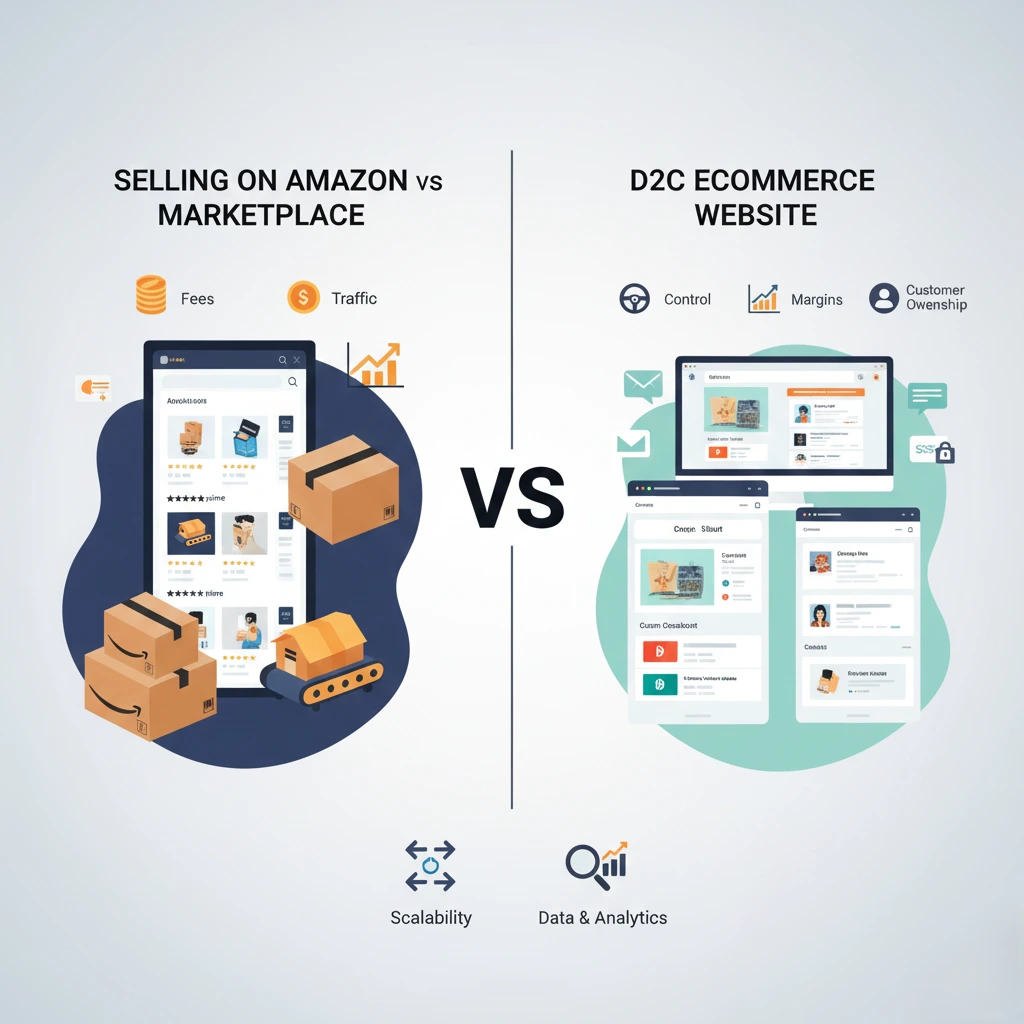
    For ecommerce brands, one of the most important strategic decisions is choosing where to sell. Selling on Amazon vs D2C ecommerce websites is not a matter of right or wrong, but of goals, margins, and long-term brand vision. While Amazon offers instant scale and trust, Direct-to-Consumer (D2C) websites provide control and customer ownership. Understanding the strengths and limitations of both models helps brands build a sustainable ecommerce strategy.

    Understanding the Amazon Marketplace Model

    Amazon is the world’s largest online marketplace, attracting millions of high-intent shoppers daily. For new and growing brands, selling on Amazon can feel like a fast track to revenue.

    Advantages of Selling on Amazon

    One of the biggest benefits of selling on Amazon is access to a massive customer base. Amazon handles trust, logistics, and payments, reducing operational friction. Programs like Fulfillment by Amazon (FBA) simplify storage, shipping, and returns, allowing brands to focus on sourcing and marketing.

    Amazon also excels at product discovery. Shoppers often search Amazon directly rather than Google, giving sellers exposure to buyers who are already ready to purchase.

    Challenges of Selling on Amazon

    Despite its reach, Amazon comes with trade-offs. High seller fees, intense competition, and limited brand differentiation can impact profitability. Brands also have minimal access to customer data, making it difficult to build long-term relationships. Algorithm changes or account suspensions can significantly affect sales overnight.

    Understanding the D2C Ecommerce Website Model

    A D2C ecommerce website allows brands to sell directly to consumers through their own online store, typically powered by platforms like Shopify or WooCommerce.

    Advantages of D2C Ecommerce Websites

    The biggest advantage of D2C is control. Brands own the customer relationship, data, and experience. This enables personalized marketing, email automation, loyalty programs, and better customer lifetime value.

    Margins are often higher on D2C ecommerce websites since there are no marketplace commissions. Brands can also fully control pricing, branding, storytelling, and user experience, which is essential for long-term brand building.

    Challenges of the D2C Model

    D2C ecommerce requires more effort upfront. Brands must invest in traffic acquisition through SEO, paid ads, social media, and content marketing. Logistics, returns, and customer support are also the brand’s responsibility unless outsourced. Trust takes time to build, especially for new or unknown brands.

    Amazon vs D2C Ecommerce Websites A Direct Comparison

    Customer Ownership

    When comparing Amazon vs D2C ecommerce, customer ownership is a key differentiator. Amazon controls customer data, while D2C brands can nurture direct relationships and remarket effectively.

    Cost and Margins

    Amazon’s fees reduce margins but lower operational complexity. D2C websites offer better margins but require ongoing marketing and technology investment.

    Brand Building

    Amazon prioritizes products over brands, making differentiation difficult. D2C ecommerce websites allow brands to tell their story, build community, and create emotional connections.

    Scalability and Risk

    Amazon enables rapid scaling but comes with platform dependency risks. D2C growth is slower but more stable and defensible over time.

    Which Model Is Right for Your Ecommerce Business

    The choice between selling on Amazon vs D2C ecommerce websites depends on business objectives. Brands focused on quick sales and operational simplicity may benefit from Amazon. Brands aiming for long-term growth, loyalty, and brand equity often prioritize D2C.

    Many successful ecommerce businesses adopt a hybrid strategy. Amazon is used for customer acquisition and volume, while D2C channels focus on retention, upselling, and brand building.

    Final Thoughts on Amazon vs D2C Ecommerce

    Selling on Amazon and running a D2C ecommerce website are not mutually exclusive. Amazon offers reach and convenience, while D2C provides control and sustainability. The most resilient ecommerce brands understand the strengths of both models and align them with their growth strategy. By balancing scale with ownership, businesses can build profitable and future-ready ecommerce operations.