Tag: Shopping

  • How to Reduce Shipping Costs for eCommerce in 2026

    How to Reduce Shipping Costs for eCommerce in 2026

    Shipping expenses are one of the largest operational costs for eCommerce businesses. As consumer expectations for fast, affordable delivery grow, learning how to reduce shipping costs has become crucial for profitability and competitiveness. With careful planning, logistics optimization, and smarter packaging practices, eCommerce businesses can streamline operations while maintaining customer satisfaction.

    Why Reducing Shipping Costs Matters

    High shipping expenses directly impact profit margins. Many eCommerce stores struggle to balance speed, reliability, and affordability. Finding ways to reduce shipping costs allows businesses to offer competitive pricing, free shipping options, and improved customer loyalty.

    Beyond cost savings, optimizing shipping processes improves order accuracy, delivery speed, and overall operational efficiency. It also positions brands to adapt to changing market conditions and the evolving eCommerce landscape in 2026.

    Leverage Logistics Optimization

    One of the most effective strategies to reduce shipping costs is implementing logistics optimization. This involves streamlining warehouse operations, selecting the right carriers, and analyzing shipping routes for efficiency.

    • Carrier Negotiation: Partner with carriers that offer volume discounts or flexible pricing based on shipment weight and distance. Comparing multiple carriers ensures you are not overpaying for delivery.
    • Route Optimization: Using software tools to plan the most efficient delivery routes reduces fuel consumption, labor costs, and delivery times.
    • Consolidated Shipments: Combining multiple orders into a single shipment where possible reduces per-package costs and minimizes environmental impact.

    Integrating these practices into your operations allows businesses to reduce shipping costs while improving reliability.

    Smart Packaging for Maximum Efficiency

    Packaging plays a significant role in shipping expenses. Overly large boxes increase dimensional weight charges, while excessive materials raise both costs and environmental impact. Focusing on packaging efficiency is a practical way to reduce shipping costs.

    • Right-Size Packaging: Select packaging that closely matches the size of the product. This minimizes dimensional weight fees charged by carriers.
    • Lightweight Materials: Using lighter yet durable materials lowers shipping weight and reduces cost per shipment.
    • Standardization: Standardizing box sizes for common products can simplify warehouse operations and decrease packaging waste.

    By investing in smarter packaging solutions, eCommerce businesses can cut expenses without compromising product protection.

    Utilize Technology for Shipping Savings

    Technology is a key enabler when it comes to reducing shipping costs. Automated shipping platforms help businesses manage rates, print labels, and select the most cost-effective carriers for each order.

    • Shipping Software: Platforms like multi-carrier shipping solutions analyze rates in real time, ensuring businesses always choose the most affordable option.
    • Predictive Analytics: Using historical data, companies can forecast shipping trends and adjust operations to minimize costs.
    • Inventory Management: Strategically locating inventory closer to customers reduces transit distances and lowers shipping fees.

    Embracing these digital tools ensures eCommerce operations are both scalable and cost-efficient, helping businesses reduce shipping costs while maintaining service quality.

    Bulk Shipping and Subscription Programs

    Encouraging bulk orders or subscription models is another way to reduce shipping costs per unit. Consolidating shipments decreases the number of individual packages and allows carriers to provide discounted rates for higher-volume shipments.

    • Subscription Boxes: Regular, recurring shipments can be optimized for route efficiency and package volume.
    • Order Incentives: Offering discounts or perks for bulk orders encourages customers to buy more per shipment, reducing overall shipping expenses.

    This approach not only reduces costs but also improves customer retention by creating predictable shipping patterns.

    Optimize Returns and Reverse Logistics

    Returns are a major expense in eCommerce. Reducing return-related shipping costs is an often-overlooked strategy to reduce shipping costs overall.

    • Clear Product Descriptions: Accurate images and descriptions reduce the likelihood of returns.
    • Return Consolidation: Using centralized return centers allows for more efficient processing and lower reverse logistics expenses.
    • Incentivize Exchanges: Offering exchanges instead of full returns can minimize shipping costs while keeping customers satisfied.

    By streamlining reverse logistics, businesses can save money and maintain positive customer experiences.

    Final Thoughts

    Effectively reducing shipping costs requires a combination of logistics optimization, packaging efficiency, and strategic technology use. From smarter packaging to route planning and bulk shipping strategies, every decision impacts the bottom line.

    By implementing these practices, eCommerce businesses can deliver faster, more affordable, and reliable shipping to customers while maintaining healthy profit margins. Focusing on efficiency, technology, and process improvement ensures that brands remain competitive in the rapidly evolving eCommerce landscape of 2026, allowing them to reduce shipping costs without sacrificing service quality or customer satisfaction.

  • Simplify, Automate, Grow: Best Ecommerce Management Tools

    Simplify, Automate, Grow: Best Ecommerce Management Tools

    Running an online store can be overwhelming without the right systems in place. From tracking inventory to processing orders and analyzing customer behavior, ecommerce operations require attention to detail and efficiency. That’s where ecommerce management tools come in. These platforms streamline workflows, reduce errors, and help businesses scale faster.

    In 2026, the most successful online retailers rely on ecommerce management tools to automate repetitive tasks, manage orders efficiently, and gain actionable insights. When paired with ecommerce automation tools, these systems save time and allow entrepreneurs to focus on growth and customer satisfaction.

    Why Ecommerce Management Tools Are Essential

    Managing an online store involves multiple moving parts—inventory, order processing, shipping, and customer communication. Without proper tools, these tasks can become time-consuming and prone to mistakes. Ecommerce management tools consolidate these processes into one platform, improving accuracy and efficiency.

    By integrating order management, inventory tracking, and reporting, businesses can monitor operations in real-time. Automation reduces human error, ensures timely delivery, and improves the customer experience, which ultimately drives higher sales and retention.

    Key Features to Look For

    Not all ecommerce management tools are created equal. When evaluating options, focus on features that simplify daily operations and support growth.

    Inventory and Order Management

    Accurate inventory tracking is crucial to prevent stockouts or overselling. Look for tools that automatically update stock levels across multiple sales channels and alert you when items run low. Integrated order management ensures every purchase is recorded, processed, and shipped efficiently.

    Automation Capabilities

    Ecommerce automation tools can handle repetitive tasks like sending order confirmation emails, generating shipping labels, or updating inventory. Automation not only saves time but also improves accuracy and consistency, reducing the risk of errors that can harm your reputation.

    Analytics and Reporting

    Ecommerce management tools should provide detailed insights into sales trends, customer behavior, and product performance. Analytics help identify best-selling items, optimize pricing, and make informed marketing decisions. Reports also highlight operational bottlenecks, enabling proactive problem-solving.

    Integration with Other Platforms

    Seamless integration with ecommerce platforms, payment gateways, shipping providers, and marketing tools is essential. The more connected your systems, the easier it is to automate workflows and maintain a cohesive operation.

    Top Ecommerce Management Tools in 2026

    Several platforms stand out for their ability to streamline ecommerce operations and support growth.

    • Shopify Plus offers integrated order management, inventory tracking, and extensive app support for automation.
    • BigCommerce provides multi-channel selling, robust analytics, and flexible inventory management.
    • WooCommerce paired with plugins enables a highly customizable system for automating repetitive tasks and managing orders efficiently.
    • TradeGecko (QuickBooks Commerce) specializes in inventory and order management, making it ideal for growing businesses.

    These tools combine core ecommerce management features with ecommerce automation tools to simplify operations and enhance productivity.

    Benefits of Using Ecommerce Management Tools

    Time Savings

    By automating repetitive processes, store owners can focus on strategy, marketing, and customer engagement rather than manual data entry.

    Improved Accuracy

    Automation reduces human error in order processing, inventory updates, and reporting. Accurate operations prevent stockouts, delayed shipments, and unhappy customers.

    Scalability

    As your store grows, manual management becomes unsustainable. Ecommerce management tools support growth by handling higher order volumes, multi-channel operations, and complex workflows without additional staff.

    Enhanced Customer Experience

    Timely order fulfillment, accurate stock availability, and proactive communication create a smoother customer journey. Satisfied customers are more likely to return and recommend your store.

    Tips for Maximizing the Impact of Ecommerce Tools

    • Automate wherever possible: Set up rules for inventory updates, order notifications, and customer communications.
    • Regularly review analytics: Identify trends and adjust inventory, pricing, or marketing strategies accordingly.
    • Integrate all platforms: Ensure your ecommerce management tools connect with your ecommerce automation tools, payment gateways, and shipping providers for seamless operations.
    • Train your team: Even with automation, your team should understand workflows to manage exceptions and maintain efficiency.

    Final Thoughts

    Ecommerce management tools are no longer optional—they are essential for running a successful online store in 2026. By combining order management, inventory tracking, analytics, and ecommerce automation tools, businesses can simplify operations, reduce errors, and focus on growth.

    Investing in the right ecommerce management tools allows you to automate repetitive tasks, improve operational efficiency, and provide a superior customer experience. With the right setup, your online store can scale effectively while maintaining accuracy and efficiency, positioning your business for long-term success.

  • Same-Day vs. Next-Day Delivery: Customer Preferences

    Same-Day vs. Next-Day Delivery: Customer Preferences

    In today’s fast-paced ecommerce world, delivery speed plays a critical role in shaping customer satisfaction. Shoppers increasingly expect quick and reliable shipping when making online purchases. Understanding the debate of same-day vs next-day delivery is essential for online retailers seeking to meet consumer expectations and stay competitive.

    Offering the right delivery options can influence purchase decisions, brand loyalty, and repeat business. By analyzing customer delivery preferences and understanding the benefits of fast shipping options, businesses can optimize their logistics strategy and improve overall customer experience.

    Why Delivery Speed Matters

    Fast delivery has become a key factor for online shoppers. Research shows that customers are more likely to abandon a cart if shipping is slow or unclear. The rise of platforms like Amazon and Walmart, which offer rapid delivery services, has set high expectations across the ecommerce industry.

    Consumers value transparency in delivery times. Providing clear choices, whether same-day vs next-day delivery, allows customers to select what suits their schedule and urgency. Offering multiple options also caters to varying needs—from urgent orders to planned purchases.

    Understanding Customer Delivery Preferences

    Every shopper has unique requirements. Some prioritize speed, while others weigh cost, reliability, or convenience. A growing segment of consumers now prefers fast shipping options even if it comes at a slightly higher price.

    Surveys indicate that customer delivery preferences often depend on the type of product. For example:

    • Essentials or urgent items, like groceries or gifts, often require same-day delivery.
    • Larger purchases or non-urgent items can be satisfied with next-day delivery.

    Understanding these preferences allows retailers to optimize warehouse placement, inventory management, and courier partnerships, ensuring faster fulfillment without sacrificing efficiency.

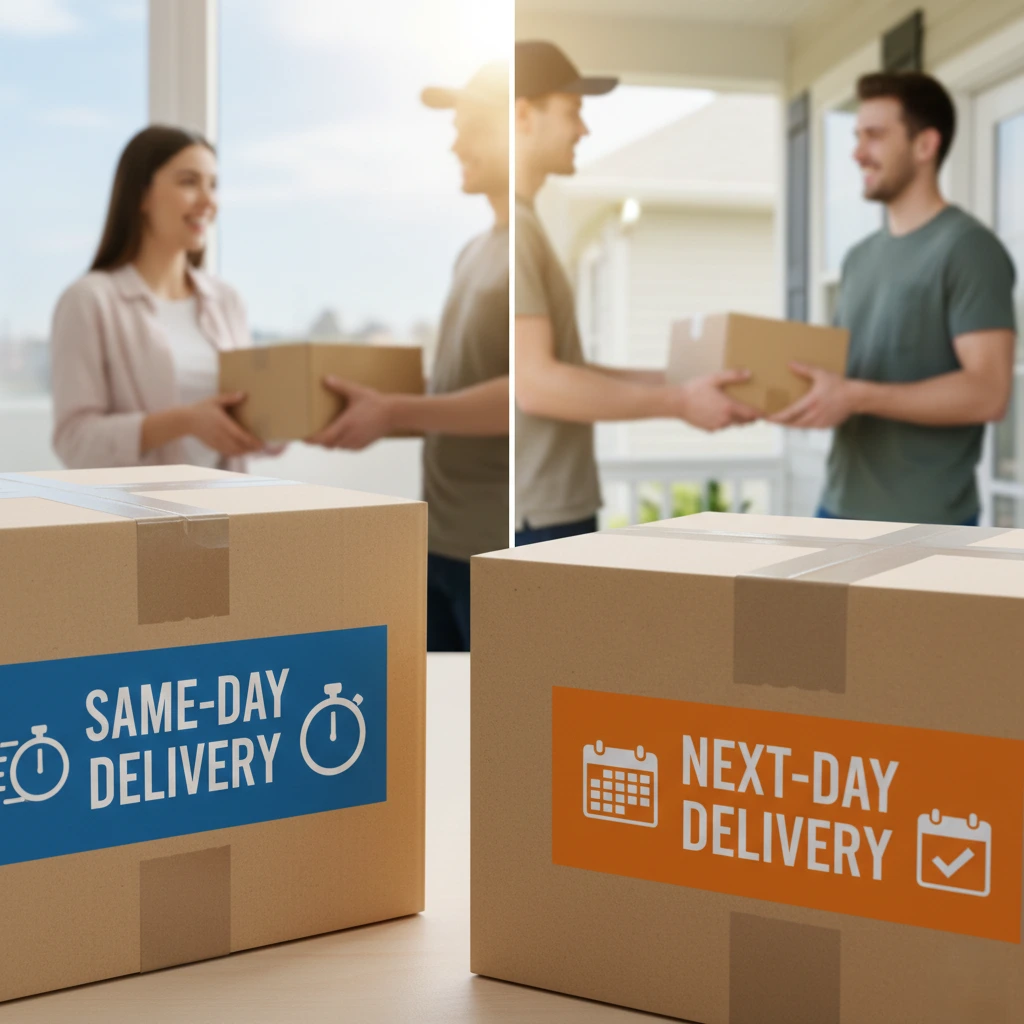
    Same-Day vs Next-Day Delivery: Key Differences

    Same-day delivery offers the fastest option, promising customers their order within hours. This option is ideal for urgent needs, last-minute gifts, or time-sensitive purchases.

    Next-day delivery guarantees arrival by the following day, balancing speed with cost efficiency. It is suitable for customers who want fast shipping but do not require immediate fulfillment.

    Retailers must consider factors such as:

    • Operational capabilities: Not all businesses can manage same-day logistics efficiently.
    • Cost implications: Same-day delivery often comes with higher expenses.
    • Geographical coverage: Urban areas are easier to serve than rural locations.

    Offering both options allows customers to choose based on urgency and budget, aligning with customer delivery preferences while maintaining operational efficiency.

    Advantages of Fast Shipping Options

    Investing in fast shipping options benefits both the retailer and the customer. Key advantages include:

    • Increased customer satisfaction: Quick deliveries enhance the shopping experience.
    • Higher conversion rates: Shoppers are more likely to complete a purchase when delivery is fast and reliable.
    • Competitive advantage: Brands offering same-day vs next-day delivery stand out in a crowded market.
    • Encourages repeat business: Consistently meeting or exceeding delivery expectations fosters loyalty.

    By analyzing order patterns and delivery demands, businesses can implement the most effective fulfillment strategy, ensuring that speed does not compromise accuracy or quality.

    Challenges of Offering Same-Day Delivery

    While same-day vs next-day delivery is attractive to customers, same-day delivery presents operational challenges. Retailers must maintain:

    • Sufficient inventory across multiple locations
    • Efficient picking, packing, and dispatch processes
    • Real-time tracking and communication systems

    Despite these hurdles, the benefits of meeting urgent customer needs often outweigh the logistical complexity, especially in competitive markets.

    Implementing the Right Strategy

    Retailers should leverage data to understand customer delivery preferences. Key steps include:

    • Segmenting customers by urgency and location
    • Offering clear delivery options at checkout
    • Using fulfillment centers strategically located near high-demand areas
    • Communicating shipping times transparently

    Balancing fast shipping options with operational costs ensures profitability while keeping customers satisfied.

    Conclusion

    In conclusion, same-day vs next-day delivery is more than a logistics decision—it is a critical component of the modern shopping experience. By recognizing customer delivery preferences and offering flexible fast shipping options, retailers can increase satisfaction, drive conversions, and enhance loyalty.

    Businesses that successfully implement these strategies gain a competitive edge, meet rising expectations, and build trust with their customers. Whether through rapid same-day fulfillment or reliable next-day delivery, speed and convenience remain key drivers in today’s ecommerce landscape.

  • Best AI Chatbots For Ecommerce Website

    Best AI Chatbots For Ecommerce Website

    In today’s fast-paced digital world, providing instant and personalized customer service is essential for online businesses. One of the most effective tools for achieving this is an AI chatbot for online store. These intelligent assistants can handle customer queries, guide shoppers through products, and even boost sales without the need for constant human intervention.

    Ecommerce businesses, from small Shopify shops to large online marketplaces, are increasingly relying on AI chatbots to improve customer experience and streamline operations. By integrating an AI chatbot for online store, merchants can reduce response times, enhance engagement, and provide support 24/7.

    Why Your Online Store Needs an AI Chatbot

    Customer expectations are evolving. Shoppers now demand instant responses, personalized recommendations, and seamless navigation. An AI chatbot for online store meets these needs by:

    • Answering frequently asked questions instantly
    • Assisting with product selection based on preferences
    • Providing order status updates and shipping information
    • Offering promotions or discounts during checkout

    Implementing an AI chatbot reduces the workload on support teams while improving conversion rates. Studies show that businesses using AI chatbots for ecommerce see higher engagement, faster response times, and increased customer satisfaction.

    Top AI Chatbots for Shopify

    For Shopify store owners, AI chatbots are a game-changer. Shopify’s ecosystem supports multiple AI-powered chat solutions, allowing store owners to enhance customer service efficiently. Some AI chatbots for Shopify include:

    1. Tidio – Offers live chat combined with AI-powered automated responses. It helps reduce cart abandonment and engages visitors proactively.
    2. Octane AI – Specializes in personalized messaging, quiz-style product recommendations, and automating customer conversations.
    3. Shopify Ping with Kit – Integrates directly with Shopify stores, providing marketing automation and personalized customer interactions.

    These tools are designed specifically for ecommerce platforms, making it easy to implement an AI chatbot for online store without extensive technical expertise.

    How AI Chatbots Improve the Customer Experience

    The primary advantage of using an AI chatbot for online store is enhanced customer experience. Chatbots can mimic human conversations while maintaining consistency and accuracy. Key benefits include:

    • Instant Support: Customers no longer have to wait for email replies or live chat availability.
    • Personalization: Chatbots can recommend products based on browsing behavior, purchase history, or customer preferences.
    • 24/7 Availability: Regardless of time zones, your store is always ready to assist shoppers.
    • Lead Generation: Bots can capture visitor information, suggest products, and guide them toward checkout.

    By combining automation with intelligent responses, businesses can create a seamless shopping experience that feels personal and attentive.

    Choosing the Right AI Chatbot

    Not all AI chatbots are created equal. When selecting an AI chatbot for online store, consider:

    • Integration Capabilities: Can it easily connect with Shopify, WooCommerce, or other platforms?
    • Customization Options: Can you tailor responses, workflows, and product suggestions?
    • Analytics & Reporting: Does it provide insights on customer interactions and engagement?
    • Multichannel Support: Can it communicate through social media, email, and website chat?

    Tools like Tidio and Octane AI are excellent starting points, especially for Shopify users, because they offer pre-built templates, AI-powered automation, and analytics for better decision-making.

    Future of AI Chatbots in Ecommerce

    The rise of AI chatbots is only accelerating. Advances in natural language processing, machine learning, and predictive analytics allow bots to handle complex queries, suggest complementary products, and even detect purchase intent. Businesses adopting these technologies gain a competitive edge, improving both efficiency and revenue.

    Using top AI chatbots ensures your online store can scale operations, reduce human error, and maintain consistent, high-quality support. Moreover, integrating an AI chatbot for online store creates opportunities for upselling, cross-selling, and proactive engagement without adding extra staff.

    Final Thoughts

    Incorporating an AI chatbot for online store is no longer optional—it’s a strategic investment. From answering questions and assisting with purchases to personalized recommendations and lead generation, chatbots are transforming the ecommerce experience. Shopify store owners and other online retailers can benefit immensely from AI chatbots for Shopify and top AI chatbots, which combine automation, intelligence, and convenience.

    By leveraging these tools, businesses can enhance customer satisfaction, streamline operations, and ultimately drive more sales, making AI chatbots an essential component of any successful ecommerce strategy.

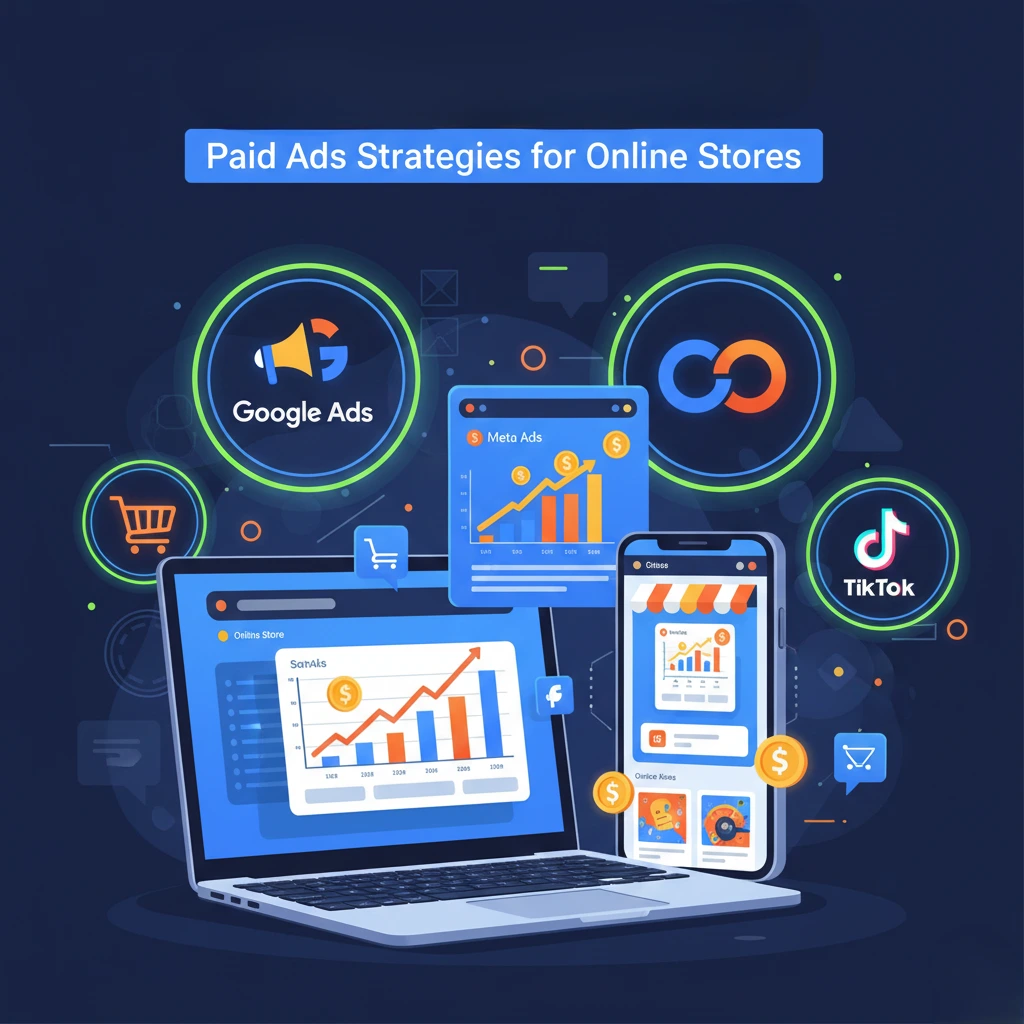
  • Maximize Sales: Paid Ads Strategies for Online Stores

    Maximize Sales: Paid Ads Strategies for Online Stores

    In the competitive world of online shopping, organic traffic alone is often not enough to drive consistent sales. Leveraging eCommerce paid ads is one of the fastest ways to reach targeted audiences, increase conversions, and boost revenue. With the right strategies, paid advertising can complement your marketing efforts and help your online store stand out. This guide will cover actionable strategies to get the most out of your advertising budget.

    Why eCommerce Paid Ads Are Essential

    Online shoppers are bombarded with options, and capturing their attention quickly is critical. eCommerce paid ads allow you to position your products in front of users who are actively searching for similar items. Unlike organic methods, paid ads provide immediate visibility, measurable results, and precise targeting.

    Key Benefits

    • Target customers based on demographics, interests, and behavior
    • Track ROI and adjust campaigns in real-time
    • Increase brand awareness and product visibility
    • Drive traffic to specific product pages or promotions

    For online retailers, integrating eCommerce paid ads into your marketing strategy ensures a steady flow of traffic and higher sales.

    Choosing the Right Platform

    While there are many advertising platforms, Google Ads remains a top choice for eCommerce businesses. Google Ads for eCommerce allows precise targeting, retargeting, and customizable campaigns that suit any budget. Other platforms like Facebook Ads, Instagram Ads, and TikTok Ads can also be effective depending on your audience.

    Tips for Platform Selection

    • Analyze where your target audience spends most of their time
    • Consider cost-per-click (CPC) and expected ROI
    • Test multiple platforms to see which performs best for your products

    Choosing the right platform is the first step in maximizing the impact of eCommerce paid ads.

    Targeting Strategies for Maximum ROI

    Successful eCommerce paid ads campaigns rely on smart targeting. Understanding your audience ensures every ad dollar is spent efficiently.

    Audience Segmentation

    Segment users by behavior, interests, purchase history, and demographics. Retargeting past visitors or cart abandoners often yields higher conversions than targeting cold traffic.

    Keyword Targeting

    For search campaigns, use keywords that match your customers’ intent. Combining high-intent keywords with compelling ad copy improves click-through rates and ROI. Using Google Ads for eCommerce, you can identify the terms most likely to convert into sales.

    Geo-Targeting and Device Targeting

    Focus on locations where your products are in demand and optimize ads for devices your audience uses most. Tailored campaigns ensure your online store advertising budget delivers results.

    Crafting Effective Ad Copy

    Even the best targeting can fail if your ad copy doesn’t resonate with potential customers. Focus on clear messaging, strong calls-to-action, and highlighting unique selling points.

    Ad Copy Tips

    • Include benefits and features of your products
    • Use urgency with limited-time offers or promotions
    • Test multiple versions to see what drives the best engagement

    Well-crafted ads are a cornerstone of successful eCommerce paid ads campaigns.

    Budgeting and Bidding

    Setting the right budget is essential to prevent overspending while maximizing ROI. Start with a manageable daily budget, monitor performance, and adjust bids based on results. Using automated bidding strategies in Google Ads for eCommerce can save time and improve campaign efficiency.

    Budget Tips

    • Allocate more to high-performing campaigns
    • Reduce spend on underperforming ads
    • Test different bidding strategies to optimize conversions

    Smart budgeting ensures your eCommerce paid ads are cost-effective and results-driven.

    Measuring Success and Optimizing Campaigns

    Regular analysis and optimization are crucial. Track metrics like CTR, conversion rate, cost per acquisition, and ROI to evaluate campaign performance. Adjust targeting, ad copy, or bids based on data. Effective online store advertising relies on continuous improvement and data-driven decisions.

    Key Metrics to Monitor

    • Impressions and clicks
    • Conversion rate per product or ad
    • Return on ad spend (ROAS)
    • Customer acquisition cost

    Consistent monitoring guarantees that your eCommerce paid ads campaigns stay profitable and deliver maximum value.

    Conclusion

    Integrating eCommerce paid ads into your marketing strategy is essential for driving traffic, increasing sales, and growing your brand. By selecting the right platforms, targeting the right audience, crafting compelling ad copy, managing budgets wisely, and continually optimizing performance, you can achieve a highly effective online store advertising strategy. Leveraging tools like Google Ads for eCommerce allows you to reach customers at the right moment, maximize ROI, and create campaigns that drive measurable growth. Start implementing these strategies today, and your paid ads will help your online store thrive in a competitive market.