Tag: online shopping

  • How to Use Social Proof to Increase Ecommerce Sales

    How to Use Social Proof to Increase Ecommerce Sales

    Social proof has become one of the most powerful tools in e-commerce marketing. Online shoppers rely heavily on the opinions and experiences of others before making a purchase. Understanding how to use social proof to increase e-commerce sales can help build trust, reduce hesitation, and drive higher conversion rates across your online store.

    What Is Social Proof in Ecommerce

    Social proof refers to the psychological concept where people follow the actions of others to make decisions. In ecommerce, it helps reassure potential customers that your products are credible and worth buying.

    Why Social Proof Matters for Online Shoppers

    Customers cannot physically see or test products online. Ecommerce social proof fills this gap by showing real experiences from other buyers. It reduces perceived risk, improves brand trust, and influences purchasing decisions at critical moments in the customer journey.

    Use Customer Reviews and Ratings Effectively

    Customer reviews are the most influential form of social proof for ecommerce websites.

    Display Reviews on Product Pages

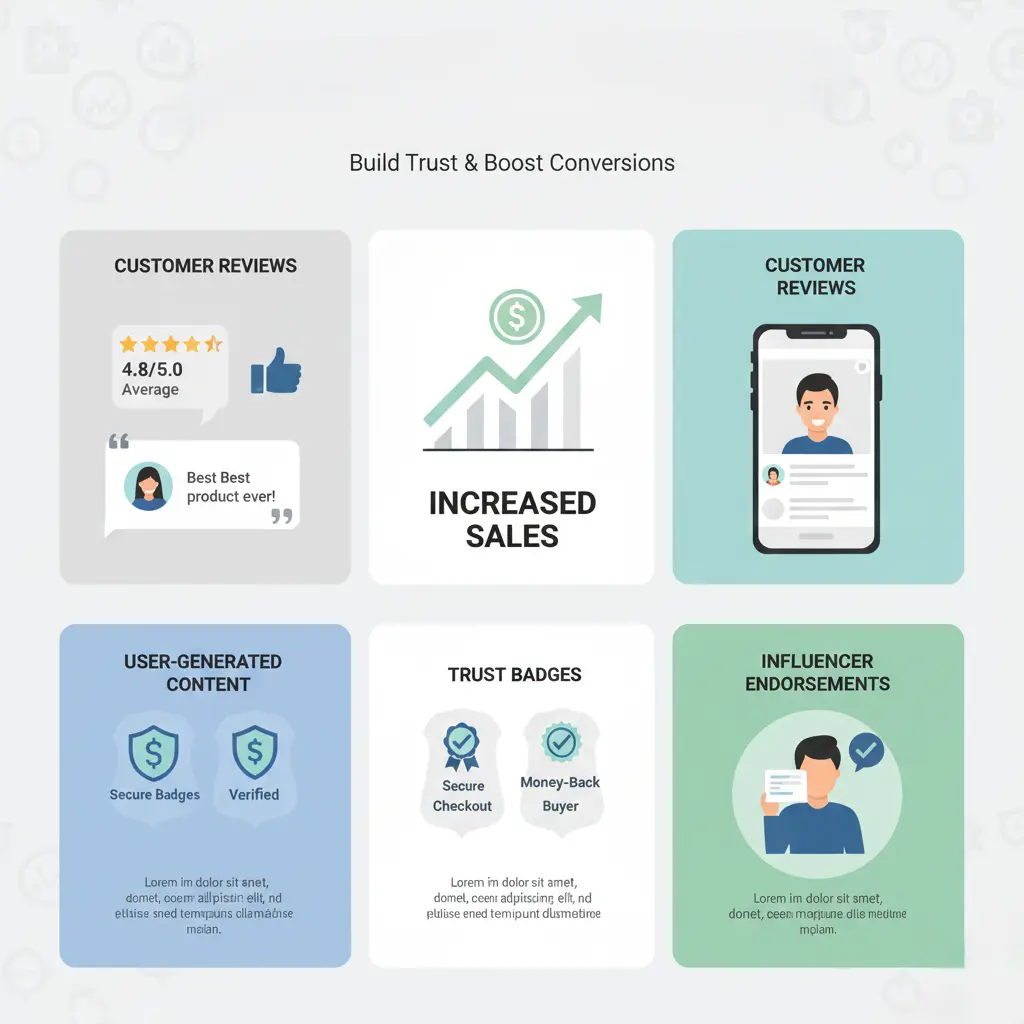
    Product pages should prominently feature star ratings and written reviews. Highlighting positive feedback improves conversion rate optimization and encourages users to complete their purchases. Reviews also add fresh content, which benefits SEO for ecommerce stores.

    Encourage Verified Buyer Reviews

    Verified reviews add authenticity and credibility. Send follow-up emails after purchase asking customers to leave honest feedback. Authentic reviews help improve online store trust and increase buyer confidence.

    Leverage User-Generated Content

    User-generated content is a powerful trust signal that shows real customers using your products.

    Showcase Customer Photos and Videos

    Photos and videos shared by customers on social media can significantly increase engagement. Display this content on product pages or galleries to enhance ecommerce credibility and create a relatable shopping experience.

    Integrate Social Media Mentions

    Featuring Instagram posts, TikTok videos, or customer tags provides real-time social proof marketing. It reassures shoppers that your products are popular and actively used by others.

    Highlight Trust Badges and Certifications

    Trust indicators help remove friction during checkout and decision-making.

    Use Security and Payment Badges

    Displaying SSL certificates, secure payment icons, and money-back guarantees increases confidence. These elements strengthen ecommerce trust signals and reduce cart abandonment.

    Feature Awards and Media Mentions

    If your brand has been featured in media outlets or has won awards, highlight them on your website. This form of authority-based social proof boosts brand credibility and influences buying decisions.

    Show Real-Time Activity and Popularity

    Demonstrating product demand can create urgency and motivate action.

    Display Sales and Stock Notifications

    Messages like “20 people bought this today” or “Only 5 items left in stock” use social proof psychology to encourage faster purchasing decisions. These notifications tap into fear of missing out while remaining authentic.

    Highlight Best-Selling Products

    Labeling items as “Best Seller” or “Most Popular” helps guide shoppers. This strategy improves ecommerce user experience and increases the likelihood of conversion.

    Why Social Proof Improves Ecommerce SEO

    Search engines value trust, engagement, and user interaction. Reviews, testimonials, and user-generated content improve dwell time and reduce bounce rates. This positively impacts ecommerce SEO performance and organic rankings.

    Build Long-Term Trust and Loyalty

    Consistently using social proof to increase ecommerce sales builds long-term customer trust. Loyal customers are more likely to leave reviews, recommend your brand, and make repeat purchases.

    Final Thoughts on Using Social Proof for Ecommerce Growth

    Learning how to use social proof to increase ecommerce sales is essential for modern online businesses. By leveraging customer reviews, user-generated content, trust badges, and real-time activity, you create a trustworthy shopping environment. Strong social proof not only increases conversions but also strengthens your brand authority, customer loyalty, and SEO performance over time.
  • How to Use Reviews & UGC to Increase Sales

    How to Use Reviews & UGC to Increase Sales

    In today’s digital marketplace, trust drives conversions. Shoppers no longer rely only on brand messaging—they look for proof from real customers. Reviews and user-generated content (UGC) play a powerful role in influencing buying decisions and increasing sales across e-commerce and service-based businesses.

    Why Reviews & UGC Matter for Sales

    Reviews and UGC act as modern word-of-mouth marketing. They reduce purchase anxiety, build credibility, and help customers visualize real-world use of your products or services.

    Key Benefits

    Builds trust and authenticity
    Improves conversion rates
    Boosts brand credibility
    Influences buying decisions
    Supports SEO and discoverability

    How Reviews Increase Sales

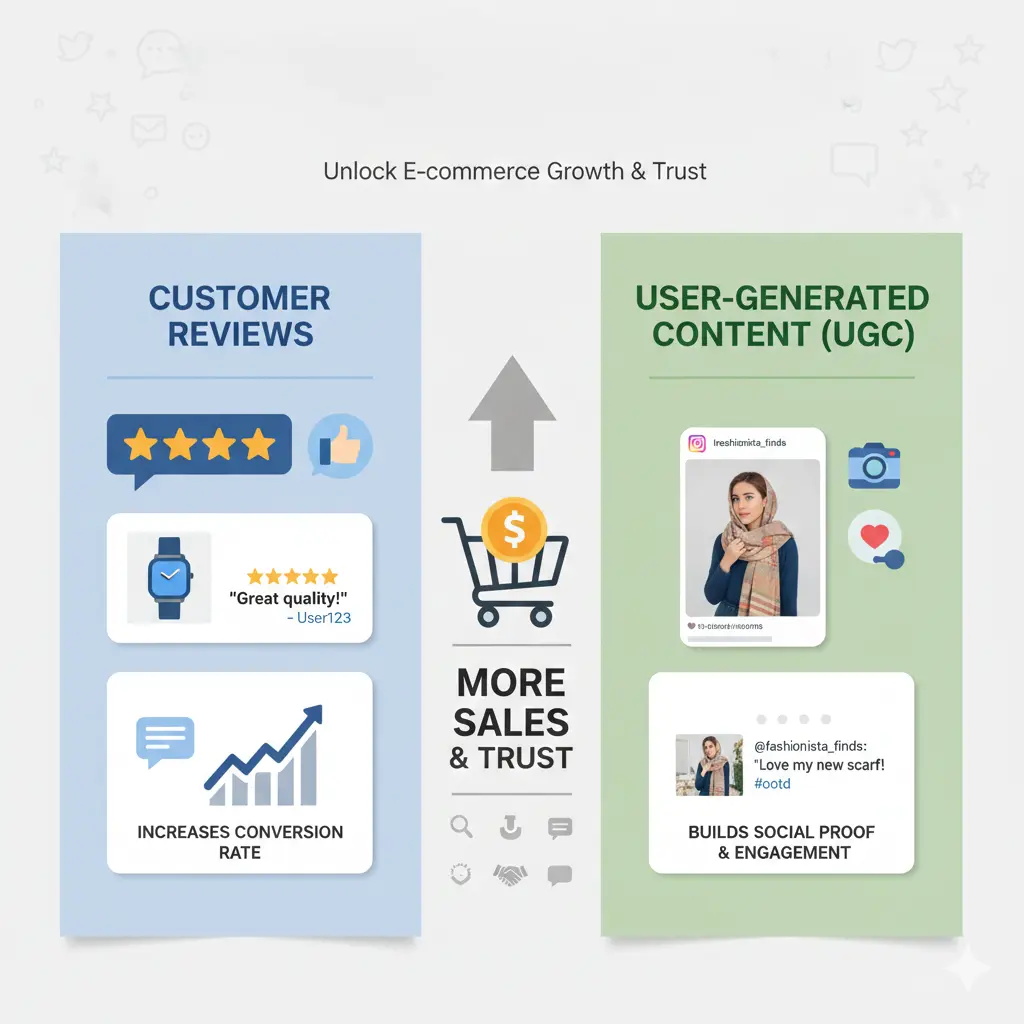
    Customer reviews provide social proof that reassures potential buyers. Products with reviews consistently outperform those without them.

    1. Display Reviews Strategically

    Place reviews where purchase decisions are made:
    Product pages
    Checkout pages
    Landing pages
    Email campaigns

    Featuring star ratings near product titles improves click-through and conversion rates.

    2. Encourage Honest Customer Feedback

    Actively ask customers to leave reviews through:
    Post-purchase emails
    SMS follow-ups
    Incentives like discounts or loyalty points

    Honest reviews—both positive and constructive—build authenticity and trust.

    3. Respond to Reviews Publicly

    Replying to reviews shows that your brand values customer feedback. Addressing negative reviews professionally can turn dissatisfied customers into loyal advocates.

    Using UGC to Drive More Sales

    User-generated content includes photos, videos, testimonials, and social posts created by real customers. UGC helps shoppers imagine themselves using your product.

    1. Showcase UGC on Product Pages

    Add customer photos or videos below product descriptions. Seeing real people using your product increases confidence and reduces hesitation.

    2. Leverage UGC on Social Media & Ads

    Repurpose customer content for:
    Instagram and Facebook ads
    Pinterest pins
    Website banners
    Email marketing

    UGC-based ads often outperform branded ads because they feel authentic and relatable.

    3. Create Hashtag Campaigns

    Encourage customers to share content using a branded hashtag. This makes it easier to collect UGC while building a community around your brand.

    Combining Reviews & UGC for Maximum Impact

    Reviews provide written validation, while UGC adds visual proof. Together, they create a powerful trust-building strategy.

    Best Practices

    Highlight top reviews alongside customer photos
    Use testimonials in retargeting ads
    Add UGC to homepage and category pages
    Feature customer stories in email campaigns

    SEO Benefits of Reviews & UGC

    User-generated content adds fresh, keyword-rich content to your site, which search engines love. Reviews can help:
    Improve long-tail keyword rankings
    Increase dwell time
    Boost local SEO performance
    Enhance rich snippets in search results

    Measuring the Impact on Sales

    Track performance metrics such as:
    Conversion rate changes
    Click-through rates
    Average order value
    Customer retention

    Analyzing this data helps you refine your review and UGC strategy for better results.

    Final Thoughts

    Reviews and UGC are no longer optional—they are essential sales tools. By strategically collecting, displaying, and promoting customer content, businesses can build trust, increase engagement, and drive higher conversions.

  • How AI is Transforming Online Shopping

    How AI is Transforming Online Shopping

    The world of online shopping is evolving faster than ever, and Artificial Intelligence (AI) is at the forefront of this transformation. From personalized recommendations to smarter inventory management, AI is changing the way consumers browse, buy, and interact with e-commerce platforms.

    AI-Powered Personalization

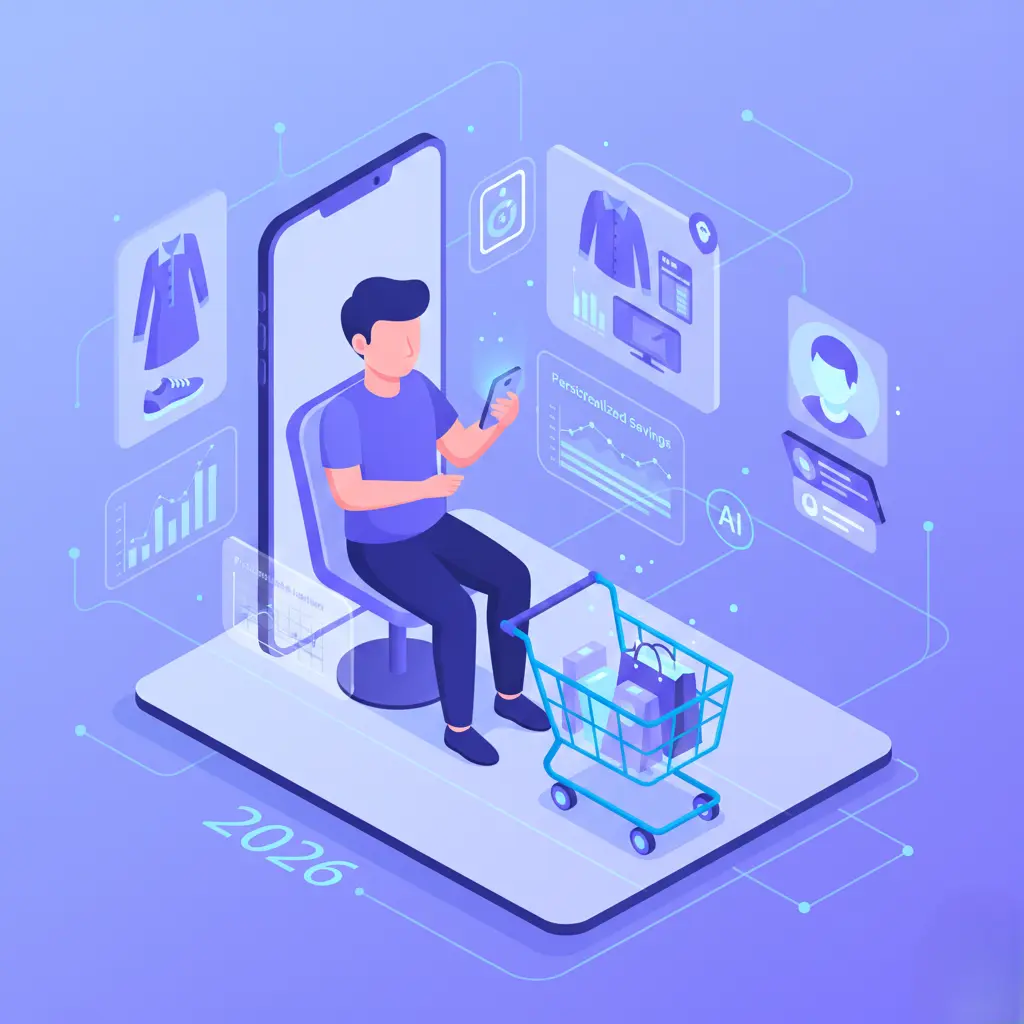
    One of the biggest impacts of AI in online shopping is personalization. AI algorithms analyze user behavior, purchase history, and preferences to deliver tailored product recommendations. Retailers like Amazon and Netflix have set high standards by showing products and content based on individual user patterns.

    Personalization not only improves the shopping experience but also increases conversion rates. Studies show that personalized recommendations can boost sales by up to 20–30% for e-commerce businesses.

    Chatbots and Virtual Assistants

    AI-driven chatbots and virtual assistants are reshaping customer service. These tools provide instant responses to queries, assist in product searches, and even help complete purchases. Unlike traditional support, AI chatbots operate 24/7, ensuring seamless shopping experiences and reducing operational costs for retailers.

    For example, fashion and beauty brands use chatbots to guide customers in choosing sizes, colors, and styles, making online shopping feel more like a personalized in-store experience.

    Visual Search and Image Recognition

    AI has enabled visual search, allowing shoppers to find products using images instead of text. By uploading a photo, users can instantly locate similar items online. This technology leverages image recognition to match patterns, colors, and shapes across product catalogs.

    Visual search not only simplifies the buying process but also reduces friction for users who may not know the exact product name, improving customer satisfaction and sales.

    Smart Inventory and Supply Chain Management

    Behind the scenes, AI is revolutionizing inventory management and supply chains. Predictive analytics help retailers forecast demand, optimize stock levels, and reduce wastage. AI systems can identify trends in real time, ensuring that popular products are always available and minimizing the risk of overstocking or stockouts.

    This efficiency directly translates to cost savings and faster delivery times, which are crucial for maintaining customer loyalty in e-commerce.

    Fraud Detection and Secure Payments

    AI algorithms also enhance security in online shopping. By analyzing transaction patterns, AI can detect fraudulent activities, unusual purchases, and account anomalies. This proactive fraud detection protects both retailers and customers, fostering trust in digital payment systems.

    Voice Commerce

    With the rise of smart speakers and voice assistants, AI is enabling voice commerce. Customers can order products, check prices, and track shipments using voice commands. Voice-activated shopping is particularly appealing for convenience-focused consumers, offering a hands-free shopping experience.

    The Future of AI in E-Commerce

    The future of AI in online shopping promises even more innovation. Technologies like augmented reality (AR) fitting rooms, predictive product launches, and hyper-personalized marketing are set to redefine the e-commerce landscape. Retailers leveraging AI effectively will not only boost sales but also create loyal and satisfied customers.

    Final Thoughts

    AI is no longer optional in online shopping—it is essential for staying competitive. From personalized recommendations to smarter supply chains and secure payments, AI is transforming every aspect of the e-commerce experience. Businesses that adopt AI technologies can offer faster, smarter, and more personalized shopping, while consumers enjoy convenience, security, and satisfaction like never before.

  • Why Social Commerce Is the Future of Online Shopping

    Why Social Commerce Is the Future of Online Shopping

    Social media has evolved beyond sharing updates and connecting with friends—it’s now transforming the way people shop online. Social commerce is rapidly becoming the driving force behind eCommerce growth, allowing brands to sell directly through social platforms while creating engaging, personalised shopping experiences. In 2026, businesses that ignore social commerce risk missing a massive opportunity to reach and convert their audience.

    What Is Social Commerce?

    Social commerce is the integration of eCommerce directly into social media platforms. Instead of redirecting users to a separate website, brands can showcase products, provide recommendations, and complete purchases within apps like Instagram, TikTok, Facebook, and Pinterest. This seamless experience merges entertainment, social interaction, and shopping into a single journey.

    Key Features of Social Commerce

    • Shoppable posts and videos: Users can click on products in a post or video to purchase instantly.
    • Influencer partnerships: Trusted personalities drive product awareness and conversions.
    • In-app checkout: Completing purchases without leaving the social platform simplifies the buying process.

    Why Social Commerce Is Growing

    Several factors are driving the rise of social commerce in 2026:

    Mobile-First Shopping

    Most users browse social media on smartphones. Social commerce capitalizes on this by making shopping mobile-native, reducing friction and increasing conversion rates.

    Personalized Experiences

    Platforms leverage user data to show relevant products based on interests, past purchases, and browsing behavior. Personalization ensures that shoppers are presented with products they are likely to buy, making social commerce highly effective.

    Community and Engagement

    Social commerce thrives on interaction. Comments, likes, shares, and reviews create a sense of community around products. This engagement builds trust and encourages purchases, transforming social media into a highly persuasive sales channel.

    Benefits of Social Commerce for Brands

    • Higher Conversion Rates: Shoppers can buy instantly without leaving the platform.
    • Lower Acquisition Costs: Organic reach, influencer marketing, and user-generated content reduce reliance on paid ads.
    • Stronger Customer Loyalty: Interactive and personalized shopping experiences foster long-term engagement.
    • Real-Time Insights: Brands gain valuable data on customer behavior, trends, and preferences.

    Social Commerce Trends to Watch in 2026

    • Live Shopping Events: Live streams where influencers or brands showcase products in real time are gaining traction.
    • AI-Powered Recommendations: Social platforms use AI to suggest products based on user behavior, increasing purchase likelihood.
    • Integrated Loyalty Programs: Rewards and points integrated into social commerce ecosystems encourage repeat purchases.

    How Brands Can Succeed in Social Commerce

    1. Focus on Engagement: Create interactive content that encourages users to like, comment, and share.
    2. Leverage Influencers Strategically: Partner with trusted creators who align with your brand.
    3. Optimize Mobile Experience: Ensure product pages, checkout, and content load quickly on mobile devices.
    4. Use Data to Personalize: Tailor product recommendations and content to each user for higher conversions.

    Conclusion

    Social commerce is the future of online shopping because it merges discovery, engagement, and purchase into one seamless experience. In 2026, brands that embrace social commerce can boost sales, strengthen customer relationships, and gain a competitive edge. The lines between social media and shopping are disappearing, and businesses that adapt will thrive in this new, interactive digital marketplace.

  • Dropshipping vs. Traditional Ecommerce: Pros and Cons

    Dropshipping vs. Traditional Ecommerce: Pros and Cons

    Choosing the right business model is one of the most important decisions for anyone starting an online store. Dropshipping and traditional eCommerce are two popular models, each with distinct advantages and challenges. Understanding their pros and cons can help entrepreneurs make smarter decisions and scale their business effectively.

    What Is Dropshipping?

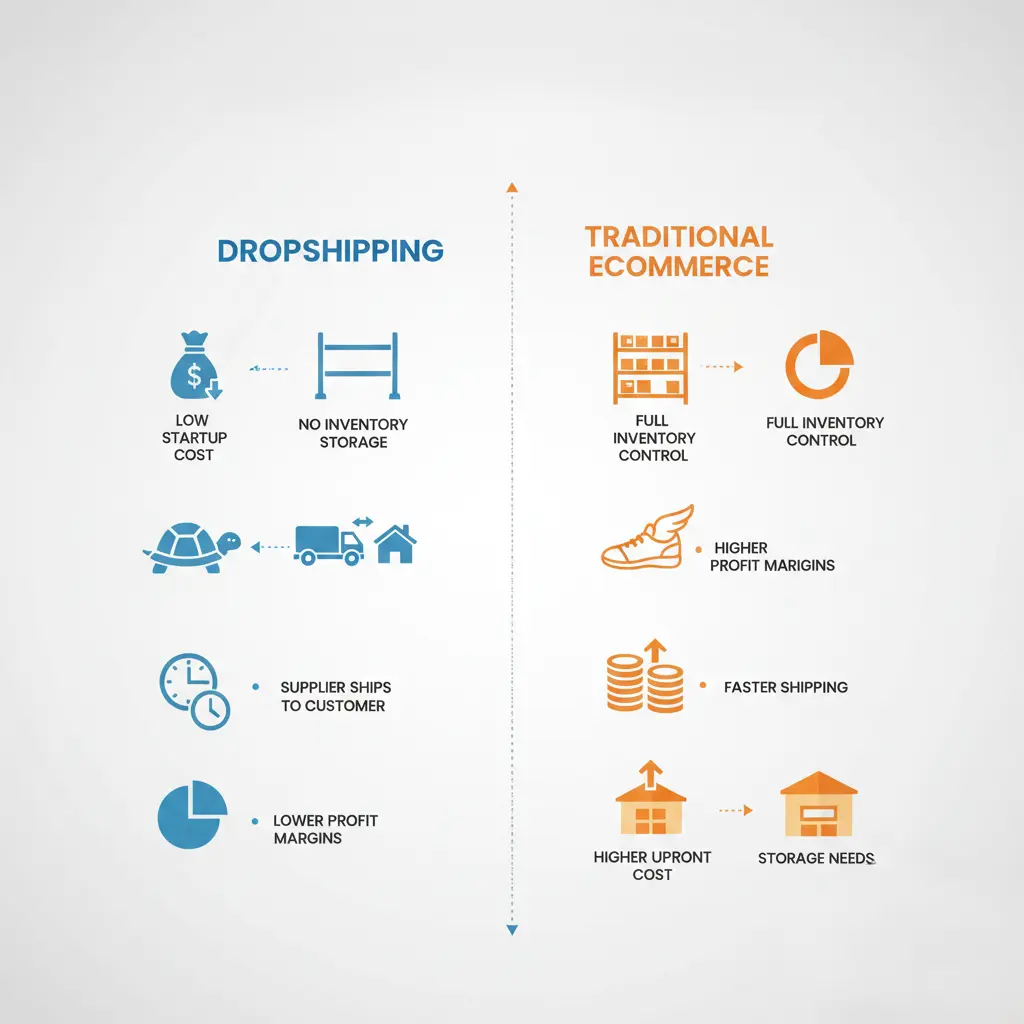
    Dropshipping is a retail model where the store sells products without holding inventory. When a customer makes a purchase, the supplier ships the product directly to them. The store acts as a middleman, focusing on marketing, sales, and customer experience.

    What Is Traditional Ecommerce?

    Traditional ecommerce involves buying inventory in bulk, storing it in a warehouse, and shipping orders directly to customers. This model gives business owners full control over inventory, shipping, and product quality.

    Pros of Dropshipping

    1. Low Startup Costs

    With dropshipping, you don’t need to invest in inventory upfront. This significantly reduces the financial risk, making it easier for beginners to start an online store.

    2. Minimal Inventory Management

    Since suppliers handle storage and shipping, you save time and resources on logistics, warehousing, and inventory tracking.

    3. Wide Product Selection

    Dropshipping allows you to list thousands of products without worrying about stock. You can experiment with different niches and products with minimal risk.

    4. Location Flexibility

    You can run a dropshipping business from anywhere with an internet connection, making it ideal for digital nomads and remote entrepreneurs.

    Cons of Dropshipping

    1. Lower Profit Margins

    Because you don’t buy in bulk, dropshipping products typically have lower margins compared to traditional ecommerce. Competition can further drive prices down.

    2. Limited Control Over Shipping and Quality

    You rely on suppliers for product quality and delivery times. Delays or defects can negatively impact your brand reputation.

    3. Higher Competition

    The low barrier to entry means more sellers offer similar products, making it harder to stand out without strong marketing.

    Pros of Traditional Ecommerce

    1. Higher Profit Margins

    Buying in bulk allows for lower product costs, which means higher margins per sale.

    2. Greater Control Over Brand Experience

    You control inventory, packaging, shipping, and product quality, ensuring a consistent experience for customers.

    3. Better Customer Loyalty

    Owning the product and fulfillment process allows you to build stronger relationships with customers through personalized packaging, faster delivery, and better service.

    Cons of Traditional Ecommerce

    1. Higher Startup Costs

    You must invest in inventory, storage, and shipping upfront, which increases financial risk.

    2. Inventory Management Responsibilities

    Tracking stock, handling returns, and managing warehouse operations require time, effort, and infrastructure.

    3. Limited Product Testing

    Since inventory requires investment, testing new products or niches can be costly and riskier.

    Which Model Is Right for You?

    If you want to start with low risk and minimal investment, dropshipping is ideal. However, if you’re looking to build a brand with higher margins and full control over customer experience, traditional ecommerce may be the better choice.

    Both models have potential for success, but your decision should align with your business goals, budget, and willingness to manage inventory and logistics.