Headless commerce sounds complicated, technical, and intimidating—but it doesn’t have to be. At its core, headless commerce is simply a smarter, more flexible way to build and scale modern ecommerce experiences without being locked into one rigid system.
This guide explains what headless commerce is, why it matters, and whether it’s right for your business—without buzzwords or technical overload.
What Is Headless Commerce?
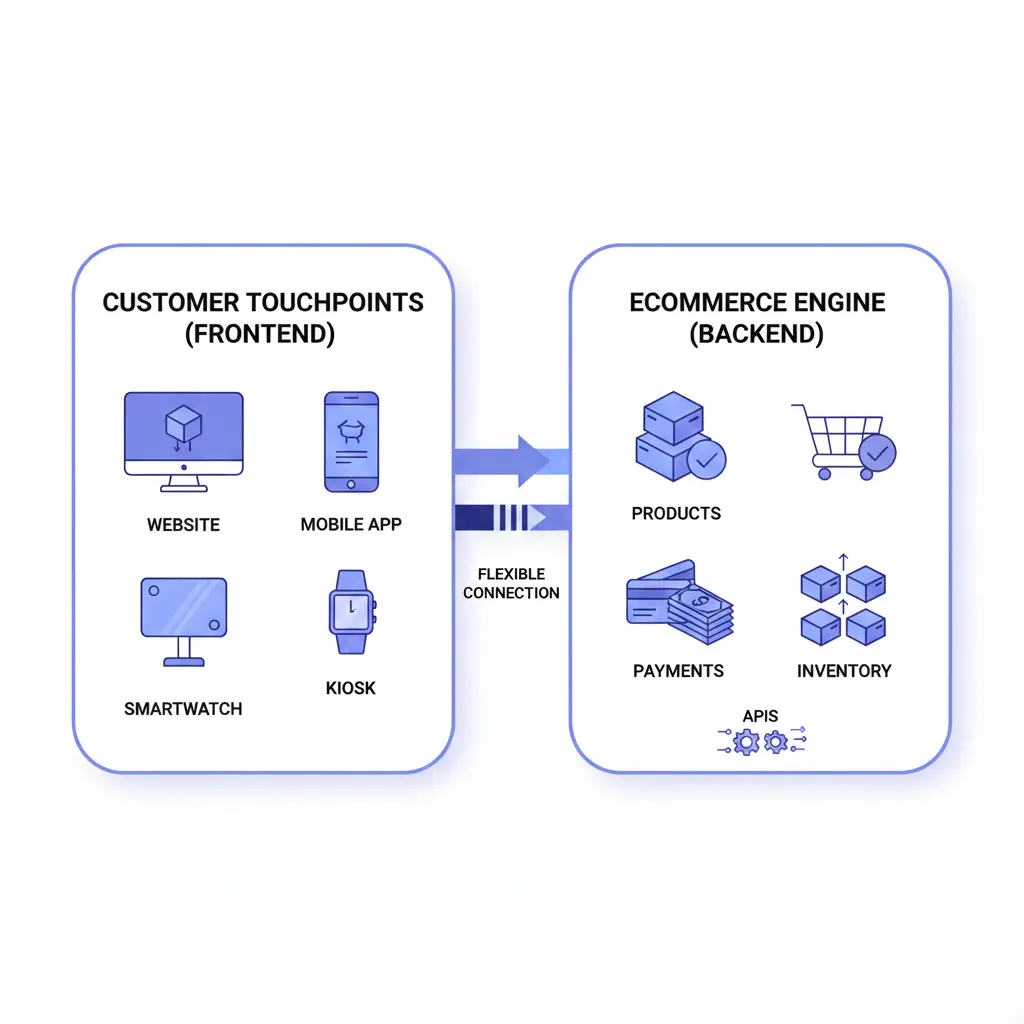
Traditional ecommerce platforms tightly connect the front end (what customers see) and the back end (where products, orders, and data live). Headless commerce breaks that connection.
In headless commerce architecture, the front end and back end operate independently. They communicate through APIs, allowing each side to evolve without disrupting the other.
A Simple Way to Think About It
Think of the back end as the brain and the front end as the face. With headless commerce, you can change the face without touching the brain—and vice versa.
This means your website, mobile app, kiosks, or even smart devices can all pull data from the same backend while delivering different experiences.
Why Businesses Are Moving to Headless Commerce
Faster, More Flexible Experiences
Traditional platforms can be slow and restrictive. Headless commerce allows developers to build fast, custom front ends using modern frameworks. This results in quicker page loads and smoother user experiences.
Speed matters—not just for customers, but for SEO and conversions.
Total Design Freedom
With headless commerce, your design is no longer limited by templates. Brands can create unique, highly customized storefronts that match their identity and customer expectations.
This is especially valuable for brands competing in crowded ecommerce markets.
How Headless Commerce Improves Customer Experience
Omnichannel Made Simple
Customers don’t just shop on websites anymore. They shop on mobile apps, social platforms, marketplaces, and even in-store screens.
Headless commerce solutions make omnichannel selling easier by delivering consistent product and pricing data across every touchpoint.
Personalization Without Complexity
Because the front end is independent, businesses can personalize content, offers, and layouts without touching core commerce logic. This makes personalization faster, safer, and more scalable.
Is Headless Commerce Only for Big Brands?
When Headless Commerce Makes Sense
Headless commerce is ideal if you:
- Need high-performance, fast-loading pages
- Want deep customization and flexibility
- Sell across multiple channels
- Plan to scale or expand internationally
Many growing mid-sized brands are adopting headless ecommerce to future-proof their tech stack.
When It Might Be Overkill
If you’re a small store with simple needs and limited development resources, a traditional platform may be sufficient. Headless commerce requires more upfront planning and technical expertise.
Common Myths About Headless Commerce
Myth 1: It’s Too Technical
While headless commerce involves APIs, many modern platforms offer pre-built integrations and tools that simplify implementation. You don’t need to be a tech giant to go headless.
Myth 2: It Replaces Your Ecommerce Platform
Headless commerce doesn’t remove your platform—it enhances it. You still use a backend system for products, orders, and payments. You just gain more control over how customers experience your brand.
The Real Benefit of Headless Commerce
The biggest advantage of headless commerce architecture is future flexibility. As customer expectations change and new channels emerge, your business can adapt without rebuilding everything from scratch.
You’re no longer boxed in by technology—you’re enabled by it.
Final Thoughts
Headless commerce isn’t about complexity—it’s about freedom. Freedom to design better experiences, move faster, and scale without limits.
If your ecommerce growth is being slowed by rigid platforms or outdated templates, headless commerce may be the upgrade that helps you stay competitive, adaptable, and customer-first in a rapidly evolving digital landscape.
Leave a Reply