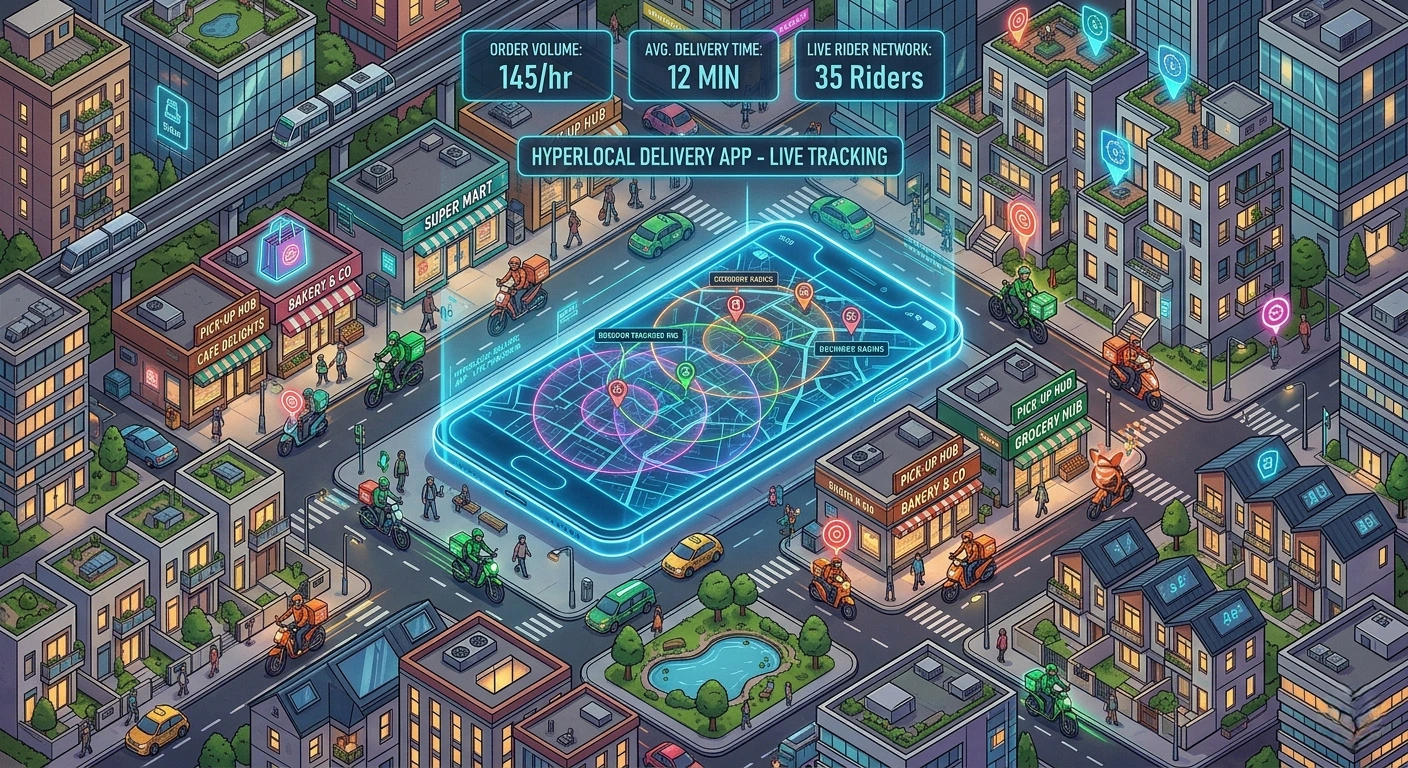
In recent years, the demand for faster and more convenient delivery services has grown rapidly. The concept of hyperlocal delivery has emerged as a powerful solution, connecting local businesses with nearby customers for quick and efficient service. This model is transforming how goods are delivered, especially in urban areas.
What is Hyperlocal Delivery?
Hyperlocal delivery refers to the process of delivering goods within a limited geographic area, usually within a few kilometers. It focuses on fulfilling orders from local stores or vendors to customers in real time. For businesses exploring hyperlocal delivery, the goal is to minimize delivery time while maximizing convenience.
How the Hyperlocal Delivery Model Works
The business model is simple yet highly effective. It typically involves:
- A digital platform or app where customers place orders
- Local merchants or vendors who fulfill those orders
- Delivery agents who pick up and deliver products
This system allows businesses to offer on-demand delivery, where customers receive their orders within minutes or hours instead of days.
Key Components of the Model
To run a successful hyperlocal delivery business, several components are essential:
- Technology Platform
Mobile apps and websites act as the backbone of the system. These platforms connect customers, vendors, and delivery partners seamlessly. - Local Vendor Network
Partnering with nearby stores ensures faster order fulfillment and supports small businesses. - Efficient Logistics
A well-managed fleet of delivery personnel ensures timely and reliable service. - Real-Time Tracking
Customers expect transparency, so tracking features are a must.
These elements together create a strong hyperlocal delivery ecosystem that meets modern consumer expectations.
Role of Local Delivery Apps
Local delivery apps have made this model more accessible and scalable. They allow users to browse products, compare prices, and place orders instantly. Popular platforms have normalized quick deliveries, making quick commerce a standard expectation.
For businesses, integrating with local delivery apps can significantly boost reach and customer engagement. These apps are a key driver behind the growth of hyperlocal delivery services worldwide.
Benefits of Hyperlocal Delivery
There are several advantages to adopting this model:
- Faster Deliveries: Orders are fulfilled within hours or even minutes
- Lower Logistics Costs: Short distances reduce transportation expenses
- Support for Local Businesses: Encourages customers to shop locally
- High Customer Satisfaction: Quick service improves user experience
These benefits make hyperlocal delivery an attractive option for startups and established businesses alike.
Challenges in the Model
Despite its advantages, there are challenges to consider:
- Managing delivery personnel efficiently
- Handling peak-time demand
- Ensuring product availability
- Maintaining consistent service quality
Overcoming these challenges is crucial for scaling a hyperlocal delivery business successfully.
Future of Hyperlocal Delivery
The future looks promising as consumer demand for speed continues to rise. With advancements in technology, automation, and AI, the model is becoming more efficient. The rise of on-demand delivery and quick commerce platforms indicates that instant fulfillment will soon become the norm.
Businesses investing in hyperlocal delivery today are likely to gain a competitive advantage in the evolving digital marketplace.
Conclusion
The hyperlocal delivery model is reshaping the way goods and services reach customers. By leveraging local networks, technology, and efficient logistics, businesses can meet the growing demand for speed and convenience. As local delivery apps and quick commerce continue to expand, this model will play a crucial role in the future of e-commerce.
FAQs
1. What is hyperlocal delivery in simple terms?
It is a delivery model where products are delivered from nearby stores to customers within a short time frame and limited area.
2. How does hyperlocal delivery differ from traditional delivery?
Traditional delivery involves long distances and longer timelines, while hyperlocal delivery focuses on nearby locations and faster fulfillment.
3. Why is hyperlocal delivery becoming popular?
It offers faster service, supports local businesses, and aligns with the growing demand for convenience and instant delivery.
Leave a Reply